
AI Revolutionizes Web Accessibility: A Path to Digital Inclusion
Unlocking inclusive online experiences through intelligent evaluation and enhancement.
Key Insights into AI for Web Accessibility
- Automated Detection and Remediation: AI significantly streamlines accessibility audits by rapidly identifying issues like missing alt text and poor color contrast, and can even suggest or apply real-time fixes, moving beyond traditional manual efforts.
- Enhanced User Experience through Personalization: Leveraging NLP and computer vision, AI generates alternative text, captions, and simplifies content, while also enabling dynamic content adjustments based on individual user preferences, thereby personalizing accessibility.
- Compliance and Future-Proofing: AI tools are crucial for ensuring adherence to global standards like WCAG 2.1/2.2, ADA, and the European Accessibility Act, facilitating continuous monitoring to maintain compliance in evolving digital environments.
The digital landscape is rapidly evolving, with artificial intelligence (AI) emerging as a transformative force in making the web accessible to everyone, regardless of their abilities. With over a billion people globally living with disabilities, ensuring digital inclusion is no longer just a best practice but a fundamental necessity. AI technology offers innovative solutions to evaluate, enhance, and maintain web accessibility, providing a crucial bridge for individuals who rely on assistive technologies to navigate the online world.
AI's Pivotal Role in Evaluating Web Accessibility
AI-powered tools are revolutionizing the evaluation of web accessibility, making the process far more efficient and comprehensive than manual methods alone. These intelligent systems can rapidly scan web designs, HTML, and CSS files to pinpoint potential accessibility issues, providing a more thorough audit of a website's compliance.
Automated Audits and Compliance Checks
AI checkers are designed to perform automated audits, quickly flagging common barriers. They can evaluate websites against a spectrum of accessibility guidelines, including Web Content Accessibility Guidelines (WCAG) 2.1 and 2.2 (across levels A, AA, AAA), as well as regional legislation such as Section 508 (US), the Stanca Act (Italian), BITV (German), and RGAA (French). Some advanced tools even incorporate their proprietary accessibility guidelines. These tools can automatically identify issues such as missing alternative text for images, insufficient color contrast, improper use of headings, and non-keyboard navigable elements. This capability ensures that accessibility is considered at every stage of development, not just as an afterthought.
An AI-driven approach to enhancing web accessibility.

Real-time Issue Identification and Remediation
A significant advantage of AI in accessibility is its ability to identify and suggest fixes for issues in real time. Tools are emerging that automate website inclusivity, ensuring continuous compliance with standards like WCAG. For instance, some AI platforms scan every page of a site frequently, ensuring that new content and updates are promptly made accessible. This dynamic updating capability means that even if original alt text wasn't manually set, AI can auto-generate it as a user interacts with content using a screen reader. This proactive approach helps maintain compliance in dynamic web environments.
Comprehensive Reporting and Guidance
Many AI accessibility tools provide detailed reports of evaluation results, often displaying information directly within web pages. These reports may include accessibility scores and offer step-by-step guidance for remediation. Tools like WAVE provide detailed test data and "Accessibility Impact (AIM) assessment reports," offering insights into a site's overall accessibility and suggesting high-impact fixes. This data-driven approach helps developers and content creators prioritize and implement effective solutions.
AI's Transformative Impact on Improving Web Accessibility
Beyond evaluation, AI significantly contributes to the improvement of web accessibility through various features and functionalities, moving beyond mere problem identification to active problem-solving.
Automated Content Enhancements
Image Recognition and Alt Text Generation
AI can automatically create alternative text (alt text) for images and videos, which is critical for visually impaired users who rely on screen readers. While AI-generated alt text may not always capture complex nuances perfectly, it vastly enhances the accessibility of web images, providing a foundational description where none existed.
Captioning and Transcription
AI can automatically generate accurate and synchronized captions for multimedia content, such as videos and podcasts. This makes content accessible to individuals with hearing impairments and benefits users who prefer to consume content silently.
Readability Improvements with NLP
Natural Language Processing (NLP) techniques are employed to simplify and enhance the readability of text. This is particularly beneficial for users with cognitive disabilities, learning difficulties, or age-related cognitive decline, helping them better comprehend web content. NLP can summarize complex texts and provide concise summaries of video content, making information more digestible.
Personalized User Experiences
AI enables websites to dynamically adjust content based on user-selected accessibility preferences. This can include optimizing contrast for better visibility, adjusting font size, and enhancing keyboard navigation. AI-powered screen readers convert on-screen text into spoken words, enabling visually impaired users to access digital content and navigate websites more effectively, thus creating a more tailored and inclusive browsing experience.
AI adapting to user preferences for enhanced accessibility.
Assistive Technologies and Tools
AI is a core component of many assistive technologies that empower individuals with disabilities, providing new avenues for interaction and navigation.
Speech Recognition Systems
AI-powered speech recognition systems enable users with mobility issues or visual impairments to control devices and navigate the web using voice commands, reducing reliance on traditional input methods like keyboards or mice.
AI-Powered Navigation
AI-powered navigation systems can provide real-time guidance, suggest accessible routes, and offer information about accessible facilities, aiding individuals with mobility impairments in physical and digital spaces.
Adaptive Learning and Education
In educational settings, AI tools can personalize content, making learning environments more inclusive. Tools that analyze code structure against WCAG criteria and provide suggestions for improvement, or offer real-time solutions for creating accessible course content, are transforming how educational materials are developed and delivered.
Understanding Key AI Technologies in Web Accessibility
To effectively leverage AI for web accessibility, it's crucial to understand the underlying AI technologies at play:
Computer Vision
Computer vision is instrumental in recognizing visual content, generating alt texts for images, and producing accessibility annotations for complex visual elements. It helps AI understand the context of visual information on a webpage.
Machine Learning (ML)
ML algorithms are trained on vast datasets of accessibility issues to learn patterns, predict potential problems across different pages and sites, and identify new issues dynamically. This enables continuous improvement in automated detection and remediation.
Natural Language Processing (NLP)
NLP is vital for text simplification, content summarization, generating accurate captions for multimedia, and improving the overall clarity and readability of textual content. It focuses on making information more understandable for diverse cognitive abilities.
Speech Recognition
Speech recognition technology enables hands-free navigation and interaction with web content, providing an alternative input method for users who cannot easily use a keyboard or mouse.
Chatbots and AI Assistants
AI-powered chatbots and virtual assistants can offer personalized accessibility support, guide users through web content, and even provide real-time content transcription, enhancing interactive accessibility.
Prominent AI-Powered Accessibility Tools and Platforms
The market for AI-powered accessibility tools is growing, with various platforms offering specialized features:
| Tool/Platform | Primary Functionality | Key AI Features |
|---|---|---|
| WAVE (WebAIM) | Comprehensive web accessibility evaluation. | Detailed reports, in-browser testing, API for large-scale data. |
| accessiBe | Automated AI-driven scanning and remediation. | Screen-reader optimization, keyboard navigation, daily site scans, AI-based alt-text generation. |
| UserWay | AI-powered scanning, widget solutions for adjustments. | ADA & WCAG compliance, contrast adjustment, font size, keyboard navigation. |
| Silktide | Automated WCAG violation testing with guidance. | Tests hundreds of WCAG violations, step-by-step remediation guidance. |
| AccessAI | Developer-centric automated compliance checks and usability. | Automates WCAG 2.1 checks, assists developers in building accessible code. |
| Dyno Mapper | Integrated audit management and impairment simulations. | Site mapping, content inventory, accessibility auditing, impairment simulations. |
| Axe DevTools (Deque) | Accessibility testing within development pipelines. | Integrates with CI/CD, provides real-time feedback for developers. |
| GitHub Copilot / GPT Accessibility CoPilot | AI pair programming tool for accessibility code. | Real-time suggestions for accessible code practices. |
Practical Directions for Your Investigation
To effectively investigate and implement AI in web accessibility, consider these practical steps:
Deep Dive into WCAG Standards
Start by gaining a thorough understanding of WCAG 2.1 and 2.2 guidelines, as they form the backbone of most AI accessibility tools and legal compliance requirements. Familiarity with these standards will help you critically evaluate the effectiveness of AI solutions.
Explore AI-Powered Accessibility Tools
Experiment with various automated scanners like WAVE, accessiBe, UserWay, and Silktide. Investigate their specific features, reporting capabilities, and compliance checks. For developers, explore tools like AccessAI, axe DevTools, and GitHub Copilot Chat, which assist in building accessible code from the ground up. Also, investigate AI-powered assistive technologies such as screen readers (e.g., Microsoft Seeing AI, Apple VoiceOver) and speech recognition software.
Understand AI Techniques for Accessibility
Focus on how Natural Language Processing (NLP) is used for text simplification, content summarization, and generating captions/transcripts. Explore the application of Computer Vision in image recognition for alt text generation, object and face recognition, and its potential for sign language interpretation. Understand how Machine Learning (ML) algorithms are trained to identify accessibility patterns, predict issues, and personalize user experiences.
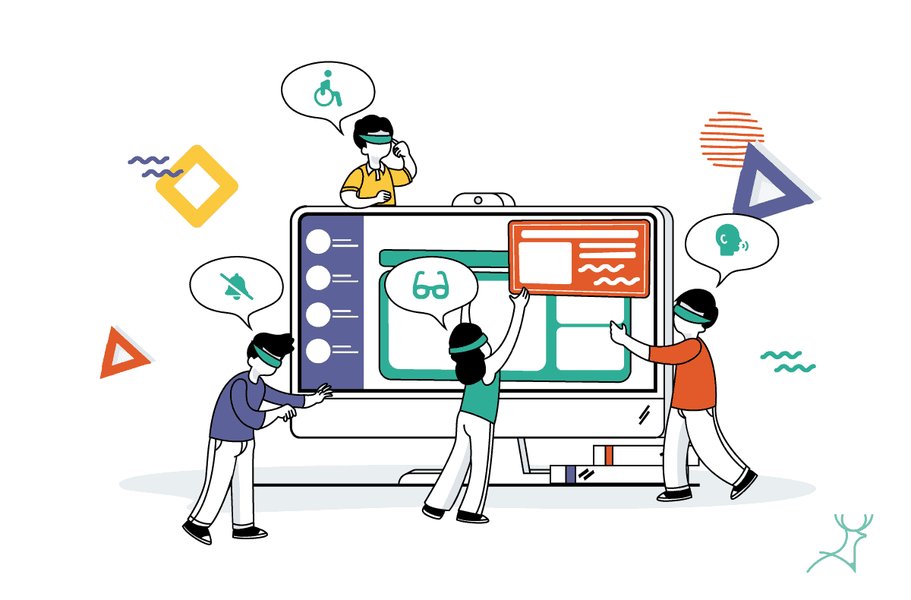
Visualizing the multifaceted impact of AI on accessibility.
Consider Legal and Ethical Implications
Research major accessibility legislation such as the Americans with Disabilities Act (ADA) Title III, Section 508, and the upcoming European Accessibility Act (EAA), which will take effect on June 30, 2025. Also, delve into the ethical considerations of AI in accessibility, such as potential biases in AI-generated content and the ongoing need for human oversight to ensure accuracy and contextual relevance.
Insights into the future of AI and accessibility.
This video, titled "How will Artificial Intelligence change accessibility testing?", discusses the potential changes AI will bring to accessibility testing, covering both the challenges and opportunities. It delves into the European Accessibility Act (EAA) and the concept of human-centered AI, providing a comprehensive overview of how AI will impact web accessibility. It’s highly relevant as it addresses both the "evaluation" and "improvement" aspects of the user's query, while also looking into future legal frameworks.
Integrate AI into Development Workflows
Investigate how AI accessibility tools can be seamlessly integrated into continuous integration (CI) processes and web development pipelines. This ensures that accessibility is addressed from the outset, rather than as a post-development remediation task.
Focus on User-Centric AI Applications
Study how AI can enable dynamic content updates based on user preferences and provide personalized support for individuals with diverse needs. This involves understanding how AI can learn from user interactions and adapt the web experience accordingly.
Acknowledge Limitations and the Need for Human Oversight
While AI is powerful, it has limitations. Automated tools may not catch all accessibility issues, particularly those requiring nuanced understanding of context or complex interactions. Investigate the balance between automated testing and the necessity of human accessibility experts for comprehensive audits and nuanced evaluations. This dual approach ensures both efficiency and accuracy.
Comparative Analysis of AI Accessibility Capabilities
To better understand the strengths and challenges of AI in web accessibility, here's an opinionated radar chart comparing different aspects of AI's capabilities against human evaluation:
This radar chart illustrates the comparative strengths of AI versus human evaluation in various aspects of web accessibility. AI excels in "Automated Issue Detection Speed," rapidly scanning for compliance violations, and shows strong performance in "Real-time Remediation" and "Personalized User Experience." However, human evaluation remains superior in areas requiring deep "Contextual Understanding," "Complex Scene Interpretation," and "Ethical Bias Detection," where AI may struggle with nuances and potential ableist biases. Both approaches contribute significantly to "Compliance Accuracy (WCAG)," highlighting the need for a hybrid approach that leverages the strengths of both AI and human expertise for truly comprehensive web accessibility.
Frequently Asked Questions (FAQ)
What are the primary benefits of using AI for web accessibility?
Can AI fully replace human accessibility testers?
What are the main challenges when implementing AI for web accessibility?
How does AI help with WCAG compliance?
Conclusion
AI technology is fundamentally transforming web accessibility, making digital environments more inclusive and navigable for people with disabilities. From automating the identification of common accessibility barriers to enhancing content through intelligent generation and offering personalized user experiences, AI provides powerful tools for evaluation and improvement. While AI offers immense potential for efficiency and scale, it is crucial to recognize its limitations and the irreplaceable role of human expertise in ensuring truly accessible and empathetic digital experiences. The ongoing evolution of AI, coupled with a deeper understanding of accessibility standards and ethical considerations, will continue to drive innovation towards a more inclusive web for all.
Recommended Further Investigations
- Ethical considerations of AI in digital accessibility.
- Integration of AI accessibility tools into CI/CD pipelines.
- Impact of European Accessibility Act on AI tool development.
- Case studies on AI-powered alt text generation accuracy.