
Why Does My Air Compressor Trip the Breaker Instantly, Even After Checks?
Troubleshooting a 6HP 110V compressor tripping a 20A breaker in under a second despite good caps and no load.
It's frustrating when your air compressor immediately trips the circuit breaker, especially after you've diligently checked common culprits like capacitors and pressure buildup. Your 6 HP, 110V single-phase compressor tripping a 20A breaker in just 0.75 seconds points towards a significant issue, likely related to excessive current draw during startup. You've already confirmed the start and run capacitors have good capacitance and ESR, tested with the air line disconnected and the centrifugal switch removed, verified winding resistances (Start: 1.8 ohms, Run: 2.1 ohms) are plausible and not shorted to ground, and ensured the tank is empty. Let's delve deeper into the potential causes and systematic troubleshooting steps based on these symptoms.
Key Insights & Takeaways
Understanding the Core Problem
- High Inrush Current vs. Breaker Capacity: A 6 HP motor running on a 110V circuit inherently demands a massive surge of current (inrush current) upon startup, often 3 to 6 times its normal running amperage. This surge, potentially exceeding 100-200 amps momentarily, is almost certainly overwhelming your standard 20A breaker, even if the motor itself is healthy.
- Electrical Supply Scrutiny: Beyond the motor, the integrity of the electrical circuit – including the breaker's condition and type, wiring gauge, connection quality, and voltage stability under load – is paramount. Issues here can exacerbate the current draw or cause premature tripping.
- Potential Hidden Motor Faults: While your basic winding checks are good, internal motor problems like partial winding shorts (only failing under load), bearing issues causing drag, or insulation breakdown can still cause excessive current draw invisible to simple resistance tests.
Diagnosing the Rapid Breaker Trip
The Challenge of High Startup Current
Single-phase motors, especially larger ones like your 6 HP unit operating at 110V, are notorious for their high starting current requirements. The motor needs a significant amount of power to overcome inertia and get up to speed (3450 RPM). While the running current might be manageable, the initial fraction-of-a-second demand can be immense.
Your observation that the breaker trips in 0.75 seconds, even with no load (air line disconnected, tank empty), strongly suggests this inrush current is the primary trigger. A standard 20A breaker, even if functioning correctly, is likely not designed to handle such a brief but intense overload without tripping. While you've ruled out capacitors and the centrifugal switch, the issue likely lies in the fundamental power demand versus supply capacity, or a deeper electrical/mechanical fault.
Systematic Troubleshooting Steps
Let's systematically investigate the remaining possibilities:
1. Measure the Actual Current Draw
This is the most crucial diagnostic step. Use a clamp-on ammeter capable of measuring high inrush currents (peak hold function is useful) around one of the motor's power leads during startup. This will quantify the current demand.
- What to look for: Expect a very high peak reading (potentially 100A+). Observe if the current starts to drop rapidly within that first fraction of a second. If it stays extremely high or doesn't drop quickly enough before the breaker trips, it confirms an excessive current condition.
- Why it matters: This confirms whether the issue is purely an oversized motor for the circuit or if there's an underlying fault causing abnormally high current draw even for this motor size.
2. Evaluate the Electrical Supply Circuit
The circuit feeding the compressor plays a critical role.
- Check Voltage Under Load: Use a multimeter to measure the voltage directly at the compressor's connection point *during* the attempted startup. A significant voltage drop (e.g., below 100V from a nominal 110-120V) indicates the wiring or circuit cannot handle the current demand. Low voltage forces the motor to draw *more* current to compensate, exacerbating the problem.
- Inspect the Circuit Breaker:
- Condition: Breakers can weaken over time, especially after multiple trips, causing them to trip below their rated current. Consider swapping it with a known good 20A breaker temporarily for testing (if safe and feasible).
- Type: Is it a standard thermal-magnetic breaker, or a High Magnetic (HM) or time-delay type designed for motor loads? Standard breakers might trip on inrush current that a time-delay breaker would tolerate. A 20A breaker is likely fundamentally undersized for a 6HP motor start, regardless of type.
- Dedicated Circuit: Confirm the compressor is on a dedicated circuit with no other significant loads running simultaneously.
- Examine Wiring and Connections:
- Gauge: What is the wire gauge from the breaker panel to the outlet? For a 20A circuit, it should be at least 12 AWG copper. However, a 6HP motor ideally needs a much heavier gauge wire (potentially 10 AWG or even thicker, depending on distance) and likely a higher amperage circuit (30A or more) to minimize voltage drop and handle the load.
- Extension Cords: Are you using an extension cord? If so, ensure it's rated for the high current (heavy gauge, short length). Inadequate cords are a common source of voltage drop and problems.
- Connections: Inspect *all* connections: at the breaker panel, the outlet, the plug, and within the compressor's pressure switch/motor wiring. Look for loose screws, corroded terminals, or improperly made connections (e.g., wire nuts on high-vibration, high-current circuits can be problematic; lugs are often preferred). Poor connections create resistance, heat, and voltage drop.
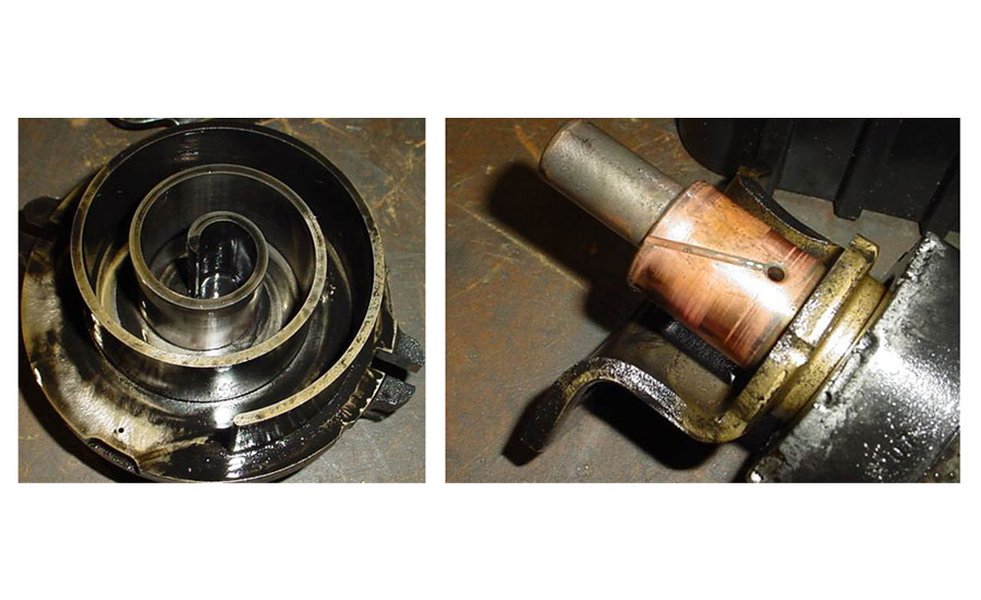
Electrical issues, like poor connections or failing components, can lead to overheating and motor damage, potentially causing symptoms like breaker tripping.
3. Investigate Potential Motor Faults
While your resistance checks are a good start, they don't reveal all possible motor problems.
- Mechanical Binding: Although you disconnected the air line (pump load), there could still be internal friction within the motor itself. Carefully try to rotate the motor shaft by hand (with power completely disconnected). Does it spin freely, or is there noticeable resistance, grinding, or tight spots? Failed bearings can cause significant drag.
- Insulation Resistance Test (Megger Test): A standard multimeter check to ground might miss subtle insulation breakdown that only occurs under the stress of applied voltage. An insulation resistance tester (megger) applies a higher voltage (e.g., 500V or 1000V) to test the integrity of the winding insulation against the motor frame (ground). Low readings (ideally should be many megohms, definitely above 1 megohm) indicate failing insulation, which can lead to shorts under load.
- Winding Shorts Under Load: It's possible, though less common, for a short circuit to exist between windings (start-to-run) or within a winding (turn-to-turn) that only manifests under the magnetic and thermal stress of startup. This is harder to diagnose without specialized equipment.
4. Consider Configuration and Sizing
- 110V vs. 220V: Many motors of this size are designed to be configurable for either 110V or 220V operation. Running on 220V significantly reduces the current draw for the same power output. Check if your motor has documentation or wiring diagrams indicating if it can be converted to 220V operation. If possible, and if you have 220V available, this is often the best solution for larger motors, requiring a new circuit breaker and wiring appropriate for 220V.
- Circuit Sizing: Realistically, a 6 HP motor (which might draw over 24 amps *running*, let alone starting) is generally too large for a standard 110V/20A circuit. You likely need a higher amperage circuit (e.g., 30A or more, possibly requiring 220V) with appropriately sized wiring and a time-delay breaker specifically rated for this motor's full load amps (FLA) and service factor. Consult the motor's nameplate data and the National Electrical Code (NEC) guidelines or a qualified electrician.
Visualizing Potential Causes
Likelihood of Fault Locations
Based on your description and the common failure points for this symptom (after ruling out capacitors and external load), the following chart visualizes the relative likelihood or impact of the remaining potential causes. A higher score suggests a stronger possibility or greater impact.
Troubleshooting Flowchart
Mapping the Diagnostic Path
This mind map outlines the logical steps to follow when diagnosing the immediate breaker trip, starting from the known symptoms and branching into the potential causes discussed.
6HP 110V
Caps OK, No Load, No Switch"] id1["Measure Inrush Current"] id1a["Current Exceeds Breaker Limit?"] id1a1["YES: Likely Circuit/Motor Mismatch"] id1a1a["Check Breaker Size/Type"] id1a1b["Check Wiring Gauge/Length"] id1a1c["Consider 220V Conversion"] id1a1d["Evaluate if Motor is Too Large for ANY 110V Circuit"] id1a2["NO (Unlikely but possible): Investigate Deeper Faults"] id1a2a["Re-check Breaker Condition"] id1a2b["Proceed to Motor Checks"] id2["Check Electrical Supply"] id2a["Voltage Drop Under Load?"] id2a1["YES: Wiring/Connection Issue"] id2a1a["Inspect/Improve Wiring"] id2a1b["Check/Tighten Connections"] id2a1c["Remove Extension Cord"] id2a2["NO: Voltage Stable"] id2a2a["Focus on Breaker/Motor"] id2b["Breaker Condition/Type"] id2b1["Weak/Faulty? -> Replace"] id2b2["Incorrect Type? -> Use Time-Delay"] id2b3["Undersized? -> Requires Circuit Upgrade (Likely)"] id2c["Wiring & Connections"] id2c1["Gauge Adequate?"] id2c2["Connections Secure/Clean?"] id2c3["Damaged Wires?"] id3["Check Motor Internals"] id3a["Mechanical Binding?"] id3a1["YES: Bearing/Internal Issue -> Repair/Replace Motor"] id3a2["NO: Rotates Freely"] id3a2a["Proceed to Electrical Tests"] id3b["Insulation Resistance (Megger)?"] id3b1["LOW: Insulation Fault -> Repair/Replace Motor"] id3b2["HIGH (OK): Problem Likely Elsewhere (Circuit/Inrush)"] id3c["Hidden Winding Fault?"] id3c1["Hard to test without specialized gear -> May require professional diagnosis or motor replacement if other causes eliminated"]
Practical Troubleshooting Summary
Actionable Steps and Tools
Here's a table summarizing the key diagnostic actions, the tools required, and what you're looking for:
| Action | Tool(s) Needed | What to Check For |
|---|---|---|
| Measure Inrush Current | Clamp Meter (with Inrush/Peak Hold) | Peak amps during startup (compare to breaker rating and expected motor draw). |
| Measure Voltage Under Load | Multimeter | Significant voltage drop (>10%) at the compressor during startup attempt. |
| Inspect Breaker | Visual Inspection, Known Good Breaker (optional) | Signs of damage, heat discoloration, correct type (time-delay preferred), age. |
| Inspect Wiring & Connections | Visual Inspection, Screwdrivers, Wire Gauge Tool | Proper wire gauge (min. 12 AWG, likely need thicker), tight/clean connections, no damage/overheating, appropriate connection types (lugs vs. nuts). |
| Check Motor Shaft Rotation | Manual Check (Power OFF) | Smooth, free rotation without binding, grinding, or excessive resistance. |
| Test Insulation Resistance | Insulation Resistance Tester (Megger) | High resistance (>> 1 Megohm) between windings and motor frame (ground). |
| Evaluate 110V/220V Option | Motor Nameplate/Manual | Check if motor is dual-voltage capable for potential conversion. |
Relevant Video Diagnosis
Visual Guide for Similar Compressor Issues
The following video addresses a very similar scenario involving a 6HP Craftsman compressor tripping breakers at startup. While it focuses on a specific component fix (often the unloader valve or check valve, though you've bypassed the unloader effect by disconnecting the line), watching the diagnostic process might offer insights or highlight something overlooked in your setup.
In this video, the owner troubleshoots a Craftsman 6HP compressor with symptoms similar to yours. While the ultimate fix might differ (often related to pressure release mechanisms like check valves or unloader valves not functioning, increasing starting load), observing the troubleshooting steps, particularly how connections and components are checked, can be beneficial. Even though you've disconnected the air line, ensuring the check valve isn't stuck closed is still relevant as it could prevent any residual pressure bleed-off.
Frequently Asked Questions (FAQ)
Common Queries on Compressor Breaker Tripping
References
Helpful Resources
- How to Determine the Cause of Electrical Compressor Failure - ACHRNEWS
- Troubleshooting Electrical Motor and Compressor Problems - ACHRNEWS
- Is Your Air Compressor Tripping the Breaker? Read This Guide! - Air Compressor Planet
- 10 Reasons Why Your Air Compressor Keeps Tripping the Breaker - All About Air Compressors
- Why Is the Breaker Tripping? - HVAC School
- Compressor trips breaker on startup - DoItYourself.com Community Forums
Recommended Further Exploration
Related Topics You Might Find Interesting
Last updated April 15, 2025