
Navigating the Haze: A Deep Dive into Alaska's Vaping Regulations
Understanding the Last Frontier's approach to e-cigarettes, from age limits to public use.
Alaska, like many other regions, has established a framework of laws and regulations to govern the sale, possession, and use of vaping products, also known as electronic cigarettes or e-cigarettes. These rules aim to balance public health concerns, particularly regarding youth access, with adult consumer choices. The landscape is shaped by both state-specific statutes and overarching federal mandates. Understanding these regulations is crucial for residents, visitors, and retailers alike.
Key Highlights of Alaska's Vaping Laws
- Federal Age Prevails: While Alaska's state law sets the minimum age for tobacco and vape product possession at 19, federal law mandates a minimum sales age of 21 for all tobacco and nicotine products, including e-cigarettes. Retailers must adhere to the stricter federal age.
- Public Use Restrictions: Alaska's comprehensive Smokefree Alaska Law treats vaping largely the same as smoking, prohibiting e-cigarette use in most indoor public places and workplaces.
- Ongoing Legislative Evolution: Alaska's legislature continues to consider measures to further regulate vaping, including aligning state age laws with federal standards and potentially introducing taxes on vaping products to deter youth use.
The Minimum Legal Age: State vs. Federal Law
Understanding Age Restrictions for Purchase and Possession
A cornerstone of vaping regulation in Alaska is the age restriction for purchasing and possessing e-cigarettes and related products. There's a notable distinction between state and federal law in this regard:
Federal Law: Tobacco 21
On December 20, 2019, a federal law was enacted raising the minimum legal sales age (MLSA) for all tobacco products, including e-cigarettes and other vaping devices, to 21 years old across the United States. This federal "Tobacco 21" or "T21" law supersedes any state laws that set a lower age for sales. Consequently, retailers in Alaska are legally prohibited from selling vaping products to anyone under the age of 21.
Alaska State Law: Age 19 for Possession
Alaska state law (specifically Alaska Statute § 11.76.105) prohibits the possession of electronic smoking products or products containing nicotine by individuals under the age of 19. While this state law on possession remains at 19, the federal sales age of 21 means those aged 19 and 20 cannot legally purchase these products, even if state law might permit possession. Efforts have been ongoing in the Alaska State Legislature to align the state's minimum age for purchase and possession with the federal standard of 21, but these changes have not yet been fully enacted statewide to match the federal sales age for possession.
Possession and Use by Minors
Minors (those under the age of 19 according to state law, or under 21 for purchase) are strictly prohibited from possessing or using vaping products. Violations can lead to penalties, which may include community service and mandatory participation in educational programs concerning the health risks associated with nicotine and vaping.
Sales, Distribution, and Retail Regulations
Controlling Access to Vaping Products
Alaska has implemented several regulations aimed at controlling the sale and distribution of vaping products to prevent underage access and ensure retailer accountability.
Retail Licensing and Accountability
To legally sell e-cigarettes and other vaping products in Alaska, retailers must possess the appropriate business licenses. Recent regulatory updates, particularly for 2025, emphasize retailer accountability. For instance, vape shops are required to secure an annual license, which can cost around $1,000. Retailers who mix or prepare e-liquids or assemble vaporizers may be classified as "tobacco product manufacturers" and could be subject to additional, more stringent regulations.
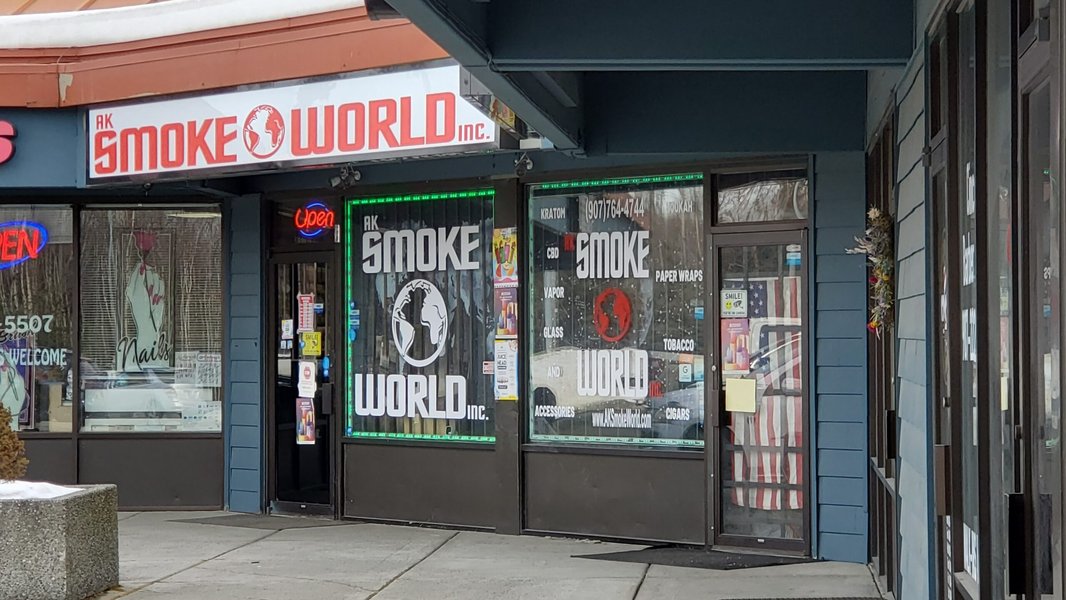
A view of a vape shop counter, illustrating a retail environment where Alaska's vaping sales regulations apply.
Mandatory ID Verification
A critical component of sales regulation is age verification. Retailers are mandated to use electronic ID verification systems to confirm that purchasers are at least 21 years old, in compliance with federal law. This helps prevent illegal sales to underage individuals.
Restrictions on Vending Machines and Self-Service Displays
The sale of tobacco products, including e-cigarettes, through vending machines is generally prohibited in Alaska. An exception exists for vending machines located in adult-only facilities, such as bars or private workplaces, where individuals younger than 21 are not permitted access. Self-service displays of vaping products are also banned in retail locations accessible to minors.
Prohibition on Free Samples
Giving away free samples of FDA-regulated products, which include e-cigarettes, is generally prohibited. A narrow exception may apply for smokeless tobacco samples distributed in qualified adult-only facilities, but this typically does not extend to vaping products.
Where is Vaping Prohibited? Public Use Restrictions
The Smokefree Alaska Law and Its Implications for Vapers
Alaska's approach to regulating the use of vaping products in public spaces is largely governed by the Smokefree Alaska Law (AS 18.35.300 – 18.35.399). This law, effective October 1, 2018, was updated to include e-cigarettes and other vaping devices, treating their use similarly to traditional smoking.
Indoor Public Places and Workplaces
Under this law, vaping is prohibited in a wide range of enclosed public areas and workplaces. This includes, but is not limited to:
- Office buildings
- Restaurants and bars
- Hotels and motels
- Retail stores
- Public transportation (e.g., buses, ferries)
- Places of employment
- Schools and childcare facilities
The state's definition of "smoking" explicitly includes the use of vapor products, regardless of whether they contain nicotine. Some municipalities in Alaska have the option to opt out of these statewide provisions through a voter referendum, meaning local regulations can vary, although such opt-outs are not common. Certain exceptions might exist for vape shops that were operational before 2017 and are equipped with specialized ventilation systems, though these are specific and limited.
Outdoor Restrictions
The Smokefree Alaska Law also extends some restrictions to outdoor areas. Vaping is generally not allowed:
- Within 20 feet of entrances, exits, open windows, or ventilation intakes of buildings where smoking and vaping are prohibited.
- Near playgrounds.
- In certain designated outdoor public areas, such as sports arenas or amphitheaters during events.
Specific Location Prohibitions
Beyond general public spaces, vaping is also explicitly prohibited in:
- Foster homes (under Alaska Admin. Code tit. 7, § 67.340).
- Vehicles when they are being used to transport children.
Vaping Regulation Landscape in Alaska: A Comparative View
The following chart offers a comparative perspective on different facets of vaping regulation in Alaska, considering the interplay of state law, federal influence, and potential future changes. The scores (1-10, higher indicating stricter/more comprehensive regulation) are illustrative, reflecting an assessment of the regulatory environment. For visual clarity, the chart's axis begins slightly above zero.
This chart visualizes how different regulatory aspects score under current state interpretations, the impact of federal laws (especially on age), and what a more stringent future regulatory environment might look like if proposed changes, such as higher taxes and full alignment of state age laws, are implemented.
Penalties and Enforcement
Consequences for Violating Vaping Laws
Violations of Alaska's vaping laws can result in various penalties for both individuals and retailers. Enforcement is typically carried out by peace officers and authorized agents from the Department of Health and Social Services.
For Individuals
Individuals who violate public use restrictions (e.g., vaping in a prohibited indoor area) can face fines. These typically start around $100 for a first offense and can increase up to $300 or more for subsequent offenses. Minors caught possessing or using vaping products may face penalties such as mandatory community service, fines, and participation in tobacco education or cessation programs.
For Retailers
Retailers who fail to comply with sales regulations, such as selling to individuals under 21 or not properly verifying age, face more severe consequences. These can include:
- Significant fines.
- Suspension or revocation of their license to sell tobacco and vaping products.
- In some cases, criminal charges, especially for repeated or egregious violations.
Taxation of Vaping Products in Alaska
Current Status and Legislative Discussions
As of early 2025, Alaska does not have a specific statewide excise tax on vaping products, unlike many other states that have implemented such taxes to generate revenue and discourage use, particularly among youth. However, the issue of taxing e-cigarettes has been a subject of considerable legislative discussion in Alaska.
Proposals have been introduced in the Alaska State Legislature to levy a tax on these products. For example, bills like Senate Bill 89 and House Bill 49 have suggested a tax rate, often around 25% of the wholesale price, on e-cigarettes and related liquid solutions. The primary rationale behind these proposals is to reduce youth vaping rates by increasing the cost of products, as well as to generate state revenue. Despite these efforts and some bills passing certain legislative hurdles, a statewide vape tax has faced challenges, including gubernatorial vetoes in the past, citing concerns about potential unintended consequences or the specifics of the proposed tax structure. The discussion remains active, with similar legislation often being reintroduced in subsequent legislative sessions.
This video from the Alaska Department of Health, "E-Cigarettes 101," discusses the risks of youth vaping, a key concern underpinning many of Alaska's vaping regulations.
Understanding the Regulatory Framework: A Mindmap
The regulation of vaping in Alaska is multifaceted. This mindmap provides a visual overview of the primary components of Alaska's vaping laws and regulatory considerations.
This mindmap illustrates the interconnected areas of regulation, from who can buy and use vaping products, to where they can be sold and consumed, and the potential financial and legal consequences of non-compliance.
Summary of Key Vaping Regulations in Alaska
The following table provides a quick reference to some of the most important aspects of vaping laws currently in effect in Alaska, reflecting both state statutes and federal mandates as of May 2025.
| Regulatory Aspect | Details | Key Statutes / Notes |
|---|---|---|
| Minimum Legal Sales Age | 21 years old (Federally mandated) | Federal Tobacco 21 Law |
| Minimum Legal Possession Age (State) | 19 years old | Alaska Statute § 11.76.105 |
| Public Indoor Vaping | Prohibited in most workplaces, public places, restaurants, and bars (treated as smoking) | Smokefree Alaska Law (AS 18.35.300 – 18.35.399) |
| Outdoor Vaping Restrictions | Prohibited within 20 feet of entrances/windows of smoke-free buildings, near playgrounds, etc. | Smokefree Alaska Law provisions |
| Retail Licensing | Required for selling vaping products. Annual fees (e.g., ~$1,000 for vape shops) apply. E-liquid mixers may be classified as manufacturers. | AS 43.70; 2025 Regulation Updates |
| ID Verification | Electronic ID verification mandated for sales to ensure compliance with age 21 minimum. | Retailer accountability measures |
| Vending Machines | Restricted to adult-only facilities where no one under 21 is permitted. | State regulations |
| Prohibition in Specific Locations | Banned in foster homes and in vehicles used for transporting children. | Alaska Admin. Code tit. 7, § 67.340 |
| Product Taxation | Currently no statewide excise tax on vaping products. Proposals (e.g., 25% wholesale tax) have been discussed in the legislature. | Ongoing legislative debate (e.g., past bills SB89, HB49) |
| Penalties for Minors | Possession/use by individuals under 19 can result in community service, educational programs. | Alaska Statute § 11.76.105 |
| Penalties for Retailers | Selling to underage individuals can lead to fines, license suspension/revocation, and potential criminal charges. | State enforcement actions |
Frequently Asked Questions (FAQ)
What is the legal age to buy vaping products in Alaska?
Due to federal law (Tobacco 21), the minimum legal age to purchase all tobacco products, including e-cigarettes and vaping products, is 21 years old in Alaska. While Alaska's state law regarding possession is 19, retailers must comply with the federal sales age.
Can I vape inside a bar or restaurant in Alaska?
No. Under the Smokefree Alaska Law, vaping is prohibited in most indoor public places, including bars, restaurants, and workplaces, just like traditional smoking.
Are vaping products taxed in Alaska?
As of early 2025, Alaska does not have a specific statewide excise tax on vaping products. However, there have been legislative proposals to introduce such a tax, so this could change in the future.
What are the penalties if someone under 19 is caught vaping in Alaska?
If a person under 19 is found possessing or using vaping products in violation of Alaska state law, they can face penalties such as fines, mandatory community service, and required participation in tobacco education or cessation programs.
Do vape shops in Alaska require a special license to operate?
Yes, retailers selling vaping products in Alaska must have appropriate business licenses. Specific regulations for 2025 indicate that vape shops need an annual license, which may cost around $1,000. Establishments that mix e-liquids may also be subject to regulations as tobacco product manufacturers.
Recommended Further Exploration
- How does Alaska's Smokefree Law define public places for vaping restrictions?
- What are the specific penalties for retailers selling vapes to minors in Alaska?
- Are there any local Alaskan city or borough ordinances on vaping stricter than state law?
- What is the history of legislative attempts to tax vaping products in Alaska?
References
Last updated May 14, 2025