
Unraveling the Enigma: Has Extraterrestrial Life Touched Our World?
Delving into scientific investigations, historical accounts, and public perceptions surrounding alien visitation to Earth.
Key Insights into Extraterrestrial Visitation
- No Definitive Proof: As of today, May 31, 2025, there is no universally accepted, scientifically verified evidence that intelligent extraterrestrial beings have visited Earth.
- Ongoing Investigations and Unexplained Phenomena: While governments and scientific bodies are seriously investigating Unidentified Aerial Phenomena (UAPs), and projects like the Galileo Project are actively searching for physical evidence, most sightings are attributable to known phenomena, and those that remain unexplained lack conclusive extraterrestrial links.
- Rising Public Belief vs. Scientific Scrutiny: Despite the lack of scientific consensus, public belief in alien visitation is significant and growing, influenced by cultural narratives and historical reports, highlighting a gap between societal perceptions and empirical evidence.
The question of whether aliens have visited Earth has captivated human imagination for centuries, bridging the realms of scientific inquiry, historical anecdotes, and cultural lore. While the notion of extraterrestrial visitation is a popular subject in fiction and public discourse, the scientific community maintains a position of open-minded skepticism, requiring concrete, verifiable evidence to confirm such extraordinary claims. This comprehensive exploration examines the various facets of this intriguing question, drawing from recent scientific findings, governmental investigations, and analyses of societal beliefs.
The Scientific Standpoint: A Search for Evidence
The scientific community approaches the question of alien visitation with rigorous methodology, focusing on empirical evidence and verifiable data. While the existence of extraterrestrial life is considered plausible given the vastness of the universe, direct contact or visitation remains unproven.
Interstellar Objects and Material Evidence
Recent scientific endeavors have brought intriguing, though not conclusive, insights. Harvard physicist Avi Loeb, leading the Galileo Project, has been at the forefront of investigating potential extraterrestrial material. His team analyzed spherules from an interstellar meteor (IM1) that impacted Earth in 2014, suggesting the arrival of materials from outside our solar system. This discovery confirms that objects from interstellar space can reach Earth, but it does not, by itself, prove visitation by intelligent extraterrestrial life. Rather, it signifies the presence of natural or technological artifacts originating from beyond our cosmic neighborhood.
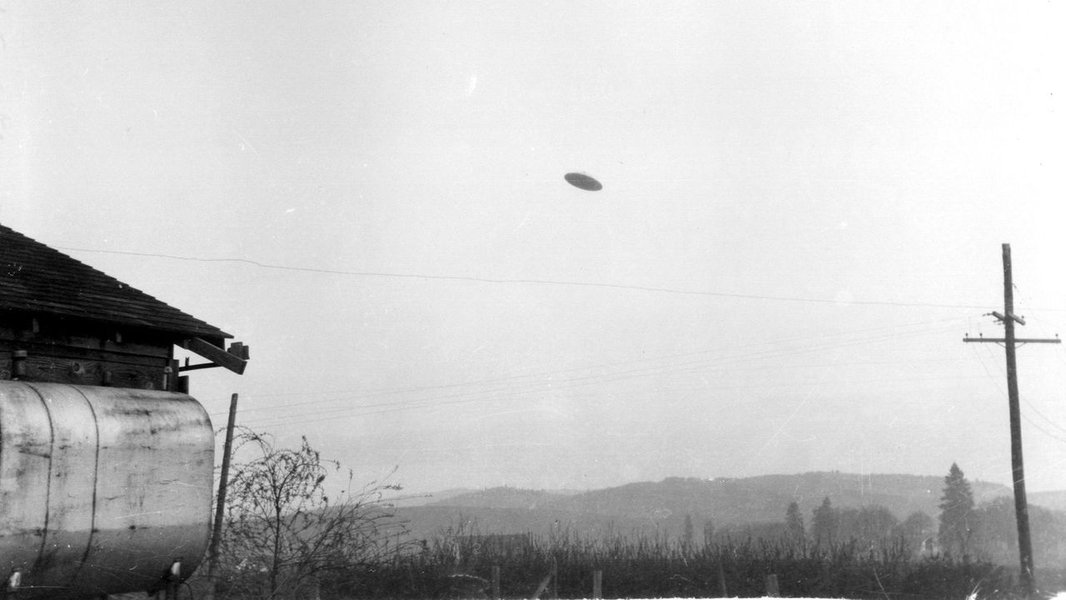
A scientist examining data, illustrating the ongoing scientific inquiry into unidentified aerial phenomena.
The Fermi Paradox: A Cosmic Conundrum
The Fermi Paradox encapsulates the contradiction between the high probability of extraterrestrial civilizations existing and the lack of observed evidence or contact. If intelligent life is common in the universe, why have we not seen any definitive signs of their visitation? Scientists often point to the immense distances between star systems, making interstellar travel incredibly challenging, if not currently impossible, with known technologies. This paradox drives much of the scientific search for extraterrestrial intelligence (SETI), which primarily focuses on detecting signals from distant planets rather than expecting direct visits.
Governmental Investigations and Unidentified Aerial Phenomena (UAPs)
Governments, particularly the United States, have historically investigated reports of unidentified flying objects (UFOs), now often referred to as Unidentified Aerial Phenomena (UAPs), due to national security and airspace safety concerns.
Historical Projects and Their Conclusions
From 1947 to 1969, the U.S. Air Force conducted Project Blue Book, investigating over 12,000 UFO sightings. While a significant portion of these reports were identified as conventional aircraft, meteorological balloons, or astronomical phenomena, about 6% remained unexplained due to insufficient data. Crucially, Project Blue Book concluded that there was no evidence of alien technology or threats to national security. Other earlier investigations, like Project Sign (1948) and Project Grudge (1949), reached similar conclusions.
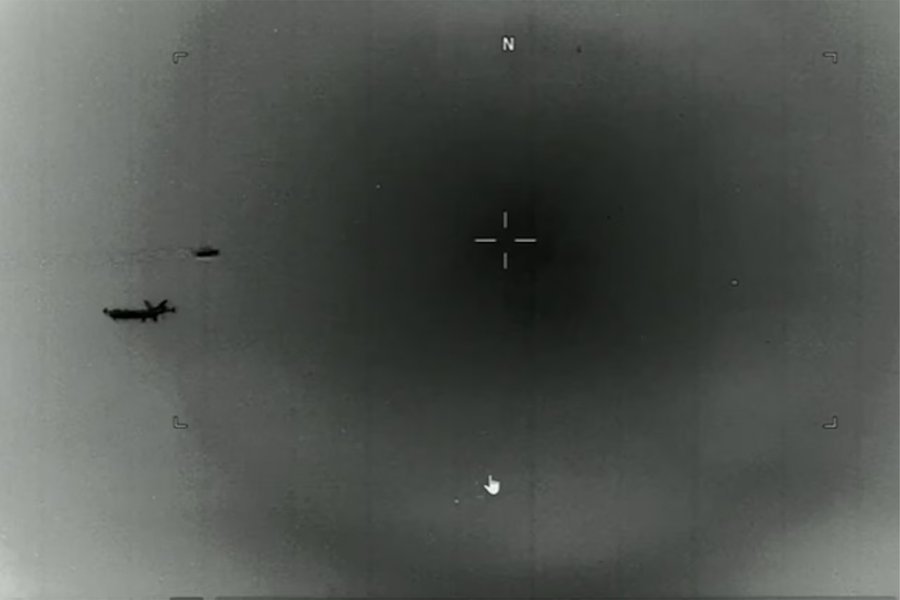
Government officials analyzing UAP reports, highlighting the seriousness with which these phenomena are now being investigated.
Contemporary Scrutiny and Transparency Efforts
In recent years, governmental interest in UAPs has resurfaced, with entities like the All-Domain Anomaly Resolution Office (AARO) being established to collect and analyze UAP reports. Congressional hearings have also been held, featuring testimonies from individuals claiming knowledge of alien visitation or retrieved extraterrestrial craft. While these hearings demonstrate serious governmental attention, publicly disclosed findings have not yielded conclusive scientific proof of alien visitation. The focus remains on understanding anomalous observations and differentiating them from explainable phenomena, advanced human technology, or sensory misinterpretations.
UFO Sightings: A Persistent Phenomenon
UFO sightings have been reported globally for decades, contributing significantly to public fascination with alien visitation. These reports encompass a wide variety of observed phenomena.
Common Characteristics and Explanations
Reports collected in databases like the National UFO Reporting Center (NUFORC) describe objects of various shapes—orbs, triangles, discs, and fireballs—often exhibiting unusual speeds or maneuvers. While many sightings remain unexplained due to a lack of sufficient data, comprehensive studies have shown that environmental factors significantly influence these reports. For instance, light pollution, cloud cover, tree obstruction, and proximity to airfields or military bases can contribute to misidentifications or create optical illusions. Over 98,000 UFO reports analyzed from 2001-2020 indicated strong correlations between environmental conditions and sighting frequency, suggesting many can be attributed to known phenomena.
Close Encounters and Abduction Claims
Beyond distant sightings, some reports involve "close encounters," a classification system proposed by astronomer J. Allen Hynek. These range from visual observations at close range to more direct interactions. The concept of "alien abduction," popularized by cases like the Betty and Barney Hill abduction in 1961, describes experiences of forced transport to extraterrestrial locations or spaceships, sometimes involving theories of alien-human hybridization. While compelling to those who experience them, these claims are largely anecdotal and lack empirical verification, often explored in psychological or sociological contexts rather than as scientific proof of visitation.
Societal Beliefs and Cultural Impact
Despite the absence of scientific consensus, public belief in alien visitation remains widespread and, in some regions, is increasing.
The Growing Public Conviction
Surveys indicate a rising trend in the belief that UFO sightings are likely evidence of intelligent extraterrestrial life. For example, a 2021 Pew Research Center survey showed that half of Americans hold this belief, and the percentage of Americans believing in UFO sightings as likely proof of alien life increased from 20% in 1996 to 34% in 2022. Similarly, a significant portion of the UK population believes Earth has been visited by extraterrestrials. This trend is influenced by media portrayals, historical accounts, and ongoing discussions that often blend speculation with genuine inquiry.
The Societal Ramifications of Unverified Beliefs
Some experts, including philosophers and researchers, argue that this widespread belief in alien visitation, in the absence of evidence, poses a "societal problem." It can foster distrust in scientific institutions and government, making objective discussions difficult and potentially contributing to the spread of misinformation or conspiracy theories. They emphasize the importance of maintaining high evidential standards for such extraordinary claims and clear communication to distinguish between unverified assertions and scientifically supported findings.
A Snapshot of Beliefs and Scientific Progress
The radar chart below illustrates a qualitative assessment of various aspects related to alien visitation, comparing societal beliefs with the current state of scientific evidence and technological capability. It highlights the disparity between public perception and scientific validation, showcasing areas where belief outpaces concrete proof.
A Mindmap of Alien Visitation Concepts
This mindmap visually organizes the key themes and interconnected ideas surrounding the query, from scientific efforts to public beliefs, illustrating how various aspects contribute to the overall discourse on alien visitation.
Analyzing "My Search for Proof Aliens Exist | Avi Loeb | TED"
The YouTube video "My Search for Proof Aliens Exist | Avi Loeb | TED" features astrophysicist Avi Loeb, a prominent figure in the scientific search for extraterrestrial life. In this compelling talk, Loeb argues that humanity has not yet found definitive proof of alien life because it has not dedicated sufficient resources or adopted an open-minded approach to the search.
Loeb's perspective is highly relevant to the question of alien visitation, as he is known for his controversial hypothesis regarding 'Oumuamua, the first interstellar object detected passing through our solar system, suggesting it might have been an artificial object rather than a natural phenomenon. His Galileo Project aims to systematically search for physical evidence of extraterrestrial technology near Earth using advanced telescopes and AI. The video underscores the shift in some scientific circles towards actively seeking tangible artifacts or debris, moving beyond passive listening for signals, which aligns with his team's analysis of materials from the IM1 meteor. Loeb's argument encourages a more proactive and less prejudiced scientific approach to exploring the possibility of alien visitation, acknowledging that extraordinary claims require extraordinary evidence, but also that a lack of past evidence doesn't preclude future discoveries if the search methodology improves.
Summary of Findings: The Unanswered Question
The following table synthesizes the prevailing perspectives and findings regarding alien visitation, offering a concise overview of the current understanding across different domains.
| Aspect | Current Status and Key Findings |
|---|---|
| Scientific Consensus | No conclusive, verified scientific evidence proves alien visitation. While extraterrestrial life is plausible, direct contact remains unconfirmed. Efforts like SETI focus on signals, and the Galileo Project seeks physical evidence, but no definitive proof of visitation has emerged. |
| Governmental Investigations | Historical projects (e.g., Project Blue Book) explained most UFOs conventionally; a small percentage were unexplained due to insufficient data, not alien origin. Current UAP investigations by entities like AARO seriously analyze reports for national security, but have not publicly confirmed alien visitation. |
| UFO/UAP Sightings | Thousands of sightings worldwide, often influenced by environmental factors (light pollution, weather, proximity to military bases). A small percentage remain unexplained, but this does not equate to alien origin. Common shapes include orbs, discs, and triangles. |
| Claims of Close Encounters & Abductions | Numerous anecdotal reports exist (e.g., Betty and Barney Hill), describing direct interactions or forced transports. These lack empirical verification and are often studied in a psychological or sociological context. |
| Public Beliefs | Belief in alien visitation is significant and increasing in several countries. This trend is influenced by media, historical narratives, and political discourse. Some experts view this as a societal problem due to the lack of evidence. |
| Challenges & Limitations | Vast interstellar distances pose immense challenges for physical travel. The scientific community requires high evidential standards for extraordinary claims, emphasizing empirical, reproducible data over anecdotal accounts. |
Frequently Asked Questions (FAQ)
What is the scientific consensus on alien visitation?
Have governments confirmed alien visitation?
What is the Galileo Project?
Why do so many people believe in alien visitation despite a lack of evidence?
What are Unidentified Aerial Phenomena (UAPs)?
Conclusion
In conclusion, while the topic of alien visitation to Earth remains a captivating subject of public fascination and cultural discussion, rigorous scientific inquiry and governmental investigations have not yet yielded conclusive, verified evidence to support such claims. The majority of Unidentified Aerial Phenomena (UAPs) are eventually attributed to known phenomena, and those that remain unexplained lack sufficient data to confirm an extraterrestrial origin. The scientific community continues its search for life beyond Earth through projects like SETI and endeavors like the Galileo Project, operating on the principle that extraordinary claims require extraordinary, empirical evidence. Until such evidence emerges, the question of whether aliens have visited Earth remains an open one, awaiting definitive proof that could reshape our understanding of humanity's place in the cosmos.
Recommended Further Reading
- How do scientists search for extraterrestrial life?
- What is the Fermi Paradox and its implications?
- What are the different types of UFO sightings and their explanations?
- How does science distinguish between speculation and evidence in exoplanetology?
