
Beyond Borders: How Amazon and JD.com Are Reshaping Global E-commerce
A deep dive into how the e-commerce giants of East and West compare in business models, operations, and future strategies
Key Highlights
- Business Model Similarities: Both operate primarily B2C e-commerce platforms, but with Amazon pursuing a more diversified approach across multiple industries while JD.com focuses on direct sales and logistics excellence.
- Market Dominance: Amazon leads in Western markets with approximately $513 billion in 2024 revenue, while JD.com commands significant presence in China with around $153 billion in 2024 revenue.
- Logistics Innovation: JD.com's logistics network has become so efficient that it now offers services to other companies, while Amazon continues expanding its delivery capabilities through automation and technological integration.
Business Models: Different Paths to E-commerce Success
Amazon and JD.com represent two of the most successful approaches to e-commerce, one born in the United States and the other in China. While they're often compared, their business models reveal important distinctions in how they've approached market dominance.
Core Business Evolution
Amazon began as an online bookstore in 1994 before expanding into virtually every product category imaginable. Its business model combines both marketplace and direct sales approaches, allowing third-party sellers to reach consumers alongside Amazon's own retail offerings. This hybrid approach has enabled Amazon to scale rapidly while maintaining quality control over key product lines.
JD.com, founded in 1998, started with electronics and home appliances before diversifying its product range. Unlike many e-commerce platforms in China, JD.com primarily follows a direct sales model where it takes ownership of inventory, ensuring quality control and enabling faster delivery times. This approach has earned JD.com the nickname "the Amazon of China," though significant differences exist between the two companies.
Revenue Diversification
A key difference between the two giants lies in their approach to revenue diversification. Amazon has aggressively expanded beyond retail into cloud computing (AWS), digital streaming, advertising, and artificial intelligence. These additional revenue streams, particularly AWS, contribute significantly to Amazon's overall profitability and have transformed it from a pure e-commerce company into a technology conglomerate.
JD.com has maintained a more focused approach on its core e-commerce and logistics businesses. While it has ventures in financial services, healthcare, and technology, these contribute a smaller portion to overall revenue compared to Amazon's diversified portfolio. This concentrated focus has allowed JD.com to excel in its core competencies but may limit growth opportunities compared to Amazon's multi-industry approach.
Loyalty Programs & Customer Retention
Both companies have developed subscription services to enhance customer loyalty. Amazon Prime offers free shipping, streaming content, and exclusive deals. Similarly, JD.com's JD Plus provides comparable benefits such as discounts, special offers, and enhanced delivery options. These loyalty programs represent a critical component of both companies' strategies to increase customer lifetime value and reduce acquisition costs.
Market Positioning & Financial Performance
The financial performance and market positioning of Amazon and JD.com reflect their respective market contexts and business strategies.
| Metric | Amazon | JD.com |
|---|---|---|
| 2024 Revenue | $513 billion | $152.8 billion |
| Revenue Growth Rate (YoY) | 10% | 5.1% |
| Net Income (2024) | $18.7 billion | $4.5 billion |
| Market Value | ~$1.81 trillion | ~$120 billion |
| Employees | 1,525,000+ | 670,000+ |
| Active Users | 300+ million worldwide | 570+ million (primarily China) |
| Market Focus | Global, with emphasis on US and EU | China, with emerging international presence |
While Amazon's overall financial metrics surpass JD.com's, it's important to consider the market context. JD.com operates primarily in China, where it faces intense competition from Alibaba and other local players. Despite this competition, JD.com has established itself as China's largest direct retailer and is positioned for continued growth as China's middle class expands.
Market Share Dynamics
Amazon dominates the US e-commerce market with approximately 40% market share, while JD.com holds roughly 9% of the global e-commerce market. In China, JD.com competes directly with Alibaba's Tmall for market share, with JD.com focusing on authentic products and reliable delivery to differentiate itself in a marketplace often concerned with counterfeit goods.
Logistics Infrastructure: The Backbone of Success
Both Amazon and JD.com have established extensive logistics networks that serve as critical competitive advantages, though their approaches differ slightly based on market conditions and strategic priorities.
Amazon's Logistics Network
Amazon has built a vast logistics infrastructure in the United States and beyond, comprising hundreds of fulfillment centers, sortation centers, and delivery stations. This network enables Amazon to offer rapid delivery options, including same-day and next-day delivery through Amazon Prime. The company continues to invest in automation and technology to improve efficiency, including the use of robots in warehouses and experiments with drone delivery.
JD.com's Logistics Excellence
JD.com's logistics network is particularly noteworthy given China's challenging delivery landscape. The company operates one of China's largest fulfillment networks, with hundreds of warehouses strategically positioned throughout the country. This infrastructure allows JD.com to deliver packages within hours in major cities and next-day in most parts of China. What sets JD.com apart is that its logistics business has become so successful that it now offers services to other companies, creating an additional revenue stream.
Technological Integration
Both companies are leveraging technology to enhance their logistics operations. Amazon uses artificial intelligence for inventory management and route optimization, while JD.com has invested heavily in automation, including autonomous delivery vehicles and drones for rural deliveries. JD.com has been particularly innovative in its use of autonomous delivery robots, which proved especially valuable during the COVID-19 pandemic when contactless delivery became essential.
As shown in the video above, JD.com has been positioned as "China's rising Amazon" with its robust logistics capabilities and growing market presence, despite recent challenges in partnerships like its breakup with Walmart.
Strategic Business Ecosystems
Both Amazon and JD.com have developed complex business ecosystems that extend beyond their core e-commerce operations. Understanding these ecosystems helps illustrate their different approaches to growth and market dominance.
Visualizing the Business Ecosystems
The mindmap above illustrates how Amazon has created a more horizontally diversified ecosystem spanning multiple industries, while JD.com has developed a more vertically integrated ecosystem with a stronger focus on its core e-commerce and logistics operations.
Technological Innovation and Future Direction
Both Amazon and JD.com are at the forefront of technological innovation in retail and logistics, investing heavily in next-generation solutions to enhance their competitive positions.
Automation and Artificial Intelligence
Amazon has integrated AI throughout its operations, from recommendation engines and demand forecasting to warehouse robotics and voice assistants. The company's investments in machine learning help optimize virtually every aspect of its business, from pricing strategies to inventory placement.
JD.com has similarly embraced automation, particularly in its logistics operations. The company operates highly automated warehouses and has deployed autonomous delivery vehicles and drones in various Chinese cities. During the COVID-19 pandemic, JD.com utilized its autonomous delivery robots to support contactless deliveries in quarantined areas, demonstrating the practical applications of its technological investments.
Visual Comparison: Logistics Innovation
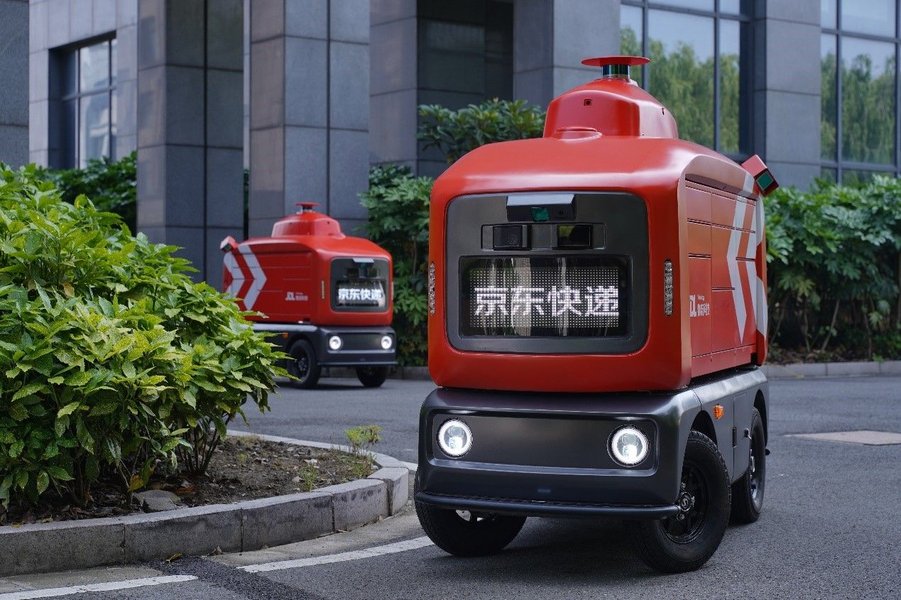
JD.com's fleet of autonomous delivery vehicles represents its commitment to innovation in logistics. These vehicles navigate urban environments to deliver packages efficiently without human intervention, showcasing JD.com's technological capabilities in autonomous systems and its forward-thinking approach to last-mile delivery challenges.
International Expansion Strategies
The international expansion strategies of Amazon and JD.com reflect their different growth trajectories and home market contexts.
Amazon's Global Footprint
Amazon has established operations in over 30 countries across North America, Europe, Asia, and Australia. The company typically enters new markets with its core e-commerce offering before introducing additional services like Prime and AWS. This gradual expansion allows Amazon to adapt its business model to local conditions while leveraging its global supply chain and technology infrastructure.
JD.com's Focused Expansion
JD.com has pursued a more targeted international expansion strategy, focusing primarily on Southeast Asia and select markets where it can leverage strategic partnerships. Rather than establishing fully independent operations in multiple countries, JD.com has often entered into joint ventures or strategic alliances to expand its reach. This approach helps mitigate the risks of international expansion while allowing JD.com to gain market knowledge and build relationships with local partners.
Both companies face challenges in international markets, including competition from established local players, regulatory hurdles, and the need to adapt their business models to different consumer preferences and infrastructure conditions. Amazon's withdrawal from China in 2019 highlights the difficulties even the most successful e-commerce companies can face when entering highly competitive foreign markets with strong local players.
Challenges and Future Outlook
Despite their successes, both Amazon and JD.com face significant challenges as they continue to evolve in a rapidly changing retail landscape.
Regulatory Scrutiny
Amazon faces increasing antitrust scrutiny in the United States and Europe, with regulators concerned about its market dominance and treatment of third-party sellers. These regulatory challenges could potentially limit Amazon's ability to expand into new markets or services.
Similarly, JD.com operates in a Chinese regulatory environment that has become increasingly focused on reining in the power of tech giants. Recent regulatory actions targeting various aspects of China's tech sector highlight the potential risks associated with government intervention in the market.
Competitive Pressures
Both companies face intense competition in their core markets. Amazon contends with traditional retailers like Walmart that have strengthened their online presence, as well as specialized e-commerce players targeting specific product categories. In China, JD.com competes primarily with Alibaba's Tmall for market share, with both companies continuously innovating to attract and retain customers.
Future Growth Opportunities
Despite these challenges, both Amazon and JD.com have significant opportunities for future growth. Amazon's investments in emerging technologies like artificial intelligence and quantum computing position it to potentially disrupt additional industries beyond retail and cloud computing. Its expansion into healthcare and financial services represents new frontiers for growth.
JD.com's opportunities lie in further penetrating China's lower-tier cities and rural areas, where e-commerce adoption is still growing. Additionally, its logistics expertise positions it well to benefit from the continued growth of online retail in China and potentially beyond as it expands its international presence.
Frequently Asked Questions
References
- JD.com Benefiting From an Amazon-Style Business Model - TipRanks
- The 3 Biggest Misconceptions About JD.com - The Motley Fool
-
JD.com vs. Amazon.com: Which Is the Better Bet? - Nasdaq
- 3 Ways JD.com Is Beating Amazon - The Motley Fool
- Alibaba vs JD.com: Which of These Is the Amazon of China? - Digital Crew
- Is JD.com the Amazon of China? - DrWealth
- Top Amazon Competitors and Alternatives in 2025 - Latterly
Recommended Searches
 aboutamazon.com
Last updated April 9, 2025