
Navigating Turbulence: Understanding American Airlines' Financial Performance
An In-Depth Analysis of Recent Challenges and Strategic Responses
Key Insights into American Airlines' Financial Challenges
- Strategic Missteps in Corporate Travel: American Airlines made significant errors in its post-pandemic corporate travel strategy, which heavily impacted its revenue. The failed direct booking initiative alienated travel agencies and corporate clients, leading to substantial losses.
- Lagging Demand and Economic Uncertainty: The airline has faced consistent challenges with passenger demand, particularly in the first quarter of 2025, which contributed to a notable net loss. Broader economic uncertainties and specific external events have further exacerbated these demand issues.
- Operational Hurdles and Cost Pressures: Despite efforts to manage costs, American Airlines has contended with rising operational expenses, including labor costs and delays in aircraft deliveries from Boeing, which have curtailed capacity and profitability.
American Airlines, a titan in the global aviation industry, has faced a series of financial headwinds in recent years, leading to what many observers describe as consistent underperformance compared to its major competitors like Delta and United. While the airline has reported record revenues in some quarters, these figures often mask deeper profitability challenges and strategic missteps. This comprehensive analysis will delve into the multifaceted reasons behind American Airlines' financial struggles, examining key operational, strategic, and market-driven factors.
A Deeper Dive into Financial Outcomes
Recent Quarterly Performance Highlights American's Struggles
American Airlines' recent financial reports paint a clear picture of its struggles. In the first quarter of 2025, the airline reported a net loss of $473 million, a significant figure attributed to "lagging demand" and a "challenging economic environment." This loss comes despite reporting $12.6 billion in revenue for the quarter. Similarly, in the third quarter of 2024, American Airlines reported a net loss of $149 million, while its major competitors, Delta and United, posted profits nearing $1 billion each. These stark contrasts underscore American's inability to translate strong revenue into consistent profitability, a persistent issue that raises questions about its underlying business model and strategic execution.
The company's financial performance can be summarized by its revenue and earnings trends over recent years:
| Year | Total Revenue (in billions USD) | Net Earnings (in billions USD) |
|---|---|---|
| 2021 | $29.88 | -$5.39 |
| 2022 | $48.97 | $0.33 |
| 2023 | $52.79 | $1.86 |
| 2024 | $54.21 | $1.36 |
While annual revenues have shown a strong recovery post-pandemic, reaching record highs, profitability has remained volatile. The first quarter of 2025 further demonstrates this volatility, with a return to significant losses. This trend suggests that while American Airlines can generate sales, it struggles with cost management and strategic positioning to secure consistent net income.
Strategic Missteps: The Corporate Travel Fiasco
The High Cost of a Flawed Distribution Strategy
One of the most significant factors contributing to American Airlines' recent financial woes is its ill-fated corporate travel strategy. After the pandemic, American Airlines attempted a radical shift in its sales distribution, aiming to drive direct bookings by limiting frequent flyer miles and gutting its sales department. This strategy, led by former Chief Commercial Officer Vasu Raja, proved to be a severe miscalculation.
Alienating Key Partners and Customers
The decision to compel customers to book directly with the airline or through preferred online travel agencies to earn AAdvantage points backfired dramatically. This move led to backlash from travel agencies and corporate clients, resulting in a substantial decline in lucrative corporate travel revenue. American Airlines lost an estimated $1.5 billion in revenue in 2024 due to these lost corporate bookings, with CEO Robert Isom acknowledging a "three quarters of a billion impact in the first six months." Competitors like United, whose "large corporate road warrior" segment was up 11% year-over-year, largely benefited from American's misstep.
This radar chart illustrates a comparative, opinionated assessment of American Airlines' performance across key areas against perceived industry leaders. It highlights American's relative weaknesses in Corporate Travel Strategy and Customer Experience, areas where recent strategic choices have demonstrably impacted financial results. While the airline shows reasonable performance in other operational aspects, the strategic missteps have a ripple effect on overall profitability.
Reversing Course and Its Ramifications
Recognizing the severity of the error, American Airlines scrapped the strategy in 2024, and Vasu Raja was replaced. CEO Robert Isom admitted, "sometimes we need to reset." While reversing course and re-engaging with travel agencies and corporate clients by adding sales staff and providing incentives is a necessary step, the damage to corporate relationships and revenue has been substantial and will take time to repair.
External Pressures and Operational Hurdles
Broader Industry Challenges and Internal Efficiency
Beyond its self-inflicted wounds, American Airlines, like the broader airline industry, is susceptible to various external pressures and faces unique operational challenges that impact its financial stability.
Lagging Demand and Economic Uncertainty
Economic uncertainty has consistently pressured domestic leisure demand. Events such as the plane crash over Washington, D.C., in January 2025 were cited by American as contributing to a decline in domestic demand. This sensitivity to external shocks, coupled with overall "lagging demand," directly impacts passenger revenue, a major source of income for airlines.
Video: Lagging Behind Its Peers: American Airlines Struggles With Financial Performance
This video provides an excellent overview of American Airlines' third-quarter struggles and attempts to explain the factors contributing to its underperformance compared to its peers. It directly addresses the core of the user's query by delving into the financial results and market perception, emphasizing the recurring theme of American trailing behind other major airlines in profitability.
Rising Costs and Labor Agreements
Despite some relief from decreasing fuel costs in certain periods, American Airlines faces persistent challenges with rising operational expenses. New labor contracts, particularly with pilots, have significantly increased costs. While necessary for employee morale and retention, these agreements impact the airline's bottom line. American's CFO, Devon May, described the anticipated increase in costs for flight attendants as "a little bit of an increase," suggesting a continued focus on cost control but acknowledging the upward pressure.
Boeing Delivery Delays and Fleet Issues
American Airlines' operational capacity has also been hampered by ongoing delays in aircraft deliveries from Boeing, particularly for its 787 Dreamliners and 737 MAX aircraft. These delays force the airline to cut flights and reduce capacity on international and Hawaii routes, directly impacting potential revenue. CEO Robert Isom expressed frustration, stating, "We’ve been struggling with them over the last five years," highlighting how Boeing's issues have become a significant distraction and operational hindrance.

American Airlines aircraft awaiting departure, reflecting the challenges of fleet management and timely deliveries.
The inability to receive new aircraft on schedule means American cannot fully capitalize on international travel demand or expand its network as planned. This impacts revenue growth and limits its ability to compete effectively in lucrative long-haul markets. The airline's decision to retire too many wide-body planes (Boeing 757s and 767s, Airbus A330s) during the pandemic further exacerbates this issue, leaving it with fewer capable aircraft for international expansion when demand surged.
Customer Experience and Brand Perception
The Imperative of a Premium Product
Beyond financial metrics and operational efficiency, customer experience and brand perception play a crucial role in an airline's long-term profitability. Critics argue that American Airlines has historically prioritized cost-cutting over customer experience, a strategy ill-suited for an airline with a high-cost base that needs to command a revenue premium.
Challenges in Premium Offerings
While American is introducing new Flagship Suite premium seats and revamped aircraft interiors for its long-haul fleet starting in 2024, the airline has faced criticism regarding its premium product. Business-class flyers, a key segment for profitability, have expressed dissatisfaction. The airline's existing product, particularly its 737 Oasis economy seats, has been described as uncomfortable, pushing away regular customers.
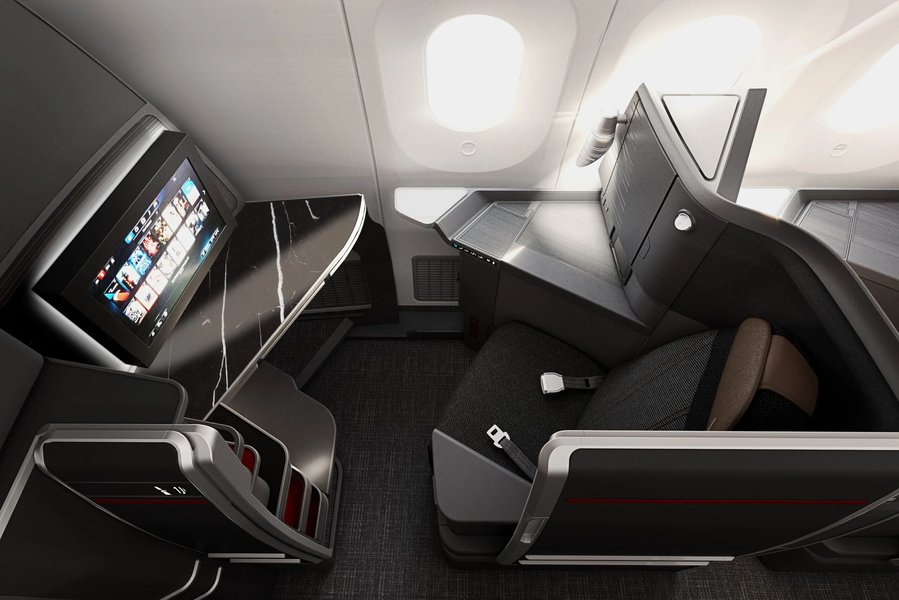
American Airlines' new Flagship Suite Preferred seat, an effort to enhance the premium customer experience.
Unlike Delta and United, which have actively pursued premium strategies, American has not clearly articulated a plan to encourage customers to pay more for its product. This lack of a distinct premium positioning, coupled with a growing supply of premium seats in the market, could further depress pricing and profitability.
Loyalty Program and Customer Relationships
The recent changes to the AAdvantage loyalty program, designed to favor direct bookings, alienated frequent flyers—the "lifeblood of any airline." While these changes have been partially walked back, repairing relationships with loyal customers and corporate partners is a long-term endeavor. A strong loyalty program is a significant revenue stream, with American receiving billions from its co-brand credit card arrangements. Disrupting this relationship can have substantial financial repercussions.
The Path Forward: Opportunities and Challenges
Rebuilding Trust and Refining Strategy
American Airlines' leadership acknowledges that the airline "dug ourselves a hole" and is looking for opportunities for improvement. The airline's strong operational performance in recent years, a result of "steadfast commitment to operational excellence," is a solid foundation. However, overcoming consistent financial underperformance requires a multi-pronged approach.
Focus on Revenue Quality and Cost Management
American needs to focus on revenue quality rather than just volume. This means attracting high-value corporate and premium travelers, which requires a competitive premium product and restored relationships with distribution channels. Simultaneously, disciplined cost management is critical, especially in an environment of rising labor costs and potential economic slowdowns. While fuel costs have been favorable, other operational expenses remain a challenge.
Strategic Network and Fleet Planning
Despite Boeing delivery delays, American Airlines is working to optimize its network. The airline's existing hubs in Charlotte and Dallas/Fort Worth are seen as low-cost advantages. Increased utilization of its regional fleet is expected to offset some disruption from Boeing delays. The launch of new international routes and increased frequencies on existing ones signal an attempt to capture growth in international markets, which have lagged behind domestic recovery.
Frequently Asked Questions (FAQ)
What was American Airlines' net loss in Q1 2025?
Why did American Airlines' corporate travel strategy fail?
How much revenue did American Airlines lose due to its corporate booking strategy?
How do Boeing delivery delays impact American Airlines?
Does American Airlines offer a competitive premium product?
Recommended Further Reading
- Explore the broader implications of direct booking strategies on airline revenue and customer loyalty.
- Delve into a detailed financial comparison of American Airlines with its key competitors, Delta and United.
- Understand the overarching economic and operational challenges expected to impact the airline industry in 2025.
- Investigate the cascading effects of Boeing's production and delivery delays across major airlines.
References
Last updated May 21, 2025