
Unlocking the Process: How Is Ammonium Nitrate Actually Made?
Delving into the chemistry and engineering behind a globally vital compound.
Ammonium nitrate (NH₄NO₃), often mistakenly referred to as "ammonia nitrate," is a crucial chemical compound with significant applications in agriculture as a high-nitrogen fertilizer and in industry for mining and civil explosives. Its production is a well-established industrial process that combines fundamental chemical principles with sophisticated engineering techniques. Understanding how this versatile substance is manufactured provides insight into modern chemical production, balancing efficiency, quality, and safety.
Production Highlights
Key Takeaways from the Ammonium Nitrate Manufacturing Process
- Core Reaction: The primary method involves the highly exothermic acid-base neutralization reaction between ammonia (NH₃) and nitric acid (HNO₃) to form an aqueous solution of ammonium nitrate (NH₄NO₃).
- Industrial Scale: Production relies heavily on the Haber-Bosch process for ammonia and the Ostwald process for nitric acid, integrating large-scale chemical synthesis pathways.
- Solid Formation: The concentrated ammonium nitrate solution is solidified into prills or granules through processes like prilling towers or granulation drums, followed by drying, cooling, and coating for stability and handling.
The Essential Ingredients: Raw Materials
Sourcing Ammonia and Nitric Acid
The journey to ammonium nitrate begins with two fundamental chemical precursors:
Ammonia (NH₃)
Ammonia serves as the base in the neutralization reaction. Industrially, it is synthesized predominantly through the Haber-Bosch process. This vital process combines atmospheric nitrogen (N₂) with hydrogen (H₂) under conditions of high temperature and pressure, typically using a catalyst. The hydrogen required is often derived from natural gas (via steam reforming), although other sources like coal gasification (particularly in regions like China) or water electrolysis can also be used.
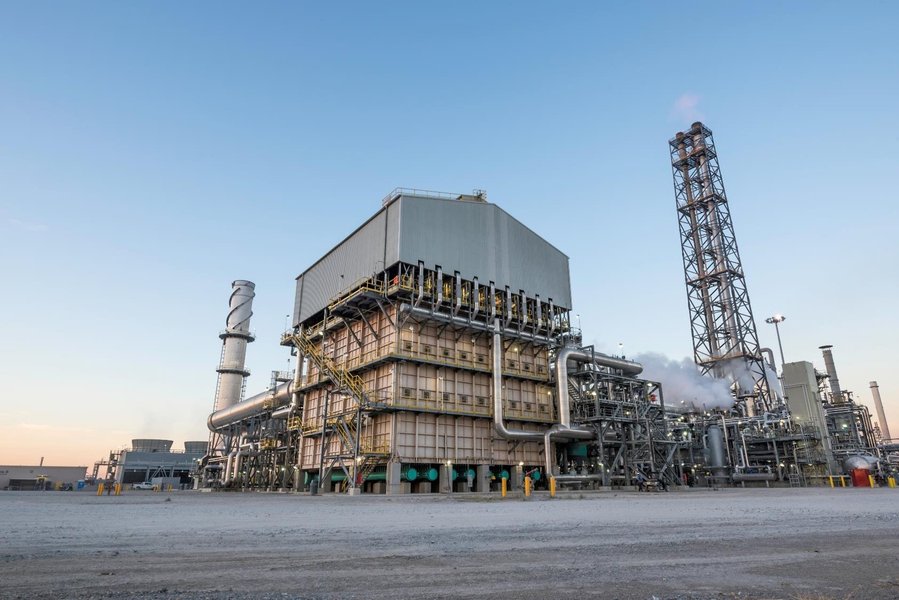
An industrial facility involved in ammonia production, a key precursor for ammonium nitrate.
Nitric Acid (HNO₃)
Nitric acid provides the nitrate component and acts as the acid in the reaction. It is commonly produced using the Ostwald process. This involves the catalytic oxidation of ammonia with air over a platinum-rhodium catalyst to form nitrogen oxides (primarily nitrogen dioxide, NO₂). These nitrogen oxides are then absorbed into water to yield nitric acid. The concentration of nitric acid used in ammonium nitrate production is typically around 55-65%.
The Core Chemistry: Neutralization Reaction
Combining Ammonia and Nitric Acid
The heart of ammonium nitrate production is the direct neutralization reaction between ammonia and nitric acid. This reaction is strongly exothermic, releasing a significant amount of heat that must be carefully managed within the industrial reactor.
The balanced chemical equation for this reaction is:
\[ \mathrm{NH_3 (g) + HNO_3 (aq) \rightarrow NH_4NO_3 (aq)} \quad \Delta H \approx -100 \, \text{kJ/mol} \]In industrial practice, gaseous anhydrous ammonia is reacted with aqueous nitric acid. The reaction typically takes place in specialized reactors designed to handle the heat generated and maintain optimal conditions for efficient conversion. Control systems monitor temperature, pressure, and pH to ensure safety and maximize yield. The heat released is often recovered and utilized elsewhere in the plant, improving overall energy efficiency.
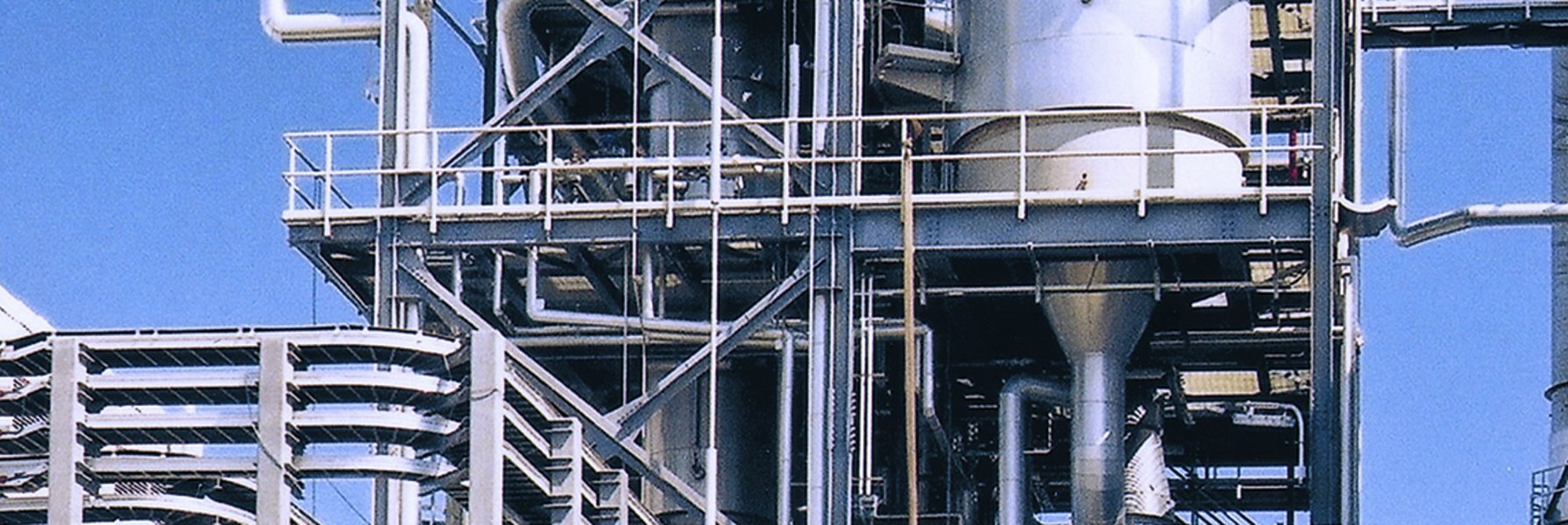
Diagram illustrating a reactor used for ammonium nitrate neutralization.
From Liquid to Solid: Industrial Process Steps
Transforming Raw Materials into Final Product
The manufacturing process converts the raw materials into the final solid ammonium nitrate product through several key stages:
1. Neutralization
As described above, ammonia and nitric acid react to form an aqueous solution of ammonium nitrate. This solution typically has an initial concentration of around 83%.
2. Concentration (Evaporation)
The ammonium nitrate solution from the reactor contains excess water, which must be removed. This is achieved through evaporation, often in multiple stages using evaporators or concentrators. The goal is to increase the ammonium nitrate concentration to a high level, typically between 95% and 99.9%, depending on the desired product grade. This highly concentrated liquid is known as "AN melt." Process monitoring instruments, such as inline refractometers, are used to precisely control the concentration.
3. Solidification: Prilling vs. Granulation
The hot AN melt is then solidified into particles suitable for handling, storage, and application. Two primary methods are used:
- Prilling: The AN melt is sprayed from the top of a tall structure known as a prilling tower. As the droplets fall through a counter-current flow of air, they cool and solidify into small, spherical beads called prills. The porosity and density of the prills can be controlled to suit different applications (e.g., low-density for explosives, high-density for fertilizers).
- Granulation: In this method, the AN melt is sprayed onto small "seed" particles within a rotating drum or fluid bed granulator. Layers of ammonium nitrate build up on the seeds, forming larger, more irregular particles called granules. Granulation often produces a harder, less porous product compared to prilling.
4. Finishing: Drying, Cooling, and Coating
The newly formed prills or granules may require further drying to reach the final moisture specification. They are then cooled to ambient temperature to prevent degradation and ensure stability. Finally, a coating agent (like clay or a proprietary chemical mixture) is often applied to the surface. This coating helps prevent the particles from absorbing moisture from the air (ammonium nitrate is hygroscopic, meaning it readily attracts water) and reduces the tendency for the particles to cake or stick together during storage and transport.
Visualizing the Production Pathway
A Mindmap of Ammonium Nitrate Synthesis
This mindmap illustrates the core stages involved in the industrial production of ammonium nitrate, from raw material sourcing to the final product forms.
Comparing Production Factors
A Comparative Look at Production Aspects
The production of ammonium nitrate involves balancing various technical, economic, and safety factors. This radar chart provides a conceptual comparison of key aspects influencing the overall process and product outcomes. The scores are relative and illustrative, reflecting general trade-offs and priorities in typical industrial settings.
Forms and Uses
Understanding Prills vs. Granules
The solidification method significantly influences the physical properties and intended applications of the final ammonium nitrate product. The table below summarizes the key differences between prilled and granulated ammonium nitrate.
| Feature | Prilled Ammonium Nitrate | Granulated Ammonium Nitrate |
|---|---|---|
| Formation Method | Spraying molten AN in a prilling tower | Layering molten AN onto seed particles in a rotating drum or fluid bed |
| Particle Shape | Small, spherical beads | Larger, more irregular granules |
| Density & Porosity | Can be produced as low-density (porous) or high-density (less porous) | Generally higher density and less porous than low-density prills |
| Hardness | Generally softer than granules | Harder, more resistant to crushing |
| Common Uses | Low-density prills: Component in ANFO explosives. High-density prills: Fertilizer. | Primarily used as fertilizer due to better handling and storage properties. |
| Handling Properties | May require more careful handling due to potential dust and lower crush strength. Coating is essential. | Generally better flowability and less dust generation. Coating is still important. |
Manufacturing in Action
Visualizing the Industrial Process
This video provides a visual overview of the manufacturing process for granular and prilled ammonium nitrate, illustrating the key steps involved in transforming the liquid melt into solid particles suitable for various applications.
Variations and Innovations
Alternative Production Routes
While the direct neutralization of ammonia and nitric acid is the dominant industrial method, some variations and alternative approaches exist:
Stengel Process
Historically used, particularly in the United States, the Stengel process involved reacting preheated ammonia and nitric acid in a packed reactor at elevated temperature and pressure, producing a nearly anhydrous melt directly. However, modern processes often favor aqueous phase reactions for better control.
Nitrophosphate Process
Ammonium nitrate can also be produced as part of the nitrophosphate process, which treats phosphate rock with nitric acid. This process yields a mixture of fertilizers, including ammonium nitrate and calcium phosphate or calcium carbonate, depending on the specific route.
Biological Production
Recent research explores the potential for biological methods. Some studies demonstrate the use of specific microbial consortia (like acidophilic ammonia-oxidizing bacteria) to convert ammonium-rich wastewater into ammonium nitrate within a bioreactor. While promising for specific applications like nitrogen recovery from waste streams, these methods are not yet widespread for bulk industrial production compared to established chemical synthesis.
Safety and Handling Considerations
Managing Risks Associated with Ammonium Nitrate
Ammonium nitrate, while invaluable, requires careful handling due to specific properties:
- Hygroscopicity: It readily absorbs moisture from the air, which can cause particles to cake and degrade. Proper coating and storage in controlled environments or sealed bags are essential.
- Thermal Decomposition: When heated, especially under confinement or in the presence of contaminants, ammonium nitrate can undergo decomposition. At lower temperatures (below ~300°C), it primarily decomposes into nitrous oxide (N₂O) and water (H₂O). However, at higher temperatures or under specific conditions (like rapid heating or shock), it can decompose explosively, producing nitrogen (N₂), oxygen (O₂), and water.
- Regulations: Due to its potential use in explosives and the risks associated with decomposition, the storage, handling, and transportation of ammonium nitrate are subject to strict government regulations worldwide. Industrial production facilities employ rigorous safety protocols, including temperature monitoring, impurity control, and ventilation systems.
- Additives: To improve safety, especially for fertilizer grades, inert materials like carbonate minerals (e.g., calcium carbonate) are sometimes added. These additives can suppress explosive decomposition but also lower the nitrogen content and may affect solubility for certain agricultural applications.
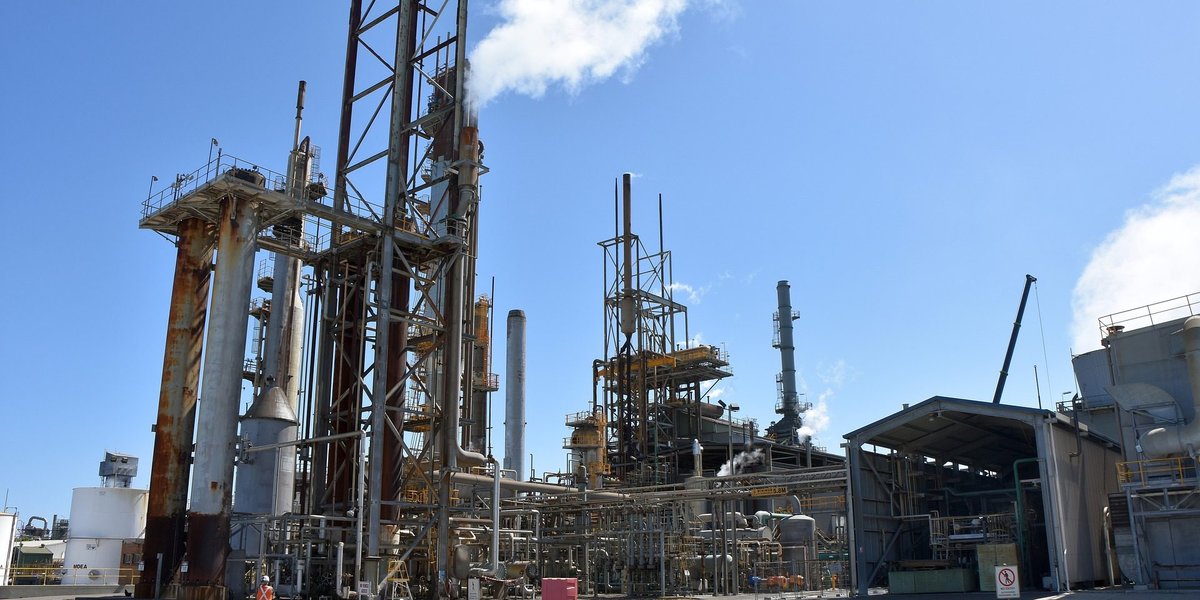
Industrial chemical plants require strict safety protocols for handling materials like ammonium nitrate.
Frequently Asked Questions (FAQ)
Common Questions About Ammonium Nitrate Production
What is the main chemical reaction in ammonium nitrate production?
The main reaction is the acid-base neutralization between ammonia (NH₃) and nitric acid (HNO₃):
\( \mathrm{NH_3 + HNO_3 \rightarrow NH_4NO_3} \). This reaction is exothermic, releasing heat.
Where do the raw materials (ammonia and nitric acid) come from?
Ammonia (NH₃) is typically produced via the Haber-Bosch process, which combines nitrogen from the air with hydrogen (often derived from natural gas). Nitric acid (HNO₃) is usually made by the Ostwald process, which involves oxidizing ammonia.
What are prills and granules in the context of ammonium nitrate?
Prills and granules are the solid forms into which molten ammonium nitrate is solidified. Prills are small, spherical beads formed by spraying the melt in a tower. Granules are larger, irregular particles formed by layering the melt onto seed particles in a rotating drum. The form affects properties like density, porosity, and handling characteristics.
Why is ammonium nitrate used in both fertilizers and explosives?
It's used as a fertilizer because it has a high nitrogen content (essential for plant growth) in both ammonium (NH₄⁺) and nitrate (NO₃⁻) forms, which plants can absorb. Its use in explosives (often mixed with fuel oil to create ANFO) stems from its properties as a strong oxidizer; upon detonation, it rapidly decomposes to produce a large volume of gas.
Is ammonium nitrate dangerous to produce and handle?
Yes, it requires careful handling. While stable under normal conditions, it can decompose explosively if heated strongly, especially under confinement or when contaminated. It is also hygroscopic (absorbs moisture). Industrial production involves strict safety protocols, temperature controls, and specialized storage and handling procedures to mitigate these risks.
Recommended Further Exploration
Dive Deeper into Related Topics
- What are the specific safety regulations governing the storage and transport of ammonium nitrate?
- Can you explain the detailed chemistry and engineering behind the Haber-Bosch process for ammonia synthesis?
- How does ammonium nitrate compare to other nitrogen-based fertilizers like urea or ammonium sulfate in terms of effectiveness and application?
- What are the primary environmental impacts associated with the large-scale production and agricultural use of ammonium nitrate?
References
Sources Used for This Analysis
Last updated May 2, 2025