
Reevaluating Ancient Prosperity: Illusions of Wealth?
Discovering hidden layers behind ancient riches and deep inequalities
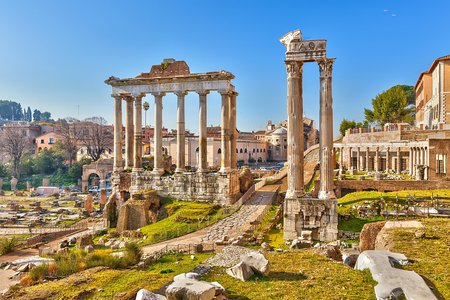
Key Highlights
- Wealth Inequality Masking True Prosperity: The spectacular remnants of palaces and monuments often reveal wealth concentrated among the few.
- Archaeological Evidence & Social Stratification: Findings from ancient dwellings and artifacts point to an unequal distribution of resources.
- Cultural and Economic Nuances: While elites enjoyed apparent opulence, the general populace frequently experienced hardship and poverty.
Understanding the Illusion of Wealth in Ancient Civilizations
Ancient civilizations are often glamorized by their impressive architectural structures, monumental artifacts, and accounts of opulent ruling classes. This imagery creates an illusion of widespread prosperity. However, a closer examination reveals that such ostentatious displays were typically the preserve of a small elite. The visible grandeur often concealed severe wealth inequality, where the bulk of the population experienced economic hardship, limited access to resources, and challenging living conditions.
Archaeological and Historical Insights
Material Culture and Unequal Distribution
Archaeological investigations have consistently shown that material remains such as large palatial complexes, intricate artifacts, and well-decorated elite houses were the markers of wealth concentrated in the hands of a few. Contrastingly, the dwellings of the common people, which have been uncovered in many ancient sites, were significantly smaller and more modest. For instance, in ancient Maya society, the magnitude of a home’s construction directly correlated with the social status of its owner, underscoring the intense stratification present in these societies.
Governance and the Concentration of Power
The political and administrative structures in ancient civilizations played a pivotal role in fostering inequality. Hierarchical or autocratic systems, such as those seen in Mesopotamia, Egypt, and later in the Roman Empire, centralized power among a restricted group. This concentration allowed elites to amass significant wealth and resources through both inheritance and control over key assets such as land, trade routes, and agricultural surpluses.
Economic Shifts and Agricultural Surpluses
The transition from nomadic lifestyles to settled agricultural societies marked a turning point in wealth accumulation. The advent of farming enabled select families or ruling elites to accumulate surplus produce which could be traded or stored as wealth. This surplus creation subsequently fostered economic systems where land ownership became paramount, leading to the emergence of pronounced social hierarchies. While elites leveraged their advantages to endorse art, architecture, and even infrastructural innovations, commoners were largely left with meager returns in terms of living standards.
Comparative Analysis: Perceptions Versus Reality
Wealth Displays versus Daily Realities
The enduring images of rich, prosperous civilizations are often tied to the remains of impressive monuments, statues, and grand public infrastructures. Such evidence provides a glimpse into the lives of the elite but does not furnish an accurate representation of the overall living conditions for the majority of the population. Historical records supplemented by archaeological discoveries demonstrate that what appeared as widespread wealth was in fact a dual reality: the opulence of a select few sharply contrasted with the relative poverty of the masses.
Social Indicators and Regional Variability
The distribution of wealth varied not only between cities and rural areas but also across different regions within the same civilization. Urban centers typically exhibited more pronounced disparities. For instance, study of remains in classical civilizations indicates that those living in the capital or principal city were more likely to be part of a stratified elite, whereas peripheral and rural regions often remained underdeveloped economically. Such regional differences further complicate the assessment of how “rich” an entire civilization truly was.
Integrative Overview of Wealth Inequality in Ancient Times
Core Factors Behind Perceived Ancient Wealth
By integrating insights from various archaeological studies and historical analyses, several core factors emerge that contributed to the perception of wealth in ancient civilizations, despite the underlying economic disparities:
| Aspect | Elite Wealth | Mass Economic Reality |
|---|---|---|
| Housing and Architecture | Grand palaces, temples, and statues crafted for display, often representing divine or semi-divine status. | Modest dwellings with limited resources, substantiated by remains of everyday housing found in less central locales. |
| Economic Systems | Accumulation of surplus through agricultural production, trade monopolies, and control over critical resources, leading to wealth concentration. | Reliance on subsistence farming, labor-intensive practices, and limited access to surplus, resulting in lower standards of living. |
| Social and Political Organization | Hierarchical governance and autocratic regimes that enforced social stratification and perpetuated elite wealth through institutionalized power. | Predominantly marginalized groups with minimal political voice and limited redistribution of wealth or resources. |
| Cultural Depictions | Records and monuments that emphasize divine right and the extraordinary lifestyle of rulers, often exaggerating overall prosperity. | Underrepresentation in historical records, with everyday life marked by poverty or modest means rather than abundance. |
Interpreting the Paradox
This paradox—where apparent wealth coexists with widespread poverty—is central to understanding many ancient civilizations. While ruling classes, through conquests, state-sponsored enterprises, or strategic agricultural practices, could cultivate considerable wealth, the overall standard of living for the average citizen frequently lagged behind. This contrast was heightened by the fact that the production and management of surpluses not only enriched the elites but also established socioeconomic structures that limited upward mobility for commoners.
Cultural Relativity of Wealth
It is also crucial to consider that the perception of wealth is inherently relative. In societies where lavish displays were the norm for the elite, the standard of living for the majority might have been deemed acceptable in context, despite modern interpretations labeling it as poverty. Ancient texts, while often glorifying the success of the ruling classes, rarely document the hardships endured by the common people, leaving modern observers with a skewed image of ancient prosperity.
Economic Consequences of Inequality
Furthermore, the structural concentration of wealth served as both an engine for cultural achievement and a mechanism for economic disparity. The patronage of arts, infrastructure, and monumental construction projects by the elites could drive significant innovation and societal progress. However, these benefits were typically accessible only to a limited segment of the population, while the mass of citizens lived in conditions that were barely sustainable. This dichotomy between visible grandeur and everyday struggle provides valuable insights into the complexities of wealth distribution in historical contexts.
Broader Implications in Historical Context
Comparisons to Modern Societies
The study of ancient wealth distribution offers a reflective mirror to the economic inequalities observed in modern times. By comparing ancient practices—such as surplus accumulation, centralized political power, and cultural emphasis on display—with contemporary economic models, scholars gain insight into the persistence and evolution of inequality. This comparative analysis enriches our understanding of how wealth is generated, distributed, and perceived across different eras.
Impact on Social Structures and Governance
In many ancient civilizations, the wealth of the ruling classes was not merely a reflection of personal opulence but also a tool for maintaining control. The concentration of financial and material resources underpinned the legitimacy of autocratic regimes and entrenched existing power structures. In turn, the lack of effective mechanisms for wealth distribution often led to social tensions, revolts, or gradual shifts in power dynamics—as observed in various historical transitions. The differential access to wealth and durable goods contributed to the rise of inequality as a recurring motif in human societies.
Synthesis of Perspectives from Multiple Disciplines
Integrating Archaeological, Anthropological, and Economic Analyses
Scholars from diverse fields have contributed to the understanding of wealth inequality in ancient civilizations. Archaeologists uncover the material culture and spatial distribution of dwellings, while economists and anthropologists analyze the dynamics of resource allocation. This interdisciplinary approach highlights that the observable opulence was largely confined to the elite, and that the broader population’s living conditions were far less prosperous than they might seem at first glance.
Archaeological Evidence
Physical remnants—such as luxurious artifacts, ceremonial objects, and elaborate palace complexes—offer concrete evidence of elite wealth. Still, these findings must be critically contextualized against data from common residential areas, burial sites, and everyday tools that indicate modest material conditions for the masses.
Economic Measurements
Modern approaches to historical economic structures, such as the application of the Gini coefficient, have illuminated just how skewed wealth distribution was even in early complex societies. Such analyses reveal that while a few individuals amassed large surpluses, the majority’s share of resources was minimal, echoing patterns still observed in contemporary economies.
References
- The Archaeology of Wealth Inequality - Smithsonian
- Why Some Ancient Societies Were More Unequal - BBC
- Ancient Maya Wealth Inequality - UNM News
- From Cattle To Capital - NPR
-
The Archaeology of Inequality - MIT Press Reader
Recommended Further Queries
Last updated March 27, 2025