

- Oral Traditions to Written Sagas: Anglo-Saxon literature transitioned from spoken word performed by scops to meticulously preserved manuscripts, shaping foundational heroic and elegiac poetry.
- Linguistic and Cultural Fusion: The Norman Conquest dramatically shifted the English linguistic landscape, introducing French and Latin influences that blended with Old English to forge Middle English and new literary forms.
- From Heroic Codes to Chivalric Ideals: The literary focus evolved from Anglo-Saxon themes of fate, kinship, and warrior ethos to Norman narratives emphasizing courtly love, chivalry, and Arthurian romance.
The literature of the Anglo-Saxon and Norman periods marks a foundational and profoundly transformative era in the history of English letters. Spanning from the 5th century to the cusp of the later Middle Ages, this period witnessed a dynamic interplay of linguistic, cultural, and thematic shifts that collectively laid the groundwork for the rich literary traditions that followed. While each period possesses distinct characteristics, they are intrinsically linked, with the Norman era building upon, and often dramatically altering, the literary foundations established by the Anglo-Saxons.
The Resilient Echoes of Anglo-Saxon Literature (c. 450 – 1066)
The Anglo-Saxon period, also known as the Old English period, commenced with the arrival of Germanic tribes—Angles, Saxons, and Jutes—in Britain following the Roman withdrawal around 410 AD. These settlers brought with them a vibrant oral tradition, which gradually transitioned into written form with the advent of Christian literacy. This era is considered the very bedrock of English literature, characterized by works written in Old English, a West Germanic language that is distinct from Modern English. Initially, stories and poems were shared orally by *scops*, or poet-singers, at communal gatherings, preserving cultural narratives and heroic deeds.
Oral Roots and Scriptural Blossoming
The earliest surviving works, dating from around 680 AD, highlight the crucial role of Christian influence. The adoption of the Latin alphabet, alongside the existing Runic, facilitated the transcription of these oral traditions. Cædmon's Hymn, a divinely inspired poem about creation, is a prime example of this transition, recorded by Bede. Monasteries, such as those at Jarrow and Wearmouth, became vital intellectual centers, playing a pivotal role in preserving and propagating literature. This blend of pagan oral heritage and Christian scriptural practice profoundly shaped the content and form of Anglo-Saxon literary output.
An example of an Anglo-Saxon manuscript, showcasing the meticulous craft of early scribes.
The Pantheon of Genres: From Epic to Elegy
Anglo-Saxon literature encompassed a remarkable variety of genres, reflecting a complex society. Heroic poetry stands as its most iconic form, with *Beowulf* being the undisputed masterpiece. This epic poem, likely composed between the 8th and 11th centuries, embodies the heroic code of Anglo-Saxon society, celebrating bravery, loyalty, and the relentless struggle against monstrous forces. Themes of comitatus (the bond between lord and retainer), wergild (blood money), and the inevitability of death are central to its narrative, often infused with Christian reinterpretations by monastic scribes. Other notable heroic poems include *The Battle of Maldon*, which commemorates a real East Anglian defeat, praising unwavering loyalty in the face of doom.
Beyond epic narratives, elegies and laments explored themes of loss, exile, and the transient nature of life. "The Wanderer" and "The Seafarer," found in the Exeter Book, poignantly evoke the ubi sunt motif ("where are they now?"), lamenting lost comrades and the hardships of exile, often intertwined with a Christian hope for eternal salvation. These poems showcase a profound awareness of fate and a stoic resilience in the face of adversity. Religious and didactic works also proliferated, particularly after the Christianization of England. These included biblical translations, sermons, saints' lives (hagiography), and theological writings, often demonstrating a fascinating synthesis of pagan and Christian influences.
Prose and Historical Records
Prose literature, though appearing somewhat later than poetry, also developed significantly. King Alfred the Great (r. 871–899) played a monumental role in promoting literacy and standardizing the West Saxon dialect, which became dominant in surviving literature. He initiated translations of important Latin works, such as Boethius's *Consolation of Philosophy* and Gregory the Great's *Pastoral Care*, to make knowledge accessible to a wider audience. The *Anglo-Saxon Chronicle*, begun during Alfred's reign and continued for over three centuries, is an invaluable historical record, chronicling early English history and providing critical insights into battles, kings, and cultural shifts. Legal writings, medical tracts, and collections of riddles, such as those in the Exeter Book, further illustrate the breadth of Anglo-Saxon literary output, showcasing wit and wordplay within a largely preliterate society.
Key Themes and Linguistic Characteristics
Themes prevalent in Anglo-Saxon literature revolved around heroism, fate (wyrd), the profound significance of kinship, and the compelling tension between pagan warrior ethics and emerging Christian belief systems. The language itself, Old English, was characterized by alliterative verse, kennings (compound metaphors like "whale-road" for the sea), and a robust vocabulary that reflected a warrior culture evolving under the influence of Christianity.
The Norman Confluence: A New Literary Epoch (1066 – c. 1350)
The Norman Conquest of 1066 irrevocably altered the course of English literature, ushering in the Anglo-Norman period and initiating the profound transition toward Middle English. William the Conqueror's victory at Hastings introduced Norman French as the language of the court, administration, and the aristocracy. This fundamentally reshaped the linguistic and cultural landscape of England. While Old English literature did not vanish immediately, it became marginalized, and French, alongside Latin (which remained the international language of scholarship and religion), gained ascendancy in literary circles.

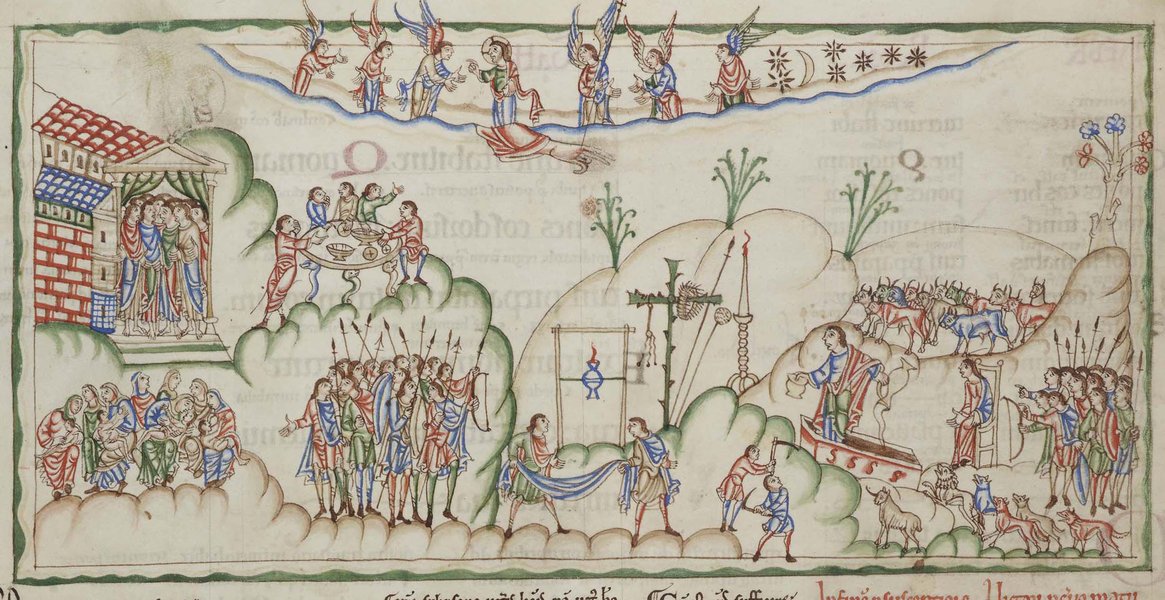
An image illustrating the intricate manuscript production during the Norman period, highlighting continental artistic influences.
Linguistic Transformation and Cultural Intermingling
The Anglo-Norman period witnessed a unique linguistic ecosystem where Old English, Norman French, and Latin coexisted and began to intermingle. This linguistic fusion was not merely a superficial overlay but a deep integration that eventually led to the development of Middle English. Anglo-Norman literature, therefore, was not simply a provincial imitation of French literature but a distinct body of work that bridged the Old English and fully developed Middle English periods. This cultural intermingling fostered new literary tastes and forms, moving away from the starker heroic codes of the Anglo-Saxons.
The Rise of Romance and Chivalry
The heroic code of Anglo-Saxon literature gradually yielded to the themes of courtly love and chivalry, heavily influenced by French culture. Romance became an exceptionally popular genre, featuring knights who proved their worth through noble character, martial prowess, and often, devotion to a lady. The Celtic legends, particularly those surrounding King Arthur and his knights, were revitalized and popularized by Anglo-Norman writers. Geoffrey of Monmouth's *Historia Regum Britanniae* (History of the Kings of Britain), written in Latin in the 12th century, was a pivotal work that, despite its historical inaccuracies, played a crucial role in disseminating Arthurian legends across Europe.
Poets like Marie de France, known for her *Lais*, and Chrétien de Troyes, were instrumental in the development of Arthurian romance, contributing significantly to the genre with narratives exploring themes of love, loyalty, and the supernatural. Marie de France's *Lais*, often set at the English court, delve into complex emotional and social dilemmas, critiquing societal norms through tales of knights and their fairy mistresses, such as in "Lanval."
Continuity and Innovation in Religious and Didactic Works
Beyond secular romances, religious and devotional works continued to hold significant sway. The Fourth Lateran Council of 1215 spurred an increase in doctrinal and devotional writings aimed at the laity in England. Hagiography, the lives of saints, remained a substantial part of the literary output, frequently commissioned by religious houses. Didactic literature, designed to instruct and moralize, also flourished, often incorporating allegorical elements. This period saw allegory emerge as a prominent literary feature, with narrative, didactic, hagiographic, lyric, satiric, and dramatic forms all finding expression, often inflected with French literary conventions.
This mindmap visually represents the intricate connections and divergences between Anglo-Saxon and Anglo-Norman literary periods, highlighting key languages, genres, themes, and influential figures in each era.
The Bridge to Middle English
By the late 12th century and into the 13th, as French influence began to wane and the English language started to re-emerge in written form, we see early instances of Middle English literature. Layamon’s *Brut* (late 12th to early 13th century) stands as a crucial bridge, a chronicle written in English that draws heavily on earlier French and British material, notably Wace's French *Roman de Rou*. This work exemplifies the evolving linguistic landscape and the gradual reassertion of English as a literary language, albeit one profoundly transformed by Norman French. The *Brut* expanded Arthurian lore with a blend of brutish and nationalistic fervor, signaling a move towards a distinct English vernacular revival. This era thus effectively paved the way for later literary giants like Geoffrey Chaucer, whose works would fully embody the richness of Middle English.
Convergence and Divergence: A Comparative Overview
To fully appreciate the evolution of English literature during these periods, it is essential to understand both their unique contributions and their points of overlap and departure.
| Aspect | Anglo-Saxon Period (c. 450-1066) | Anglo-Norman Period (1066-c. 1350) |
|---|---|---|
| Primary Language(s) | Old English, Latin (for scholarly/ecclesiastical texts) | Norman French, Latin, evolving Middle English |
| Dominant Genres | Heroic Epic, Elegy, Religious Poetry, Historical Prose (Chronicles), Riddles, Hagiography | Romance (Arthurian, Courtly Love), Hagiography, Didactic Literature, Chronicles, Lyric Poetry |
| Key Themes | Heroism, Loyalty, Fate (Wyrd), Exile, Loss, Pagan/Christian tension, Kinship | Chivalry, Courtly Love, Religious Morality, Identity, Conquest, Arthurian Legend |
| Influential Works/Authors | Beowulf, "The Wanderer", "The Seafarer", Cædmon's Hymn, Anglo-Saxon Chronicle, King Alfred's translations | Geoffrey of Monmouth's Historia Regum Britanniae, Marie de France's Lais, Chrétien de Troyes's Romances, Layamon's Brut |
| Literary Style/Devices | Alliterative verse, Kennings, Oral tradition elements, Strong rhythm | Octosyllabic couplets, Allegory, Narrative detail, Focus on noble character/adventure |
| Cultural Context | Germanic warrior culture, gradual Christianization, monastic centers | Feudal system, French aristocracy dominance, multilingual society, increasing literacy among laity |
| Manuscript Culture | Primarily monastic production (Exeter Book, Vercelli Book) | Monastic and courtly patronage, wider circulation of secular texts |
This table provides a structured comparison of key aspects of Anglo-Saxon and Anglo-Norman literature, highlighting the significant shifts in language, genre, themes, and cultural influences that defined these two periods.
The Ever-Evolving Narrative
The transition from the Anglo-Saxon to the Anglo-Norman period was not a clean break but a gradual evolution, marked by linguistic shifts and cultural assimilation. The robust Old English literary tradition, with its profound poetic expressions and historical records, provided a solid foundation. The Norman Conquest then introduced a dynamic continental influence, enriching the literary landscape with new genres, themes, and linguistic complexities. This period of intense change ultimately culminated in the vibrant and multilingual environment that gave rise to Middle English literature, a true synthesis of these earlier traditions. The literature of these centuries offers invaluable insights into the values, beliefs, and transformations of early England, providing a continuous narrative thread that weaves through centuries of change, conflict, and creativity, setting the stage for the Renaissance and beyond.
This video, "Anglo-Saxon Age & Anglo-Norman Age | History of English Literature | Major Writers & Works", provides a concise yet comprehensive overview of the literary developments in both periods. It explores key figures, characteristic works, and the historical contexts that shaped these foundational eras of English literature, making it an excellent visual companion to this detailed exploration.
Frequently Asked Questions
What was the primary language of Anglo-Saxon literature?
How did the Norman Conquest impact English literature?
What are some key works from the Anglo-Saxon period?
What themes were prominent in Anglo-Norman literature?
Who were some influential authors during the Anglo-Norman period?
Conclusion
The Anglo-Saxon and Norman periods together represent a foundational epoch in English literary history, characterized by profound transformations in language, culture, and thematic focus. From the oral traditions and heroic epics of Old English to the courtly romances and chivalric ideals introduced by the Normans, this era laid the essential groundwork for the rich and diverse literature that would flourish in the later Middle Ages and beyond. The interplay of Germanic heritage, Christian doctrine, and French aristocratic culture created a unique literary tapestry, providing a compelling narrative of identity, conflict, and creative evolution that continues to resonate with readers and scholars today.
Recommended Reading
- The evolution of English language through Anglo-Saxon and Norman influences
- Deep dive into Beowulf themes and literary significance
- The impact of courtly love on medieval literature
- Major figures and works of early Middle English literature