
The Unsilenced Voice: Unpacking the Enduring Power of Anne Frank's Diary
Discover the profound story behind one of history's most compelling personal testimonies and its lasting impact on the world.
Highlights
- A Young Girl's Perspective: Anne Frank's diary offers an intimate, firsthand account of the Holocaust through the eyes of a teenager, humanizing the immense tragedy and making it accessible to millions.
- Testament to Resilience: Despite unimaginable circumstances, Anne's writings reveal her enduring hope, intellectual curiosity, and profound reflections on humanity, showcasing the strength of the human spirit.
- Global Historical Impact: Published posthumously, the diary has been translated into over 70 languages, becoming a cornerstone of Holocaust education and a universal symbol against persecution and intolerance.
Introduction: A Voice from the Shadows
Anne Frank's diary, often published under the title "The Diary of a Young Girl" (originally *Het Achterhuis* or "The Secret Annex" in Dutch), is one of the most renowned and poignant personal accounts to emerge from the Second World War. It chronicles the thoughts, fears, and aspirations of Annelies Marie Frank, a Jewish teenager forced into hiding with her family and four others to escape Nazi persecution in Amsterdam. More than just a historical document, the diary is a powerful testament to the resilience of the human spirit, a coming-of-age story set against a backdrop of unimaginable terror, and a timeless call for tolerance and understanding.
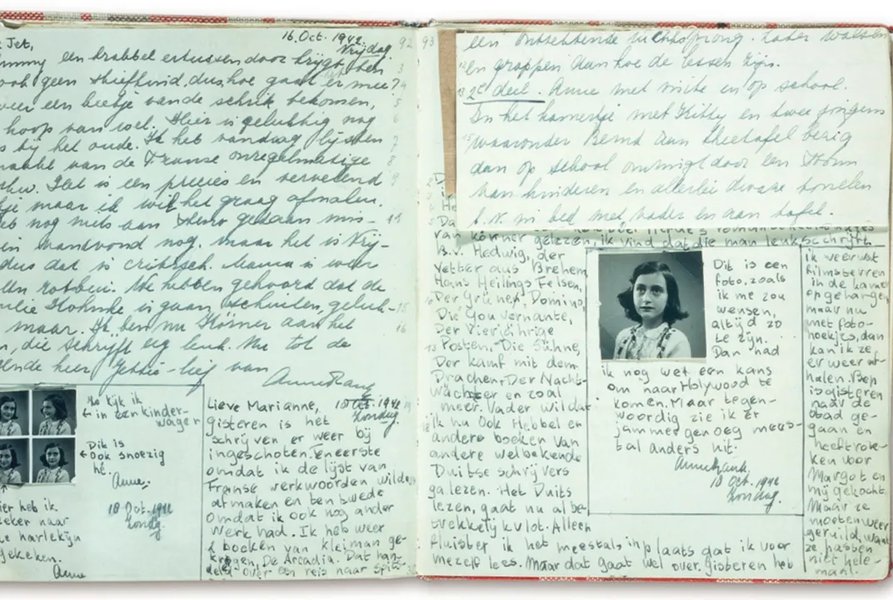
A portrait of Anne Frank, whose diary became a global symbol.
The Genesis of a Cherished Document
From Birthday Gift to Confidante
Anne Frank received her iconic red-and-white checkered autograph book, which she would use as her diary, as a gift for her thirteenth birthday on June 12, 1942. Initially, her entries depicted the life of a typical young girl in Amsterdam: school, friends, crushes, and her innermost thoughts. She affectionately named her diary "Kitty," treating it as a confidante to whom she could pour out her feelings and observations. Little did she know that this seemingly ordinary gift would soon become an extraordinary record of survival.
The Shadow of Persecution
Born in Frankfurt, Germany, in 1929, Anne's family had moved to Amsterdam in 1933 to escape the rising tide of Nazism. However, the Nazi occupation of the Netherlands in May 1940 brought escalating anti-Jewish measures. The situation became dire, and when Anne's older sister, Margot, received a call-up notice for a supposed "labor camp" in Germany in July 1942, the Frank family knew they had to act immediately. This summons precipitated their move into a pre-prepared hiding place.
Life in Hiding: The Secret Annex
The Confines of Concealment
On July 6, 1942, the Frank family—Anne, Margot, their father Otto, and mother Edith—went into hiding in a concealed apartment located in the back annex of Otto Frank's business premises at Prinsengracht 263 in Amsterdam. This hiding place became known as the "Secret Annex" (Het Achterhuis). They were soon joined by Hermann and Auguste van Pels, their teenage son Peter, and later by Fritz Pfeffer, a dentist. For over two years, these eight individuals lived in cramped quarters, facing constant fear of discovery.
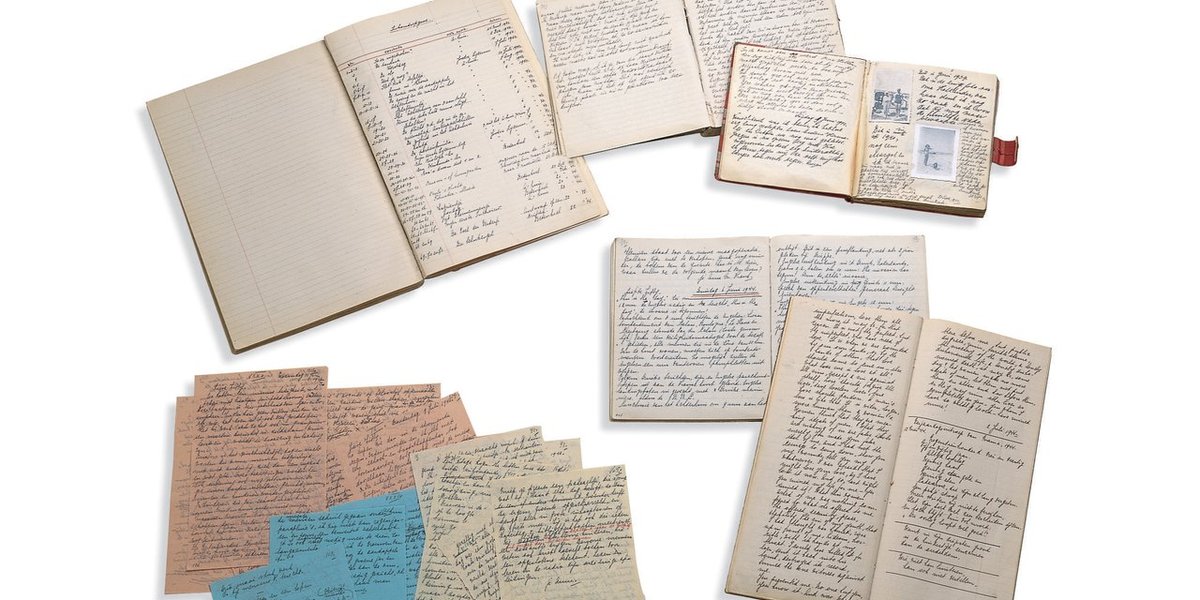
The original diary and loose pages on which Anne Frank rewrote her experiences.
Daily Realities and Strains
Anne's diary vividly documents the daily struggles and routines within the Annex. She writes about the challenges of living in such close proximity, the personality clashes, the strict rules of silence during daytime working hours to avoid detection by warehouse staff, the meager food rations, and the ever-present anxiety. They relied on a small group of Otto Frank's trusted non-Jewish employees, including Miep Gies, Johannes Kleiman, Victor Kugler, and Bep Voskuijl, who risked their own lives to provide them with food, supplies, and news from the outside world. Through her diary, Anne recorded news of the war gleaned from clandestine radio broadcasts, providing a harrowing context to their isolation. She also described her personal growth, her evolving relationship with Peter van Pels, and her intellectual development.
A Young Mind Unfolding: Anne's Reflections and Growth
Adolescence Amidst Adversity
Despite the oppressive environment, Anne's diary entries reveal a young woman undergoing significant personal and intellectual growth. She grapples with typical adolescent concerns—her identity, her changing body, her feelings of loneliness, her complex relationship with her mother, and her burgeoning romantic interest in Peter van Pels. The diary charts her transformation from a somewhat boisterous and self-absorbed girl into a more introspective and observant young writer.
Profound Musings on Humanity
Anne's writing transcends simple daily chronicles. She often reflects on profound subjects such as human nature, war, prejudice, faith, and her own aspirations to become a writer or journalist. She famously wrote, "In spite of everything, I still believe that people are really good at heart." This statement, written amidst such profound suffering, underscores her enduring optimism and the depth of her character. She also revised her diary entries with the hope of publishing them as a book titled "The Secret Annex" after hearing a radio broadcast from the Dutch minister in exile urging citizens to keep records of their wartime experiences.
Thematic Depths of the Diary
Anne Frank's diary explores a multitude of universal themes that continue to resonate with readers across generations and cultures. Her personal experiences in the Secret Annex provide a lens through which these broader human conditions are examined. The following mindmap illustrates some of the central themes woven throughout her narrative, offering a visual representation of the diary's multifaceted emotional and intellectual landscape.
despite adversity"] id1b["Dreams for the future"] id1c["Strength of human spirit"] id2["Isolation & Fear"] id2a["Physical confinement
in the Annex"] id2b["Emotional loneliness"] id2c["Constant dread of discovery"] id2d["Claustrophobia"] id3["Coming of Age & Identity"] id3a["Adolescent struggles"] id3b["Self-discovery & introspection"] id3c["Loss of innocence"] id3d["Developing relationships
(e.g., with Peter)"] id4["Human Nature"] id4a["Generosity vs. Greed"] id4b["Conflicts & Tensions
among inhabitants"] id4c["Courage of helpers"] id4d["Reflections on prejudice"] id5["The Brutality of War & Persecution"] id5a["Impact of Nazi policies"] id5b["Loss of freedom"] id5c["Awareness of external suffering"] id6["Family Dynamics"] id6a["Complex relationship with mother"] id6b["Admiration for father"] id6c["Sibling interactions"]
This mindmap highlights how Anne's personal narrative touches upon themes such as the unwavering spark of hope even in the darkest times, the profound psychological effects of isolation and fear, the universal journey of adolescence complicated by war, and sharp observations on the dualities of human behavior. Her writings on family provide a relatable anchor, while her understanding of the war's brutality offers a stark historical testimony.
Betrayal, Arrest, and Tragic End
The last entry in Anne's diary is dated August 1, 1944. Just three days later, on August 4, 1944, the Secret Annex was raided by the Gestapo, acting on a tip from an unknown informant (the identity of whom remains a subject of historical investigation). All eight inhabitants were arrested and initially taken to Westerbork transit camp in the Netherlands.
In September 1944, they were deported to Auschwitz-Birkenau concentration and extermination camp in German-occupied Poland. Anne, Margot, and their mother were separated from Otto Frank upon arrival. In late October or early November 1944, Anne and Margot were transported to the Bergen-Belsen concentration camp in Germany. Edith Frank remained in Auschwitz, where she died of starvation and exhaustion in January 1945. Anne and Margot Frank both succumbed to typhus at Bergen-Belsen in early 1945, likely in February or March, just weeks before the camp was liberated by British forces on April 15, 1945.
The Diary's Journey to the World
Miep Gies: The Diary's Guardian
After the arrest, Miep Gies, one of the courageous helpers, discovered Anne's diary notebooks and loose papers scattered on the floor of the Annex. She collected and kept them in a desk drawer, unread, hoping to return them to Anne after the war. When Otto Frank returned to Amsterdam in June 1945, the sole survivor from the Secret Annex, Miep gave him Anne's writings.
Otto Frank's Mission
Reading his daughter's diary was a profound experience for Otto Frank. He was astonished by the depth of her thoughts and her literary talent. He initially shared excerpts with family and friends, who encouraged him to publish it. Otto Frank compiled and edited Anne's original diary (Version A) and her rewritten version (Version B) into what became Version C, the first published edition. He removed some passages he felt were too personal or might be offensive to others mentioned. The diary was first published in Dutch in 1947 as *Het Achterhuis* ("The Secret Annex").

An early edition of "The Diary of a Young Girl," showcasing its global reach.
The Enduring Legacy and Global Impact
A Symbol of the Holocaust
Anne Frank's diary quickly gained international recognition. It was translated into English in 1952 as "Anne Frank: The Diary of a Young Girl" and subsequently into over 70 languages, selling tens of millions of copies worldwide. Anne Frank became an international symbol of the Holocaust, representing the millions of Jewish victims, particularly children, whose lives were brutally cut short. Her story personalizes the incomprehensible statistics of the genocide, offering a relatable human face to the suffering.
Educational and Cultural Influence
The diary is a cornerstone of Holocaust education in many countries. It provides an accessible entry point for young people to learn about this dark period of history, fostering empathy and critical thinking about prejudice, discrimination, and human rights. The diary has inspired numerous adaptations, including a Pulitzer Prize-winning play (1955) and an Academy Award-winning film (1959), as well as documentaries, television series, and musical compositions. The Anne Frank House in Amsterdam, the preserved Secret Annex, attracts over a million visitors annually, serving as a museum and educational center dedicated to Anne's life and legacy, and promoting tolerance and mutual respect.
The multifaceted impact of Anne Frank's Diary can be visualized by considering several key factors. The radar chart below offers an opinionated assessment of these dimensions, illustrating how different aspects contribute to its overall significance. These are subjective evaluations based on common scholarly and public perceptions, not empirical data.
This chart visualizes how aspects like its 'Educational Value' and 'Global Reach' are perceived as extremely high, while its 'Literary Merit,' though significant, is often viewed in conjunction with its profound historical and emotional weight. The 'Symbol of Hope' and 'Emotional Impact' also score very highly, reflecting its deep connection with readers worldwide.
Visualizing Anne's World and Words
Video: Anne Frank's World and Her Diary
To further understand the context and impact of Anne Frank's diary, the following video provides a compelling overview of her life, her time in hiding, and the enduring significance of her writings. It offers visual context to the historical period and helps to bring her story to life for contemporary audiences.
This documentary excerpt from the United States Holocaust Memorial Museum delves into Anne's world, exploring the circumstances that led to her family's hiding and the way her diary provides a unique window into the Holocaust. It emphasizes how her personal story helps individuals grasp the larger historical events and their human consequences.
Inhabitants of the Secret Annex: A Brief Overview
The Secret Annex was home to eight individuals for over two years. Their intertwined lives, conflicts, and shared hopes and fears form the core of Anne's diary. The following table provides a summary of who these individuals were and their tragic fates.
| Name | Relationship/Role | Born | Fate |
|---|---|---|---|
| Anne Frank | Diarist, younger daughter of Otto and Edith | June 12, 1929 | Died of typhus in Bergen-Belsen, February/March 1945 |
| Otto Frank | Anne's father, businessman | May 12, 1889 | Survived Auschwitz; died August 19, 1980 |
| Edith Frank-Holländer | Anne's mother | January 16, 1900 | Died of starvation/exhaustion in Auschwitz-Birkenau, January 6, 1945 |
| Margot Frank | Anne's older sister | February 16, 1926 | Died of typhus in Bergen-Belsen, February/March 1945 |
| Hermann van Pels | Otto Frank's business associate (known as Hermann van Daan in the diary) | March 31, 1898 | Gassed in Auschwitz, September/October 1944 |
| Auguste van Pels | Hermann's wife (known as Petronella van Daan in the diary) | September 29, 1900 | Died April/May 1945, during or after transport from Buchenwald to Theresienstadt |
| Peter van Pels | Son of Hermann and Auguste (known as Peter van Daan in the diary) | November 8, 1926 | Died in Mauthausen, May 1945, shortly before liberation |
| Fritz Pfeffer | Dentist, family friend (known as Albert Dussel in the diary) | April 30, 1889 | Died in Neuengamme concentration camp, December 20, 1944 |
This table underscores the devastating human cost of the Holocaust, with Otto Frank being the only one of the eight to survive the war. Their stories, primarily preserved through Anne's words, serve as a poignant reminder of the individual lives impacted by systematic persecution.
Frequently Asked Questions (FAQ)
When and where did Anne Frank write her diary?
Anne Frank wrote her diary primarily between June 12, 1942, and August 1, 1944, while she and her family were in hiding in the Secret Annex, a concealed apartment in her father's office building at Prinsengracht 263 in Amsterdam, Netherlands, during the Nazi occupation of World War II.
Why is Anne Frank's diary considered so important?
Anne Frank's diary is historically significant as a firsthand account of Jewish life under Nazi persecution during the Holocaust. It humanizes the victims of this genocide by providing an intimate, personal perspective of a young girl's experiences, thoughts, and emotions. Culturally, it has become a symbol of resilience, hope, and the fight against intolerance, serving as a powerful educational tool worldwide.
Who was "Kitty" in Anne Frank's diary?
"Kitty" was the name Anne Frank gave to her diary. She addressed her entries to Kitty as if writing to a close friend, allowing her to express her deepest thoughts and feelings. While initially thought to be a fictional character, some researchers suggest Kitty might have been inspired by a character in a series of popular Dutch books Anne enjoyed, written by Cissy van Marxveldt.
How was Anne Frank's diary saved and published?
After the arrest of the inhabitants of the Secret Annex, Miep Gies, one of the Dutch helpers, found Anne's diary notebooks and papers. She kept them safe and unread. Upon Otto Frank's return to Amsterdam after the war (he was the only survivor from the Annex), Miep gave him Anne's writings. Otto Frank then edited the diary, combining Anne's original entries with her later revisions, and fulfilled her wish to be a published writer. It was first published in Dutch in 1947.
What are the main themes explored in Anne Frank's diary?
Key themes in Anne Frank's diary include the loss of innocence and coming of age under extreme circumstances, hope and resilience in the face of despair, the profound impact of isolation and fear, the complexities of human nature (both good and bad), the longing for freedom, and the challenges of identity and self-discovery during adolescence.
Recommended Further Exploration
- What was daily life like for those hiding in the Secret Annex with Anne Frank?
- How did Otto Frank contribute to the legacy of Anne Frank's diary after the war?
- Explore the different versions and editions of Anne Frank's diary and their variations.
- What is the historical significance of the Anne Frank House museum today?
References
 cdn.fld.nz
Last updated May 10, 2025