
Research Report on Antenna Parameters
A detailed exploration of performance measures in various antenna types
Key Insights
- Essential Parameters: Gain, bandwidth, radiation pattern, directivity, polarization, impedance, efficiency, and more determine an antenna’s ability to transmit and receive signals optimally.
- Design & Application: Understanding these parameters supports efficient antenna design and matching them to specific applications like cellular networks, satellite communications, and radar systems.
- Impact on Performance: Each parameter affects signal strength, directional focus, energy conversion, and overall system performance in real-world environments.
Introduction
Antennas play a pivotal role in modern communication systems, forming the backbone of technologies ranging from mobile communications to radar and satellite systems. The performance of any antenna is dictated by a range of parameters that characterize its behavior in transmitting and receiving electromagnetic waves. This report provides an in-depth analysis of these parameters, examining their fundamental concepts, methods of measurement, and implications for antenna design and application.
Core Antenna Parameters
Gain and Directivity
Gain is a measure of an antenna's capability to focus energy in a specified direction as compared to an ideal isotropic radiator, which radiates energy uniformly in all directions. Expressed typically in decibels relative to an isotropic source (dBi), a higher gain is often associated with improved transmission and reception capabilities in the desired direction.
Directivity quantifies how concentrated the radiation is in one direction compared to the average radiated power. While gain considers both directivity and efficiency, directivity on its own measures the power distribution with respect to spatial orientation. These parameters are closely linked; an antenna can have high directivity but may suffer reduced gain if efficiency—often affected by physical and material limitations—is low.
Bandwidth
The operational frequency range over which an antenna performs optimally is defined as its bandwidth. This parameter can be quantified either as an absolute frequency range (e.g., 2.4 GHz to 2.5 GHz) or as a percentage relative to the center frequency. Wideband antennas are particularly useful in applications requiring the transmission of multiple signals or adaptation to rapidly changing frequency requirements. A broad bandwidth guarantees that the antenna maintains its performance across various communication standards while providing flexibility in system design.
Radiation Pattern and Beamwidth
The radiation pattern is the spatial representation of the power distribution radiated by an antenna. This pattern is often visualized in both 2D and 3D plots, indicating the main lobe, side lobes, and back lobes that describe the directional characteristics of energy dispersion.
Associated with the radiation pattern is the concept of beamwidth. Typically defined as the half-power beamwidth (HPBW), it represents the angular separation between the points where the radiated power falls to half of the maximum value. Beamwidth is critical in understanding the resolution and target specificity, especially for directional antennas used in radar or telecommunications.
Polarization
Polarization indicates the orientation of the electric field vector of the radiated electromagnetic wave. Antennas can be designed for linear (vertical or horizontal), circular, or elliptical polarization.
Polarization matching between transmitting and receiving antennas is essential; a mismatch can lead to significant power losses. For example, a vertically polarized transmitting antenna communicates most efficiently with a vertically polarized receiver. This parameter is instrumental in minimizing interference and optimizing signal quality, especially in environments with multiple reflecting surfaces.
Impedance and Efficiency
Impedance is the ratio of voltage to current at the antenna feed point and is crucial for ensuring maximum power transfer. Standard antennas typically have an impedance of around 50 ohms, and proper impedance matching between the antenna and the connected transmission line minimizes reflections and losses.
Efficiency measures the antenna's ability to convert input electrical power into radiated electromagnetic energy. It is defined as the ratio of the power radiated by the antenna to the total power supplied to it. High efficiency indicates that the antenna performs well with minimal internal and external losses, providing a more reliable and robust signal.
Additional Considerations
Radiation Efficiency and Input Impedance
Radiation efficiency, denoted typically as \( \eta_A \), includes contributions from both the antenna’s material properties and design. It is influenced by internal factors such as conductor losses and dielectric losses, which can degrade performance, particularly in compact or high-frequency designs. Input impedance compatibility maintains the wave integrity between the antenna and its associated circuitry, vital for system stability.
Effective Aperture and Field Strength
The effective aperture or effective area of an antenna is related to its capability to capture incoming electromagnetic waves. This parameter, which correlates with gain, influences the reception performance of the antenna. Additionally, parameters such as field strength and power flux density help in evaluating the spatial distribution of the radiated energy and ensuring the antenna's utility in both short-range and long-range communication.
Types of Antennas and Their Parameter Implications
Dipole and Monopole Antennas
Dipole antennas are among the simplest types used in many communications applications. Their radiation pattern is typically bi-directional, with maximum radiation occurring perpendicular to the axis of the dipole. These antennas are characterized by moderate gain, a balanced impedance (often around 50 ohms), and consistent polarization when used in a controlled environment.
Monopole antennas utilize a single radiating element complemented by a ground plane that reflects energy. This design supports a similar radiation pattern to dipoles but is often employed where size constraints and specific usage patterns are imperative. The ground plane introduces modifications in the impedance and bandwidth, making proper design and matching critical for high-performance applications.
Yagi-Uda, Parabolic Dish, and Loop Antennas
The Yagi-Uda antenna is known for its high gain and directivity, achieved by deploying multiple elements such as a driven element, reflectors, and directors. This design is especially useful in applications like television reception and long-distance communications, where signal concentration in a particular direction is critical.
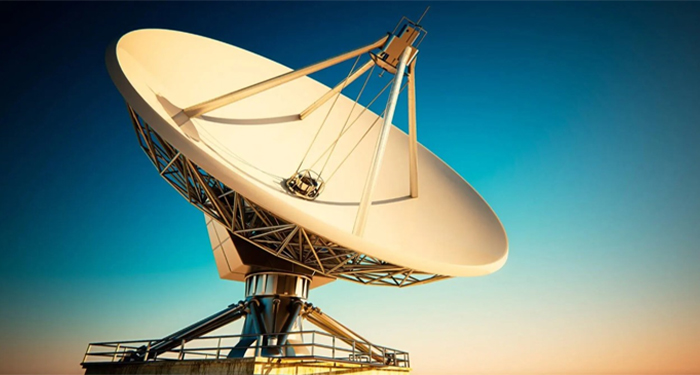
Parabolic dish antennas use a parabolic reflector to concentrate incoming or outgoing radio waves onto a focal point. This design results in very high gain and narrow beamwidth, making them ideal for satellite communication and point-to-point links. However, the precision in positioning and limited bandwidth are design trade-offs that engineers must address.
Loop antennas offer benefits in terms of compact size and versatility, particularly in low-frequency applications. Although they tend to exhibit lower gain compared to larger counterparts, they are well-suited for environments where space is a premium and a broad radiation pattern is acceptable.
Practical Aspects and Measurement Techniques
Measurement of Antenna Parameters
Accurately measuring antenna parameters is essential for both design validation and performance optimization. Multiple techniques are employed by engineers to assess aspects such as gain, impedance, and radiation patterns. These include:
- Anechoic Chambers: Controlled environments that eliminate reflections, allowing for precise radiation pattern and gain measurements.
- Network Analyzers: Instruments used to measure impedance and return loss, ensuring appropriate matching between the antenna and transmission lines.
- Field Strength Meters: Tools that quantify the power flux density and help validate the effective aperture of the antenna.
Modern measurement techniques benefit from advanced software and hardware integration that allows for real-time analysis of various parameters, ensuring that antennas meet the stringent requirements for high-performance applications.
Comparative Analysis Table
The following table summarizes key parameters for different types of antennas, highlighting the diverse considerations across antenna designs:
| Antenna Type | Gain (dBi) | Bandwidth | Radiation Pattern | Polarization |
|---|---|---|---|---|
| Dipole | 2-3 | Narrow to Moderate | Bi-directional | Linear |
| Monopole | 3-5 | Moderate | Hemispherical | Linear |
| Yagi-Uda | 7-15 | Narrow | Directional | Linear |
| Parabolic Dish | 15-30+ | Very Narrow | Highly Directional | Variable |
| Loop | 1-2 | Broad | Omnidirectional | Variable |
Implications for System Design
Optimizing Communication Systems
The integration of these parameters into antenna design is critical for crafting effective communication systems. Antennas with high gain and directivity are beneficial in long-distance and point-to-point communications, where focusing energy in a narrow beam can significantly enhance reliability and reduce interference. Conversely, antennas requiring a broad coverage pattern, such as those used in mobile communications, typically prioritize an omnidirectional radiation pattern and a balanced bandwidth, ensuring adequate signal reception regardless of direction.
Additionally, careful considerations of impedance matching and efficiency are paramount. A slight mismatch in impedance between the antenna and the connected network infrastructure can lead to signal reflections and losses, thereby degrading overall system performance. Similarly, high radiation efficiency ensures that the majority of the input power is effectively transformed into a radiated signal, thereby enhancing the quality and strength of the communication link.
Design Trade-offs and Future Research
While each parameter can be optimized individually, antenna design often involves balancing trade-offs. For example, increasing gain may lead to a narrower bandwidth and more pronounced sensitivity to alignment errors. Similarly, efforts to expand bandwidth might result in a more complex radiation pattern. These trade-offs necessitate detailed design strategies where performance targets are balanced against practical limitations such as size, material costs, and manufacturing tolerances.
Looking to the future, research into advanced materials, compact designs, and multi-band operations could further enhance these design trade-offs. Emerging technologies, including metamaterials and smart antennas, hold promise for achieving previously unattainable efficiencies and operational ranges, making antenna design a continually evolving field.
Practical Application Scenarios
Wireless Networks and Mobile Communication
In modern wireless networks, antennas are critical for establishing robust and efficient links between devices. The performance parameters discussed here influence everything from the minimal signal drop detected across a city to the intense focus of signals in rural environments. Broadband and multi-frequency antennas are increasingly favored in these environments, ensuring compatibility with diverse communication standards and reducing bottlenecks during peak usage periods.
Satellite Communications and Radar Systems
Satellite communications and radar systems demand high precision in both directivity and gain. Parabolic dish antennas, for instance, rely on highly specific radiation patterns to ensure that signals are accurately transmitted and received over vast distances. Similarly, radar systems benefit from narrowly focused beamwidths that provide high resolution in target detection. In such systems, even minor improvements in efficiency or impedance matching can yield significant performance gains.
IoT and Emerging Technologies
With the rise of the Internet of Things (IoT) and smart devices, antenna parameters have taken on new importance in ensuring reliable connectivity across diverse environments. IoT devices generally require antennas that are small, efficient, and capable of operating over multiple frequencies. Here, the interplay between bandwidth, efficiency, and impedance becomes critical, as devices must manage power consumption while maintaining robust connectivity.
References
-
Practical Overview of Antenna Parameters - A.H. Systems
- 4.5: Antenna Parameters - Engineering LibreTexts
- Antenna Basics - Antenna Theory
- What are the 5 parameters that can be used to describe the performance of an antenna? - Dolph Microwave
- Antenna Measurement - Wikipedia
Recommended Queries for Further Research
Last updated March 15, 2025