
Mechanism of Action of Antibiotics
An In-depth Exploration of How Antibiotics Target Bacterial Processes
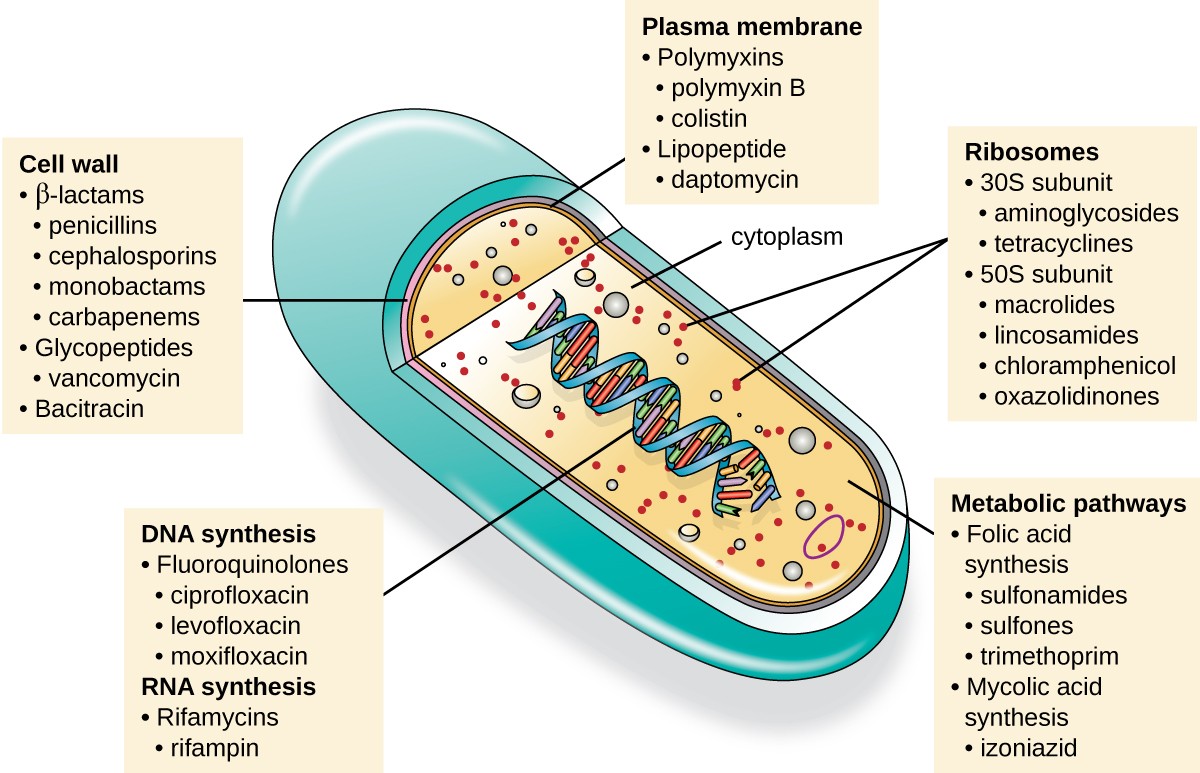
Key Takeaways
- Targeting Protein Synthesis: Antibiotics affecting the 30S and 50S ribosomal subunits disrupt bacterial protein production.
- Interfering with Nucleic Acid Processes: Inhibitors of RNA polymerase and DNA gyrase block RNA transcription and DNA replication.
- Inhibiting Metabolic Pathways: Agents that block folate synthesis prevent essential nucleotide production for bacterial growth.
Introduction
Antibiotics have revolutionized modern medicine by targeting specific bacterial processes vital for survival and reproduction. By exploiting fundamental differences between prokaryotic and human cellular machinery, antibiotics can selectively disrupt bacterial functions. This detailed overview explains five core mechanisms by which antibiotics operate: interference with the 30S and 50S ribosomal subunits that inhibit protein synthesis; inhibition of RNA polymerase that blocks transcription; targeting of DNA gyrase to interrupt DNA replication and repair; and disruption of folate synthesis, a metabolic pathway crucial for generating nucleotides.
This exploration not only highlights the molecular targets but also discusses the specific drug classes that exploit these vulnerabilities. Understanding these mechanisms is crucial not just for effective clinical application but also for addressing the emergence of bacterial resistance—a mounting challenge in the field of antimicrobial therapy.
Mechanisms of Action in Detail
1. Inhibition of Protein Synthesis on the 30S Ribosomal Subunit
Mechanism and Drug Examples
The bacterial ribosome, the cellular machinery that synthesizes proteins, comprises two subunits: 30S and 50S. The 30S subunit is targeted by classes of antibiotics that disturb the fidelity of protein translation. Aminoglycosides, such as gentamicin and streptomycin, bind tightly to the 16S rRNA component of the 30S subunit. This binding not only causes misreading of the mRNA template but also disrupts the formation of the initiation complex. As a result, subsequent protein synthesis is compromised, leading to the production of nonfunctional or toxic proteins that eventually cause bacterial cell death.
Another major group, the tetracyclines (including doxycycline and tetracycline), binds reversibly to the 30S subunit. Their primary action is to interfere with the attachment of aminoacyl-tRNA to the A (acceptor) site on the ribosome. This competitive inhibition prevents the elongation of the nascent polypeptide chain, ultimately exerting a bacteriostatic effect by halting the synthesis of vital proteins.
An important consideration is that these mechanisms are highly specific to prokaryotic ribosomal structures. Human cytosolic ribosomes, though similar in function, differ in structure sufficiently to avoid significant inhibition by these antibiotics—thereby reducing toxicity to human cells. However, mitochondrial ribosomes can sometimes be inadvertently affected owing to their evolutionary similarities to bacterial ribosomes.
2. Inhibition of Protein Synthesis on the 50S Ribosomal Subunit
Mechanism and Drug Examples
The 50S subunit is another critical component of bacterial ribosomes where peptide bond formation and the translocation of tRNAs occur. Antibiotics that target this subunit primarily interfere with the later stages of protein synthesis. Macrolides, such as erythromycin and azithromycin, attach near the exit tunnel of the 50S subunit. This binding obstructs the passage of the growing polypeptide, thereby inhibiting elongation. The result is not only an interruption of protein synthesis but also potential misfolding or premature termination of peptides.
Chloramphenicol acts by binding to the peptidyl transferase center of the 50S subunit, which directly stops peptide bond formation. Similarly, clindamycin and lincosamides prevent peptide chain elongation by interfering with the assembly of the initiation complex. Furthermore, oxazolidinones such as linezolid block the formation of the functional 70S initiation complex by binding to a site on the 50S subunit that is critical for subunit association.
Together, these drugs provide a robust toolkit for combating bacterial infections by crippling the machinery needed for protein production. Although primarily bacteriostatic—meaning they inhibit growth rather than kill bacteria outright—some of these inhibitors can be bactericidal at higher concentrations or depending on the bacterial species involved.
3. Inhibition of RNA Polymerase
Mechanism and Drug Examples
RNA polymerase is the enzyme responsible for synthesizing RNA from a DNA template—a fundamental process for gene expression in bacteria. Rifamycins, most notably rifampin, are antibiotics that target the beta subunit of bacterial RNA polymerase. By binding specifically to this subunit, rifampin prevents the formation of the first phosphodiester bond required for RNA synthesis, effectively halting transcription.
The blockade imposed by rifampin disrupts the cascade of protein production, as messenger RNA (mRNA) cannot be synthesized in adequate amounts to support protein translation. This collapse in transcription leads to a rapid decline in bacterial viability. Due to its effectiveness, rifampin has been a critical component in therapeutic regimens for diseases such as tuberculosis and other mycobacterial infections. However, its use can sometimes lead to the rapid emergence of resistance, largely due to mutations in the RNA polymerase gene.
4. Inhibition of DNA Gyrase
Mechanism and Drug Examples
DNA gyrase is a type II topoisomerase that plays a pivotal role in managing DNA supercoiling during replication and transcription. In bacteria, the enzyme is responsible for introducing negative supercoils, which help relieve the torsional stress that builds up ahead of replication forks and transcription complexes. Fluoroquinolones, such as ciprofloxacin, levofloxacin, and moxifloxacin, target DNA gyrase, as well as topoisomerase IV, by inhibiting their ability to relax supercoiled DNA.
The interaction of fluoroquinolones with DNA gyrase leads to the stabilization of the enzyme-DNA cleavage complex. Normally, after making a transient break in the DNA strands to relieve torsional strain, the enzyme re-ligates the strands. However, fluoroquinolones prevent the re-ligation process, resulting in the accumulation of double-stranded breaks in the DNA. These breaks are fatal to the bacteria as they disturb the DNA replication machinery and lead to chromosome fragmentation, which is rapidly lethal.
Additionally, the mechanism by which these drugs interact with the enzyme often involves the formation of a water–metal ion bridge that is essential for proper binding. Mutations in the regions that form this bridge can lead to significant drug resistance, highlighting the clinical importance of targeting this precise mechanism.
5. Inhibition of Folate Synthesis
Mechanism and Drug Examples
Folate, or vitamin B9, is a crucial cofactor in the synthesis of purines, pyrimidines, and certain amino acids. Unlike humans, bacteria must synthesize folate de novo; hence, this pathway is an ideal target for antibiotic intervention. Sulfonamides (such as sulfamethoxazole) and diaminopyrimidines (like trimethoprim) are the two principal classes of drugs that inhibit folate synthesis.
Sulfonamides act as structural analogs of para-aminobenzoic acid (PABA), a substrate for dihydropteroate synthase, which is essential for folate production. By competitively inhibiting this enzyme, sulfonamides block the production of dihydropteroate, a precursor in the folate pathway. Trimethoprim, on the other hand, selectively inhibits dihydrofolate reductase. This inhibition prevents the conversion of dihydrofolate to tetrahydrofolate, a vital methyl group donor required for nucleotide synthesis. When used in combination (as in co-trimoxazole), these drugs produce a sequential blockade in folate synthesis, resulting in a potent bacteriostatic—and at times bactericidal—effect.
The dual inhibition approach is particularly effective because it significantly diminishes the possibility of bacterial resistance developing through a single-point mutation. Moreover, since mammals obtain folate through dietary sources, these drugs exhibit a high degree of selectivity against bacterial cells.
Comparative Table of Antibiotic Mechanisms
| Mechanism | Target | Examples | Action |
|---|---|---|---|
| 30S Protein Synthesis Inhibitors | 30S Ribosomal Subunit | Aminoglycosides, Tetracyclines | Misreading of mRNA and blockade of aminoacyl-tRNA binding |
| 50S Protein Synthesis Inhibitors | 50S Ribosomal Subunit | Macrolides, Chloramphenicol, Clindamycin, Linezolid | Blocking peptide bond formation or translocation |
| RNA Polymerase Inhibitors | RNA Polymerase | Rifampin | Inhibition of mRNA synthesis via binding to the β subunit |
| DNA Gyrase Inhibitors | DNA Gyrase/Topoisomerase IV | Fluoroquinolones (e.g., Ciprofloxacin, Levofloxacin) | Stabilization of the enzyme–DNA cleavage complex leading to double-strand breaks |
| Folate Synthesis Inhibitors | Folate Pathway Enzymes | Sulfonamides, Trimethoprim | Blockade of dihydropteroate synthase and dihydrofolate reductase, preventing nucleotide synthesis |
Clinical Implications and Resistance Considerations
While each class of antibiotic targets a specific bacterial process, clinical use involves delicately balancing efficacy with the potential development of resistance. Resistance emerges through several mechanisms, including mutations in the target site, enzymatic drug modification, decreased drug uptake, and increased efflux.
For instance, mutations in the ribosomal RNA genes can reduce binding affinity for aminoglycosides and tetracyclines, lowering their effectiveness. Similarly, alterations in the peptidyl transferase center or secondary binding sites may lead to resistance against 50S-targeting agents like macrolides or chloramphenicol. In the case of rifampin, point mutations in the gene encoding the RNA polymerase β subunit are a well-documented source of resistance, especially in long-term treatments such as those for tuberculosis.
Resistance to fluoroquinolones often involves mutations in the quinolone resistance-determining region (QRDR) of DNA gyrase and topoisomerase IV, disrupting the essential water–metal ion bridge required for effective drug binding. This emphasizes the need for continued development of novel agents or combination therapies that can overcome these resistance mechanisms. Similarly, the folate synthesis pathway is less prone to rapid resistance because the two-step blockade using sulfonamides and trimethoprim makes it difficult for bacteria to bypass both inhibitory effects.
In clinical practice, the choice of antibiotic usually considers not only the mechanism of action but also the site of infection, the patient’s immune status, and local resistance patterns. Combination regimens using drugs with different mechanisms are common, as they provide a broader spectrum of activity and decrease the likelihood of resistance developing. In addition, dosage regimens and treatment durations are optimized to maintain effective drug concentrations at the site of infection while minimizing exposure that could lead to resistance.
Future Directions and Ongoing Research
Research into the mechanisms of antibiotic action continues to evolve, particularly in the face of mounting global antibiotic resistance. Advances in molecular biology and structural biochemistry have provided clearer insights into how drugs interact with their targets at the atomic level. Researchers are now using high-resolution cryo-electron microscopy (cryo-EM) and X-ray crystallography to visualize the interactions between antibiotics and bacterial targets, offering pathways to design more effective and less toxic compounds.
Novel approaches include the development of molecules that can either bind to alternative sites on the ribosome or exploit allosteric modulation of enzyme activity. For instance, the rising interest in non-traditional targets such as the regulatory proteins involved in transcription and translation promises to expand the therapeutic arsenal. Similarly, new iterations of fluoroquinolones and other DNA gyrase inhibitors are being engineered to overcome resistance barriers by improving binding affinities and reducing the chances for mutational escape.
In the realm of folate synthesis inhibitors, efforts are underway to design drugs with dual or multiple targets within the folate pathway to make it even harder for bacteria to develop resistance. Additionally, combination therapies involving inhibitors of protein, RNA, and DNA synthesis are being investigated to provide synergistic effects that maximize bacterial eradication while curbing resistance development.
Conclusion
In summary, antibiotics exploit a range of bacterial vulnerabilities by targeting core processes such as protein synthesis, transcription, DNA replication, and essential metabolic pathways like folate synthesis. By binding to the 30S and 50S ribosomal subunits, these drugs hinder the production of functional proteins. In parallel, inhibitors of RNA polymerase such as rifampin effectively stall mRNA production, while fluoroquinolones inhibit DNA gyrase, leading to irreparable DNA damage. Finally, the blockade of folate synthesis through sulfonamides and trimethoprim deprives bacteria of the essential precursors required for nucleotide synthesis.
These mechanisms underscore the precision with which antibiotics operate, minimizing harm to human cells while maximizing their antibacterial effects. However, the rise of antibiotic-resistant strains highlights the need for continual innovation in drug development. Ongoing research focuses on designing derivatives with improved efficacy and reduced side effects, as well as combination therapies that can hinder the emergence of resistance.
By understanding these complex molecular interactions, clinicians and researchers are better equipped to choose effective treatments and devise strategies to extend the useful lifespan of existing antibiotics. This comprehensive understanding of antibiotic mechanisms remains critical as we continue to confront the global challenge of antimicrobial resistance.
References
- 5 Key Mechanisms of Antibiotic Action - Antibiotics Health
- Antibiotic Mechanisms in Modern Therapy - Frontiers in Pharmacology
- Mechanisms of Antibiotic Action - TeachMePhysiology
- Mechanisms of Action of Antibiotics - Microbe Online
-
Antibiotic Action and Resistance - PMC
More
Last updated February 18, 2025