
Development of Antioxidant-Rich Multicolored Blue Pea Tea: A Research Proposal
Harnessing Nature's Vibrancy for Enhanced Health and Aesthetic Appeal
Key Takeaways
- Natural Antioxidant Enhancement: Utilizing the rich anthocyanin content in blue pea flowers to combat oxidative stress.
- Color Innovation: Creating visually appealing multicolored teas through natural pH-sensitive ingredients.
- Consumer-Centric Development: Balancing health benefits with sensory attributes to meet market demands.
Introduction
Background and Significance
In the ever-evolving landscape of functional beverages, consumer preferences are shifting towards products that not only offer health benefits but also provide sensory satisfaction. The blue pea flower (*Clitoria ternatea*), commonly known as butterfly pea, has emerged as a prominent candidate in this domain due to its vibrant blue hue and substantial antioxidant properties. Traditionally utilized in Southeast Asian cultures for its medicinal and culinary applications, blue pea flower tea has gained international attention for its potential health benefits and aesthetic appeal.
The distinctive blue color of butterfly pea tea is primarily attributed to anthocyanins, particularly delphinidin, which are potent antioxidants known for their ability to neutralize free radicals and reduce oxidative stress. These compounds play a crucial role in mitigating the risk of chronic diseases such as cardiovascular ailments, diabetes, and cancer, while also contributing to anti-aging effects by preserving cellular integrity.
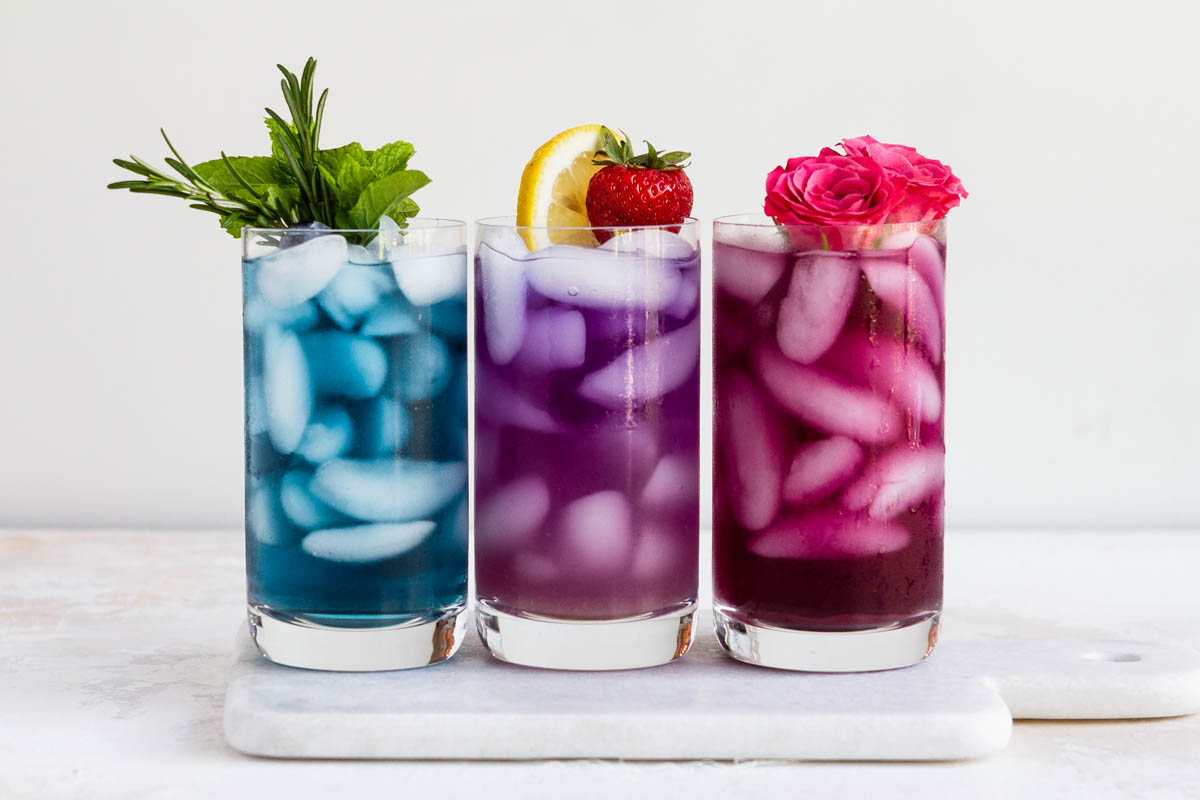
Beyond its health benefits, the butterfly pea flower possesses pH-sensitive properties, allowing the tea to transition through a spectrum of colors when exposed to varying acidity levels. This unique characteristic presents an opportunity to create multicolored tea variants that cater to contemporary consumer desires for visually engaging and innovative beverages.
Research Objectives
Enhancing Antioxidant Content
The primary objective of this research is to optimize the extraction techniques of blue pea flowers to maximize their antioxidant content. This involves experimenting with various steeping times, temperatures, and flower-to-water ratios to determine the conditions that yield the highest concentration of anthocyanins and other polyphenolic compounds. By enhancing the antioxidant profile, the resulting tea will offer superior health benefits, making it a competitive product in the functional beverage market.
Creating Multicolored Variants
Leveraging the pH-sensitive nature of anthocyanins, this project aims to develop multicolored blue pea tea by incorporating natural acids and bases. Ingredients such as lemon juice, hibiscus, turmeric, and spirulina will be explored for their ability to alter the tea's color while contributing additional health-promoting compounds. This innovation seeks to provide consumers with a visually stimulating product that maintains its health benefits across different color variants.
Optimizing Health Benefits
In addition to enhancing antioxidant levels, the research will evaluate the overall health benefits of the multicolored tea variants. This includes assessing anti-inflammatory, cognitive-enhancing, and adaptogenic properties through biochemical analyses and in vitro studies. Understanding the synergistic effects of combined ingredients will be essential in formulating a product that offers comprehensive health advantages.
Sensory Evaluation
To ensure the commercial viability of the developed tea variants, sensory evaluations will be conducted to gauge consumer acceptance in terms of taste, aroma, and visual appeal. This involves assembling focus groups and conducting surveys to collect feedback on various formulations. The insights gained will inform the final product development, ensuring that the tea not only meets health standards but also aligns with consumer preferences.
Literature Review
Antioxidant Properties of Blue Pea Flower
Numerous studies have highlighted the potent antioxidant capacities of blue pea flower tea. Anthocyanins, the primary bioactive compounds in the tea, have been extensively researched for their role in neutralizing reactive oxygen species (ROS) and preventing cellular damage. Comparative analyses indicate that blue pea tea possesses higher anthocyanin concentrations than many traditional antioxidant sources, such as blueberries, positioning it as a superior natural antioxidant.
Colorimetric Adaptations
The pH-responsive nature of anthocyanins in blue pea flowers allows for dynamic color changes, making it an ideal candidate for creating multicolored beverages. By introducing various natural acids and bases, the tea can be transformed into hues ranging from pink and purple to green and orange. This property not only enhances the visual appeal of the beverage but also introduces additional health benefits through the incorporation of diverse natural ingredients.
Consumer Trends in Functional Beverages
The global market for functional beverages is experiencing significant growth, driven by increasing consumer awareness of health and wellness. Modern consumers prioritize products that offer tangible health benefits, such as antioxidant-rich teas, while also seeking aesthetic and sensory satisfaction. The development of multicolored blue pea tea aligns with these trends, offering a product that meets both nutritional and experiential demands.
Methodology
Extraction Optimization
The first phase of the research involves optimizing the extraction process to maximize the antioxidant yield from blue pea flowers. Experimental designs will vary steeping times (ranging from 5 to 20 minutes), temperatures (60°C to 100°C), and flower-to-water ratios to identify the optimal conditions. High-performance liquid chromatography (HPLC) will be employed to quantify anthocyanin concentrations under different extraction parameters.
Multicolored Variant Development
Building upon the optimized extraction process, the next step is to develop multicolored tea variants. Natural pH-altering agents such as lemon juice (acidic), baking soda (basic), hibiscus (acidic), turmeric (neutral to slightly acidic), and spirulina (basic) will be systematically incorporated. Each variant will be analyzed for color stability, antioxidant content, and the presence of additional bioactive compounds introduced by the additives.
Health Benefit Evaluation
To assess the health-promoting properties of the developed tea variants, in vitro assays will be conducted to evaluate anti-inflammatory, anti-aging, and cognitive-enhancing effects. These assays will measure markers such as cytokine inhibition, cellular senescence, and neuroprotective activities. The results will provide insights into the synergistic effects of combined ingredients and their potential therapeutic applications.
Sensory and Market Analysis
A comprehensive sensory evaluation will be carried out to determine consumer acceptance of the various tea formulations. Surveys and taste tests will be conducted with a diverse demographic to gather feedback on flavor profiles, aroma intensity, and visual appeal. Additionally, market analysis will be performed to identify target consumer segments and positioning strategies, ensuring the final product aligns with market demands.
Expected Outcomes
Enhanced Antioxidant Profile
It is anticipated that the optimized extraction methods will significantly increase the concentration of antioxidants in blue pea tea, surpassing traditional antioxidant-rich beverages. This enhancement will solidify the tea's position as a superior functional beverage with robust health benefits.
Innovative Product Variants
The development of multicolored tea variants will cater to consumer preferences for visually appealing products. Each color variant will not only offer a unique aesthetic but also introduce distinct flavors and additional health-promoting compounds, thereby broadening the product's appeal.
Comprehensive Health Benefits
The combined health benefits of the optimized antioxidant content and the added natural ingredients are expected to provide a synergistic effect. This will result in a beverage that offers comprehensive health advantages, including enhanced anti-inflammatory and cognitive benefits.
Market Readiness
Through extensive sensory and market analyses, the research will ensure that the developed tea variants are well-received by consumers. The insights gained will inform effective marketing strategies and product positioning, facilitating successful market entry and adoption.
Data Analysis
Quantitative Analysis
Quantitative data from antioxidant assays, HPLC measurements, and in vitro health benefit evaluations will be statistically analyzed to determine the significance of the results. Analysis of variance (ANOVA) and regression models will be employed to identify the optimal extraction conditions and the impact of different additives on antioxidant levels and health benefits.
Qualitative Analysis
Qualitative feedback from sensory evaluations will be thematically analyzed to identify common preferences and areas for improvement. This analysis will help refine the product formulations to better align with consumer expectations.
Resources and Timeline
Resources
The research will require access to laboratory facilities equipped with HPLC, spectrophotometers, and in vitro assay equipment. Additionally, resources for conducting sensory evaluations and market research, including participant recruitment and survey tools, will be essential. Collaborations with food scientists, nutritionists, and marketing experts will support the multifaceted aspects of the project.
Timeline
The project is structured to be completed over a 12-month period, divided into the following phases:
| Phase | Duration | Activities |
|---|---|---|
| Phase 1 | Months 1-3 | Extraction optimization and initial antioxidant assays |
| Phase 2 | Months 4-6 | Development of multicolored variants and additional compound analysis |
| Phase 3 | Months 7-9 | Health benefit evaluations and in vitro studies |
| Phase 4 | Months 10-12 | Sensory evaluations, market analysis, and final report preparation |
Conclusion
The proposed research project aims to innovate within the functional beverage industry by developing an antioxidant-rich multicolored blue pea tea. By optimizing extraction methods to enhance antioxidant levels, leveraging pH-sensitive properties for color variation, and ensuring sensory appeal through consumer-centric evaluations, this project seeks to create a product that resonates with modern health-conscious consumers. The anticipated outcomes not only promise significant health benefits but also align with current market trends favoring natural, visually appealing, and health-promoting products. This research has the potential to contribute substantially to the fields of nutrition, food science, and consumer health, paving the way for future innovations in functional beverages.
References
Last updated February 13, 2025