
Undeterministic Order and APFS
Understanding the implications of APFS's file ordering behavior
Highlights
- Non-Deterministic Enumeration: APFS returns directory listings in a hash order rather than lexicographical order.
- Performance Impact on Different Media: The ordering approach is optimized for SSDs but can lead to slower performance on HDDs.
- Documentation Nuance: Official documentation confirms non-deterministic ordering without explicitly stating it was implemented strictly for performance reasons.
Introduction
Apple File System (APFS) introduced notable changes from its predecessor HFS+, particularly in relation to directory enumeration. A key aspect of these changes is the non-deterministic, or "undeterministic," ordering of files when reading directory contents. This deviation from a character-by-character lexicographical order to a hash-based ordering system has raised questions regarding its rationale and potential performance implications, especially in contexts where different types of storage media are involved.
Detailed Analysis of APFS Ordering
Non-Deterministic File Enumeration
In the context of APFS, non-deterministic ordering refers to the method by which files and directories are returned during directory enumeration. Instead of returning entries in a strictly alphabetical or lexicographical sequence, APFS employs a hash-based approach. This means that the order in which files are listed is not predetermined by their names but is determined by their internal hash values.
The hashing mechanism is integral to the design of the file system as it helps in balancing data distribution and can allow for faster file lookups on solid-state drives (SSDs). However, users and developers have observed that subsequent enumeration of the same directory could lead to different ordering, thus raising the question of determinism.
Performance Considerations
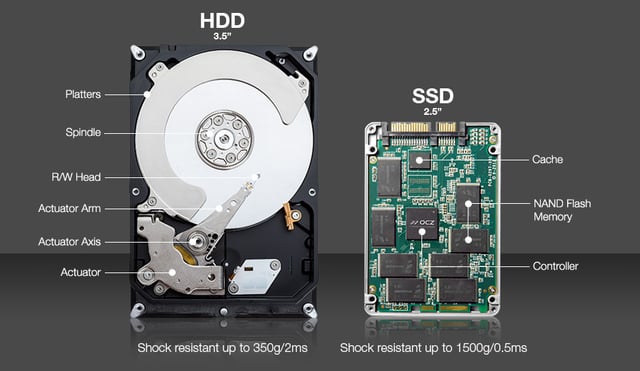
APFS’s architecture was primarily optimized with the performance capabilities of SSDs in mind. SSDs, which do not have moving parts, benefit from rapid access times regardless of the physical ordering of data on disk. The hash-based ordering, therefore, does not affect performance adversely on SSDs. Instead, it can lead to enhanced performance due to quicker lookup times when navigating large directories.
On the other hand, traditional hard disk drives (HDDs) operate using mechanical seek operations. In such cases, the scattering of metadata and files—as a consequence of the non-deterministic ordering—can result in increased head movement, higher latency, and slower overall performance. Although APFS is designed to cater to modern flash storage, the performance degradation on HDDs has been noted as a drawback.
It is this contrast in performance between SSDs and HDDs that often accentuates the impact of non-deterministic ordering. While technically not intended as a feature to perform a specific "performance boost" on any media, the ordering mechanism embodies a trade-off inherent in using a hash-driven approach. It is suitable for flash storage but introduces certain challenges on rotational media.
Context in Official Documentation
Official documentation from Apple and detailed technical analyses confirm that when using system calls like readdir(2), the order in which filenames are returned is based on a hash order. Although this is well documented, the literature does not specify that this undeterministic ordering was explicitly introduced for performance optimization. Instead, it is described as a characteristic of how the file system handles metadata.
In essence, the documentation clarifies that the change from lexicographical ordering to hash order is a design decision. It optimizes operations that match the underlying hardware assumptions, such as those for SSDs. However, this change is not explicitly justified by developers or Apple as a maneuver targeted primarily at enhancing performance—it is more a byproduct of the overall data structure and algorithms implemented in APFS.
This subtle distinction is important; while performance differences are evident, especially when comparing SSDs with HDDs, the documentation does not argue that performance was improved directly through non-deterministic ordering. Rather, the improvement is indirect, resulting from design choices made with modern storage technology in mind.
Comparative Context: APFS vs. HFS+
Historical Context
Before the introduction of APFS, HFS+ used a reverse approach whereby directory listings were returned in lexicographical order. This method, while predictable, was less efficient for bulk file access and did not benefit from the technical enhancements afforded by modern SSDs. The shift to hash-based ordering in APFS is part of a broader redesign that enhances speed and efficiency in contemporary computing environments.
Technical Advantages and Trade-offs
The hash-based ordering system can be thought of as double-edged:
Advantages
- Optimized for SSDs: The distributed metadata and hash values contribute to rapid file lookup speeds on solid-state drives, making operations efficient.
- Enhanced Scalability: For systems that manage a vast number of files, the non-deterministic order helps in distributing file records in a balanced way across the file system.
Disadvantages
- Inconsistent File Order: For applications that rely on predictable file orderings, such as scripts that process directory contents, the non-deterministic order can lead to inconsistencies.
- Performance on HDDs: On rotational hard drives, where seeking is a physical limitation, the scattered nature of file metadata can cause slower performance and increased fragmentation.
Empirical Performance Data
Empirical benchmarks and performance studies have highlighted that the benefits of APFS in terms of speed are mostly realized on SSDs. In contrast, on HDDs, the anticipated performance gains from hash-based enumeration are negated by mechanical limitations. These studies have reinforced the observation that while the design is effective for modern storage media, it can present challenges for legacy systems still utilizing HDDs.
Implementation Implications in Software Development
Programming Considerations
Developers working on cross-platform applications sometimes encounter subtle issues when porting directory enumeration code between macOS and other operating systems. The non-deterministic ordering of APFS can lead to unexpected behavior if applications assume a consistent, alphabetical order. To mitigate such challenges, many developers explicitly sort filenames after retrieval, ensuring that the application behavior remains predictable and consistent regardless of the underlying filesystem.
Best Practices
In light of the non-deterministic ordering behavior in APFS, the following best practices have emerged for developers:
- Explicit Sorting: Implement sorting mechanisms within the application code to order file lists as required, rather than relying on the underlying filesystem ordering.
- Platform-Specific Handling: When developing cross-platform software, introduce conditional logic to handle known discrepancies in directory enumeration between operating systems.
- Testing Across Media: Ensure performance is tested on both SSDs and HDDs to better understand the impact of APFS’s behaviors in varied environments.
Table: Comparison of File System Ordering Mechanisms
| File System | Ordering Method | Primary Optimized Storage | Implications |
|---|---|---|---|
| APFS | Hash-based (non-deterministic) | SSD | Improved lookups on SSD; inconsistent order & potential HDD inefficiencies |
| HFS+ | Lexicographical | HDD | Predictable order; less optimized for current flash storage technology |
Addressing the Specific Query
Is there documentation that mentions undeterministic ordering for performance reasons?
The existing documentation and technical analyses confirm that APFS returns file names in a non-deterministic (hash-based) order, differing from the lexicographical order familiar from HFS+. However, it is important to note that while the documentation clearly describes this behavior, it does not explicitly state that the undeterministic ordering was introduced solely for performance reasons.
Instead, the shift to a hash-based ordering system is presented as a design decision inherent to APFS’s architecture. This design naturally aligns with the performance advantages offered by SSDs. The mechanism results in faster file lookups and efficient metadata distribution, which indirectly benefits performance. Yet, on HDDs, where physical disk operations come into play, this same design leads to performance degradation. Therefore, the performance implications are recognized as a byproduct of the design rather than a feature intentionally implemented with performance as the primary goal.
In summary, while the non-deterministic ordering in APFS is documented, it is not explicitly framed as a deliberate performance enhancement. Instead, it reflects a trade-off driven by broader architectural considerations aimed at optimizing for modern storage media while acknowledging the limitations encountered on traditional rotational hard drives.
Conclusion
The investigation into the ordering behavior of APFS reveals that its non-deterministic, hash-based file enumeration is a core design aspect intended to improve efficiency on solid-state storage. Documentation and technical insights consistently confirm that APFS no longer adheres to a lexicographical order; however, there is no explicit claim that such ordering was introduced solely for the purpose of enhancing performance.
Instead, the performance benefits associated with APFS derive from how its design aligns with the rapid access characteristics of SSDs, while the operational trade-offs present challenges on HDDs. Developers and system administrators should be aware of these characteristics, particularly when developing cross-platform solutions or maintaining systems that operate on multiple storage media.
Overall, the information emphasizes that while the non-deterministic ordering in APFS does impact performance indirectly, it was not implemented as a targeted performance optimization for all storage types; it remains a structural decision that carries with it both benefits and challenges.
References
- Apple Developer Documentation - APFS FAQ
- APFS Enumeration Performance on Rotational Hard Drives - Michael Tsai
- Analysis of APFS Enumeration Performance on Rotational Hard Drives - Bombich Software
Recommended Further Reading
Last updated February 26, 2025