
Comparing API Architectural Styles: REST, SOAP, and GraphQL in Fintech
Navigating the Landscape of Financial Technology APIs
Key Highlights
- REST APIs are the most widely adopted and generally favored for their simplicity, scalability, and broad tooling support, making them a go-to for many fintech applications, particularly for web and mobile integrations.
- GraphQL offers enhanced flexibility and efficiency in data fetching by allowing clients to request precisely the data they need in a single query, which can significantly reduce over-fetching and under-fetching issues common in REST.
- SOAP APIs, while older and more complex, remain relevant in enterprise-level fintech for their robust security features, standardization, and built-in handling of transactions and error management, often used in environments where strict compliance and reliability are paramount.
In the dynamic world of financial technology (fintech), the choice of Application Programming Interface (API) architectural style is a critical decision that impacts performance, scalability, security, and development efficiency. APIs serve as the backbone of modern software applications, enabling seamless data exchange between disparate systems. For fintech, where real-time processing, low latency, and enterprise-grade security are paramount, understanding the strengths and weaknesses of different API paradigms is essential. This comprehensive guide explores the pros and cons of three prominent API architectural styles: REST, SOAP, and GraphQL, specifically within the context of fintech.
Understanding the Core API Paradigms
Before diving into the specifics of each architectural style within fintech, it's crucial to grasp their fundamental definitions and approaches to data exchange.
REST: The Ubiquitous Architectural Style
Representational State Transfer (REST) is an architectural style that leverages standard HTTP methods (GET, POST, PUT, DELETE) to interact with resources. It is known for its statelessness, cacheability, and a uniform interface, making it highly scalable and widely adopted. REST APIs typically exchange data in lightweight formats like JSON or XML.
SOAP: The Protocol with Robustness
Simple Object Access Protocol (SOAP) is a protocol defined by the W3C. Unlike REST, which is an architectural style, SOAP has a stricter structure and relies on XML for message formatting. It supports various protocols like HTTP, HTTPS, SMTP, and more. SOAP is often associated with enterprise-level applications requiring strong security, transactional integrity, and formal contracts.
GraphQL: The Flexible Query Language
GraphQL is a query language for APIs and a server-side runtime for executing queries. Developed by Facebook, it allows clients to request exactly the data they need, avoiding the over-fetching or under-fetching issues often encountered with REST. GraphQL operates over HTTP/HTTPS and is defined by a schema that provides a strong contract between the server and client.
REST in Fintech: Pros and Cons
REST APIs are the most common way to share data across applications and are widely used in fintech due to their simplicity and scalability.
Advantages of REST in Fintech
Ease of Integration and Development
REST's adherence to standard HTTP methods and its use of lightweight data formats like JSON make it relatively easy to integrate with various platforms and technologies. This simplicity accelerates development cycles, a crucial factor in the fast-paced fintech landscape.
Scalability and Performance
The stateless nature of REST allows for easy scaling of servers as there is no need to maintain session state on the server side. Caching mechanisms can also be readily implemented, improving performance by reducing the need for repeated requests.
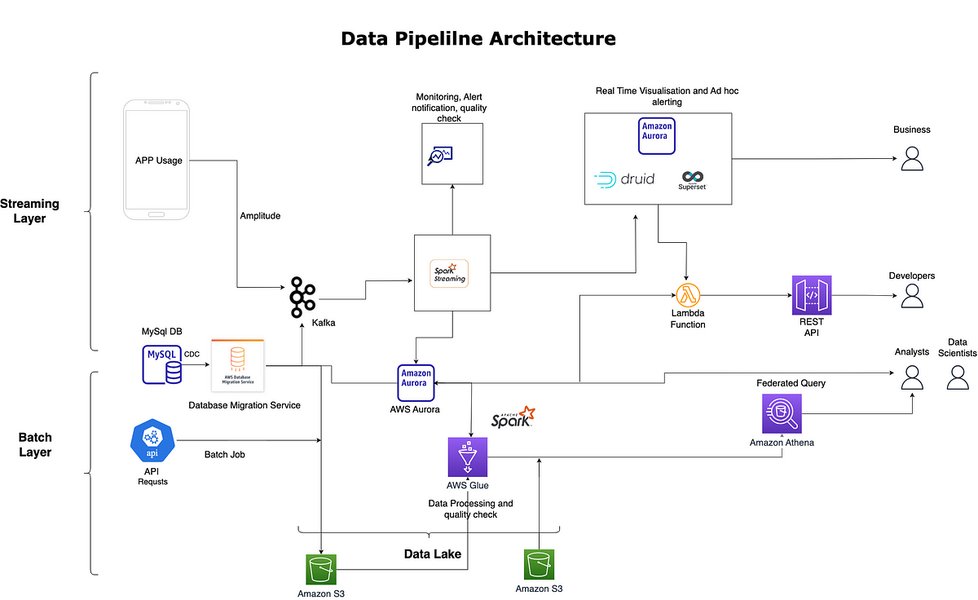
A potential architecture showcasing how APIs (often RESTful) fit into a scalable data platform.
Wide Tooling Support and Community
REST has a mature ecosystem with extensive tooling, libraries, and community support. This makes it easier for fintech developers to find resources, troubleshoot issues, and leverage existing solutions for tasks like API testing, documentation, and security.
Flexibility in Data Formats
While JSON is the most common, REST can support other data formats like XML, providing flexibility depending on the integration requirements of different financial systems.
Disadvantages of REST in Fintech
Over-fetching and Under-fetching
A significant drawback of REST is the potential for over-fetching (receiving more data than needed) or under-fetching (requiring multiple requests to get all necessary data). This can lead to inefficient data transfer and increased latency, which is particularly critical in real-time financial applications.
Multiple Endpoints
Fetching related data in REST often requires multiple requests to different endpoints. This can increase the complexity of client-side logic and lead to chattiness between the client and server, impacting performance.
Versioning Challenges
Managing different versions of a REST API can be challenging. Backward compatibility needs careful consideration to avoid breaking existing client applications when introducing changes.
SOAP in Fintech: Pros and Cons
SOAP, while less prevalent for public APIs compared to REST, still holds ground in enterprise fintech environments where its specific features are advantageous.
Advantages of SOAP in Fintech
Strong Security Features
SOAP has built-in support for various security protocols like WS-Security, offering robust authentication, authorization, and encryption capabilities. This is highly valuable in the heavily regulated fintech industry where data security is paramount.
Strict Standardization and Formal Contracts
SOAP relies on WSDL (Web Services Description Language) files to define the structure of messages and available operations. This provides a strict contract between the client and server, reducing ambiguity and improving interoperability in complex enterprise systems.
ACID Transactions
SOAP can leverage WS-AtomicTransaction to support ACID (Atomicity, Consistency, Isolation, Durability) transactions, ensuring data integrity in distributed environments. This is crucial for financial transactions where reliability is non-negotiable.
Protocol Agnostic
Unlike REST, which is primarily tied to HTTP, SOAP can operate over multiple protocols, offering flexibility in integration scenarios with legacy systems.
Disadvantages of SOAP in Fintech
Complexity and Verbosity
SOAP messages are formatted in XML, which is significantly more verbose than JSON. This increases message size and parsing overhead. The complexity of the SOAP specification and related standards can also make development and debugging more challenging.
Higher Overhead
The strict structure and extensive features of SOAP contribute to higher overhead compared to REST, potentially leading to slower performance, especially in scenarios requiring high throughput.
Limited Browser Support
SOAP has less native browser support compared to REST, making it less suitable for web-based applications where direct browser interaction with APIs is required.
GraphQL in Fintech: Pros and Cons
GraphQL is gaining traction in fintech for its ability to provide clients with greater control over data fetching.
Advantages of GraphQL in Fintech
Efficient Data Fetching
GraphQL's core strength lies in its ability to allow clients to request only the specific data fields they need. This eliminates over-fetching and under-fetching, leading to more efficient data transfer and reduced latency, which is highly beneficial for mobile fintech applications with limited bandwidth.
Exploring the key differences and use cases of REST and GraphQL APIs.
This video provides a good overview of the fundamental differences between REST and GraphQL, highlighting how GraphQL's data fetching capabilities offer advantages in certain scenarios, which are particularly relevant in optimizing data transfer for fintech applications.
Single Endpoint
GraphQL typically exposes a single endpoint, simplifying API interactions for clients. Clients can retrieve data from multiple resources in a single query, reducing the number of round trips to the server.
Strongly Typed Schema and Introspection
GraphQL APIs are defined by a strongly typed schema that serves as a clear contract between the client and server. The schema is introspectable, allowing developers to explore the API's capabilities and understand the data structure without relying solely on external documentation.
Real-time Data with Subscriptions
GraphQL supports subscriptions, enabling real-time data updates. This is particularly useful for fintech applications requiring live feeds of financial data, such as stock prices or transaction notifications.
Disadvantages of GraphQL in Fintech
Complexity in Implementation
Implementing a GraphQL API can be more complex than building a simple REST API, especially for developers new to the technology. Designing the schema and setting up the server-side resolution logic requires a deeper understanding of GraphQL concepts.
Caching Challenges
Caching in GraphQL can be more complex than in REST due to the flexibility of queries. Caching at the resource level, as is common in REST, is not directly applicable in GraphQL. Caching strategies need to be implemented at the field level or using client-side caching libraries.
File Uploads
Handling file uploads in GraphQL is not as straightforward as with REST, which has native support for multipart form data. While solutions exist, they add an extra layer of complexity.
Security Considerations
The flexibility of GraphQL queries can pose security risks if not properly managed. Deeply nested queries can potentially lead to Denial of Service (DoS) attacks. Implementing measures like query complexity analysis and depth limiting is essential.
Comparison of API Styles in Fintech
Here's a summary comparing the three API styles across key aspects relevant to fintech:
| Feature | REST | SOAP | GraphQL |
|---|---|---|---|
| Architectural Style / Protocol | Architectural Style | Protocol | Query Language |
| Message Format | JSON, XML | XML | JSON |
| Protocol Support | Primarily HTTP | HTTP, HTTPS, SMTP, etc. | HTTP/HTTPS |
| Data Fetching | Multiple endpoints, potential over/under-fetching | Strict structure, often over-fetching | Single endpoint, precise data fetching |
| Complexity | Generally simpler | More complex | Moderate complexity (depends on implementation) |
| Security | Relies on HTTP security, OAuth 2.0 common | Built-in WS-Security, robust features | Requires careful implementation (e.g., query limits) |
| Caching | Easier (resource-based) | Less emphasis on caching | More complex (field-based, client-side libraries) |
| Use Cases in Fintech | Public APIs, mobile apps, web integrations, microservices | Enterprise systems, legacy integrations, applications requiring high security/transactions | Mobile apps, applications needing flexible data access, real-time updates |
The choice between REST, SOAP, and GraphQL in fintech depends heavily on the specific use case, existing infrastructure, security requirements, and performance needs. REST remains the most popular choice for its versatility and ease of use, while SOAP is preferred in environments demanding stringent security and transactional integrity. GraphQL is increasingly adopted for its efficiency in data fetching, particularly for client-facing applications.
Fintech API Security Considerations
Regardless of the architectural style, API security is paramount in fintech. Handling sensitive financial data requires robust security measures. Common security practices include:
- Authentication and Authorization: Implementing strong authentication mechanisms (e.g., OAuth 2.0, API keys) to verify the identity of clients and authorization to control access to specific resources.
- Data Encryption: Using HTTPS to encrypt data in transit and considering encryption for data at rest to protect sensitive information from interception or unauthorized access.
- API Gateways: Employing API gateways to centralize security concerns like authentication, rate limiting, and logging.
- Regular Security Audits: Conducting frequent security audits and penetration testing to identify and address vulnerabilities.
- Compliance: Ensuring compliance with relevant financial regulations and data protection standards (e.g., GDPR, PSD2).
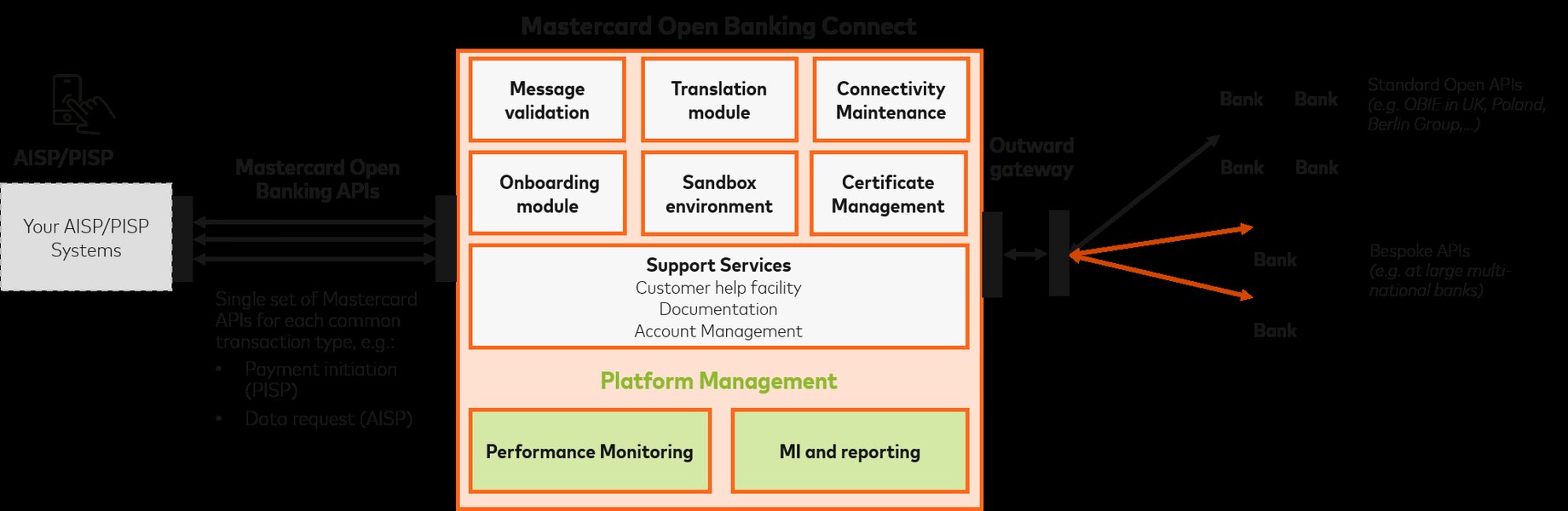
A visual representation of accessing account information through an Open Banking API, emphasizing security flows like authentication.
Use Cases of APIs in Fintech
APIs are revolutionizing the fintech industry by enabling a wide range of applications and services. Some key use cases include:
-
Open Banking: APIs facilitate secure access to customer financial data with their consent, enabling third-party providers to build innovative financial services.
-
Payment Processing: APIs allow seamless integration with payment gateways, enabling online transactions, mobile payments, and peer-to-peer transfers.
-
Account Aggregation: APIs enable users to view and manage multiple bank accounts and financial data from a single platform.
-
Lending and Credit Scoring: APIs provide access to financial data for automated credit assessments and loan processing.
-
Wealth Management: APIs facilitate access to market data, trading platforms, and portfolio management tools.
-
Fraud Detection: APIs can integrate with fraud detection systems to analyze transactions in real-time and identify suspicious activities.
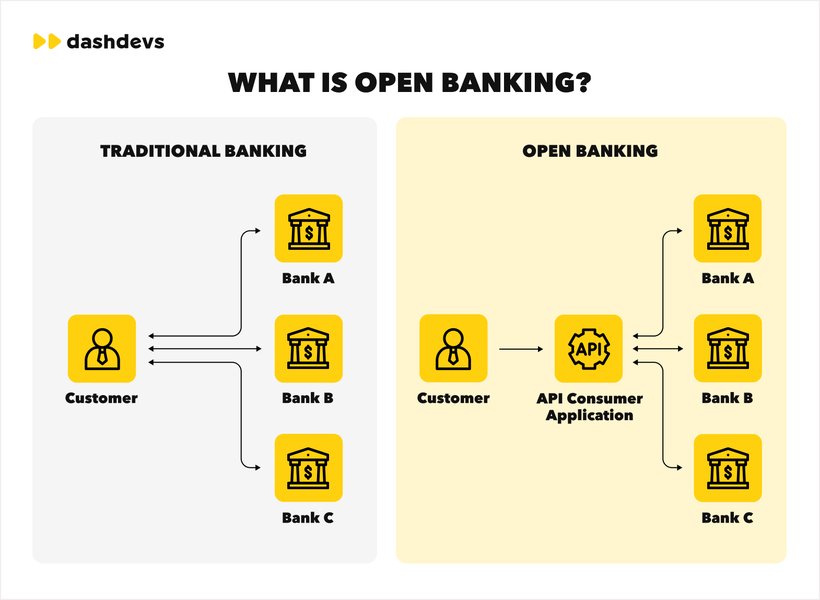
An illustration depicting the interconnected nature of Open Banking, made possible by APIs.
Future Trends in Fintech APIs
The fintech API landscape is continuously evolving. Emerging trends include the increasing adoption of GraphQL for specific use cases, the growing importance of gRPC for high-performance inter-service communication, and the integration of decentralized finance (DeFi) protocols through APIs.
Frequently Asked Questions
Which API style is best for fintech?
There is no single "best" API style for all fintech applications. The ideal choice depends on factors such as the specific use case, performance requirements, security needs, existing infrastructure, and developer expertise. REST is a popular and versatile choice, while SOAP is preferred for enterprise-grade security and transactions, and GraphQL is gaining traction for efficient data fetching.
Why are APIs important in fintech?
APIs are crucial in fintech as they enable seamless communication and data exchange between different financial systems and applications. This facilitates innovation, enhances user experiences, streamlines operations, and allows for the development of new financial products and services.
What are the main security considerations for fintech APIs?
Key security considerations for fintech APIs include robust authentication and authorization, data encryption (HTTPS), using API gateways, regular security audits, and ensuring compliance with relevant financial regulations.
References
Last updated May 4, 2025