
From Jerusalem to the Ends of the Earth: The Apostolic Odyssey After Pentecost
Uncover the extraordinary missions and far-reaching travels of Jesus' twelve apostles as they spread their message across the ancient world.
The event of Pentecost, described in the Book of Acts (Acts 2), stands as a pivotal moment in early Christian history. It was then that the Holy Spirit descended upon the apostles, empowering them with divine courage, spiritual gifts, and a fervent zeal to fulfill Jesus' Great Commission: to "make disciples of all nations" (Matthew 28:19). Before this, the apostles were often portrayed as uncertain, even fearful. After Pentecost, they transformed into bold evangelists, ready to carry their message to distant lands, often at great personal cost. This account details the specific missions, extensive travels, and traditional fates of each of the twelve biblical apostles, including Matthias who replaced Judas Iscariot, following this transformative experience.
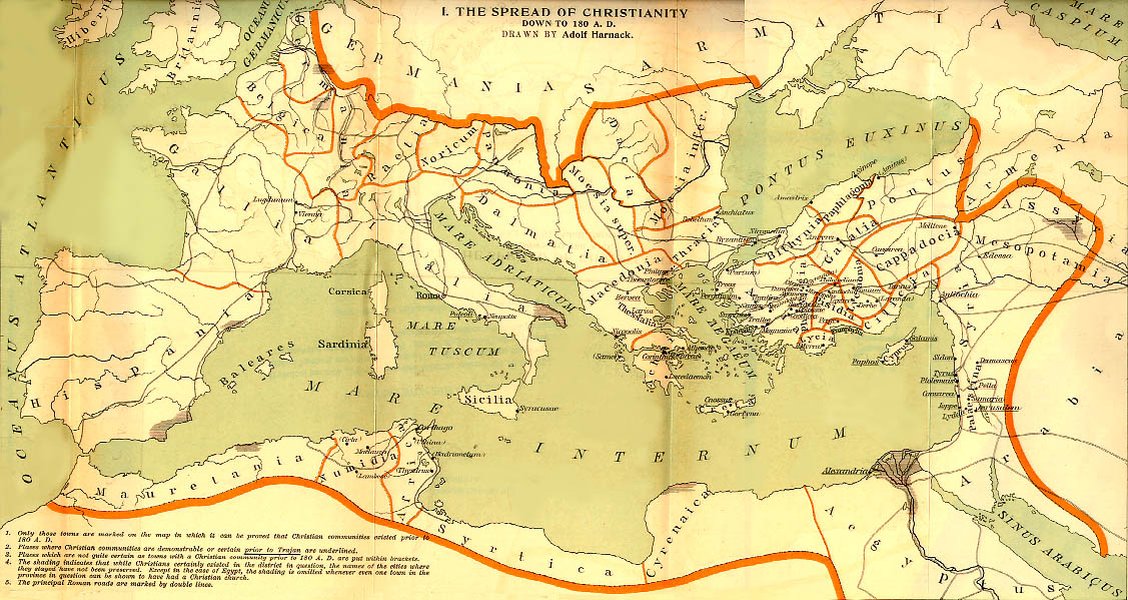
A map illustrating the traditional missionary journeys of the apostles, showcasing the wide geographical spread of early Christianity.
Key Highlights of the Apostolic Missions
- Global Dispersal: Empowered by the Holy Spirit at Pentecost, the apostles embarked on widespread missionary journeys, taking the Christian message from Jerusalem to diverse regions including Europe, Asia, and Africa.
- Founding of Communities: Their travels were not mere explorations but dedicated efforts to establish Christian communities, teach new believers, and organize the nascent Church structure in various cultural contexts.
- Facing Adversity: Most apostles faced significant persecution and, according to tradition, met martyrs' deaths, underscoring their unwavering commitment to their faith and mission.
The Journeys and Fates of the Twelve Apostles
The accounts of the apostles' missions are drawn from a combination of New Testament references, writings of early Church Fathers (like Eusebius), and long-standing traditions. While the specifics can vary, a general consensus emerges regarding their fields of labor and ultimate sacrifices.
1. Simon Peter
The Rock's Enduring Mission
Considered a leading figure among the apostles, Simon Peter was instrumental in the early Church's formation, famously delivering the first sermon on Pentecost that led to thousands of conversions (Acts 2). His initial ministry was centered in Jerusalem, Judea, and Samaria. He performed healings and preached boldly. Later, tradition holds that Peter traveled extensively, with missions in Pontus, Galatia, Cappadocia, Asia Minor, and Bithynia. His journeys eventually led him to Rome, the heart of the Roman Empire. It is widely believed that he was martyred in Rome under Emperor Nero around AD 64-68, crucified upside down at his own request, as he felt unworthy to die in the same manner as Jesus.
2. Andrew
The First-Called's Outreach to the Greeks
Andrew, Peter's brother and one of the first disciples called by Jesus, is traditionally known as the "Apostle to the Greeks." After Pentecost, his missionary zeal reportedly took him to Scythia (a vast region north and east of the Black Sea), Thrace, and Greece, particularly Achaia. Ancient traditions recount his powerful preaching and the establishment of Christian communities in these Greek-speaking areas. He is believed to have been martyred in Patras, Greece, by crucifixion on an X-shaped cross (crux decussata), which subsequently became known as St. Andrew's Cross, around AD 60-70.
3. James, son of Zebedee (James the Great)
The First Apostolic Martyr
James, the brother of John and part of Jesus' inner circle, ministered primarily in Jerusalem and Judea. His missionary journeys outside this immediate region were limited due to his early martyrdom. He was the first of the apostles to die for his faith, executed by the sword under the orders of King Herod Agrippa I in Jerusalem around AD 44 (Acts 12:1-2). Tradition suggests his body was later miraculously transported to Santiago de Compostela in Spain, which became a major pilgrimage site.
4. John
The Beloved Disciple's Enduring Legacy
John, brother of James and known as "the Beloved Disciple," played a crucial role in the Jerusalem church alongside Peter and James (the Lord's brother), being considered one of its "pillars" (Galatians 2:9). He journeyed with Peter to Samaria. Tradition holds that he later moved to Ephesus in Asia Minor, where he ministered for many years, wrote his Gospel, three epistles, and, during a period of exile on the island of Patmos, the Book of Revelation. Uniquely among the apostles, John is believed to have died of natural causes at an old age, likely in Ephesus, around AD 98, during the reign of Emperor Trajan. Tradition also holds he cared for Mary, the mother of Jesus, after Christ's ascension.
5. Philip
Mission to the Hellenistic World
Philip, distinct from Philip the Deacon (Acts 6 and 8), hailed from Bethsaida, like Peter and Andrew. After Pentecost, he directed his missionary efforts towards Greek-speaking communities. Tradition suggests he preached extensively in Phrygia, a region in Asia Minor, and particularly in the city of Hierapolis. It is in Hierapolis that he is believed to have been martyred, possibly by crucifixion or stoning, around AD 80. His ministry underscored the early Church's outreach to Hellenistic cultures.
6. Bartholomew (Nathanael)
Evangelist to the East
Bartholomew, often identified with Nathanael mentioned in the Gospel of John, is said to have undertaken extensive missionary journeys to the East. Traditions place his ministry in diverse regions including India, Armenia, Ethiopia, Mesopotamia, Parthia, and Lycaonia. He is particularly revered in Armenia, where, alongside Jude Thaddeus, he is credited as a co-founder of the Armenian Apostolic Church. According to tradition, he was martyred in Armenia, possibly by being flayed alive and then beheaded, around AD 70.
7. Thomas (Didymus)
The Apostle to India
Thomas, often remembered as "Doubting Thomas" for his initial skepticism about Jesus' resurrection, became a courageous missionary. Strong and ancient traditions link him to evangelistic work in Parthia (modern-day Iran and surrounding areas) and, most famously, India. He is believed to have traveled as far as the Malabar Coast in Southern India, where he established Christian communities that persist to this day as the Saint Thomas Christians (Mar Thoma Nazranis). Tradition holds that he was martyred near Mylapore, Madras (now Chennai), India, around AD 72, pierced by spears or a sword.
8. Matthew (Levi)
The Tax Collector's Gospel Outreach
Matthew, also known as Levi the tax collector before becoming an apostle, is credited with authoring the Gospel of Matthew, likely written initially for a Jewish audience. After Pentecost, early traditions suggest he preached the Gospel to Jewish communities in the East. His mission fields are variously reported to include Judea, Persia, Parthia, Syria, Macedonia, and Ethiopia. The details of his later life and death are somewhat obscure, leading some to call him the "Phantom Apostle," but many traditions hold that he was martyred, possibly by a sword or spear, in Ethiopia or Persia around AD 60-70.
9. James, son of Alphaeus (James the Less)
Quiet Dedication
James, son of Alphaeus, often referred to as James the Less (possibly due to his stature or age compared to James, son of Zebedee), is one of the less documented apostles in the New Testament after Pentecost. However, tradition indicates he preached in Judea, Edessa (in Upper Mesopotamia), Gaza, and Eleutheropolis. Some traditions link him with missionary work in Syria or Egypt. He is believed to have been martyred, with accounts varying between crucifixion (possibly in Egypt) or stoning in Jerusalem.
10. Jude (Thaddeus or Lebbaeus)
Missionary to Mesopotamia and Armenia
Jude, also known by the names Thaddeus or Lebbaeus (and distinct from Judas Iscariot), is the traditional author of the Epistle of Jude. After Pentecost, he is said to have undertaken missionary journeys to Judea, Samaria, Idumaea, Syria, Mesopotamia, and Libya. He is particularly associated with missionary work in Persia (modern Iran) and Armenia. Alongside Bartholomew, he is venerated as a co-founder of the Armenian Apostolic Church. Tradition holds that he was martyred around AD 65, possibly in Beirut (Phoenicia) or Persia, often depicted as being killed with an axe or club.
11. Simon the Zealot
The Zealous Evangelist
Simon the Zealot, so-called to distinguish him from Simon Peter and possibly due to his former association with the Jewish Zealot party, is another apostle about whom the New Testament provides few details after Pentecost. Traditions about his missionary activities are varied and widespread. Some accounts suggest he preached in Egypt, Cyrene, across North Africa, and even as far as Britain. Other strong traditions link him with Jude Thaddeus, claiming they ministered together in Persia, Armenia, and Syria, where they were jointly martyred, possibly in Beirut or Suanir, Persia, around AD 65-70.
12. Matthias
Chosen to Continue the Mission
Matthias was chosen by the remaining eleven apostles to replace Judas Iscariot shortly after Jesus' ascension and before Pentecost (Acts 1:15-26), thereby restoring the number to twelve. While Scripture does not record his specific missionary activities, tradition holds that he preached the Gospel with dedication. His mission fields are believed to have included Judea, Cappadocia, and regions along the Caspian Sea coast (often referred to as "Ethiopia" in some ancient texts, which could denote areas beyond Roman Egypt, including Colchis in modern-day Georgia). According to tradition, he was martyred for his faith, with accounts varying between stoning followed by beheading (possibly in Jerusalem or Colchis) around AD 80.
Paul: The Apostle to the Gentiles
Although not one of the original twelve apostles chosen by Jesus during His earthly ministry, Paul (formerly Saul of Tarsus) received a special commission from the resurrected Christ to be the "Apostle to the Gentiles" (Romans 11:13, Galatians 2:8). His conversion was a dramatic turning point. Paul undertook at least three major missionary journeys, covering over 10,000 miles by land and sea. His travels spanned Cyprus, Asia Minor (modern Turkey), Macedonia, Greece, and eventually led him to Rome. He planted numerous churches (at least 14 are noted), wrote a significant portion of the New Testament epistles, and tirelessly spread the Gospel across the Roman Empire. Approximately half of the Book of Acts is dedicated to documenting his travels, preaching, and miracles. Tradition holds that Paul was martyred in Rome under Emperor Nero, likely by beheading, around AD 64-67.

A map illustrating one of Apostle Paul's extensive missionary journeys, highlighting his reach across Asia Minor and Greece.
Visualizing the Apostolic Outreach: A Comparative Look
The following chart offers an illustrative comparison of some key apostles (including Paul for his significant missionary role) based on traditional accounts and biblical mentions. This is not based on precise data but rather on general estimations derived from historical and traditional narratives, highlighting different facets of their post-Pentecost ministries.
This radar chart provides a visual way to consider the varied contributions and experiences of these key figures. For instance, Paul scores highly across all metrics due to his extensive, well-documented missions. Thomas is noted for his remarkable geographical reach to India, while John's strength lies in the enduring tradition and impact of his later ministry and writings, despite a less severe traditional end.
Mapping the Apostles' Fields of Ministry
The following mindmap illustrates the traditional primary regions where each apostle (and Paul) carried out their missionary work after Pentecost. This provides a conceptual overview of their geographical dispersion as they sought to spread the Christian message throughout the known world and beyond.
Jerusalem, Judea, Samaria
Pontus, Galatia, Cappadocia
Asia Minor, Rome"] andrew["Andrew
Scythia, Black Sea Region
Thrace, Greece (Patras)"] james_zebedee["James (son of Zebedee)
Jerusalem, Judea
(Early Martyrdom)"] john["John
Jerusalem, Samaria
Ephesus (Asia Minor), Patmos"] philip["Philip
Phrygia (Hierapolis)
Greek-speaking communities"] bartholomew["Bartholomew (Nathanael)
Armenia, India
Ethiopia, Mesopotamia"] thomas["Thomas
Parthia, India (Malabar Coast)"] matthew["Matthew (Levi)
Judea, Persia, Parthia
Ethiopia, Jewish communities"] james_alphaeus["James (son of Alphaeus)
Judea, Edessa
Syria, Egypt"] jude["Jude (Thaddeus)
Mesopotamia, Armenia
Persia, Syria"] simon_zealot["Simon the Zealot
Persia (with Jude)
Egypt, North Africa, Britain (varied traditions)"] matthias["Matthias
Judea, Cappadocia
Caspian Sea Coasts, Colchis (Georgia)"] paul["Paul (Apostle to Gentiles)
Cyprus, Asia Minor
Macedonia, Greece, Rome"]
This mindmap visually emphasizes how the apostles, starting from Jerusalem, branched out to carry their teachings to diverse cultures and distant lands, fulfilling the mandate they received.
Summary of Apostolic Missions and Traditional Fates
The dedication of the apostles to their mission often led them to face severe persecution. The table below summarizes their traditional primary mission areas and how their lives are believed to have concluded, underscoring their commitment.
| Apostle | Primary Mission Areas | Traditional Fate |
|---|---|---|
| Peter (Simon Peter) | Jerusalem, Judea, Samaria, Pontus, Galatia, Cappadocia, Rome | Martyred by crucifixion (upside down) in Rome |
| Andrew | Scythia, Thrace, Greece (Achaia, Patras) | Martyred by crucifixion (X-shaped cross) in Patras |
| James (son of Zebedee) | Jerusalem, Judea | Martyred by sword (Herod Agrippa I) in Jerusalem (c. 44 AD) |
| John | Jerusalem, Ephesus, Asia Minor, Patmos | Died of natural causes in Ephesus (c. 98 AD) |
| Philip | Phrygia (Hierapolis), Greek-speaking communities | Martyred (crucifixion or stoning) in Hierapolis (c. 80 AD) |
| Bartholomew (Nathanael) | Armenia, India, Ethiopia, Mesopotamia | Martyred (flayed alive and/or beheaded) in Armenia (c. 70 AD) |
| Thomas (Didymus) | Parthia, India (Malabar Coast) | Martyred (speared or stabbed) near Mylapore, India (c. 72 AD) |
| Matthew (Levi) | Judea, Persia, Parthia, Ethiopia | Martyred (sword or spear), possibly in Ethiopia or Persia (c. 60-70 AD) |
| James (son of Alphaeus) | Judea, Edessa, Syria, Egypt | Martyred (crucifixion or stoning) |
| Jude (Thaddeus/Lebbaeus) | Mesopotamia, Armenia, Persia, Syria | Martyred (axe or club), possibly in Beirut or Persia (c. 65 AD) |
| Simon the Zealot | Persia, Armenia, Egypt, North Africa (varied traditions) | Martyred, often with Jude, possibly in Persia or Beirut (c. 65-70 AD) |
| Matthias | Judea, Cappadocia, Caspian Sea coasts, Colchis (Georgia) | Martyred (stoned and beheaded), possibly in Colchis (c. 80 AD) |
A Visual Journey with the Apostles
The following video provides a narrative overview of the traditional journeys undertaken by the twelve apostles as they embarked on their mission to spread the teachings of Jesus Christ after Pentecost. It offers a visual companion to the historical and traditional accounts discussed, helping to bring their remarkable efforts to life.
"Parable Exclusive: Journey of The Twelve Apostles" - This video visually explores the apostles' missions.
Watching such visualizations can deepen our appreciation for the immense challenges these early missionaries faced, traveling vast distances without modern conveniences, often into hostile territories, driven by their profound faith and the empowering presence of the Holy Spirit they received at Pentecost.
Frequently Asked Questions (FAQ)
How did the apostles travel during their missions?
How reliable are the accounts of the apostles' later missions and deaths?
What does "martyrdom" mean in the context of the apostles?
Were all apostles martyred?
Why was Paul so prominent if he wasn't one of the original twelve?
Conclusion: An Unwavering Mission
The period following Pentecost witnessed an extraordinary expansion of the Christian message, spearheaded by the twelve apostles and other early disciples like Paul. Transformed from a small group of followers in Jerusalem, they embraced their commission with unwavering resolve, carrying their teachings across diverse cultures and vast geographical expanses. Their journeys, fraught with peril and often culminating in martyrdom, laid the foundational stones for a global faith. The legacy of their missions is not just in the churches they planted, but in the enduring narrative of faith, courage, and sacrifice that continues to inspire millions worldwide. Their collective efforts truly began to turn the world "upside down" (Acts 17:6) with the message of Jesus Christ.
Recommended Further Exploration
- Explore the profound theological and practical significance of the Pentecost event for the nascent Christian community.
- Investigate the different approaches and target audiences in the missionary work of Apostle Peter versus Apostle Paul.
- Learn about the formation and characteristics of the first Christian churches established through apostolic missions.
- Examine the historical and patristic sources that detail the martyrdoms of the apostles.
References
 biblesaintsandscoundrels.wordpress.com

Last updated May 21, 2025