
Comprehensive Performance Comparison: Apple Silicon (M1 Pro, M2, M3, M4) vs NVIDIA RTX 4090 in Running Ollama
Analyzing Efficiency and Speed Across Leading Processors for Optimal AI Task Execution
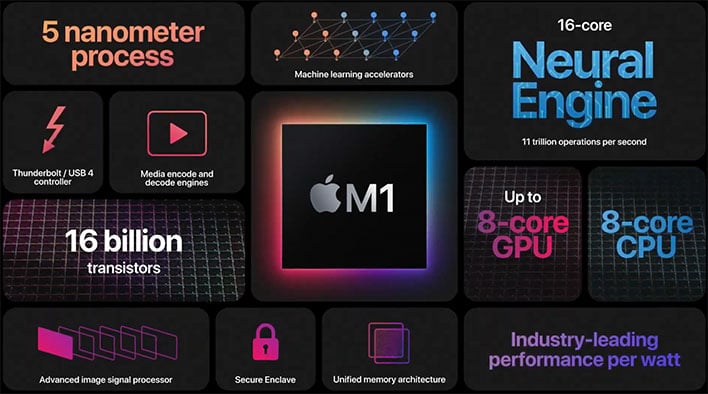
Key Takeaways
- NVIDIA RTX 4090 significantly outperforms all Apple Silicon chips in raw computational power and memory bandwidth, making it the top choice for intensive AI tasks.
- Apple M3 Max offers a balanced performance with improved GPU cores and memory bandwidth, suitable for moderate AI workloads.
- Memory bandwidth and GPU core count are critical factors influencing the performance of AI inference tasks like running Ollama.
Overview of Chips
The landscape of AI processing units features Apple's M1 Pro, M2, M3, and M4 chips alongside NVIDIA's high-end GPU, the RTX 4090. Each of these processors brings unique strengths and architectural designs tailored to different aspects of computing and AI tasks.
Apple Silicon Chips
- M1 Pro: The first generation of Apple's M-series chips, renowned for efficiency and integrated design, typically configured with 16GB or 32GB of unified RAM.
- M2: An iterative improvement over the M1 Pro, offering enhanced performance and energy efficiency with incremental gains in processing capabilities.
- M3: The latest generation before the M4, featuring further enhancements in GPU cores, Neural Engine capabilities, and memory bandwidth.
- M4: Anticipated to deliver significant performance boosts over its predecessors, focusing on both computational power and energy management.
NVIDIA RTX 4090
The RTX 4090 stands as a powerhouse in the GPU market, designed for high-end graphics rendering and AI tasks. Equipped with 24GB of VRAM and CUDA cores optimized for parallel processing, it is tailored for demanding computational workloads.
Performance Metrics in Running Ollama
Running Ollama, an AI-driven language model, demands substantial computational resources. The performance of each processor varies based on architecture, memory bandwidth, and GPU acceleration capabilities.
Token Generation Speed
| Processor | Tokens/Second – CPU | Tokens/Second – GPU | Memory Bandwidth (GB/s) | GPU Cores |
|---|---|---|---|---|
| M1 Pro | 14.8 | 19.4 | Unified RAM (16GB/32GB) | Integrated GPU |
| M2 | ~10-15% faster than M1 Pro | Improved over M1 Pro | Enhanced unified RAM | Enhanced GPU cores |
| M3 Max | Higher than M2 | 67.5 | 200 GB/s | 40 GPU cores |
| M4 Pro | 11-15 | 15 (base model) | ~220 GB/s | Upgraded GPU cores |
| NVIDIA RTX 4090 | 108.5 to 119.1 | 108.5 to 119.1 | 1,008 GB/s | 16,384 CUDA cores |
Inference Speed and Efficiency
The RTX 4090 vastly outperforms all Apple Silicon counterparts in both CPU and GPU inference speeds when running Ollama. With token generation rates exceeding 100 tokens per second, it is ideal for high-demand AI tasks requiring rapid processing. In contrast, Apple's chips, while efficient and suitable for smaller or quantized models, lag significantly behind in raw performance metrics.
Memory Constraints
Memory bandwidth plays a crucial role in AI inference performance. Apple's unified RAM architecture, even in upgraded models like the M3 Max and M4 Pro, still falls short compared to the RTX 4090's massive 1,008 GB/s memory bandwidth. This difference becomes especially pronounced when handling larger models or higher data throughput requirements.
Detailed Performance Analysis
Apple M1 Pro and M2
The M1 Pro, Apple's initial foray into high-performance integrated chips, offers respectable performance for smaller AI models. However, its unified RAM (up to 32GB) becomes a bottleneck when dealing with larger models like the 7B LLaMA in non-quantized settings. The M2 builds upon the M1 Pro's foundation with a better Neural Engine and slight GPU enhancements, delivering approximately 10-15% better performance depending on the task. Nonetheless, both chips struggle to compete with discrete GPUs like the RTX 4090 in high-demand scenarios.
Apple M3 and M4
The M3 Max introduces significant improvements over its predecessors, boasting enhanced GPU cores and increased memory bandwidth. This results in higher inference speeds, making it more capable of handling mid-sized AI models. However, despite these advancements, the M3 Max still trails behind the RTX 4090 by a considerable margin, particularly in tasks that fully utilize GPU acceleration.
The forthcoming M4 Pro is expected to deliver further enhancements, with anticipated improvements in both GPU core count and memory bandwidth. While these upgrades provide modest performance gains, they are unlikely to bridge the gap with the RTX 4090 in terms of raw AI processing power. The M4's architectural focus remains on power efficiency and integrated design, aligning with Apple's broader strategy rather than directly challenging high-end GPUs.
NVIDIA RTX 4090
The RTX 4090 stands out with its exceptional computational capabilities, featuring 16,384 CUDA cores and 24GB of VRAM. Its memory bandwidth of 1,008 GB/s enables rapid data processing, essential for high-performance AI tasks like running Ollama. The GPU's architecture is optimized for parallel processing, significantly enhancing both speed and efficiency in handling large-scale models and extensive token generation.
Moreover, CUDA optimizations and the RTX 4090's ability to handle batched inference tasks provide a substantial edge over integrated solutions. Even when overclocked, the RTX 4090 maintains superior performance, making it the preferred choice for developers and researchers requiring top-tier AI processing capabilities.
Key Factors Influencing Performance
Memory Bandwidth
Memory bandwidth is a critical determinant of AI inference performance. The RTX 4090's 1,008 GB/s contrasted with the M3 Max's 200 GB/s underscores the GPU's superior ability to handle high-volume data transfers, essential for rapid token generation and processing large models.
GPU Core Count
The sheer number of GPU cores is another pivotal factor. The RTX 4090's 16,384 CUDA cores provide immense parallel processing power, far exceeding the GPU core counts of Apple's M-series chips. This disparity translates directly into faster and more efficient AI task completion.
Power Efficiency vs. Raw Power
While Apple's chips excel in power efficiency, making them ideal for portable and energy-constrained environments, the RTX 4090 prioritizes raw computational power. This trade-off is significant for users who require sustained high performance for intensive AI workloads.
Use Cases
Apple M1 Pro, M2, M3, M4
These chips are best suited for developers, hobbyists, and professionals who run smaller or quantized AI models locally. Their integrated design and energy efficiency make them ideal for environments where portability and low power consumption are paramount. Tasks such as lightweight data processing, small-scale machine learning applications, and development workflows benefit from the balanced performance of Apple's Silicon.
NVIDIA RTX 4090
The RTX 4090 is the optimal choice for high-performance AI tasks that demand rapid processing and the handling of large models. Its robust GPU capabilities make it suitable for researchers, developers, and enterprises engaged in intensive machine learning, data analysis, and large-scale AI model training. Additionally, its high memory bandwidth and extensive VRAM support complex, data-heavy applications with ease.
Conclusion
In the realm of running Ollama and similar large language models, the NVIDIA RTX 4090 unequivocally outperforms Apple's M-series chips in terms of raw computational power, memory bandwidth, and GPU core count. While Apple's Silicon offers impressive efficiency and is well-suited for smaller-scale or energy-efficient AI tasks, it falls short when pitted against the RTX 4090's superior performance in high-demand scenarios.
For users requiring top-tier AI processing capabilities, especially those dealing with large models and extensive token generation, the RTX 4090 remains the gold standard. Conversely, Apple's M1 Pro, M2, M3, and upcoming M4 chips serve as excellent alternatives for less intensive applications, offering a harmonious balance between performance and power efficiency.
References
- Running Local LLMs: CPU vs. GPU - a Quick Speed Test
- Performance of llama.cpp on Apple Silicon M-series #4167
- The Fastest Llama: Uncovering the Speed of LLMs
- GitHub - GPU Benchmarks on LLM Inference
- Thoughts on Apple Silicon Performance for Local LLMs
- YouTube: Performance Insights
- Mac M3 vs. NVIDIA 4090 Performance Analysis
- Apple Silicon M3 Pro Surpasses NVIDIA RTX 4090 in AI Benchmark
Last updated January 27, 2025