
Unlock Maintenance Savings: How Augmented Reality Delivers Real-Time, Hands-Free Repair Guidance
Discover AR's transformative role in guiding technicians through complex repairs, boosting efficiency, and slashing maintenance costs.
Key Insights: AR in Maintenance Cost Control
- Drastically Reduced Downtime: AR empowers technicians with instant information and remote expertise, leading to faster diagnostics and repairs, directly minimizing costly operational interruptions.
- Enhanced First-Time Fix Rates: By providing precise, step-by-step visual instructions, AR significantly reduces errors and the need for rework, optimizing labor and parts expenses.
- Optimized Training & Safety: AR offers immersive, hands-on training simulations and real-time safety alerts, lowering training costs, accelerating skill acquisition, and reducing accident-related expenditures.
What is Augmented Reality (AR) in Maintenance?
Augmented Reality (AR) in the context of maintenance is a cutting-edge technology that superimposes digital information—such as 3D models, instructional text, animations, or real-time data—onto a technician's view of the physical world. Typically experienced through smart glasses, tablets, or smartphones, AR provides an interactive and enriched perspective of the equipment being serviced. This allows technicians to receive contextual guidance and crucial information directly within their line of sight, enabling them to perform complex repair and maintenance tasks with greater accuracy and efficiency, all while keeping their hands free to work.
For a Maintenance Cost Control course, understanding AR is pivotal because it directly addresses common sources of high maintenance expenditure: prolonged downtimes, human error, inefficient use of resources, and extensive training periods.
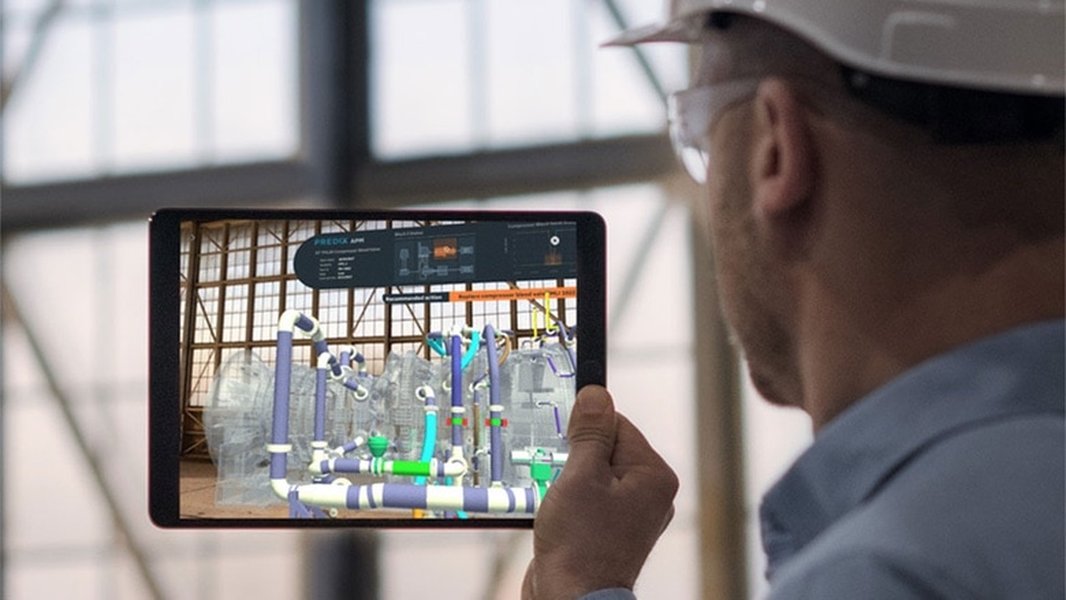
Apple engineers reportedly use AR to guide remote technicians, showcasing real-world application.
How AR Guides Technicians: Mechanisms of Support
AR systems employ a combination of hardware and software to deliver intuitive support. The process typically involves:
- Visual Overlays & Step-by-Step Instructions 📄➡️💻: AR applications can display detailed, sequential repair instructions directly in the technician's field of view. This eliminates the need to consult paper manuals or switch between a separate device and the task at hand, ensuring focus and precision. These instructions can include highlighting specific parts, showing tool usage, or animating disassembly/assembly sequences.
- Hands-Free Operation 🕶️: Devices like smart glasses allow technicians to access data, view instructions, and communicate with experts without using their hands. This is crucial for safety and efficiency, especially when working in confined spaces or performing tasks that require both hands. Voice commands are often used to navigate AR interfaces.
- Real-Time Data Access & Component Identification ⚙️🔍: By using image recognition or by connecting to IoT sensors, AR systems can identify equipment and its components, then display relevant data such as maintenance history, operating parameters, or required part numbers. Some AR tools offer "X-ray vision" capabilities to visualize internal components.
- Remote Expert Assistance 🌐💬: A significant cost-saving feature is the ability for an on-site technician to share their live point-of-view with an off-site expert. The expert can then provide guidance by drawing annotations, sharing documents, or demonstrating procedures directly within the technician's AR display. This "see-what-I-see" capability reduces travel time for specialists and enables faster problem resolution.
- Interactive 3D Models: Instead of static diagrams, technicians can interact with dynamic 3D models of the machinery. They can rotate, explode, or section these models to better understand complex assemblies and locate hard-to-find parts.
Visualizing the Impact: AR vs. Traditional Maintenance
To better understand the transformative potential of Augmented Reality in maintenance operations, the radar chart below compares key performance indicators for traditional maintenance methods versus AR-assisted maintenance. The scores, on a scale where higher values indicate better performance (or lower negative impact, e.g., skill reliance), are based on industry observations and the expected benefits of AR adoption. Notice how AR consistently enhances various facets of maintenance work, leading to overall improvements in efficiency and cost-effectiveness.
As illustrated, AR-assisted maintenance shows significant advantages in repair speed, accuracy, safety, training efficiency, and overall cost-effectiveness, while also reducing over-reliance on highly specialized individual technician skills by standardizing procedures and providing robust support.
Key Benefits of AR for Maintenance Cost Control 💰📉
The adoption of AR in maintenance translates directly into tangible cost savings and operational efficiencies. Here’s how:
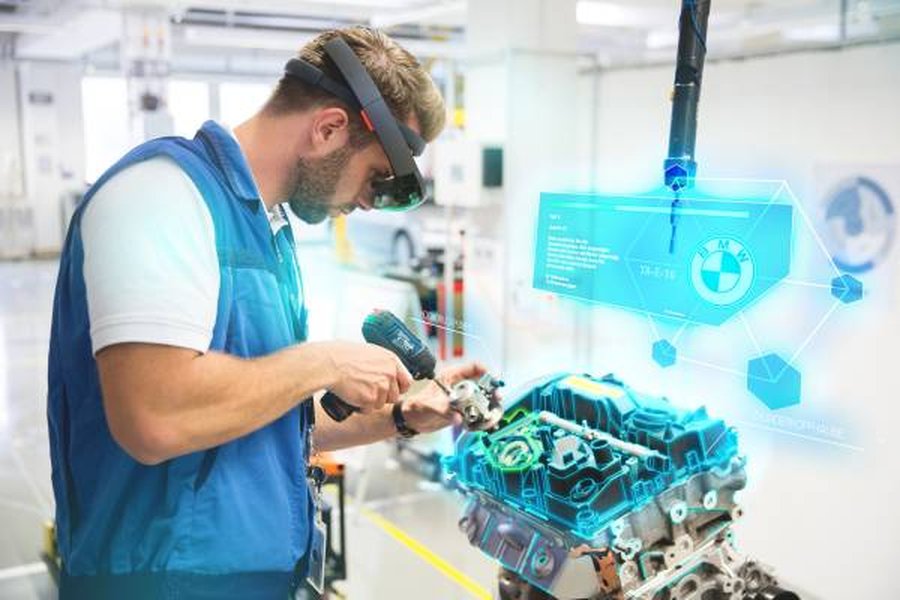
BMW Group utilizes AR for training in engine assembly, enhancing skill development and reducing errors.
Direct Cost Reductions
Reduced Downtime & Increased Uptime ⏱️
Faster troubleshooting and repair processes mean machinery is back online quicker. This directly impacts production output and revenue, especially in manufacturing or critical infrastructure. AR can help reduce Mean Time To Repair (MTTR) significantly.
Lower Labor Costs
Increased technician efficiency means tasks are completed faster, reducing billable hours. Remote expert assistance eliminates the need for expensive travel and accommodation for specialists, drastically cutting associated costs.
Minimized Errors and Rework ✅
Step-by-step visual guidance reduces the likelihood of human error, leading to higher first-time fix rates. This avoids the cost of repeat visits, additional parts, and further downtime associated with incorrect repairs.
Optimized Parts Usage
Accurate diagnostics and component identification ensure the correct parts are ordered and used, reducing waste from misordered or unnecessarily replaced components.
Indirect Cost Savings & Efficiency Gains
Enhanced Technician Safety 🛡️
Hands-free operation and clear visual cues can prevent accidents. AR can also highlight hazardous areas or necessary safety precautions. Reduced accidents lead to lower insurance premiums, compensation claims, and lost workdays.
Improved Training and Skill Development 💡🧠
AR provides an immersive and interactive training environment. New technicians can learn complex procedures more quickly and effectively, often on virtual equipment, reducing the cost and time associated with traditional training programs. It also helps in upskilling existing workforce for new or complex machinery.
Knowledge Capture and Standardization
AR solutions can record repair procedures performed by experienced technicians. This captured knowledge can then be used to train new staff or create standardized best practices, ensuring consistent quality and preserving valuable expertise within the organization.
Summary Table: AR Benefits & Cost Control Impact
The following table summarizes the key benefits of AR in maintenance and their direct impact on cost control:
| Benefit of AR | Impact on Maintenance Cost Control |
|---|---|
| Real-time, Step-by-Step Guidance | Reduced errors, less rework, lower material waste, improved quality. |
| Hands-Free Operation | Increased technician efficiency, improved safety, ability to work in complex environments. |
| Remote Expert Assistance | Reduced travel costs for experts, faster problem resolution, wider access to expertise. |
| Reduced Equipment Downtime | Increased asset availability, higher production output, minimized revenue loss. |
| Improved First-Time Fix Rates (FTFR) | Lower repeat visits, optimized labor costs, increased customer satisfaction. |
| Enhanced Safety | Fewer accidents, reduced compensation & liability costs, improved worker morale. |
| Accelerated Training & Skill Development | Lower training expenses, faster onboarding of new staff, reduced dependency on few experts. |
| Accurate Component Identification & Data Access | Reduced ordering of wrong parts, less inventory waste, more efficient diagnostics. |
AR in Maintenance: A Conceptual Overview
The mindmap below illustrates the interconnected concepts within Augmented Reality for maintenance. It highlights the core idea, the technologies and devices involved, key applications and guidance methods, and the resulting benefits, particularly those pertinent to cost control. This visual representation helps to consolidate the understanding of how AR functions as a comprehensive solution in modern maintenance strategies.
Hands-Free Support"] id2["Key Technologies & Devices"] id2a["Smart Glasses & Headsets"] id2b["Tablets & Smartphones"] id2c["AR Software Platforms"] id2d["Image Recognition & Tracking"] id2e["IoT Integration"] id3["Applications & Guidance Methods"] id3a["Step-by-Step Instructions"] id3b["3D Model Visualization & Animation"] id3c["Remote Expert Assistance & Collaboration"] id3d["Digital Checklists & Workflow Guidance"] id3e["Access to Manuals & History Data"] id3f["Component Identification & Location"] id4["Benefits for Maintenance Cost Control"] id4a["Reduced Equipment Downtime"] id4b["Improved First-Time Fix Rate (FTFR)"] id4c["Lower Labor & Travel Costs"] id4d["Minimized Errors & Rework Costs"] id4e["Enhanced Technician Safety & Reduced Incidents"] id4f["Faster & More Effective Training"] id4g["Optimized Spare Parts Management"]
See AR in Action: Transforming Maintenance
The following video provides a compelling overview of how Augmented Reality is revolutionizing the maintenance industry. It showcases practical applications and highlights the tangible benefits technicians and organizations can achieve, such as improved efficiency, enhanced safety, and streamlined workflows. Watching this can help solidify the concepts discussed and provide a visual understanding of AR's impact on real-world maintenance tasks.
Video: Augmented Reality in Maintenance: Transforming the Industry by UpKeep.
This video illustrates how AR solutions are not just futuristic concepts but practical tools being implemented today to solve complex maintenance challenges and drive significant cost savings.
Frequently Asked Questions (FAQ)
What types of devices are used for AR in maintenance?
Technicians primarily use smart glasses (like Microsoft HoloLens or RealWear devices) for hands-free operation. However, AR applications can also run on tablets and smartphones, which are more widely available and can be a cost-effective starting point for AR adoption.
How does AR contribute to safety in maintenance tasks?
AR enhances safety by providing hands-free access to information, reducing distractions. It can display safety warnings, highlight hazardous areas, and guide technicians through procedures correctly, minimizing risks. AR training also allows practice in simulated hazardous environments without actual danger.
Can AR be integrated with existing maintenance systems like CMMS?
Yes, many AR platforms are designed to integrate with existing enterprise systems such as Computerized Maintenance Management Systems (CMMS), Enterprise Asset Management (EAM), and Product Lifecycle Management (PLM) systems. This integration allows AR applications to pull relevant data (e.g., work orders, asset history, IoT data) and push back completed task information, ensuring data consistency.
What is the typical Return on Investment (ROI) for implementing AR in maintenance?
The ROI varies depending on the scale of implementation and specific use cases. However, companies often report significant ROI through reduced downtime (sometimes by 25-50%), improved first-time fix rates (up to 90% in some cases), decreased training time (by 30-50%), and lower travel expenses for experts. These factors contribute to substantial overall cost savings.
How does AR help in training new technicians more effectively?
AR provides an immersive, 'learn-by-doing' experience. Trainees can interact with virtual equipment and follow guided instructions overlaid on real or simulated machinery. This accelerates learning, improves knowledge retention, boosts confidence, and allows them to practice complex or dangerous tasks in a safe environment before working on actual equipment.
Recommended Further Exploration
- How can I accurately calculate the return on investment for implementing AR technology specifically within industrial maintenance operations?
- What are the current leading Augmented Reality hardware and software solutions tailored for field service and maintenance tasks in 2025?
- In what ways does Augmented Reality integrate with Internet of Things (IoT) sensor data to offer predictive maintenance insights directly to technicians?
- What are the primary challenges and established best practices when deploying AR-based maintenance solutions across a geographically distributed workforce?
References
Last updated May 13, 2025