
Beyond the Basics: Strengthening Your Case Against Applying Hardial Singh Principles in Hong Kong
Exploring additional arguments concerning executive discretion, legal evolution, and practical challenges in immigration detention.
You've identified two strong pillars for arguing against the continued application of the Hardial Singh principles in Hong Kong: the principle that courts shouldn't substitute the executive's judgment on detention periods, and the adequacy of existing general judicial review grounds. Building upon these, here are further points and elaborations, synthesized from legal analyses and official commentary, to construct a more comprehensive case.
Key Highlights
- Evolving Legal Landscape: Arguments suggest the principles, rooted in 1984 UK law, may need reconsideration within Hong Kong's specific and evolving legal and administrative context.
- Executive Expertise & Flexibility: Detention decisions involve complex assessments (risk, removal feasibility) best handled by the executive, requiring flexibility potentially hindered by rigid principles.
- Practical Challenges: Determining a "reasonable period" is inherently complex and can lead to inconsistencies and litigation, potentially undermining efficient immigration management.
Elaborating on Core Arguments
1. Reinforcing the Non-Substitution Principle: Executive Discretion in Detention
While you already grasp this point, strengthening it involves emphasizing the specific nature of executive functions in immigration control.
Separation of Powers and Expertise
A core tenet of administrative law is respecting the separation of powers. Decisions regarding immigration detention inherently involve assessments that fall squarely within the executive's purview. Authorities like the Director of Immigration are tasked with balancing complex factors, including:
- Risk Assessment: Evaluating the likelihood of a detainee absconding or posing a threat to security or public order.
- Removal Feasibility: Assessing the practicalities and timelines involved in removal, which can depend on international cooperation, travel documentation, and ongoing legal challenges (like non-refoulement claims).
- Operational Knowledge: Understanding the resources, procedures, and real-world challenges associated with detention and removal.
Applying the Hardial Singh principles, particularly the requirement for detention to cease if removal isn't possible within a "reasonable period," can be seen as courts stepping into this operational domain. Critics argue that courts lack the specialized knowledge and resources to accurately determine what constitutes a "reasonable period" in diverse and often complex immigration scenarios. This risks judicial overreach, substituting the court's assessment for the executive's informed judgment, potentially undermining the executive's ability to manage immigration control effectively and respond flexibly to changing circumstances.
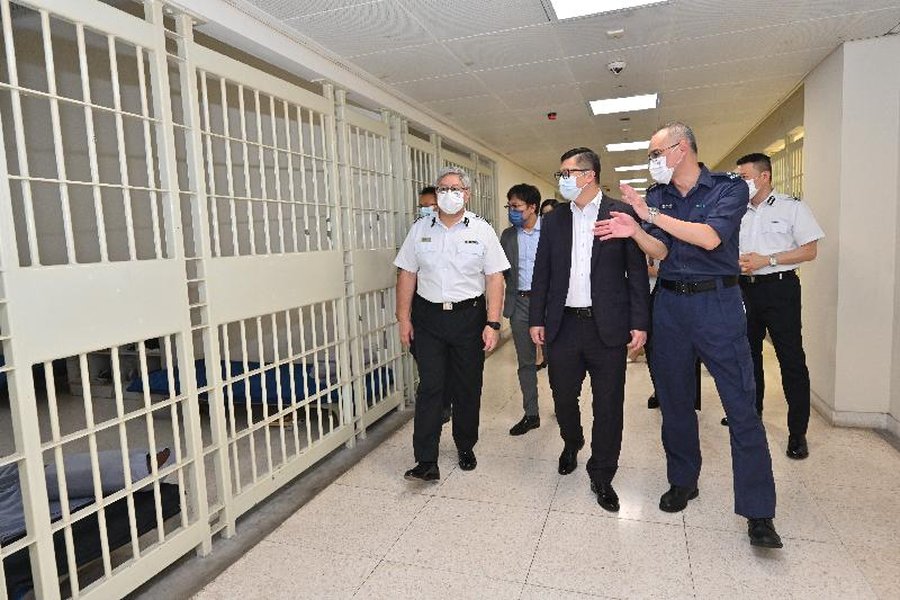
Castle Peak Bay Immigration Centre (CIC), a key facility managed by the Hong Kong Immigration Department for immigration detention.
2. Underscoring the Sufficiency of General Judicial Review
Your point about adequate remedies under general judicial review is crucial. Elaborating on the specific mechanisms strengthens this argument.
Robust Existing Safeguards
Hong Kong administrative law provides a well-established framework for challenging executive decisions, including detention, on several grounds:
- Illegality: The decision-maker acted outside their legal powers.
- Irrationality (Wednesbury Unreasonableness): The decision is so unreasonable that no reasonable authority could have reached it.
- Procedural Impropriety: The process leading to the decision was unfair or flawed.
- Proportionality: Increasingly relevant, this assesses whether the measure taken (detention) is proportionate to the objective pursued (e.g., preventing absconding, facilitating removal).
These grounds allow courts to scrutinize the lawfulness and reasonableness of detention without needing the specific temporal focus of the Hardial Singh principles. If detention is deemed arbitrary, disproportionate, based on errors of law or fact, or procedurally unfair, remedies such as habeas corpus (release from unlawful detention) or damages are available. Case law demonstrates courts applying these general principles to grant relief in detention cases. Therefore, the argument follows that the Hardial Singh principles are arguably redundant, adding an unnecessary layer of complexity when robust, flexible safeguards already exist within the general judicial review framework.
Introducing Additional Arguments Against Hardial Singh
3. The Evolving Hong Kong Context
Legal principles must adapt. The Hardial Singh principles originated in a different jurisdiction (UK) and era (1984). Arguments can be made that Hong Kong's unique context warrants a reassessment.
Changes Since Adoption
Hong Kong's legal and administrative landscape has undergone significant changes since the principles were firmly adopted. This includes developments in immigration law, the implementation of the unified screening mechanism (USM) for non-refoulement claims, and evolving security considerations. Principles developed decades ago in a different context might not perfectly align with the current operational realities and legal framework specific to Hong Kong. Some legal commentators suggest it may be opportune to reconsider the place of these specific principles within Hong Kong's broader administrative law framework.
4. Practical Difficulties and the Need for Flexibility
The application of the Hardial Singh principles can present practical challenges and may lack the necessary flexibility.
Defining "Reasonable Period"
The core concept of a "reasonable period" is inherently subjective and highly dependent on the specific facts of each case. This ambiguity can lead to:
- Inconsistency: Different interpretations across cases.
- Increased Litigation: Disputes over whether the "reasonable period" has expired.
- Administrative Burden: Constant pressure to meet potentially judicially defined timelines, which may not reflect the genuine complexities of a case (e.g., delays caused by the detainee's actions, complexities in obtaining travel documents, pending appeals).
Cases like *Johnson Benjamin v Director of Immigration* [2024] highlight situations where a detainee's own unreasonable behavior significantly prolongs the process, complicating the application of a strict "reasonable period" test. Critics argue that the principles can be overly rigid, hindering the executive's ability to manage complex cases effectively and potentially leading to rushed decisions or premature releases that might compromise immigration control or public safety.

Immigration officers handle complex cases involving detention and removal procedures.
5. Potential Redundancy and Restrictiveness
As touched upon earlier, a key argument is that the principles may be superfluous given the strength of general judicial review.
Overlapping Protections
If detention becomes unduly prolonged without justification, it could likely be challenged successfully under grounds of irrationality or proportionality within the general judicial review framework. This suggests the specific constraints of Hardial Singh might offer little additional protection while potentially introducing rigidity and complexity. The focus could shift entirely to whether the detention decision remains lawful and reasonable based on *all* relevant factors, assessed through the established lens of general administrative law, rather than being overly constrained by a specific temporal principle.
Visualizing the Factors and Arguments
Comparing Detention Assessment Factors
The following chart illustrates the various factors the executive typically weighs when making immigration detention decisions. The Hardial Singh principles introduce a specific constraint focused primarily on the duration relative to removal prospects, potentially creating tension with other critical factors best assessed by the executive.
Mindmap: Arguments Against Applying Hardial Singh
This mindmap summarizes the core arguments suggesting the Hardial Singh principles may no longer be the most appropriate framework for reviewing immigration detention in Hong Kong.
Comparing Legal Frameworks
The following table contrasts the focus and potential impact of relying solely on Hardial Singh principles versus general judicial review grounds for overseeing immigration detention.
| Aspect | Hardial Singh Principles | General Judicial Review Grounds |
|---|---|---|
| Primary Focus | Lawfulness linked to detention duration relative to removal prospects ("reasonable period"). | Overall lawfulness, reasonableness, fairness, and proportionality of the decision to detain/continue detention. |
| Key Test Element | Is removal feasible within a reasonable time? | Is the decision legal, rational, procedurally fair, and proportionate based on all circumstances? |
| Flexibility | Can be perceived as rigid due to focus on temporal limits. | Generally more flexible, allowing consideration of a wider range of factors influencing reasonableness/proportionality. |
| Impact on Executive Discretion | Potentially higher judicial intervention in setting/assessing timeframes. | Review focuses on the legality and rationality of the executive's exercise of discretion, rather than substituting judgment on timelines. |
| Key Remedy Example | Release if "reasonable period" expires or removal is no longer foreseeable. | Release (habeas corpus), quashing the decision, damages if detention found unlawful/irrational/disproportionate. |
Frequently Asked Questions (FAQ)
What exactly are the Hardial Singh principles?
Derived from a 1984 UK case, these principles state that the power to detain pending removal can only be exercised if removal is a realistic prospect within a reasonable period. Key aspects include: (1) The power to detain is limited to the specific purpose (e.g., removal); (2) Detention should only be for a period that is reasonable in all circumstances; (3) If it becomes apparent removal cannot occur within a reasonable period, detention authority ceases.
Why were these principles applied in Hong Kong?
As part of the common law heritage, Hong Kong courts adopted these principles to ensure that administrative detention powers related to immigration are not used arbitrarily or indefinitely. The Court of Final Appeal affirmed their applicability, requiring the Immigration Department to observe them during removal procedures, particularly concerning the reasonableness of the detention duration.
What are the main grounds for general judicial review in Hong Kong?
General judicial review allows courts to examine the lawfulness of administrative actions. Key grounds include illegality (acting beyond power), irrationality (Wednesbury unreasonableness - a decision no reasonable authority could make), procedural impropriety (unfairness in the decision-making process), and increasingly, proportionality (whether the action taken is proportionate to the legitimate aim pursued).
Can immigration detention be challenged without relying on Hardial Singh?
Yes. Detention can be challenged using general judicial review grounds. For example, a detainee could argue that the decision to detain was irrational given the circumstances, disproportionate to the risk posed, based on incorrect facts, or made unfairly. If successful, remedies like release or damages could be granted, even without specific reference to the "reasonable period" aspect central to Hardial Singh.
Recommended Further Exploration
- How have judicial review standards for immigration detention evolved in Hong Kong?
- What are the primary arguments supporting executive discretion in Hong Kong immigration detention decisions?
- How does the application of Hardial Singh principles in Hong Kong compare to other common law jurisdictions?
- What impact has the unified screening mechanism (USM) had on the duration and review of immigration detention in Hong Kong?
References
Last updated April 29, 2025