
Unveiling Artificial Intelligence: From Concept to Creation
A Comprehensive Journey Through AI's Inner Workings and Development Lifecycle
Key Insights into AI and its Development
- AI mimics human intelligence: At its core, Artificial Intelligence is about enabling machines to learn, reason, solve problems, perceive, and use language, much like humans do.
- The AI Development Lifecycle is iterative: Building AI is not a one-time effort but a continuous process involving problem definition, data management, model design, training, evaluation, and deployment, with constant iteration for improvement.
- Data is the lifeblood of AI: Large volumes of high-quality, well-prepared data are fundamental for training AI algorithms, allowing them to identify patterns and make accurate predictions.
Artificial Intelligence (AI) has rapidly transformed from a futuristic concept into an integral part of our daily lives, powering everything from personalized recommendations to advanced self-driving cars. Understanding what AI is and, more importantly, how it is made, demystifies this powerful technology. AI essentially involves programming systems to analyze data, learn from experiences, and make intelligent decisions, simulating human cognitive functions.
What Exactly is Artificial Intelligence?
Defining the Core Concepts of AI
Artificial intelligence (AI) refers to the ability of computer systems to perform tasks that typically require human intelligence. This encompasses a broad range of capabilities, including learning, reasoning, problem-solving, perception, and language understanding. The ultimate goal of AI is to create machines that can think and reason like humans, and even perform tasks beyond human capabilities. AI works by combining vast amounts of data with fast, iterative processing and intelligent algorithms, enabling software to learn automatically from patterns and features within the data.
AI can be categorized in several ways, often based on its stage of development or the actions it performs:
Categories of AI
- Artificial Narrow Intelligence (ANI): This is the most prevalent form of AI today. ANI systems are designed to excel at specific tasks. Examples include spam filters, virtual assistants like Siri, and recommendation engines. They are highly skilled within their defined scope but lack the flexibility to perform beyond their programmed abilities.
- Artificial General Intelligence (AGI): Often referred to as "Strong AI," AGI aims to possess human-like intelligence and adaptability. This hypothetical benchmark would allow AI to understand, learn, and apply intelligence to any intellectual task that a human can. AGI is still a significant research goal.
- Artificial Superintelligence (ASI): This represents a hypothetical future stage where AI would outperform the smartest humans in every domain, including creativity, general knowledge, and problem-solving. This level of AI does not currently exist.
How AI Systems Function: The Underlying Mechanisms
The Technical Foundation of Intelligent Machines
At its fundamental level, AI mimics human intelligence through algorithms and vast datasets. The operational mechanics of AI rely on several interconnected technologies and processes:
Data Collection and Input
The journey of any AI system begins with data. A massive amount of relevant data is collected, serving as the input for the AI. This data can range from images, text, and audio to numerical datasets, depending on the AI's intended purpose. The quality and quantity of this initial data significantly impact the AI's performance.
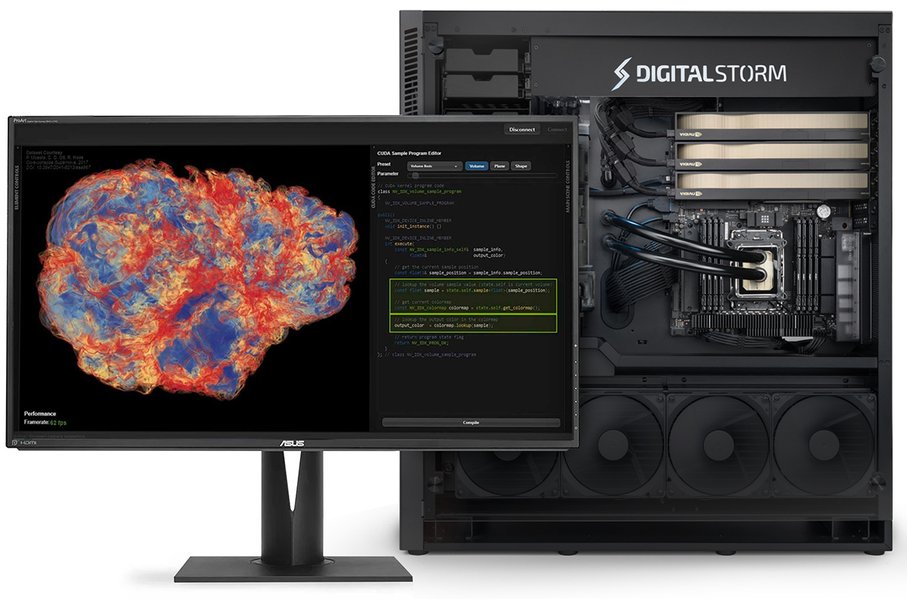
A high-performance computing workstation, essential for processing the vast datasets required for AI training.
Algorithms and Models
Once data is collected, it is applied to mathematical models, or algorithms. These algorithms are the "brains" of the AI, providing the series of instructions that allow the software to learn from patterns and features within the data. Key technologies powering AI include:
- Machine Learning (ML): A subset of AI that enables systems to learn from data and improve over time without being explicitly programmed. It involves training models on data to recognize patterns and make predictions.
- Deep Learning (DL): A sub-field of ML that uses neural networks, modeled after the human brain's structure and function, to analyze complex patterns in large datasets. Deep learning is particularly effective for tasks like image recognition, speech recognition, and natural language processing.
- Natural Language Processing (NLP): This allows machines to understand, interpret, and generate human language. NLP is crucial for applications like chatbots, language translation, and sentiment analysis.
Training and Learning
During the training phase, the AI model iteratively processes the collected data. Through various learning paradigms, the model adjusts its internal parameters to identify and generalize patterns. This process allows the AI to adapt to new inputs and make decisions without explicit programming. Similar to how humans learn from mistakes, AI systems improve their performance over time by continuously processing information, recognizing patterns, and making decisions.

A visualization of the iterative process in machine learning, where data is fed into a model for training and refinement.
Outputs and Adjustments
After processing, the AI generates outcomes, which could be predictions, classifications, or generated content. These outcomes are then assessed for accuracy and effectiveness. If the results are not optimal, the system undergoes adjustments, often involving re-training with more data or refined algorithms. This iterative feedback loop is fundamental to AI's ability to learn and improve.
The AI Development Lifecycle: A Step-by-Step Guide
From Concept to Deployment: Building an AI System
Developing an AI system is a structured and often iterative process, distinct from traditional software development due to its reliance on data and continuous improvement. The AI development lifecycle (AI SDLC) typically involves several key stages:
1. Problem Definition and Goal Setting
The crucial first step is to clearly define the problem the AI will solve and assess the feasibility of an AI solution. This involves setting specific, measurable, achievable, relevant, and time-bound (SMART) goals. For instance, if the goal is to reduce patient wait times, a measurable target might be to cut them by 20-30%. Understanding the specific use case and defining success metrics guides the entire development process.
2. Data Collection and Sourcing
High-quality data is the cornerstone of any effective AI system. This stage involves identifying, acquiring, and collecting the necessary data from various sources. The type of data depends entirely on the problem defined. For example, building a predictive model for house prices would require historical data on house sales, including features like size, location, and previous prices.
3. Data Preparation and Preprocessing
Raw data is rarely in a usable format for AI models. This phase involves cleaning, transforming, and enriching the data. Tasks include handling missing values, removing inconsistencies, normalizing data, and feature engineering (creating new features from existing ones) to make the data suitable for model training. Rigorous data preparation lays a strong foundation for building scalable, high-performing AI models.
4. Model Design and Selection
This stage involves choosing the appropriate AI model and architecture based on the defined problem and prepared data. This might include selecting specific machine learning algorithms (e.g., supervised, unsupervised learning), designing neural network architectures for deep learning, or opting for pre-built AI models or frameworks. The architectural choices significantly affect the system’s performance and scalability.
5. Model Training
With the model designed and data prepared, the AI system is trained. This involves feeding the processed data into the chosen algorithm, allowing it to learn patterns and relationships. This phase often requires significant computational power, utilizing CPUs and GPUs, often leveraged through cloud computing platforms. The model's performance is continuously monitored during training to ensure it learns effectively without overfitting or underfitting the data.
This radar chart illustrates the perceived strengths of different AI development phases based on typical challenges and success factors. A higher score indicates a stronger performance or lower complexity in that area.
6. Model Evaluation and Validation
Once trained, the AI model is rigorously evaluated against unseen data to determine its accuracy, robustness, and generalization capabilities. Techniques like cross-validation are used to test how well the model works on new data. This phase is critical to ensure the AI performs reliably in real-world scenarios and achieves the defined objectives. Insights from this stage guide further refinements.
7. Deployment and Integration
After validation, the AI solution is ready for deployment. This involves integrating the AI model into existing systems or developing new applications around it. Deployment strategies vary, from cloud-based solutions to on-premise implementations. This phase is crucial for transforming theoretical AI models into practical tools that can be used in an operational environment. It also involves establishing robust security measures to protect the AI system and its data.
8. Monitoring and Maintenance
Building an AI is not a one-time effort; it requires continuous monitoring and maintenance. AI models can degrade over time due to shifts in data patterns (concept drift) or changes in the environment. Regular monitoring helps detect performance degradation, and the models may need retraining or updates to maintain their effectiveness. Feedback from users and ongoing analysis help identify opportunities for improvement and new features.
Here is a summary of the AI Development Lifecycle:
| Phase | Key Activities | Primary Goal |
|---|---|---|
| 1. Problem Definition | Identify the specific problem, set SMART goals, assess feasibility. | Clearly define the AI's purpose and scope. |
| 2. Data Collection | Gather relevant and sufficient data from various sources. | Acquire the raw material for AI learning. |
| 3. Data Preparation | Clean, transform, and preprocess data; feature engineering. | Ensure data quality and suitability for modeling. |
| 4. Model Design | Select appropriate algorithms, design architecture. | Choose the right "brain" for the AI. |
| 5. Model Training | Feed prepared data to the model; iterative learning. | Enable the AI to learn patterns and make predictions. |
| 6. Model Evaluation | Test model performance on unseen data, validate accuracy. | Verify the AI's reliability and effectiveness. |
| 7. Deployment | Integrate the AI into operational systems. | Make the AI solution accessible and functional. |
| 8. Monitoring & Maintenance | Continuously track performance, update models as needed. | Ensure long-term effectiveness and relevance of the AI. |
The Role of Generative AI in Development
Generative AI, particularly large language models (LLMs), is revolutionizing the software and AI development process itself. These advanced AI tools can automate key steps, from idea generation and requirement gathering to coding and testing. They assist developers by suggesting code, generating entire functions from natural language inputs, and speeding up development by automating routine tasks. Tools like code completion systems and automated testing platforms reduce the need for manual coding and debugging, accelerating development time and improving code quality.
This video explores how Generative AI is transforming the product development process, enabling teams to operate more efficiently.
Challenges and Considerations in AI Development
Navigating the Complexities of Building AI
While the potential of AI is immense, its development comes with several challenges:
- Data Dependency: AI models are only as good as the data they are trained on. Bias in data can lead to biased AI outcomes, and insufficient data can result in poor performance.
- Integration Difficulties: Incorporating new AI systems into existing technological infrastructures can be complex and disruptive.
- Rapid Technological Change: The field of AI is evolving at a breakneck pace, which can lead to rapid obsolescence if systems are not regularly updated.
- Ethical Concerns and Regulation: Issues such as data privacy, algorithmic bias, transparency in decision-making, and job displacement require careful consideration. Governments and organizations worldwide are working on regulations (like the EU's Artificial Intelligence Act) to ensure AI systems are safe, transparent, and ethically developed.
- Scalability: Building an AI system that can scale effectively with business growth and increasing data volumes is a common hurdle.
- Computational Resources: Training complex AI models, especially deep learning networks, requires significant computational power and energy.
The Future of AI Development
Evolving Capabilities and Broader Impact
The evolution of AI is continuous, with ongoing advancements in areas like:
- Agentic AI Systems: These are AI systems that can independently set goals, plan actions, and execute tasks to achieve those goals, often involving multiple steps and interactions with their environment. Building such systems from scratch involves rethinking how AI makes decisions and handles complexity.
- Low-code/No-code Platforms: These platforms are democratizing AI development, allowing users with minimal coding knowledge to build AI-powered applications using drag-and-drop tools and pre-built components.
- Responsible AI: Growing emphasis is placed on developing AI systems that are fair, transparent, accountable, and environmentally friendly. This includes addressing bias, ensuring interpretability of AI decisions, and minimizing energy consumption.
Frequently Asked Questions about AI Development
How long does it take to build an AI system?
What programming languages are commonly used for AI development?
Can a beginner build an AI system?
What is the difference between AI and machine learning?
Conclusion
Artificial intelligence is a transformative technology built upon the foundational principles of data, algorithms, and iterative learning. Its creation involves a disciplined lifecycle that begins with problem definition, moves through meticulous data handling and model design, and extends to continuous deployment and maintenance. While challenges such as data quality, integration, and ethical considerations exist, the rapid advancements in AI, particularly with generative models and low-code platforms, are making its development more accessible and its impact more profound across all industries. Understanding this intricate process is key to harnessing the full potential of AI and navigating its future evolution.
Recommended Further Exploration
- How does AI impact various industries and sectors?
- What are the ethical implications and governance frameworks for AI?
- Explore the advancements in Artificial General Intelligence (AGI) research.
- What are the latest tools and platforms for building AI applications?
References
 cdn.openai.com
Last updated May 21, 2025