
Unmasking Criminal Profiling: Are Its Foundations Built on Solid Ground?
Delve into the assumptions that underpin criminal profiling and discover the extent to which research supports these fundamental principles.
Key Highlights of Criminal Profiling Assumptions:
- Behavioral Consistency: Criminal profiling often assumes that offenders exhibit consistent behavior patterns across different crimes, which can be crucial in linking seemingly unrelated cases.
- Homology Assumption: This principle suggests that offenders who commit similar crimes share similar characteristics, aiding profilers in predicting offender traits based on crime scene analysis.
- Experience and Expertise: The field relies on the assumption that profilers' training and experience enable them to accurately interpret crime scene information, though this is subject to ongoing scrutiny.
Decoding the Core Assumptions of Criminal Profiling
Criminal profiling, also known as offender profiling, is an investigative strategy used by law enforcement agencies to identify likely suspects and link cases that may have been committed by the same perpetrator. This technique aims to predict offenders' personality patterns, behaviors, and demographic characteristics, providing insights into the perpetrators. However, the effectiveness and validity of criminal profiling hinge on several key assumptions that are not always fully understood or critically examined.
Behavioral Consistency: The Cornerstone of Profiling
One of the primary assumptions in criminal profiling is that offenders display consistency in their behaviors across different crimes. This assumption suggests that an offender's actions and choices at a crime scene reflect their personality, motivations, and modus operandi, remaining relatively stable over time. For example, if an offender consistently uses a particular method of entry, displays a specific type of aggression, or leaves a signature mark at the crime scene, profilers assume that these behaviors will likely be repeated in subsequent offenses. Understanding an offender's consistency can significantly aid in linking seemingly unrelated crimes and narrowing down the list of potential suspects.
The Homology Assumption: Do Similar Crimes Imply Similar Criminals?
The homology assumption posits that offenders who commit similar types of crimes also share similar characteristics, such as age, background, motive, or psychological traits. This assumption suggests that there is a direct relationship between the crime scene behavior and the offender's characteristics. For instance, if several arson cases involve similar ignition methods and target specific types of buildings, the homology assumption would lead profilers to infer that the offenders might share similar backgrounds, such as a history of employment in related industries or a common grievance against the targeted entities.
However, this assumption has faced considerable scrutiny. A widely cited study by Mokros and Alison (2002) tested the homology assumption using a sample of convicted rapists and found no significant correlation between similarities in crime scene behavior and similarities in offender characteristics such as age, occupation, or criminal history. This research provided strong evidence that offenders with comparable behavioral patterns do not necessarily resemble one another in terms of psychological or demographic profiles.
The Role of Experience and Expertise in Criminal Profiling
Criminal profilers often assume that their experience, training, and expertise in the field enable them to accurately interpret crime scene information and generate reliable profiles of offenders. This assumption is based on the belief that seasoned profilers, through years of studying criminal behavior and analyzing crime scenes, develop an intuitive understanding of offender psychology and motivations. They rely on their accumulated knowledge and pattern recognition skills to identify subtle clues and draw meaningful inferences about the offender's characteristics.
However, the reliance on experience and expertise can also be a source of bias. Criminal profilers might inadvertently permit the influence of stereotypes, preconceptions, and apparent truths to inform their analysis. The assumption of unknown characteristics about an offender’s motivation is inherently difficult, and the profiler’s own biases can skew the interpretation of evidence. Therefore, while experience and expertise are valuable assets, they must be tempered with objectivity, critical thinking, and a thorough understanding of the limitations inherent in the profiling process.
Geographic Profiling: Mapping the Offender's Territory
Geographical profiling is a key method used to infer where an offender is likely to live, also known as crime mapping. Canter and Larkin (1993) introduced the circle theory of environmental range, suggesting that if a circle encompasses all linked crimes, the offender is likely based within that circle. Rossmo (2000) further suggests that criminals generally offend close to their homes or other bases. This approach assumes that offenders operate in areas they know well, providing a spatial consistency that helps narrow down potential search areas.
Evaluating the Literature: Support and Contradictions
The validity of the assumptions underlying criminal profiling has been a subject of considerable debate and empirical research. While some studies provide support for certain aspects of these assumptions, others challenge their applicability and question their reliability.
Evidence Supporting Behavioral Consistency and Specificity
Several studies have found evidence of behavioral consistency among offenders, indicating that certain offenders do exhibit similar behaviors across different crime scenes. For example, research on homicide offenders has shown that consistent signature behaviors can reflect underlying psychological and emotional needs. This suggests that offenders' actions at a crime scene may indeed provide valuable insights into their personality and motivations.
Moreover, some research supports the specificity hypothesis, which posits that stable relationships exist between offense behaviors and offender characteristics. This suggests that specific crime scene behaviors are associated with particular configurations of offender background characteristics. However, it is important to note that the evidence for behavioral consistency is often moderate, and the relationships between offense behaviors and offender characteristics are not always straightforward.
Challenges to the Homology Assumption
The homology assumption has faced significant criticism and empirical challenges. As previously mentioned, the study by Mokros and Alison (2002) found no significant correlation between similarities in crime scene behavior and similarities in offender characteristics among convicted rapists. This finding raises serious questions about the validity of assuming that offenders who commit similar crimes necessarily share similar traits. Furthermore, Alison et al. (2003) also questioned the assumption that similar types of offenders will commit crimes in a similar way, adding further doubt to the homology assumption's reliability.
The Debate Over Profiling Accuracy and Utility
The accuracy and utility of criminal profiling as an investigative tool have been a topic of ongoing debate. While some studies suggest that profiling can be helpful in narrowing down the list of potential suspects and generating investigative leads, others raise concerns about its limitations and potential for bias. In 1999, the percentage of accurate criminal profilers was only estimated to be at 21%, whereas in 2020 the accuracy was estimated to be at 86%. Despite these improvements, the effectiveness of criminal profiling still depends on several factors, including the quality of the information available, the skills and experience of the profiler, and the specific characteristics of the case.
The CRIME Approach: An Integrated Framework
To address the current practice deficits in criminal profiling, an integrated framework known as the CRIME approach has been proposed. This framework consists of several key components designed to promote structure and uniformity in profile development:
- Crime Scene Evaluations
- Relevancy of Research
- Investigative or Clinical Opinions
- Methods of Investigation
- Evaluation
The CRIME approach aims to enhance the reliability of profiling by providing an integrative framework for developing profiles and ensuring that all relevant factors are considered.
Overall Conclusion: A Cautious Approach to Criminal Profiling
After evaluating the literature on the assumptions underlying criminal profiling, it is evident that while some assumptions have merit and can provide valuable insights, others are more problematic and require a cautious approach. The assumption of behavioral consistency has some support, but the relationships between offense behaviors and offender characteristics are not always straightforward. The homology assumption, in particular, has faced significant challenges and should not be relied upon without careful consideration of the specific circumstances of the case. The role of experience and expertise is crucial, but profilers must remain objective and avoid biases that can skew their interpretations.
Overall, criminal profiling should be viewed as one tool among many in the investigative process, rather than a definitive solution. It is not a substitute for skilled detective work but rather a tool that can help detectives narrow down the list of potential suspects and generate investigative leads. Logic is pivotal to constructing rational and robust arguments about offender characteristics. Conclusions about the offender should not remain unfounded assumptions or ill-informed guesswork.
Visual Insights: Criminal Profiling in Action
Visual aids can provide a clearer understanding of the methods and assumptions used in criminal profiling. Below are some images that illustrate key aspects of the profiling process.
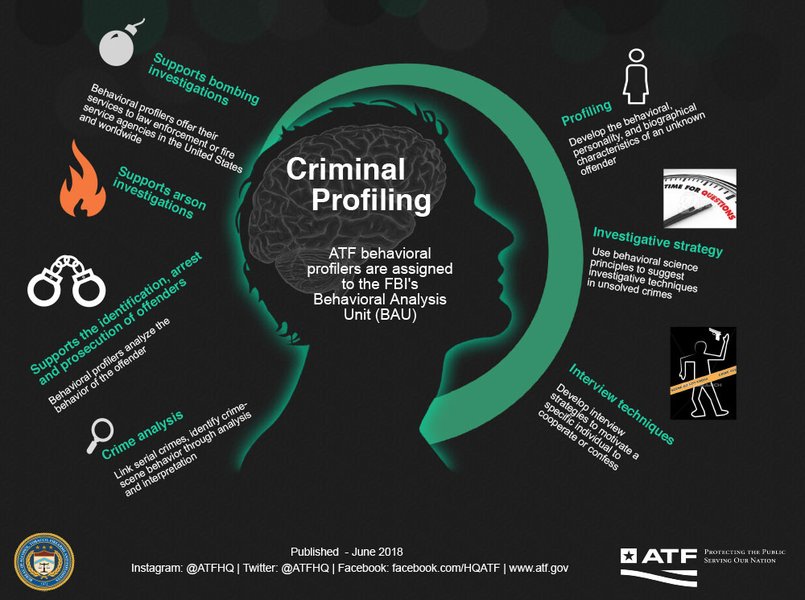
An infographic from the Bureau of Alcohol, Tobacco, Firearms and Explosives (ATF) outlining the steps involved in criminal profiling.
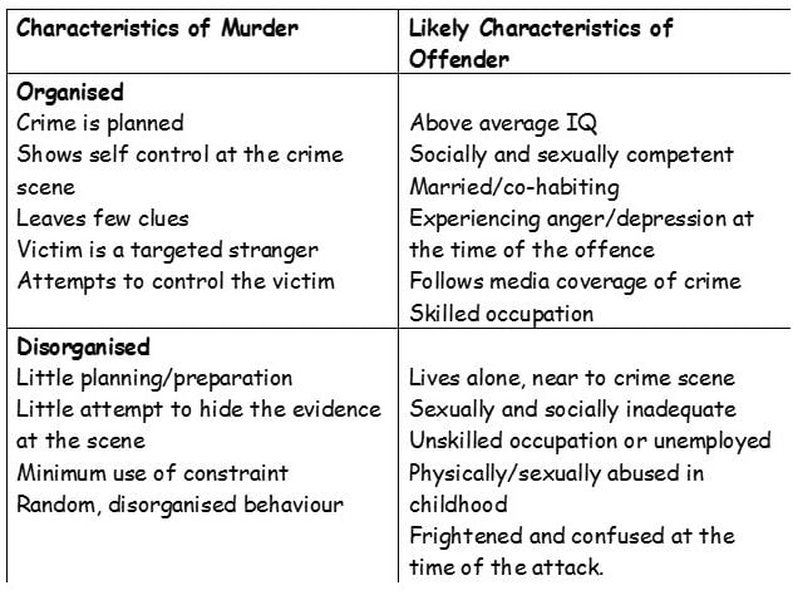
An illustration of top-down profiling, which involves using established theories and knowledge to analyze crime scenes.
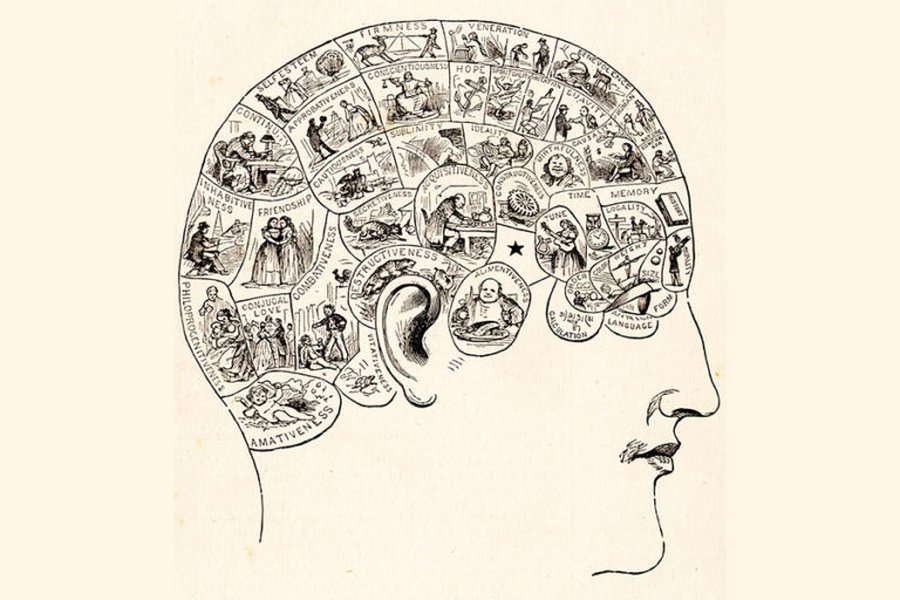
An image depicting Lombroso's theory of the "criminal type," an early, now largely discredited, approach to profiling.
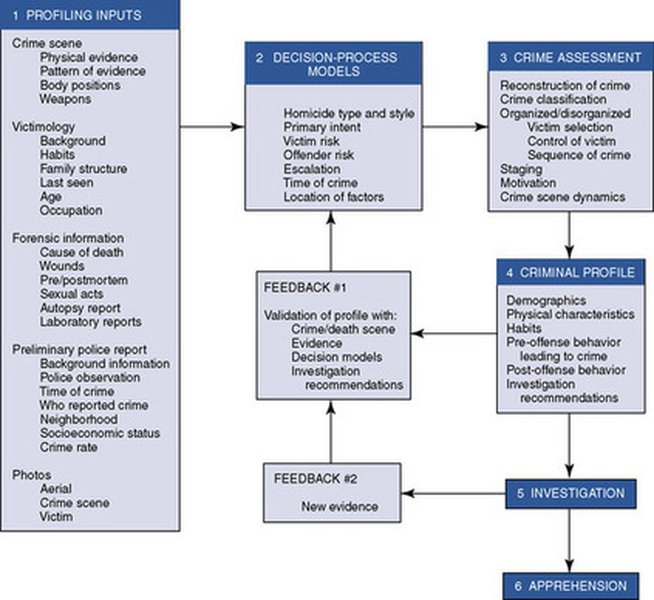
An example of behavioral analysis, highlighting the importance of understanding an individual's actions and patterns.
The Validity of Profiling Methods
Different methods of criminal profiling exist, each with its strengths and weaknesses. These methods can be broadly categorized into clinical and statistical approaches. The clinical method relies on the profiler's experience, knowledge, and intuition, while statistical methods use quantitative data and analysis to identify patterns and predict offender characteristics. Combining these approaches can lead to more robust and reliable profiles.
| Profiling Method | Description | Strengths | Weaknesses |
|---|---|---|---|
| Clinical Method | Based on experience, knowledge, intuition, and/or training to predict offenders' characteristics. | Can provide nuanced insights based on individual case details. | Subjective and prone to bias; difficult to validate statistically. |
| Statistical Methods | Uses quantitative data and analysis to identify patterns and predict offender characteristics. Includes Criminal Investigative Analysis, Investigative Psychology, and Crime Action Profiling. | More objective and empirically grounded; can identify broad trends and patterns. | May oversimplify complex behaviors; relies on the quality and completeness of data. |
| Inductive Profiling | Based on observing previous crimes and applying theories based on this information. | Can draw on a broad base of knowledge and experience. | May rely on generalizations and stereotypes. |
| Deductive Profiling | Avoids using generalizations and focuses on information from the specific case. | More focused and tailored to the specific crime. | May overlook broader patterns and trends. |
The Reality of Criminal Profiling: More Art Than Science?
This YouTube video, "CRIMINAL PROFILING Is NOT A SCIENCE And This Is WHY...," discusses the limitations and potential pitfalls of criminal profiling, arguing that it is not a precise science. It highlights the dangers of relying too heavily on profiling techniques, referencing the Rachel Nickell case as an example of how profiling can lead to misidentification and wrongful accusations. The video emphasizes the importance of critical thinking and skepticism when interpreting profiles, suggesting that profiling should be used as a tool to assist investigations rather than a definitive method for identifying criminals.
Frequently Asked Questions (FAQ)
References
Last updated April 10, 2025