
Augustine's Eden: A World Perfectly Woven in Divine Harmony
Exploring St. Augustine's vision of the pristine order and relational peace that characterized existence before the Fall of Man.
Saint Augustine of Hippo (354-430 AD), a towering figure in Christian theology and Western philosophy, articulated a profound vision of the world as it existed before the biblical Fall of Adam and Eve. This pre-lapsarian state, primarily detailed in his interpretations of Genesis and works like "The City of God," was characterized by an all-encompassing harmony—a perfect, divinely ordained order that permeated every facet of existence, from humanity's relationship with God to the inner workings of the human soul and the natural world itself.
Key Facets of Pre-Fall Harmony
Essential Insights into Augustine's Paradise
- Perfect Relational Unity: Before the Fall, humanity enjoyed a seamless and loving relationship with God, characterized by obedience and direct communion. This divine harmony extended to interpersonal relationships, where Adam and Eve lived in mutual love and peace, free from coercion or conflict.
- Integral Human Nature: Internally, humans possessed a perfect equilibrium. Reason governed the passions, the will was aligned with divine goodness, and the body was entirely subject to the soul, resulting in an absence of inner conflict or disordered desires (concupiscence).
- Congruity with Creation: The natural world existed in a state of benign cooperation with humanity. There was no toil in the modern sense; nature provided abundantly, and humans lived as peaceful stewards of a non-threatening creation.
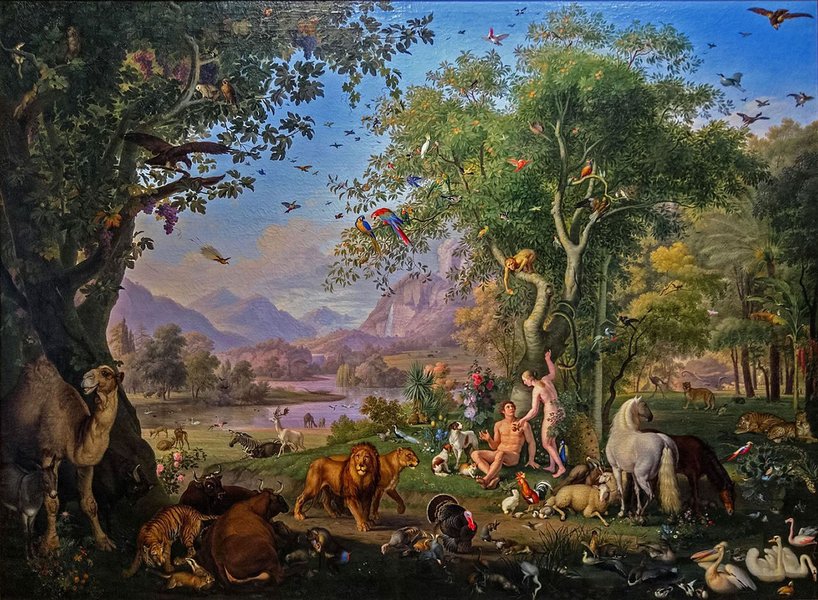
Adam and Eve in the idyllic Garden of Eden, as envisioned by Wenzel Peter, reflecting the harmony Augustine described before the Fall.
The Tapestry of Pre-Lapsarian Perfection
A Deeper Look into Augustine's Vision of Original Harmony
Augustine's understanding of the world before the Fall, primarily drawn from his meticulous exegesis of the early chapters of Genesis, paints a picture of an existence marked by profound peace, order, and inherent goodness. This wasn't merely an absence of evil, but a positive state of flourishing in accordance with God's design.
Harmony with God: The Divine Connection
At the apex of this harmonious order was the relationship between humanity and God. Adam and Eve lived in a state of "original justice" and sanctifying grace. This meant they were in full communion with their Creator, their wills perfectly aligned with His. Obedience was not a burden but a natural expression of love and trust. They walked with God, experiencing His presence directly, unmarred by sin or shame. Their existence was a continuous participation in the divine life, reflecting God's goodness and wisdom.
Harmony Among Humans: Ideal Fellowship
The relationship between Adam and Eve, the primordial human pair, was one of perfect love, companionship, and mutual support. Augustine envisioned their bond as free from selfishness, domination, or deceit. Their interactions were characterized by what he termed *caritas* (charitable love), reflecting God's love. This ideal fellowship was a cornerstone of the social order God intended, where relationships were non-coercive and bound by affection and shared purpose.

A depiction of the Garden of Eden, symbolizing the peace, abundance, and inherent order of the world before the Fall, as Augustine might have contemplated.
Harmony with Creation: A Benign Natural World
Humanity's relationship with the natural world was also one of perfect harmony. The Garden of Eden was not a place of struggle against the elements or arduous labor for sustenance. Instead, creation willingly served humanity, providing all that was needed without resistance. Animals were not hostile, and the earth was fruitful. Humans were appointed as stewards, tasked with caring for this bountiful creation, a role they fulfilled with wisdom and joy. There was no threat from nature, nor did humans exploit it.
Internal Harmony: The Ordered Self
Perhaps most crucial to Augustine's concept was the internal harmony within the human person. Before the Fall, the human constitution was perfectly ordered:
- Reason and Will: Reason held its rightful place, guiding the will towards the good. The will, in turn, was strong and capable of effortlessly choosing in accordance with God's commands and rational understanding.
- Passions and Body: The passions (emotions) were subject to reason and the will, not unruly or sources of temptation. The body was perfectly subordinate to the soul, free from disease, decay (initially), and the rebellious desires that Augustine would later identify as concupiscence. This meant there was no internal conflict, no war between spirit and flesh.
Visualizing Augustine's Pre-Fall Harmony
A Graphical Representation of Perfect Order
The following chart illustrates the perfection Augustine ascribed to the various dimensions of harmony in the pre-lapsarian world. Each axis represents a crucial relational or internal aspect, with the data points reflecting an ideal state of complete accord and flourishing. This is not based on empirical data but is an interpretative visualization of Augustine's theological framework, where all aspects existed in their fullest, divinely intended expression.
This chart visually emphasizes how, in Augustine's view, every dimension of existence before the Fall reached a pinnacle of harmonious function, a stark contrast to the fractured state that followed.
The Interconnected Web of Original Justice
Mapping the Elements of Pre-Lapsarian Existence
Augustine's concept of pre-Fall harmony was not a collection of disparate ideal states but an interconnected web, where each aspect reinforced the others. This "original justice" was a gift from God, maintaining the equilibrium. The mindmap below explores these connections, showing how divine, human, natural, and internal harmonies were intrinsically linked in Augustine's theology.
This mindmap illustrates the multifaceted yet unified nature of Augustine's vision. The central theme of harmony branched out into every sphere of existence, all sustained by God's grace and humanity's willing participation in the divine order.
Genesis, Grace, and the Pre-Fall Condition
The Foundations of Augustine's View
Augustine's depiction of pre-Fall harmony is central to his understanding of original sin, grace, and salvation. He believed that God created humanity good and in a state of perfection. This "original righteousness" or "original justice" was not inherent to human nature in isolation but was a supernatural gift of grace that perfected human nature and maintained this universal harmony. The scriptural basis for Augustine was primarily the account in Genesis 1-3. He interpreted the Garden of Eden narratives, Adam and Eve's creation, and their initial state quite literally, albeit with rich allegorical and theological depth. The command not to eat from the tree of the knowledge of good and evil was, for Augustine, a simple test of obedience, the linchpin of this harmonious relationship with God. This pre-lapsarian state was one where humans possessed free will, but it was a will unimpaired by sinful inclination, naturally tending towards the good. Love, specifically *caritas*—love directed towards God and others for God's sake—was the animating principle of this harmonious existence.
This video, "Day 53: Man in Paradise — The Catechism in a Year (with Fr. Mike Schmitz)," touches upon the concept of "original justice" and the harmony our first parents experienced, aligning with Augustinian themes of the pre-Fall state.
Contrasting Pre-Fall Harmony with Post-Fall Discord
The Impact of Disobedience
Understanding Augustine's view of pre-Fall harmony is crucial because it sets the stage for his doctrine of the Fall and Original Sin. The act of disobedience (eating the forbidden fruit) shattered this intricate web of harmony, introducing discord at every level. The following table summarizes the stark contrast between the world before and after the Fall, according to Augustine's theological framework:
| Aspect of Existence | State Before the Fall (According to Augustine) | State After the Fall (According to Augustine) |
|---|---|---|
| Relationship with God | Direct communion, loving obedience, participation in divine order, sanctifying grace, friendship with God. | Alienation, fear, disobedience, loss of sanctifying grace, enmity, divine judgment. |
| Human Relationships | Perfect harmony, mutual love (*caritas*), non-coercive, based on shared love for God, unity. | Strife, blame, dominance, shame, fractured relationships, lust, self-interest. |
| Relationship with Nature | Peaceful coexistence, stewardship, nature was benign and served humanity willingly, abundance. | Hostility from nature (thorns and thistles), toil and struggle for sustenance, environmental discord, exploitation. |
| Internal Human State (Psychological/Spiritual) | Reason governed passions, will aligned with God's will, internal peace, body subject to soul, immortality. | Concupiscence (disordered desires), internal conflict (war between spirit and flesh), weakened will (inclination to evil), darkened intellect, mortality and physical suffering. |
| Knowledge & Will | Clear understanding of good, ability not to sin (*posse non peccare*), freedom of will oriented to good. | Impaired understanding of good, inability not to sin (*non posse non peccare* without special grace), will enslaved by sin. |
This transformation underscores the catastrophic consequences of the Fall in Augustine's theology, highlighting the paradise lost and the subsequent need for divine grace and redemption through Christ to even begin to restore elements of this lost harmony.
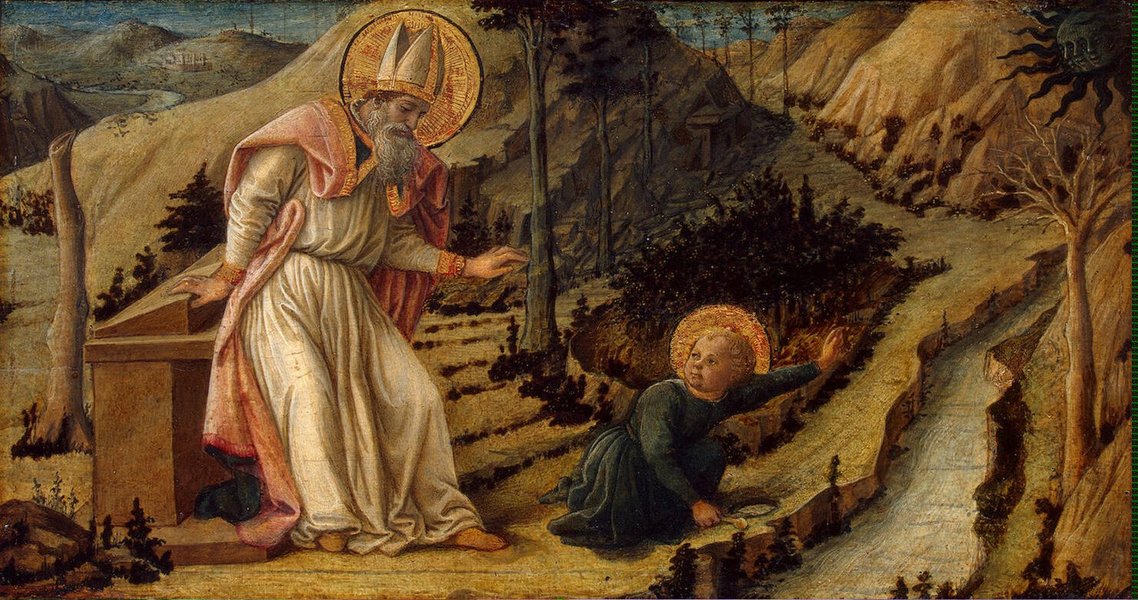
Filippo Lippi's "Vision of St. Augustine," depicting the saint in profound contemplation. Augustine's theological insights into creation and the Fall were deeply influential.
Frequently Asked Questions (FAQ)
Clarifying Augustine's Concepts of Pre-Lapsarian Life
What did Augustine mean by "original justice"?
For Augustine, "original justice" (or "original righteousness") referred to the pristine state of humanity before the Fall. It wasn't just moral innocence but a supernatural gift of sanctifying grace from God. This grace ensured the perfect harmony between humanity and God, among humans, with nature, and within the individual. It included the subordination of the body to the soul, the passions to reason, and the human will to God's will. It also implied immortality and freedom from suffering, contingent upon obedience.
How did the Fall fundamentally alter this pre-lapsarian harmony?
The Fall, through Adam and Eve's disobedience, shattered this perfect harmony. According to Augustine, it resulted in:
- Loss of Divine Harmony: Alienation from God, loss of sanctifying grace.
- Interpersonal Discord: Introduction of blame, shame, and conflict in human relationships.
- Conflict with Nature: Nature became hostile, and work became toilsome.
- Internal Disarray: The rise of concupiscence (disordered desires), where passions rebelled against reason, and the will became weakened and inclined towards sin. Humanity lost its conditional immortality and became subject to suffering and death.
What scriptural passages most influenced Augustine's view of pre-Fall harmony?
Augustine's primary source was the Book of Genesis, specifically chapters 1-3. These passages describe the creation of the world and humanity, the establishment of Adam and Eve in the Garden of Eden, God's commands, their initial state of innocence, and their subsequent disobedience and expulsion. Augustine meticulously analyzed these texts in works like "De Genesi ad Litteram" (The Literal Meaning of Genesis) and "Confessions," and "City of God" to develop his understanding of pre-Fall harmony and the consequences of sin.
Did Augustine view the Garden of Eden and its harmony as purely allegorical?
Augustine affirmed the historical reality of Adam and Eve and the Garden of Eden. While he engaged in profound allegorical and spiritual interpretations of the Genesis narrative, he did not dismiss its literal foundation. For him, the pre-Fall harmony was a real state of existence, even if described in symbolic language. He believed the Fall was a historical event with real consequences for humanity. His approach allowed for both a literal reading and deeper theological meanings to coexist.
Recommended Further Exploration
Delve Deeper into Augustinian Thought
- How did Augustine's concept of original sin develop from his understanding of pre-Fall harmony?
- What were the philosophical influences, such as Platonism, on Augustine's depiction of the ideal pre-Fall state?
- Compare Augustine's view of pre-Fall humanity with that of other early Church Fathers.
- What are the implications of Augustine's pre-Fall harmony for his understanding of salvation and grace?
References
Sources for Further Reading
 laurenrevisesphilosophy.wordpress.com
 immaculataepcc.wordpress.com
 hesiodscorner.wordpress.com
 lucashatt.wordpress.com
Last updated May 20, 2025