
Implementation of Automatic Parking Algorithms in Autonomous Driving Systems
Introduction
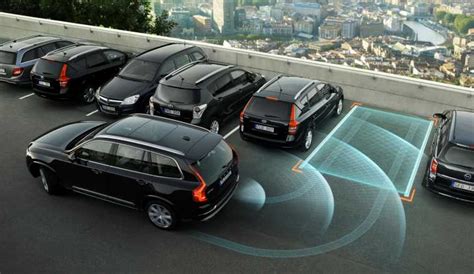
Automatic parking algorithms are pivotal components of autonomous driving systems, enabling vehicles to navigate and park with minimal human intervention. These algorithms integrate a suite of technologies and methodologies to ensure precision, safety, and efficiency during the parking process. This comprehensive overview delves into the key components, methodologies, and technological integrations that underpin automatic parking systems in modern autonomous vehicles.
1. Sensor Integration
Types of Sensors
Autonomous vehicles utilize a diverse array of sensors to perceive their environment accurately. The primary sensors involved in automatic parking include:
- Lidar (Light Detection and Ranging): Generates high-resolution 3D maps of the surrounding environment by emitting laser pulses and measuring their reflections.
- Radar (Radio Detection and Ranging): Detects objects and measures their speed and distance, especially effective in varying weather conditions.
- Cameras: Provide visual data for identifying parking spaces, obstacles, road markings, and other vehicles through computer vision techniques.
- Ultrasonic Sensors: Measure short-range distances to detect nearby objects, crucial for low-speed maneuvers during parking.
Sensor Fusion
The data from these sensors are not used in isolation. Sensor fusion algorithms combine inputs from multiple sensors to create a comprehensive and accurate representation of the vehicle's surroundings. Techniques such as Kalman filtering and probabilistic data association are employed to mitigate sensor noise and reconcile discrepancies between different data sources, resulting in a unified 3D map or point cloud that serves as the foundation for subsequent processing stages.
2. Parking Space Detection
Computer Vision and Image Processing
Identifying suitable parking spaces is a critical step in the automatic parking process. Computer vision algorithms analyze images captured by cameras to detect potential parking spots. Techniques such as convolutional neural networks (CNNs) are commonly used for object detection and classification, distinguishing parking spaces from other objects like pedestrians or stationary vehicles.
Machine Learning Models
Advanced machine learning models are trained on extensive datasets of parking scenarios to enhance detection accuracy. These models can recognize various parking configurations and adapt to different environmental conditions, ensuring reliable identification of viable parking spots.
Spatial Analysis
Real-time spatial analysis evaluates the geometry of the parking lot or street to assess the suitability of detected parking spaces. Factors such as space dimensions, angle of approach, and proximity to obstacles are considered to determine if a parking spot is safe and accessible.
3. Path Planning and Trajectory Generation
Path Planning Algorithms
Once a suitable parking space is identified, the system employs path planning algorithms to chart a feasible route from the vehicle's current position to the target parking spot. Commonly used algorithms include:
- A* Algorithm: Utilizes heuristic-based search to find the shortest path efficiently.
- Dijkstra's Algorithm: Determines the shortest path without heuristic guidance, ensuring optimal routing.
- Improved A* Variants: Enhance real-time performance through optimized heuristic functions, binary heap optimizations, and bidirectional search strategies.
Trajectory Generation
After establishing the path, the system generates a smooth and safe trajectory for the vehicle to follow. This involves calculating the vehicle's speed, steering angles, and acceleration profiles at each point along the path. Techniques such as Bezier curve optimization and neighborhood expansion are employed to refine the trajectory, ensuring high precision and comfort during the parking maneuver.
Model Predictive Control (MPC)
MPC algorithms are instrumental in translating the planned trajectory into actionable control commands. By designing a loss function tailored to the characteristics of the parking task, MPC can predict future states and make real-time adjustments to steering, throttle, and braking, effectively guiding the vehicle along the desired path while adhering to dynamic constraints.
4. Control and Execution
Steering and Speed Control
The control system actuates the vehicle's steering, throttle, and brakes based on the generated trajectory. Precision is paramount, especially in tight parking scenarios, necessitating smooth and responsive control inputs to maintain the vehicle's stability and alignment.
Collision Avoidance
During execution, collision avoidance algorithms continuously monitor the vehicle's surroundings using real-time sensor data. These algorithms can adjust the trajectory on-the-fly to prevent potential collisions with dynamic or static obstacles, ensuring the safety of both the vehicle and nearby entities.
5. Feedback and Monitoring
Continuous Monitoring
A feedback loop is integral to the automatic parking process. The system continuously monitors the vehicle's position and orientation relative to the planned trajectory, making necessary micro-adjustments to account for any deviations caused by sensor inaccuracies or unexpected obstacles.
Adaptation and Error Correction
If discrepancies between the planned path and the vehicle's actual position are detected, the system can adapt by recalculating segments of the trajectory or temporarily halting the maneuver to reassess the environment, thereby enhancing overall reliability and safety.
6. Simulation and Testing
Simulation Environments
Before deployment in real-world scenarios, automatic parking algorithms undergo rigorous testing within simulated environments. These simulations replicate various parking conditions, including different space geometries, obstacle configurations, and environmental factors, allowing developers to validate and refine the algorithms comprehensively.
Ablation Experiments
Ablation studies are conducted to isolate and assess the impact of individual components within the algorithm. By systematically removing or modifying certain elements, developers can identify which aspects contribute most significantly to performance, facilitating targeted improvements.
Real-World Testing
Post-simulation, algorithms are tested in controlled real-world environments. This step ensures that the system can handle unpredictable variables and maintains performance standards outside the simulated parameters.
7. User Interface and Experience
Driver Interaction
The user interface (UI) plays a crucial role in automatic parking systems, providing drivers with control and feedback. Interfaces may offer features such as:
-
Initiation Controls: Buttons or touchscreens that allow drivers to start or cancel the parking process.
-
Status Indicators: Visual or auditory cues that inform the driver about the parking status, progress, and any required interventions.
-
Manual Overrides: Options for drivers to take control if necessary, enhancing trust and safety.
Automated Notifications
During the parking maneuver, the system provides real-time notifications about environmental conditions, potential obstacles, and the overall status of the parking process, ensuring that drivers remain informed and can respond if required.
8. Specific Algorithms and Advanced Techniques
Reinforcement Learning
Some modern automatic parking systems leverage reinforcement learning to train agents in optimal parking strategies. Through trial and error within simulated environments, these agents learn to navigate complex parking scenarios efficiently.
Deep Learning
Deep neural networks enhance various aspects of the parking algorithm, including object detection, path planning, and trajectory optimization. These networks can process vast amounts of data to recognize patterns and make informed decisions in real-time.
Improved A* Algorithm
An enhanced version of the A* algorithm incorporates optimized heuristic functions and bidirectional search capabilities, significantly improving real-time performance and trajectory precision. This ensures that the vehicle can plan and execute parking maneuvers swiftly and accurately.
9. Cost-Effectiveness and Safety Considerations
Balancing cost and safety is essential in the development of automatic parking systems. Implementations like Wipro’s autonomous valet parking utilize RADARs and cameras as primary sensors to maintain affordability without compromising on safety or performance. By selecting appropriate sensor suites and optimizing algorithmic efficiency, manufacturers can deliver reliable parking solutions that are accessible to a broader market.
Conclusion
The implementation of automatic parking algorithms in autonomous driving systems is a multifaceted process that integrates advanced sensors, sophisticated algorithms, and robust control systems. By harnessing technologies such as sensor fusion, machine learning, and model predictive control, these systems achieve high levels of precision, safety, and efficiency in parking operations. Continuous advancements in algorithmic methodologies and sensor technologies promise to further enhance the capabilities and reliability of automatic parking solutions in the future.
References
Last updated January 6, 2025