
Understanding the Average Airspeed of Swallows
A Comprehensive Analysis of Swallow Flight Dynamics and Factors Influencing Speed
Key Takeaways
- Variation Across Species: The average airspeed of swallows varies between species, with the European Swallow averaging around 11 meters per second.
- Environmental and Physiological Factors: Factors such as wind conditions, flight purpose, and physical attributes like wing size and body mass significantly influence swallow speed.
- Flight Efficiency: Swallows exhibit highly efficient flight mechanics, utilizing aerodynamic principles like the Strouhal number to optimize their speed and endurance.
Introduction to Swallow Flight
Swallows are renowned for their graceful and agile flight patterns, making them a subject of interest not only among ornithologists but also in popular culture. The inquiry into their average airspeed often references scientific studies, aerodynamic principles, and even humorous cultural nods, such as the iconic question from the movie Monty Python and the Holy Grail.
Species-Specific Airspeed Analysis
European Swallow (Hirundo rustica)
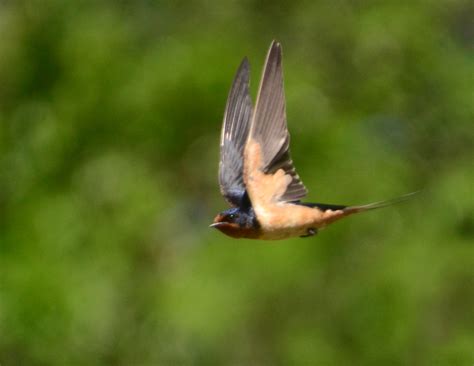
The European Swallow, commonly known as the Barn Swallow, is one of the most studied species concerning flight dynamics. Scientific research, including wind tunnel experiments and observational studies, has established the following key metrics:
- Average Cruising Airspeed: Approximately 11 meters per second (24 miles per hour).
- Maximum Speed: Can reach up to 14 meters per second (31 miles per hour) during rapid flight maneuvers.
- Wing Specifications: An average wing length of about 12.2 centimeters contributes to their aerodynamically efficient flight.
- Wingbeat Frequency: Typically ranges between 7 to 9 beats per second, balancing the need for speed and energy conservation.
The efficient flight of the European Swallow is further characterized by its low Strouhal number, a dimensionless parameter that indicates the efficiency of swimming and flying. A Strouhal number around 0.2-0.4 signifies optimal flight efficiency, allowing swallows to maintain steady speeds with minimal energy expenditure.
African Swallow
While less data is available for the African Swallow compared to its European counterpart, estimations based on similar species suggest:
- Average Airspeed: Ranges between 20 to 25 miles per hour under standard flight conditions.
- Flight Adaptations: Similar wing morphology and lightweight body contribute to comparable flight speeds.
It's important to note that variations in airspeed between different swallow species can be attributed to ecological niches, migratory patterns, and anatomical differences.
Factors Influencing Swallow Airspeed
Physiological Attributes
The physical characteristics of swallows play a crucial role in determining their flight speed. Key physiological attributes include:
- Body Mass: Lighter body mass allows swallows to achieve higher speeds with less energy.
- Wing Morphology: Longer and narrower wings provide greater lift and reduced drag, facilitating faster flight.
- Muscle Composition: High proportions of fast-twitch muscle fibers enable rapid wingbeat frequencies essential for swift maneuvers.
Environmental Conditions
External factors significantly impact the airspeed of swallows, including:
- Wind Speed and Direction: Tailwinds can assist in increasing airspeed, while headwinds may reduce effective speed.
- Air Density: Variations in air density, influenced by altitude and temperature, affect flight efficiency and speed.
- Weather Conditions: Rain, storms, and turbulent weather can impede flight speed and maneuverability.
Flight Purpose and Behavior
Swallows adjust their flight speed based on their immediate needs and activities:
- Cruising: During long-distance migration or routine travel, swallows maintain a steady, efficient speed.
- Foraging: When hunting for insects, swallows may reduce speed to improve maneuverability and increase prey capture efficiency.
- Evasion: To escape predators, swallows can accelerate rapidly, reaching their maximum flight speeds.
Aerodynamic Principles in Swallow Flight
Strouhal Number and Flight Efficiency
The Strouhal number (St) is a dimensionless number describing oscillating flow mechanisms. In the context of bird flight, it relates the frequency of wingbeats (f), amplitude of wing movement (A), and forward velocity (V) as:
$$St = \frac{f \cdot A}{V}$$
A Strouhal number between 0.2 to 0.4 is considered optimal for efficient flight, as it represents a balance between thrust generation and energy expenditure. Swallows, particularly the European Swallow, exhibit Strouhal numbers within this range, indicating their highly efficient flight dynamics.
Wingbeat Mechanics
Swallows employ a specific wingbeat pattern that maximizes lift while minimizing drag. The combination of wing shape, size, and beat frequency allows swallows to sustain high speeds over long periods. The typical wingbeat frequency of 7-9 beats per second provides the necessary propulsion while conserving energy for sustained flight.
Energy Conservation Strategies
To maintain impressive airspeeds without rapid fatigue, swallows implement several energy conservation strategies:
-
Gliding: By leveraging thermal currents and updrafts, swallows can glide to conserve energy during long flights.
-
Wing Folding: Reducing wing surface area while gliding decreases aerodynamic drag.
-
Flight Path Optimization: Efficient routing minimizes the distance traveled and avoids energy-intensive maneuvers.
Comparative Analysis of Swallow Species
European Swallow vs. African Swallow
| Attribute | European Swallow | African Swallow |
|---|---|---|
| Average Airspeed | 11 m/s (24 mph) | Approximately 20-25 mph |
| Maximum Speed | 14 m/s (31 mph) | Estimated similar to European Swallow |
| Wing Length | 12.2 cm | Comparable to European Swallow |
| Wingbeat Frequency | 7-9 beats/sec | Assumed similar to European Swallow |
| Strouhal Number | 0.2-0.4 | Presumed similar |
Implications of Species Differences
While both the European and African Swallows share similar flight mechanics, slight variations in their average airspeeds can be attributed to differences in habitat, migratory patterns, and environmental challenges. The African Swallows may exhibit slightly higher average speeds to cover larger distances during migration or to adapt to different climatic conditions.
Impact of Environmental Factors on Airspeed
Wind Conditions
Wind plays a significant role in influencing the effective airspeed of swallows. Tailwinds can provide a natural boost, reducing the energy required for sustained flight, while headwinds can impede progress, forcing swallows to expend more energy to maintain speed.
Air Density and Altitude
Air density decreases with altitude, which can affect the lift generated by a swallow's wings. At higher altitudes with lower air density, swallows may need to adjust their wingbeat frequency or adopt different flight patterns to compensate for reduced lift.
Temperature and Weather Patterns
Temperature variations can influence air density and the stability of atmospheric currents. Swallows may adjust their flight speed and altitude to navigate through stable or turbulent weather conditions, optimizing their energy expenditure.
Flight Purpose and Behavioral Adaptations
Migration
During migration, swallows maintain a steady and efficient cruising speed to cover long distances. The optimization of airspeed during these periods is crucial for successful migration, balancing speed with energy conservation.
Foraging
When hunting for insects, swallows may reduce their flight speed to increase maneuverability, allowing for swift changes in direction to catch prey. This behavior contrasts with their cruising speed, highlighting the adaptability of their flight patterns based on immediate needs.
Predator Evasion
In instances where swallows need to evade predators, they can rapidly accelerate to their maximum speeds. This instantaneous burst of speed is a critical survival mechanism, enabling swift escapes from threats.
Technological Insights and Modeling
Wind Tunnel Studies
Wind tunnel experiments have been instrumental in understanding the aerodynamic properties of swallows. By simulating flight conditions, researchers can measure variables such as Wingbeat frequency, lift, drag, and overall airspeed with high precision.
Computational Fluid Dynamics (CFD)
Advancements in CFD have allowed for detailed modeling of swallow flight mechanics. These simulations help in visualizing airflow patterns around the wings, optimizing wing shapes for better performance, and predicting how swallows respond to varying environmental conditions.
Biomimicry in Aviation
Insights gained from studying swallow flight have applications in the field of biomimicry, influencing the design of more efficient aircraft wings and drones. The principles of efficient wingbeat frequencies and optimized aerodynamic shapes are directly inspired by avian flight mechanics.
Conclusion
Swallows, with their remarkable flight capabilities, serve as exemplary models of aerodynamic efficiency and adaptability. The average airspeed of a swallow, while varying slightly across species, consistently demonstrates a balance between speed, energy conservation, and maneuverability. Understanding the multitude of factors that influence their flight not only deepens our appreciation for these agile birds but also informs advancements in aeronautical engineering and environmental science.
References
Last updated January 19, 2025