
Unveiling the Stock Market Holdings of the Average 30-Year-Old: Benchmarks vs. Reality
Exploring typical investment amounts, allocation strategies, and key financial milestones for investors in their thirties.
Figuring out how your investments stack up against the "average" 30-year-old can be tricky. Investment levels vary widely based on income, savings habits, debt, goals, and when someone started investing. While there isn't one single definitive "average" amount invested in the stock market, we can explore data points like median holdings, expert benchmarks, and typical portfolio allocations to paint a clearer picture.
Key Insights: Investing in Your 30s
- Median Holdings: Data suggests the median amount held in U.S. stocks by investors in their 30s is around $177,522, with an additional median of $23,321 in international stocks. Remember, median represents the midpoint, potentially differing from the average (mean).
- Common Benchmark: Financial experts often recommend aiming to have saved and invested the equivalent of 1x your annual salary by age 30. For many, this translates to a target range of $50,000 - $100,000+ invested, depending on salary.
- Typical Allocation: On average, investors in their 30s allocate a significant portion of their portfolio to stocks – roughly 43% to U.S. stocks and 8% to international stocks, totaling around 51%. This reflects a focus on growth due to a longer time horizon.
Decoding Investment Figures: Median vs. Benchmarks
When discussing average investment amounts, it's crucial to understand the data sources and metrics used. Different studies might report averages (means), medians, or benchmarks, leading to varying figures.
Median Investment Data
One specific data point comes from Empower, which analyzed investor portfolios. Their findings indicate:
- The median amount invested specifically in U.S. stocks by individuals in their 30s is approximately $177,522.
- The median amount invested in international stocks for the same age group is around $23,321.
The median represents the middle value in a dataset – half the investors have more, and half have less. It's often considered a better representation of the "typical" person than the average (mean), which can be skewed upwards by very high earners or large inheritances. Therefore, while the median U.S. stock holding is substantial, it doesn't necessarily reflect the experience of every 30-year-old investor.
Expert Benchmarks and Salary Multiples
Financial advisors often provide benchmarks based on age and income. A widely cited goal for age 30 is to have saved and invested an amount equivalent to one times your annual salary.
- For someone earning $60,000 per year, the target would be $60,000 saved/invested.
- For someone earning $80,000 per year, the target would be $80,000 saved/invested.
Given median U.S. salaries, this benchmark often suggests target investment levels in the $50,000 to $100,000 range for many 30-year-olds actively saving for retirement. A significant portion of this would typically be allocated to the stock market, aligning with growth objectives.
It's important to note that reaching this benchmark depends heavily on starting contributions early (ideally in one's 20s) and consistently saving 10-15% or more of income annually.
Asset Allocation: The 30-Something Strategy
How much a 30-year-old has in the stock market is also a function of their overall asset allocation strategy – how they divide their investments among different categories like stocks, bonds, and cash.
Typical Stock Exposure
Investors in their 30s generally have a long time horizon until retirement (30+ years). This allows them to tolerate more market volatility in exchange for potentially higher long-term returns. Consequently, their portfolios tend to be heavily weighted towards stocks (equities).
Based on average portfolio data:
- U.S. Stocks: ~43%
- International Stocks: ~8%
- Total Stock Allocation: ~51%
While this ~51% is an average, many financial advisors recommend an even higher stock allocation for this age group, sometimes suggesting formulas like "100 minus age" (implying 70% stocks at age 30) or even more aggressive allocations of 80-90% in stocks, particularly within retirement accounts like 401(k)s and IRAs. The remaining portion is typically allocated to bonds, cash, or alternative investments for diversification.
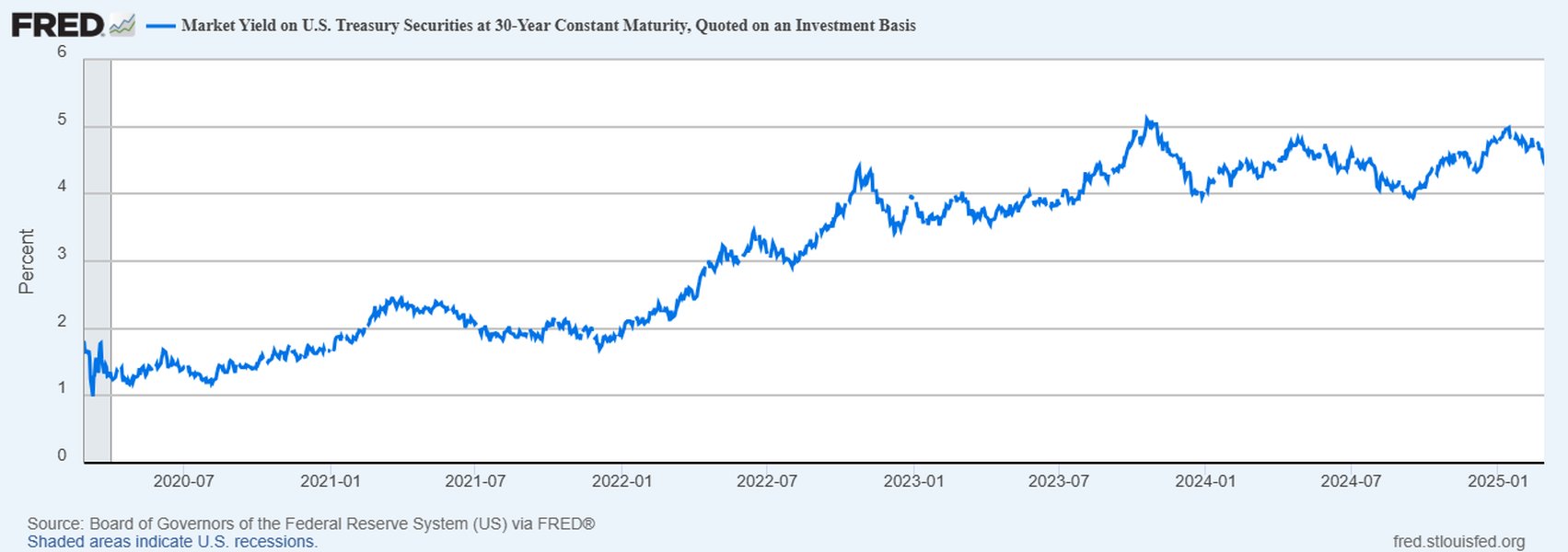
While stocks form the core for growth, other assets like bonds play a role in diversification, especially as investment goals evolve.
Comparing Allocation Models
Different models exist for determining age-appropriate asset allocation. Here's a comparison of common approaches for a 30-year-old:
| Allocation Model / Rule | Recommended Stock Allocation (Approx.) | Recommended Bond/Other Allocation (Approx.) | Rationale |
|---|---|---|---|
| 100 Minus Age Rule | 70% (100 - 30) | 30% | Simple rule, moderately aggressive, historically common. |
| 110 Minus Age Rule | 80% (110 - 30) | 20% | More aggressive version reflecting longer life expectancies. |
| Empower Average Data | ~51% (43% US + 8% Intl) | ~49% (Includes bonds, cash, alternatives) | Reflects actual average holdings observed in investor portfolios. May be more conservative than recommendations. |
| Aggressive Growth Target | 80-90% | 10-20% | Maximizes growth potential for long time horizons, assumes higher risk tolerance. Common in target-date funds for this age. |
| Target-Date Fund (e.g., 2060 Fund) | ~85-90% | ~10-15% | Professionally managed fund automatically adjusts allocation over time, typically starting very stock-heavy. |
This table illustrates that while average observed allocations are around 51% stocks, many guidelines recommend a higher equity exposure (70-90%) for investors in their 30s to capitalize on long-term growth potential.
Visualizing Investor Profiles at Age 30
Investment habits and portfolio compositions can vary significantly among 30-year-olds. The radar chart below compares hypothetical profiles based on factors like savings rate, risk tolerance, and resulting asset allocation. It provides a visual way to understand how different approaches might look, scaled relatively from 1 (Lowest) to 10 (Highest).
This chart highlights the diversity among investors. An "Aggressive Saver" likely started early, saves a high percentage of income, tolerates high risk, and thus has a larger stock allocation. Conversely, a "Conservative / Late Starter" may have lower savings, lower risk tolerance, and potentially a lower allocation to stocks relative to other assets, having started investing later in their 20s or early 30s.
Factors Influencing Investment Levels at Age 30
The amount invested by age 30 isn't just about hitting an average; it's the result of numerous personal financial factors. Understanding these can help contextualize individual situations.
at Age 30"] id1["Influencing Factors"] id1.1["Income Level"] id1.2["Savings Habits
(Consistency & Rate)"] id1.3["Debt Levels
(Student Loans, CC, etc.)"] id1.4["Financial Goals
(Retirement, House, etc.)"] id1.5["Investment Start Date
(Early vs. Late Start)"] id1.6["Risk Tolerance"] id1.7["Access to Investment Accounts
(401k, IRA, Brokerage)"] id1.8["Market Conditions
& Returns"] id1.9["Asset Allocation Choices"] id1.10["Major Life Events
(Marriage, Children)"]
This mindmap illustrates the interconnected factors determining how much a 30-year-old might have invested. Higher income and savings rates, lower debt, clear goals, an early start, appropriate risk tolerance, and consistent contributions generally lead to higher investment balances. Market performance also plays a significant role over time due to compounding.
Maximizing Investments in Your 30s: Video Insights
Understanding portfolio construction is key for investors in their 30s. This video explores portfolio strategies suitable for this age group, discussing asset allocation and investment choices to balance growth and risk over the long term.
The video emphasizes building a diversified portfolio tailored to your time horizon and goals, often reinforcing the idea of maintaining a significant allocation to equities (stocks) during your 30s to harness the power of compounding before retirement.
Frequently Asked Questions (FAQ)
▶ How much *should* a 30-year-old have invested?
A common financial guideline is to aim for having 1x your annual salary saved and invested by age 30. For example, if you earn $70,000, you'd aim for $70,000 in total investments. However, this is just a benchmark. What you "should" have depends entirely on your personal circumstances, income, goals, debt, and when you started saving. The focus should be on consistent saving (aiming for 10-15%+ of income) and investing appropriately for your long-term goals, rather than solely comparing to an average or benchmark.
▶ Is the $177,522 median U.S. stock holding realistic for most 30-year-olds?
The $177,522 figure is a *median* from a specific dataset (Empower). Medians can be higher than what many perceive as "typical," especially if the dataset includes a significant number of high-income or high-net-worth individuals. While achievable for diligent savers who started early or have high incomes, it may be higher than the amount held by a broader "average" 30-year-old, especially those aligning more closely with the 1x salary benchmark based on median national incomes. It serves as one data point, not necessarily the universal experience.
▶ What's a good stock allocation percentage for someone age 30?
Given a long time horizon until retirement, financial advisors often recommend a relatively high allocation to stocks for 30-year-olds, typically ranging from 70% to 90% of their investment portfolio. Common rules of thumb like "110 minus age" suggest 80% (110 - 30 = 80). While average observed allocations are closer to 51%, aiming higher allows for greater long-term growth potential. The exact percentage should align with your individual risk tolerance and financial goals. Diversification within stocks (U.S., international, different sectors) is also crucial.
▶ Does it matter if my investment amount is below average?
Not necessarily. Everyone's financial journey is unique. Factors like career path, income trajectory, student debt, family responsibilities, and lifestyle choices significantly impact savings potential. Comparing yourself to an "average" or "median" can be discouraging if you're below it, or create false security if you're above it but still not on track for your personal goals. What matters most is establishing good financial habits: creating a budget, saving consistently, managing debt wisely, and investing regularly according to a plan that suits your goals and risk tolerance. Focus on your progress and making steady improvements.
Recommended Reading
- What is a good asset allocation strategy for someone in their 30s?
- How much should I be saving for retirement each month at age 30?
- Compare investment returns of stocks vs bonds over 30 years.
- Impact of starting investing at 30 vs 20.
References
Last updated May 4, 2025