
Unlocking the Metabolic Magic of B Complex Vitamins
Explore how B complex supports glucose, fat, and amino acid metabolism
Essential Insights
- B Complex as Coenzymes: They facilitate key metabolic pathways to convert macronutrients into energy.
- Multi-Faceted Roles: Each vitamin in the group uniquely supports carbohydrate, fat, and protein metabolism.
- Deficiency Implications: Reduced levels can disrupt energy production and metabolic balance.
Overview of B Complex and Energy Metabolism
B complex vitamins are a group of eight water-soluble vitamins that function largely as coenzymes responsible for metabolic conversion of carbohydrates, fats, and proteins into usable energy. They are indispensable in activating and synthesizing the enzymes responsible for energy production. Their participation ensures that glucose, fatty acids, and amino acids efficiently enter the pathways of cellular respiration, ultimately leading to the production of adenosine triphosphate (ATP) – the body’s primary energy currency.
Within the realm of carbohydrate metabolism, B-vitamins such as thiamine (B1), riboflavin (B2), niacin (B3), and pantothenic acid (B5) are pivotal. Thiamine, for example, plays a crucial role in the conversion of pyruvate into acetyl-CoA through its involvement in the enzyme pyruvate dehydrogenase. This is a critical step, linking glycolysis with the Krebs cycle. Riboflavin and niacin facilitate electron transport within the mitochondria, supporting the oxidation of carbohydrates to yield energy. Pantothenic acid is a component of coenzyme A, which is essential for the metabolism of not only carbohydrates but also fats and proteins.
Detailed Metabolic Functions of B Complex Vitamins
Carbohydrate Metabolism
Carbohydrate metabolism involves the breakdown of sugars and starches into simpler forms like glucose, which is then oxidized to release energy. Thiamine (B1) is a key player in the conversion of pyruvate to acetyl-CoA, feeding into the Krebs cycle, which is essential for energy generation. Riboflavin (B2) contributes by forming FAD and FMN, coenzymes that accept electrons during the oxidation process in the electron transport chain. Niacin (B3) helps synthesize NAD and NADP, critical molecules in both glycolysis and the Krebs cycle, that shuttle electrons to drive ATP synthesis.
Fat Metabolism
The metabolism of fats involves the synthesis and degradation of fatty acids. B vitamins, particularly niacin (B3) and pantothenic acid (B5), are instrumental in lipid metabolism. Niacin’s role in the production of NAD and NADP extends to the oxidation of fatty acids, powering the breakdown of fat into acetyl-CoA. Pantothenic acid, as part of coenzyme A, is vital for both the synthesis and oxidation of fatty acids and cholesterol. Moreover, biotin (B7) acts as a coenzyme for carboxylase enzymes involved in fatty acid synthesis, linking the use of dietary fats with their storage or conversion into energy.
Protein and Amino Acid Metabolism
Protein metabolism refers to the breakdown of protein molecules into amino acids, which are later reorganized into new proteins or used as an energy source. Vitamin B6 (pyridoxine) takes center stage in amino acid metabolism by facilitating transamination, a process that transforms amino acids into usable metabolic intermediates. Folic acid (B9) and cobalamin (B12) are critical in the metabolism of amino acids and in the critical conversion of homocysteine to methionine, vital for DNA synthesis and repair. These vitamins not only support protein synthesis but also ensure that the metabolic pathways that break down proteins function optimally, thereby securing energy even when carbohydrate supplies are low.
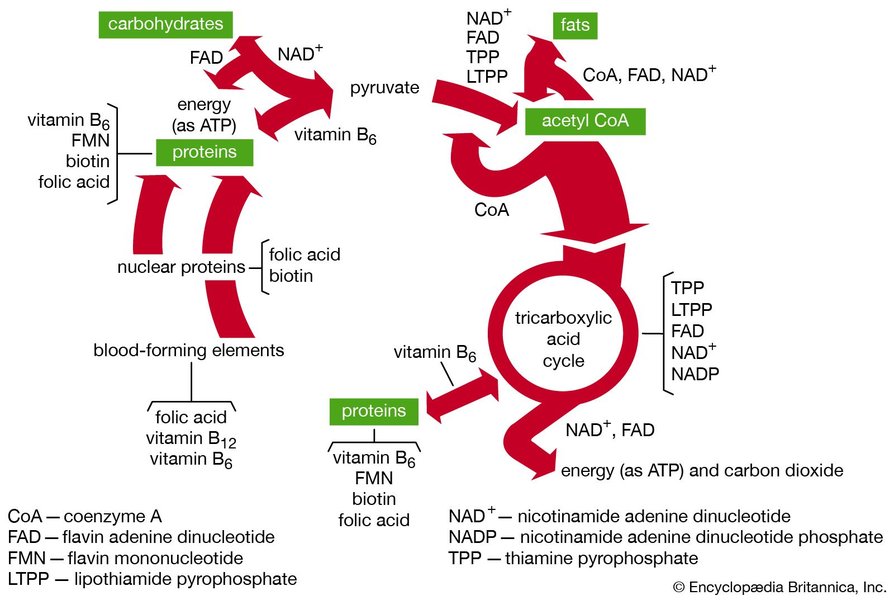
When you consider the visual interplay of these processes, a comprehensive diagram that correlates the specific roles of each B vitamin with these metabolic pathways can be highly instructive. The synergy between these vitamins creates a network of coenzyme-driven reactions that sustain cellular energy production, optimize nutrient utilization, and maintain metabolic balance.
Visualizing B Complex Functions
Integrated Metabolism Diagram
The diagram below illustrates the interconnected roles of B complex vitamins in the metabolism of carbohydrates, fats, and proteins. It depicts how each vitamin contributes to converting macronutrients into energy through crucial biochemical steps:
| B Vitamin | Metabolic Role | Biochemical Process |
|---|---|---|
| Thiamine (B1) | Carbohydrate metabolism | Conversion of pyruvate to acetyl-CoA |
| Riboflavin (B2) | Carbohydrate and fat metabolism | Electron transport chain through FAD/FMN |
| Niacin (B3) | Carbohydrate, fat, and protein metabolism | Synthesis of NAD/NADP for ATP production |
| Pantothenic Acid (B5) | Carbohydrate, fat, and protein metabolism | Formation of coenzyme A |
| Pyridoxine (B6) | Protein metabolism | Transamination and amino acid synthesis |
| Biotin (B7) | Fat metabolism | Support of carboxylase enzymes |
| Folate (B9) & Cobalamin (B12) | Amino acid metabolism | Conversion of homocysteine to methionine |
Interactive Radar Chart of Metabolic Contributions
To further illustrate the diverse roles of B complex vitamins, observe the radar chart below which compares their contributions in various metabolic processes. The chart includes multiple datasets that represent qualitative analyses of their importance in carbohydrate, fat, and protein metabolism.
Mindmap Diagram of B Complex Functions
The illustration below represents a simplified mindmap of the metabolic pathways that involve B complex vitamins. Each branch shows the metabolic function with key vitamins annotated for clarity.
(B1, B2, B3)") Fats("Lipid Metabolism
(B3, B5, B7)") Proteins("Amino Acid Metabolism
(B6, B9, B12)")
Supplemental Educational Material
Informative YouTube Resource
For those who wish to explore the subject further, the video embedded below provides a comprehensive overview of the functions and importance of B complex vitamins in metabolic processes. This resource explains the conversion of macronutrients into ATP and the indispensable role of B vitamins in that transformation.
Frequently Asked Questions (FAQ)
What role do B complex vitamins play in glucose metabolism?
How do B vitamins support fat metabolism?
What is the importance of B6 in protein metabolism?
References
- B Complex & L-Carnitine - Restore
- Vitamin B Complex Overview - Healthline
- Improve Carbohydrate Metabolism with B Vitamin Complex - Radiant Life Catalog
- Vitamin B Complex Role in Metabolism - Nursing Times
-
B Vitamins in Medicine - PMC
Recommended Queries for Deeper Insights
Last updated March 30, 2025