
Exploring the Dynamics of B2B Rapid Delivery
Unpacking the Concept and Models Behind Ultra-Fast Business Deliveries
The landscape of business-to-business (B2B) delivery is undergoing a rapid transformation, driven by the increasing demand for speed and efficiency that mirrors the expectations set in the business-to-consumer (B2C) market. While a "1-minute delivery" might be a hyperbole, the concept underscores a significant trend towards extremely fast B2B logistics, often referred to as rapid delivery, instant delivery, or quick commerce in various contexts. This move towards accelerated B2B deliveries is reshaping supply chains and operational strategies across numerous industries.
This document explores the core concepts, business models, and key considerations surrounding the acceleration of B2B deliveries, drawing insights from various sources to provide a comprehensive overview.
Key Insights into Rapid B2B Delivery
- Evolving Expectations: B2B buyers are increasingly expecting delivery speeds and transparency comparable to B2C services.
- Diverse Models: Various business models, including hyperlocal, platform-based, and vertically integrated approaches, are being employed to achieve rapid B2B deliveries.
- Technological Integration: Automation, AI, real-time tracking, and optimized routing are crucial for enabling and scaling rapid B2B delivery services.
Defining Rapid B2B Delivery
Rapid B2B delivery refers to the expedited transportation of goods between businesses. Unlike traditional B2B logistics which might involve longer lead times and scheduled deliveries, rapid delivery aims to significantly shorten the time between order placement and receipt, often within hours or even minutes. This is particularly relevant for urgent needs, just-in-time inventory, and industries where speed is a critical competitive advantage.
The concept of "1-minute delivery," while extreme, highlights the aspirational goal of minimizing delivery times to the absolute practical limit. In reality, rapid B2B delivery typically translates to same-day or even sub-hour delivery windows, depending on the goods and the geographical area.
B2B delivery encompasses transactions and transportation of goods from one business to another. This can range from raw materials and components to finished goods and essential supplies. The key differentiator of rapid B2B delivery is the emphasis on speed and responsiveness.
Business Models Driving Rapid B2B Delivery
Several business models are facilitating the rise of rapid B2B delivery. These models often leverage technology and strategic operational structures to achieve faster delivery times.
Hyperlocal Delivery Model
The hyperlocal model focuses on providing fast, on-demand delivery within a limited geographical radius. This is particularly effective for B2B deliveries where the origin and destination are relatively close.
In this model, businesses can utilize local courier services or build their own small-scale delivery networks to serve nearby clients quickly. Micro-fulfillment centers located in urban areas are often integral to this model, allowing for rapid picking and dispatch.
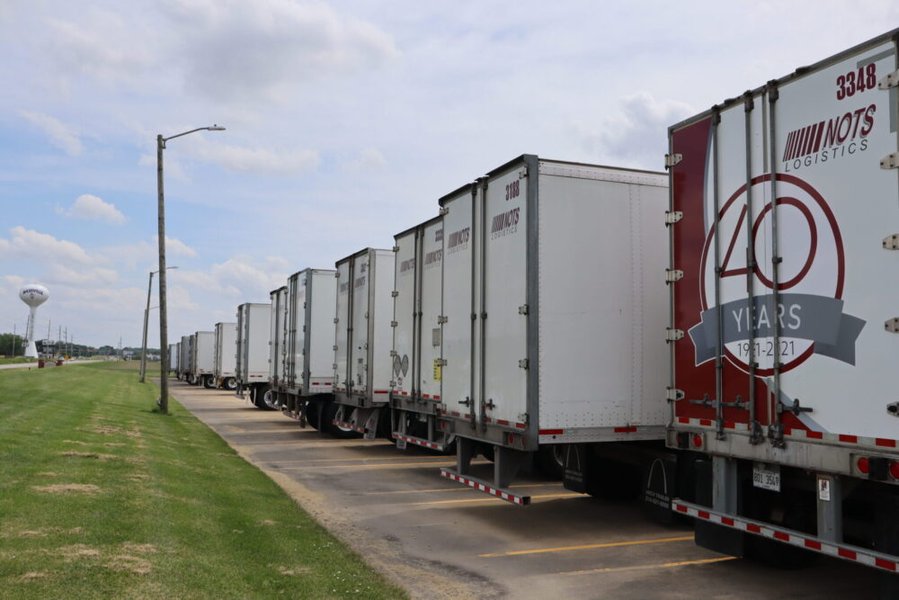
A truck representing B2B delivery services.
Platform-Based Delivery Model
Similar to B2C food delivery platforms, this model involves a third-party platform connecting businesses that need to send goods with a network of independent drivers or courier companies.
The platform handles order management, dispatch, tracking, and payment processing. This asset-light model allows businesses to access a large delivery fleet without the overhead of managing their own. The platform typically earns revenue through commissions from businesses and potentially delivery fees.
Vertically Integrated Model
In this model, businesses build and manage their entire delivery infrastructure, including warehousing, inventory, and transportation. This approach offers greater control over the entire process, enabling optimized workflows and faster delivery times, especially for businesses with high-volume or specialized delivery needs.
Instant-needs operators procuring their own inventory and establishing micro-fulfillment centers is a prime example of vertical integration in rapid delivery.
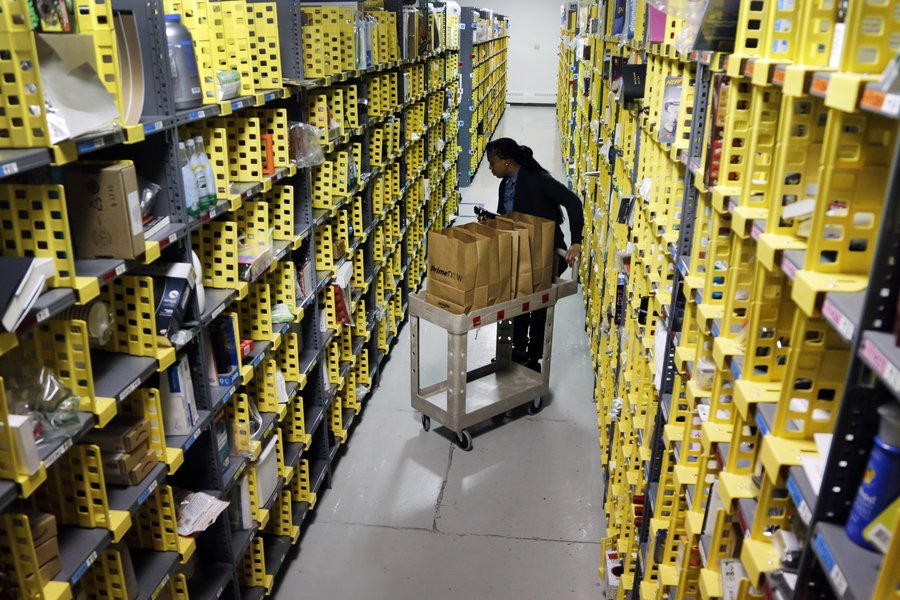
Inside an Amazon fulfillment center.
Courier Service Model
Traditional courier companies are adapting to the demand for speed by offering expedited and same-day delivery options for B2B clients. They leverage their existing infrastructure and networks while incorporating technology for improved tracking and efficiency.
Many courier companies are also exploring alternative transportation methods and strategically located hubs to shorten last-mile delivery times in urban environments.
Key Factors Enabling Rapid B2B Delivery
Achieving rapid B2B delivery requires a combination of strategic planning, technological adoption, and operational efficiency.
Technological Advancements
Technology plays a pivotal role in enabling rapid deliveries. Key technologies include:
- Real-time Tracking: Provides visibility into the location and status of deliveries, allowing businesses to manage expectations and react to delays.
- Route Optimization Software: Uses algorithms to determine the most efficient routes, minimizing travel time and fuel costs.
- Automation: Automated systems in warehouses and for sorting can significantly speed up the processing of orders for rapid dispatch.
- AI and Predictive Analytics: Can be used to anticipate demand, optimize inventory placement, and predict potential delivery delays.
- Automated Proof-of-Delivery (POD): Streamlines the confirmation process upon delivery.
Optimized Logistics and Infrastructure
Efficient logistics and strategically located infrastructure are essential. This includes:
- Micro-fulfillment Centers (MFCs): Smaller, decentralized warehouses located closer to customers to facilitate faster last-mile delivery.
- Inventory Management: Maintaining optimal inventory levels and accurate inventory data to ensure products are available for rapid dispatch.
- Fleet Management: Efficiently managing a fleet of vehicles and drivers to handle on-demand requests.
Strong Partnerships
Collaborating with reliable logistics providers, technology partners, and even complementary businesses can enhance rapid delivery capabilities. Strategic alliances can help extend reach and offer integrated solutions.
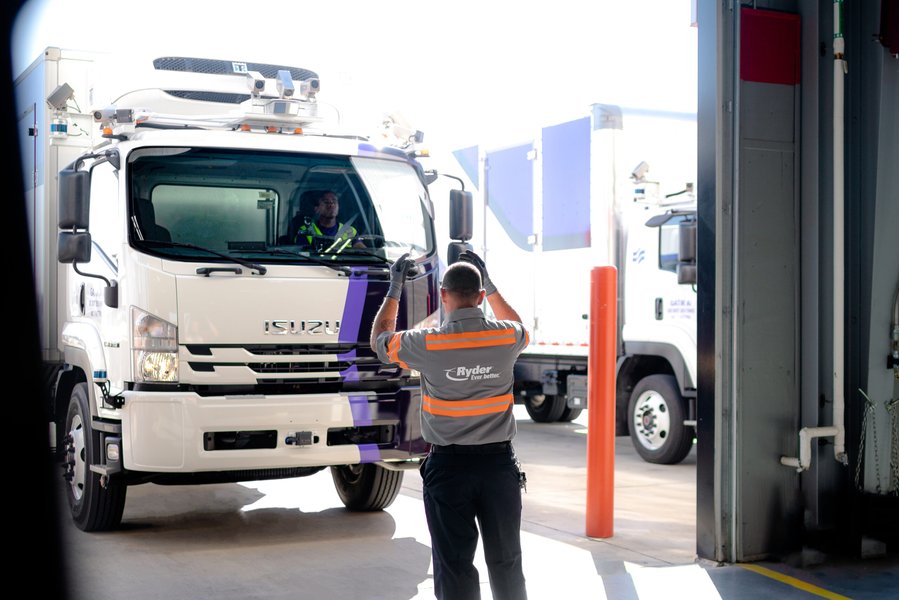
A representation of a B2B partnership in logistics.
Challenges in Rapid B2B Delivery
While the benefits of rapid B2B delivery are clear, there are also significant challenges to overcome.
High Costs
Implementing and maintaining rapid delivery services can be expensive due to the need for advanced technology, optimized infrastructure, and potentially higher labor costs associated with faster turnaround times.
Operational Complexity
Managing rapid B2B deliveries adds complexity to logistics operations, requiring precise coordination and real-time decision-making.
Meeting Tight Deadlines
Strict on-time delivery requirements, especially in industries supplying rapid delivery services, can lead to financial penalties for missed appointments.
Infrastructure Limitations
In certain areas, existing infrastructure may not be conducive to ultra-fast deliveries.
Industries Benefiting from Rapid B2B Delivery
Several industries are particularly well-suited to leverage rapid B2B delivery:
- Food Service: Restaurants and food businesses requiring fresh ingredients quickly.
- Healthcare: Delivery of medical supplies, equipment, and pharmaceuticals.
- Construction and Trades: Urgent delivery of parts and materials to job sites.
- Retail: Replenishing inventory in physical stores or for online orders from local stock.
- Manufacturing: Just-in-time delivery of components to production lines.
The Future of Rapid B2B Delivery
The trend towards faster B2B deliveries is expected to continue. Future advancements may include:
- Expansion of Autonomous Delivery: Increased use of drones and autonomous vehicles for certain types of B2B deliveries.
- Further Integration of AI: More sophisticated AI for demand forecasting, route optimization, and warehouse management.
- Enhanced Supply Chain Visibility: Greater transparency across the entire supply chain to enable better coordination for rapid deliveries.
The move towards rapid B2B delivery signifies a shift in business expectations, where speed and efficiency are becoming as crucial in the B2B space as they are in B2C. Businesses that can effectively implement and manage rapid delivery models are likely to gain a significant competitive advantage.
Understanding Quick Commerce and Instant Delivery
The terms "quick commerce" and "instant delivery" are closely related to rapid delivery and are often used in the context of both B2C and B2B.
Quick commerce generally refers to the delivery of goods within a very short timeframe, typically less than an hour. This model is often associated with convenience items and groceries, but its principles are increasingly being applied to B2B scenarios, especially for urgent supplies.
Instant delivery is a super-fast shipping service aiming to deliver parcels within a short time, aligning with the concept of rapid B2B delivery. These concepts highlight the growing consumer and business expectation for immediate access to goods.
Focus on the Last Mile
The "last mile" – the final step of the delivery process from a distribution center or hub to the final destination – is a critical focus area for achieving rapid B2B delivery. Optimizing this stage is crucial for minimizing delivery times.
Last-mile delivery in B2B involves transporting products to the purchasing company or end user business. Efficient last-mile B2B delivery often relies on:
- Strategic placement of inventory (e.g., in MFCs).
- Optimized route planning.
- Efficient communication with the recipient business.
- Leveraging technology for real-time tracking and proof of delivery.
A visual representing last-mile delivery.
Comparing B2B and B2C Delivery Expectations
While B2C delivery has long emphasized speed and convenience, B2B delivery is now catching up. B2B buyers are demanding a B2C-like experience in their professional interactions, expecting certainty and transparency throughout the delivery process, similar to what they experience as consumers. This convergence of expectations is a significant driver behind the push for rapid B2B delivery.
Delivery Business Models in Action
Here's a table summarizing some of the key delivery business models relevant to rapid B2B delivery:
| Model | Description | Relevance to Rapid B2B Delivery |
|---|---|---|
| Hyperlocal | Delivery within a limited geographical area. | Enables very fast deliveries for nearby businesses. |
| Platform-Based | Connects businesses with a network of couriers via a platform. | Provides access to a large, flexible delivery fleet for on-demand needs. |
| Vertically Integrated | Business manages its own inventory, warehousing, and transportation. | Offers maximum control and optimization for rapid deliveries. |
| Courier Service | Traditional courier companies offering expedited services. | Leverages existing infrastructure with added speed and tracking capabilities. |
Considerations for Implementing Rapid B2B Delivery
Businesses looking to implement or improve rapid B2B delivery should consider:
-
Defining Service Levels: Clearly defining the speed of delivery offered (e.g., same-day, within 2 hours).
-
Assessing Demand: Understanding the need for rapid delivery among target B2B customers.
-
Technology Investment: Investing in the necessary software and hardware for tracking, routing, and automation.
-
Operational Adjustments: Adapting warehouse processes and labor allocation for faster picking and packing.
-
Carrier Relationships: Building strong relationships with reliable courier services or developing internal delivery capabilities.
-
Communication: Providing clear and timely communication to B2B customers regarding order status and delivery times.
FAQ
What is the main driver for the shift towards rapid B2B delivery?
The primary driver is the increasing expectation among B2B buyers for delivery experiences that are as fast and transparent as those they encounter as consumers in the B2C market. This demand for convenience and speed is pushing businesses to accelerate their logistics.
Is "1-minute delivery" a realistic goal for B2B?
While "1-minute delivery" is likely an exaggeration, it represents the trend towards minimizing delivery times significantly. Realistic rapid B2B delivery typically means same-day or within-hours delivery, depending on the context and type of goods. The term highlights the aspiration for extreme speed and efficiency.
What role does technology play in rapid B2B delivery?
Technology is crucial. Real-time tracking, route optimization software, automation in warehouses, and AI-powered analytics are all essential tools that enable businesses to process orders faster, optimize routes, and provide visibility to customers, all of which are vital for rapid delivery.
Which industries benefit most from rapid B2B delivery?
Industries with urgent needs, such as food service (perishable goods), healthcare (medical supplies), construction (urgent parts), and manufacturing (just-in-time components), are among those that significantly benefit from rapid B2B delivery capabilities.
What are the main challenges in implementing rapid B2B delivery?
Key challenges include the high costs associated with technology and infrastructure, the increased operational complexity of managing faster deliveries, the need to meet very tight deadlines, and potential limitations in existing infrastructure.
References
Last updated May 6, 2025