
Unlocking B2B Potential: How Self-Service Portals Transform Customer Experience
Discover how customer portals and self-service tools create unparalleled value for B2B organizations and their clients
Key Value Propositions of B2B Self-Service Tools
- 24/7 Accessibility: Customer portals provide round-the-clock access to crucial business information, eliminating wait times and empowering clients to find solutions independently.
- Operational Efficiency: Self-service solutions reduce support costs by up to 70% while freeing support teams to focus on complex, high-value interactions.
- Enhanced Customer Experience: Personalized interfaces with intuitive navigation create stronger B2B relationships, increasing customer retention and lifetime value.
Understanding B2B Self-Service Portals: Definition and Evolution
B2B self-service portals are secure, branded digital platforms that enable business customers to access information, perform tasks, and find solutions without direct assistance from a company representative. These portals serve as centralized hubs where customers can manage their accounts, track orders, access personalized pricing, and resolve support issues independently.
The evolution of these tools has been driven by the increasing demand for efficiency in business operations and the growing expectation for immediate access to information. Modern B2B self-service portals integrate seamlessly with CRM systems, providing a comprehensive view of customer interactions while enabling businesses to deliver personalized experiences at scale.
Core Functionality of B2B Customer Portals
Today's B2B customer portals offer a wide range of functionality designed to enhance the customer experience while streamlining business operations:
| Feature Category | Key Functionalities | Business Impact |
|---|---|---|
| Account Management | Profile management, user permissions, team collaboration tools | Improved data accuracy, enhanced security, streamlined communication |
| Order Management | Order placement, tracking, history, reordering capabilities | Increased sales efficiency, reduced order errors, improved inventory management |
| Self-Service Support | Knowledge base, FAQs, community forums, chatbots, ticket submission | Reduced support costs, faster resolution times, improved customer satisfaction |
| Financial Management | Invoice access, payment processing, credit management, financial reporting | Accelerated cash flow, reduced billing disputes, improved financial transparency |
| Custom Integrations | CRM integration, ERP connectivity, third-party system compatibility | Enhanced data consistency, streamlined workflows, unified customer experience |
Integration with Existing CRM Systems
The true power of B2B self-service portals emerges when they're tightly integrated with CRM and other back-end systems. This integration enables real-time data synchronization, ensuring customers always see the most current information while providing businesses with valuable insights into customer behavior and preferences. Leading CRM platforms like Salesforce, HubSpot, and Zoho offer robust self-service portal capabilities that leverage customer data to create personalized experiences.
The User Value Dimension: Why B2B Customers Embrace Self-Service
Understanding the value that B2B customers derive from self-service tools is essential for designing effective solutions. While cost savings for the providing company are often highlighted, the true power of self-service lies in the value it creates for users.
Primary Value Drivers for B2B Portal Users
Convenience and Accessibility
B2B customers value the ability to access information and perform tasks on their own schedule, without being limited by business hours or support team availability. This 24/7 accessibility is particularly valuable for global businesses operating across different time zones.
Time Efficiency and Autonomy
Time is a precious commodity in business. Self-service portals enable customers to find information and complete tasks more quickly than traditional support channels, reducing the time spent waiting for responses and allowing them to maintain momentum in their operations.
Transparency and Control
B2B customers appreciate having visibility into their account status, order history, and support issues. This transparency builds trust and gives customers a greater sense of control over their business relationship. Self-service tools empower customers to track progress, manage their accounts, and make informed decisions based on real-time information.
Personalization and Relevance
Advanced self-service portals can deliver personalized experiences based on customer profiles, purchase history, and behavior. This customization ensures that customers see information and tools that are relevant to their specific needs, enhancing the overall user experience and driving engagement.
The radar chart above illustrates the relative importance of different value factors for B2B users across enterprise, mid-market, and small business segments. Enterprise users place higher value on control and transparency, while small businesses prioritize convenience and multi-channel access.
The Business Value Proposition: ROI of Self-Service Portals
While user value is critical, the business value proposition of self-service tools ultimately determines whether companies invest in these solutions. The compelling ROI case for self-service portals encompasses both quantitative and qualitative benefits.
Quantifiable Business Benefits
Cost Reduction and Operational Efficiency
Self-service portals significantly reduce the volume of routine customer inquiries handled by support teams. According to industry data, implementing effective self-service solutions can reduce support costs by 25-40% by deflecting basic queries from high-cost channels like phone and email support. This reduction allows support staff to focus on complex issues that truly require human expertise.
Accelerated Cash Flow
By providing customers with easy access to invoices and online payment options, self-service portals can accelerate cash flow and reduce days sales outstanding (DSO). Digital payment options integrated into customer portals streamline the payment process, reducing delays and administrative overhead associated with traditional payment methods.
Increased Sales and Revenue
Self-service portals create opportunities for upselling and cross-selling by presenting customers with personalized recommendations based on their purchase history and browsing behavior. Businesses report an average 15-20% increase in repeat purchases after implementing well-designed self-service ordering capabilities.
Qualitative Business Benefits
Enhanced Customer Relationships
Self-service portals strengthen B2B relationships by providing customers with the tools they need to succeed. The transparency and control offered by these portals build trust and demonstrate a commitment to customer success, leading to higher retention rates and increased customer lifetime value.
Valuable Customer Insights
Self-service portals generate rich data on customer preferences, behaviors, and pain points. This information can inform product development, marketing strategies, and service improvements, creating a continuous feedback loop that drives business growth and innovation.
Competitive Differentiation
In competitive B2B markets, an exceptional customer portal can be a key differentiator. Companies that offer superior self-service experiences gain a competitive edge, particularly in industries where product differentiation is challenging and customer experience becomes the primary battleground.
Self-Service Tool Ecosystem: Beyond Basic Portals
The self-service ecosystem extends beyond customer portals to include a variety of complementary tools that enhance the customer experience. Understanding this broader ecosystem is essential for designing a comprehensive self-service strategy.
Leading Self-Service Solutions in the B2B Space
Several platforms have emerged as leaders in the B2B self-service space, each offering unique capabilities and value propositions:
CRM-Integrated Solutions
Platforms like Salesforce Service Cloud, HubSpot Service Hub, and Zoho Desk offer powerful self-service capabilities that leverage customer data from their CRM systems. These integrated solutions provide a seamless experience for both customers and support teams, with unified data and workflows across all customer touchpoints.
Specialized B2B Portal Solutions
Purpose-built B2B portal solutions like Clinked, Accelo, and ClientPortal.space offer customizable interfaces tailored to specific industries and use cases. These specialized tools often provide unique features designed for particular business models or customer relationships.
Knowledge Management and Community Platforms
Solutions like Zendesk Guide, Helpjuice, and Higher Logic focus on knowledge management and community building, enabling customers to find answers through searchable knowledge bases and peer interactions. These platforms excel at organizing and presenting information in user-friendly formats.
This video provides a practical demonstration of a customer self-service portal that integrates with CRM and Sales Order Management systems. It showcases how these tools help customers access relevant information about their interactions with your business.
Implementing a Successful B2B Self-Service Portal
Creating a successful B2B self-service portal requires thoughtful planning and execution. The following framework provides a roadmap for implementation that maximizes both user value and business ROI.
Strategic Planning and Requirements Gathering
Identify Key Customer Needs
Begin by analyzing your customer support data to identify the most common queries and tasks that could be addressed through self-service. Focus on high-volume, low-complexity interactions that consume significant support resources while being relatively straightforward to automate.
Define Clear Success Metrics
Establish measurable goals for your self-service portal, such as portal adoption rate, support ticket deflection, customer satisfaction scores, and cost savings. These metrics will help you evaluate the success of your implementation and identify areas for improvement.
Design and Development Best Practices
User-Centered Design
Apply user-centered design principles to create an intuitive interface that aligns with your customers' needs and workflows. Involve actual users in the design process through interviews, surveys, and usability testing to ensure the portal meets their expectations.
Mobile Optimization
Ensure your portal is fully responsive and optimized for mobile devices. B2B users increasingly expect to access information and perform tasks on the go, making mobile functionality a critical component of a successful self-service strategy.
Integration with Existing Systems
Integrate your portal with your CRM, ERP, and other back-end systems to provide real-time data and ensure consistency across all customer touchpoints. This integration is essential for creating a seamless experience and maintaining data accuracy.
Launch and Adoption Strategy
Phased Rollout
Consider a phased approach to launching your portal, starting with a pilot group of customers who can provide feedback before a wider release. This approach allows you to identify and address issues early while building advocates for the new system.
Proactive Communication and Training
Develop a comprehensive communication and training plan to drive portal adoption. This should include email announcements, webinars, video tutorials, and in-portal guidance to help customers understand the benefits and functionality of the new system.
Continuous Improvement
Establish processes for gathering and acting on customer feedback after launch. Use analytics and user behavior data to identify areas for improvement and prioritize enhancements based on their potential impact on user value and business outcomes.
The Future of B2B Self-Service: Emerging Trends
The landscape of B2B self-service is evolving rapidly, driven by technological advances and changing customer expectations. Understanding these trends is essential for developing forward-looking self-service strategies that deliver sustained value.
AI and Machine Learning Integration
Artificial intelligence and machine learning are transforming B2B self-service portals, enabling more personalized and predictive experiences. AI-powered chatbots can understand natural language queries and provide contextually relevant responses, while machine learning algorithms can anticipate customer needs based on behavior patterns and proactively offer solutions.
Hyper-Personalization
The future of B2B self-service lies in hyper-personalization—delivering tailored experiences based on individual user preferences, role, industry, and past interactions. Advanced analytics and AI will enable portals to dynamically adjust content, layout, and functionality to match each user's specific needs and preferences.
Seamless Omnichannel Integration
As B2B customers increasingly expect consumer-grade experiences, the lines between self-service channels are blurring. Future portals will offer seamless transitions between web, mobile, voice, and messaging platforms, allowing customers to start an interaction in one channel and continue it in another without losing context.
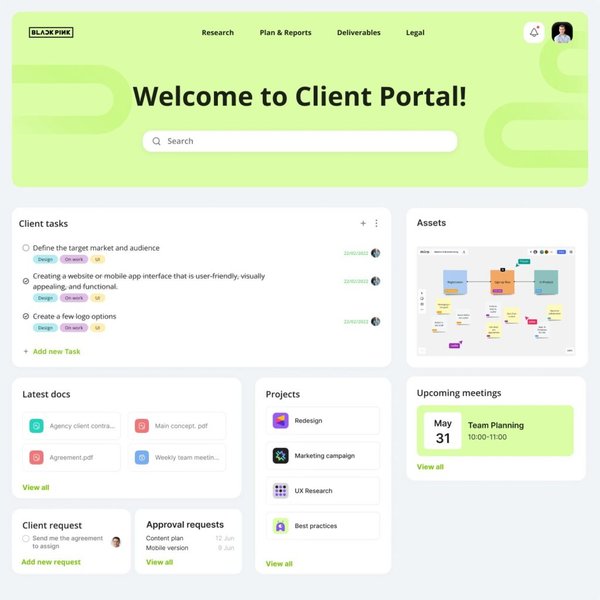
Modern B2B customer service interfaces integrate self-service capabilities with personalized support options, creating a seamless experience for business clients.
Frequently Asked Questions
References
- What Is a Customer Portal? - Codeless Platforms
-
Self-Service Portals: Best Practices - Salesforce
- Customer Self-Service: Essential Tips for Improvement - SuperOffice
- Benefits of Implementing B2B Customer Self-Service Portal - KaptureCRM
- Benefits of a B2B Customer Self-Service Portal - Higher Logic
- What Is a Customer Portal? Benefits & Key Elements - Knack
- B2B Self-Service Portal: What You Need to Know - Intershop
Recommended Searches

Last updated April 7, 2025