
Urban Greening's New Favorite: Bamboo Meets Low-Carbon Demands
Exploring Bamboo's Revival in Sustainable Architecture
Key Takeaways
- Bamboo's exceptional resilience and versatility make it a prime candidate for sustainable urban architecture.
- Integrating bamboo with modern materials can overcome challenges related to craftsmanship and durability.
- The revival of bamboo aligns with global sustainability goals, offering both environmental and aesthetic benefits.
The Resilient Symbol of Bamboo
Bamboo is a plant that withstands harsh conditions, remaining upright and unbending even after severe damage, showcasing the tenacity of life. This resilience is why scholars have long used bamboo to symbolize the integrity and noble character of a virtuous individual.
Bamboo: From Ancient Utility to Modern Sustainability
Beyond its cultural symbolism, bamboo was a highly valued material in ancient societies, utilized in everything from woven utensils to bamboo-framed houses. However, as societies advanced and alternative materials became prevalent, bamboo gradually receded from the historical stage.
In recent years, with the global emphasis on sustainable development and environmental consciousness, bamboo has regained attention due to its powerful carbon sequestration capabilities. Many countries are actively developing bamboo industries, creating comprehensive supply chains, and promoting bamboo as a sustainable alternative to wood. Today, bamboo is recognized as an innovative green building material.
Innovative Bamboo Architecture in Malaysia
If you've been observant, you might have noticed numerous innovative bamboo structures in Malaysia. Architects employ simple and minimalist design languages to create spaces that embody the beauty of natural ecology, fostering a subtle connection between people and nature.
September 18th marks World Bamboo Day. Although it has passed by two weeks, we still wish to explore the potential applications and economic value of bamboo with you.
Bamboo: Neither Grass nor Wood
Ancient people referred to bamboo as "neither grass nor wood," as it possesses tree-like stems but lacks the robustness and thickness of traditional trees. From a taxonomic perspective, bamboo is related to rice, wheat, corn, and sorghum, all belonging to the Poaceae family. Within this family, bamboo falls under the Bambusoideae subfamily, while the others belong to the Pooideae subfamily.
Simply put, bamboo is essentially "grass that resembles wood." It is naturally endowed with flexibility, lightweight, elasticity, high hardness, and moisture resistance. When used as a building material, its inherent warmth seems to soften the cold, harsh feel of cement, soothing the restless minds of urban dwellers.
A Green Oasis: The Bamboo Green School in Bali
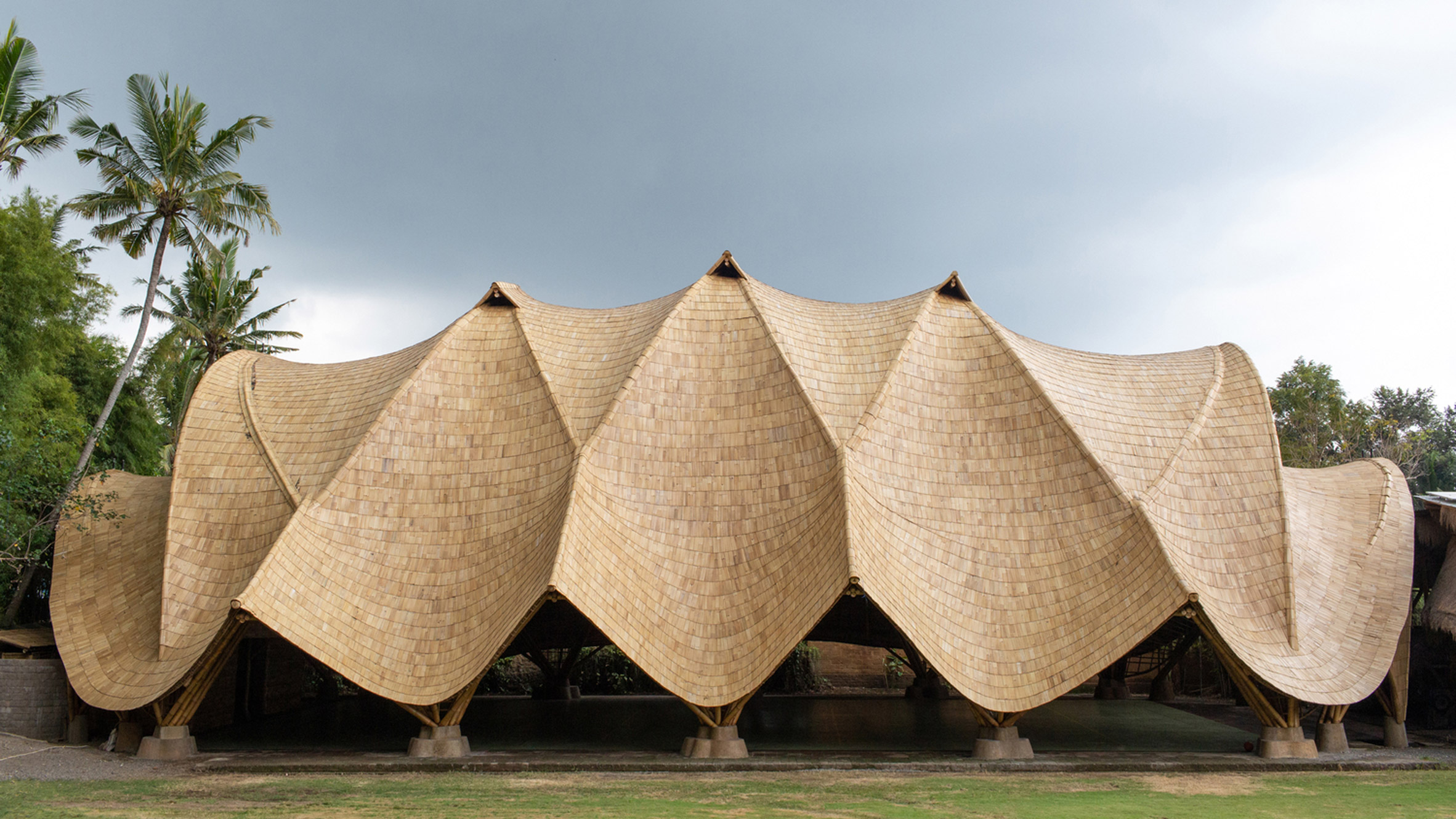
In the dense jungles of Bali stands a world-renowned green school constructed entirely from bamboo, seamlessly blending with nature. The school exudes vitality, harmony, and aesthetic appeal, serving as a testament to bamboo's potential in sustainable architecture.
Expert Insights: Cai Lizhen on Bamboo Architecture
Cai Lizhen, a bamboo construction expert specializing in bamboo architectural structures, discusses how modern urban life, dominated by rigid and cold concrete designs, can often leave people feeling stifled and depressed. In contrast, the traditional lifestyle of older generations, living in wooden houses with good ventilation and pleasant coolness, is enviable. Cai herself resides in a wooden house in a new village, where she rarely needs to use a fan at night.
Awakening from Ruins: Embracing Green Architecture
At 28, Cai Lizhen graduated from UCSI University’s architecture program but initially didn’t focus on bamboo architecture. By chance, she and a friend undertook an interior renovation project. Upon completion, she stood in front of the store, her gaze falling on a construction waste bin filled with various discarded materials and damaged building components. At that moment, she felt a pang of sadness.
“If I’m going to do architectural design but end up producing so much waste, I feel like I’m betraying my conscience,” she said. Unwilling to harm the planet, she decided to take a different path—one focused on green architecture.
Shortly after, she joined the nonprofit organization Colllab, dedicating herself to community space transformation projects. In 2021, Colllab received an invitation from the local bamboo construction company SEAD to travel to Bentong, Pahang, to build a “forest classroom” for the Dignity Children’s Fund—three open-air bamboo classrooms. This was her first encounter with bamboo architecture, marking a turning point in her career.
Indigenous Knowledge: The Key to Bamboo's Strengths and Weaknesses
Building with bamboo presents numerous challenges. Architects must explore different material properties, design forms, and artistic structures to create unique aesthetics.
Bamboo’s flexibility allows for the creation of curved, flowing designs, offering more freedom and elasticity than traditional wood, resulting in a distinctive sensory experience. Cai notes that bamboo’s weight-to-strength ratio is exceptionally high. With proper design and weaving, bamboo can even surpass steel in durability.
However, bamboo is a natural plant, and each stalk varies in shape and length, making standardization difficult. To simplify bamboo construction, she limits bamboo lengths to 20 feet, the ideal size. Beyond this length, bamboo tends to bend significantly. She then categorizes the bamboo by diameter into 2-inch, 3-inch, and 4-inch sizes.
Which bamboo species are suitable? She typically uses Buluh Betong (Sweet Dragon Bamboo) and Buluh Semantan (Little Black Bamboo). Sweet Dragon Bamboo has thick skin and shorter internodes, making it ideal for load-bearing structures and foundation beams. Little Black Bamboo, being lightweight with longer internodes, is suitable for roof beams and crossbeams. Occasionally, Buluh Madu (Honey Bamboo) is used, but it tends to bend during growth, limiting its usable length.
She reveals that SEAD employs indigenous people to harvest bamboo from the forests, so sometimes it’s a matter of luck whether specific species and quantities are found. How do indigenous people determine which bamboo is suitable for construction? She smiles, explaining that indigenous people are the most knowledgeable about bamboo quality. Their ancestral experience serves as the best validation, knowing which bamboo is durable and which is not.
Craftsmanship Shortages Hindering Bamboo Architecture's Popularity
In May of this year, SEAD, Epic Homes, and Better Bamboo Buildings collaborated to complete a bamboo house model for indigenous communities, with Cai participating in the project.
When asked how to stabilize bamboo structures, she explains that three methods are commonly used: binding, bamboo nails, and metal fasteners. Bamboo nails are best for beams or columns, while non-load-bearing parts are bound together. Occasionally, a “fish-mouth joint” technique is employed.
Bamboo construction demands exceptional craftsmanship. Due to the uneven heights and varying shapes of bamboo, skilled artisans are needed to securely bind them. Unfortunately, there is a shortage of experienced craftsmen locally, often requiring reliance on Indonesian artisans. This makes it difficult to promote and mass-produce bamboo architecture in Malaysia due to the lack of local craftsmen.
Despite this, Cai doesn’t advocate for buildings made entirely of bamboo, as maintenance costs are too high. “We lack the mature technology for repairs and sufficient local manpower for large-scale bamboo structures,” she says.
The ideal approach is to combine bamboo with modern materials, using a 50-50 or 60-40 ratio, integrating concrete, wood, steel bars, and iron to create stronger, more aesthetically pleasing buildings. At the same time, architects must cleverly design details to make repairs easier, allowing local workers to handle maintenance without relying on specialized craftsmen.
“If It Rots, It Returns to Nature”
Cai notes that the Malaysian government does not recognize bamboo as a permanent building material, so local bamboo structures are considered temporary. However, local authorities understand that the market has strict standards and regulations, and they generally approve the use of bamboo for certain parts of residential structures.
She emphasizes that bamboo is not fireproof, but all bamboo undergoes chemical treatment to prevent pests. First, when bamboo arrives at the factory, workers conduct an initial screening before drying it in the sun. After drying, the bamboo loses moisture, and its surface may crack, requiring a second round of screening to select only crack-free bamboo.
Next, the bamboo is soaked in a borax solution to remove its sugar content, protecting it from insects, termites, and fungi. Afterward, it is dried again and undergoes a third round of screening. Only at this stage is the bamboo ready for use.
Since bamboo is not a permanent building material, if clients request bamboo structures, she always informs them in advance that regular maintenance is required, which can be costly. “Maintenance doesn’t always mean replacing materials; it might just involve reapplying protective coatings. Replacement is rare,” she explains.
Bamboo Architecture as a Space for Tranquility
“I want to clarify one thing: bamboo itself is cheap, but labor costs are high,” Cai says. Compared to other building materials, bamboo structures have a relatively shorter lifespan. However, with good design planning, they can last 10 to 20 years. If a bamboo structure eventually rots, it simply returns to nature, posing no environmental pollution concerns.
“If we can raise awareness about bamboo, make it more popular, and teach more people how to handle it, I believe we can reduce costs,” she adds.
Bamboo has a high “green value.” Sourced from nature, it helps reduce carbon emissions, and bamboo architecture can create harmonious, natural landscapes within urban environments. Compared to traditional buildings, bamboo’s natural curves and versatility allow for innovative, avant-garde designs, bringing vitality to concrete jungles and providing urban dwellers with a tranquil space for rest and reflection.
Conclusion
The resurgence of bamboo in urban architecture represents a harmonious blend of tradition and innovation. Its remarkable resilience, sustainability, and aesthetic versatility make it an ideal material for creating eco-friendly and visually appealing structures. While challenges such as craftsmanship shortages and maintenance costs persist, integrating bamboo with modern materials offers a promising path forward. As awareness grows and techniques improve, bamboo has the potential to significantly contribute to sustainable urban development, providing serene spaces that reconnect people with nature.
Last updated January 24, 2025