
Main Thesis of the Investigation
Exploring Banana Peel as a Sustainable Alternative Teaching Material
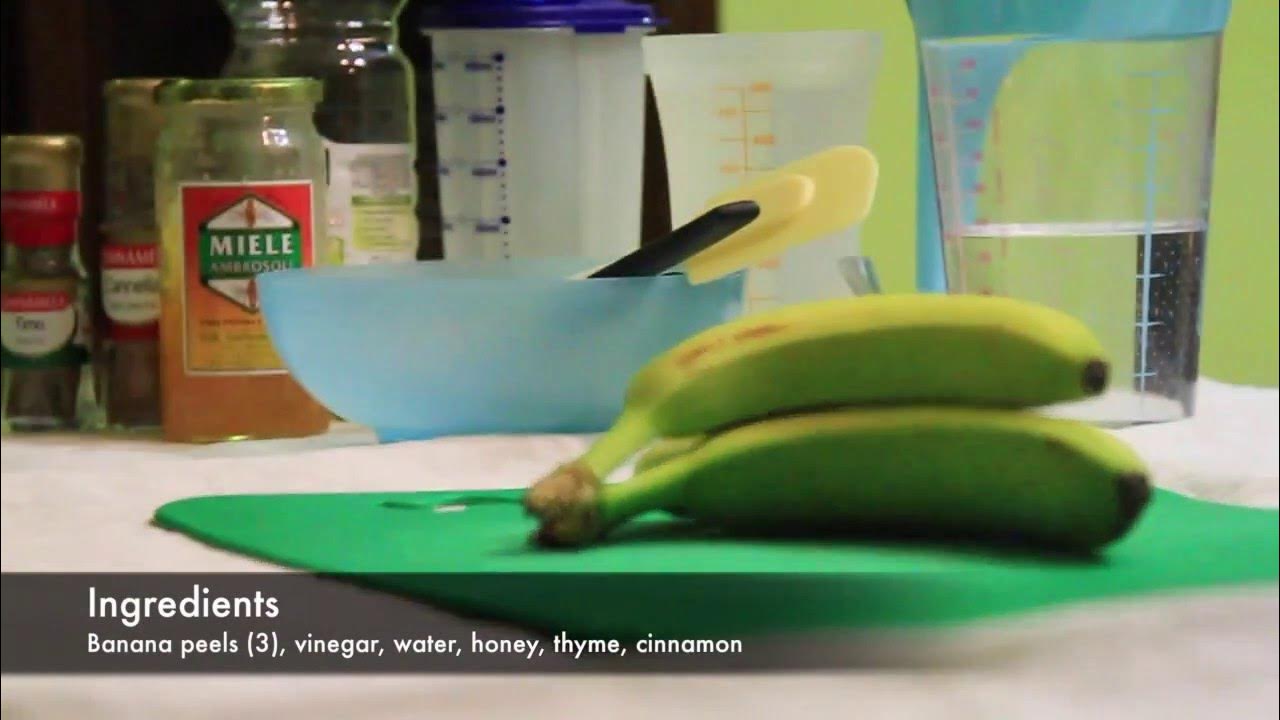
Key Highlights
- Sustainability and Waste Reduction: Converting agricultural waste into valuable educational resources.
- Innovative Learning Methods: Integrating unconventional materials for hands-on teaching and practical application.
- Cost-Effectiveness and Resource Optimization: Leveraging an abundant, inexpensive material to enhance the learning experience.
Detailed Thesis and Rationale
The central thesis of the investigation on using banana peels as an alternative teaching material centers around the idea of transforming a commonly discarded agricultural by-product into a resource that can be employed in educational settings. This research explores the feasibility of converting banana peels into a medium that not only reduces waste but also introduces sustainable and innovative approaches to teaching.
Banana peels possess several inherent properties that make them appealing for educational use:
Environmental Sustainability
One of the most compelling reasons for studying banana peels as an alternative teaching material is their potential to contribute to environmental sustainability. As society grapples with increasing amounts of organic waste and environmental degradation, this investigation highlights how using banana peels can help mitigate such issues. The process of repurposing banana peels aims to:
- Reduce Waste: Banana peels are typically discarded, contributing to landfill mass and environmental pollution. Utilizing them for educational purposes transforms waste into a useful resource.
- Promote Recycling and Upcycling: By turning banana peels into materials suitable for classroom experiments—such as paper production, floor wax substrates, or even suturing models—students learn about recycling and sustainable practices.
- Encourage Eco-Friendly Practices: The study promotes an understanding of the circular economy, fostering environmental stewardship among learners and contributing to a broader societal shift towards sustainability.
Sustainability in Classroom Materials
The environmental benefits of using banana peels include reducing dependency on conventional materials that often require extensive energy and raw materials (like wood pulp and synthetic compounds). In this context, banana peels offer a dual advantage: they help in waste management and provide a renewable alternative that is both cost-effective and accessible, especially in resource-limited settings.
Innovative Educational Approaches
Incorporating banana peels into educational settings is not simply an exercise in waste management—it is also a vehicle for innovative and experiential learning. This research advocates for breaking away from traditional teaching methods by incorporating tangible, alternative materials that stimulate curiosity and engagement.
Hands-On Learning
Hands-on learning is a well-documented method that enhances retention and understanding of complex concepts. Here’s how banana peels can be utilized in this context:
- Experimentation in Paper Production: Students can explore the process of extracting cellulose from banana peels, then learn how to reconstitute it as paper. Through this process, they gain insights into material science, chemistry, and environmental engineering.
- Development of Bioplastics: Working with banana peel starch as a base for biodegradable plastics facilitates hands-on activities that integrate environmental science and practical innovation.
- Alternative Models for Suturing and Other Practical Applications: Banana peels can serve as cost-effective models in medical or biological experiments, providing tactile experiences that might otherwise be too expensive or difficult to set up.
Innovative Teaching Methodologies
By incorporating banana peels into curricula, educators can introduce interdisciplinary concepts that bridge environmental science with practical applications. This method encourages students to think innovatively, solve real-world problems, and apply theoretical knowledge in tangible projects, enhancing both cognitive skills and environmental awareness.
Economic and Resource Considerations
Cost-effectiveness is another significant motivator behind investigating banana peels as an alternative teaching material. Given that banana peels are a by-product of a widely consumed fruit, they are accessible, inexpensive, and abundantly available in many regions. This makes them an ideal subject for research in areas with limited funding or resources.
Affordability and Accessibility
Traditional teaching materials such as commercial papers, synthetic plastics, or conventional laboratory models often involve high costs and complex supply chains. In contrast, banana peels offer several advantages:
- Low or No Cost: As a waste product, banana peels are essentially free, drastically reducing the cost component of educational experiments.
- Local Availability: Many regions that produce bananas have an excess supply of peels, thereby minimizing transportation costs and logistical challenges.
- Encouraging Local Innovations: This research can stimulate local innovations in sustainable materials, encouraging community-level problem solving and experimentation.
Potential Economic Benefits
Beyond the immediate cost-effectiveness, studying banana peels opens the door to broader economic benefits such as bridging the gap between waste management and educational innovation. Students and researchers can explore local entrepreneurial endeavors in creating valuable products from what would otherwise be discarded. This aligns with emerging trends in green entrepreneurship and the development of circular economies.
Integrating Alternative Materials in Curriculum
The investigation also seeks to detail how banana peels can be integrated into educational curricula. Here we focus on the pedagogical benefits and the potential for community and environmental impact.
Promoting Environmental Consciousness
Introducing alternative teaching materials like banana peels into classroom activities serves a dual purpose:
- Raising Awareness: It prompts discussion about global waste challenges and resource reutilization among students.
- Interdisciplinary Learning: Subjects such as biology, chemistry, environmental science, and even economics can integrate lessons that make use of banana peels. For example, the process of converting banana peels into paper involves chemical treatments and an understanding of material properties.
- Real-World Connections: By engaging in projects where waste is transformed into a learning tool, students gain a better appreciation for sustainability. Such projects bridge the gap between theoretical knowledge and practical, real-world applications.
Application in a Real-World Educational Context
Consider a classroom project where students are tasked with creating a sustainable product from banana peels. The project might include steps such as:
| Stage | Activity Description | Learning Outcome |
|---|---|---|
| Collection & Preparation | Gather and clean banana peels, understand normalization processes. | Practical waste management skills and environmental stewardship. |
| Material Conversion | Process banana peels into paper pulp or starch for bioplastics. | Insights into material science and sustainable practices. |
| Product Development | Design and develop prototypes for educational tools such as paper sheets or suturing models. | Experiential learning and problem-solving. |
| Evaluation & Analysis | Assess the quality, durability, and potential scalability of the produced material. | Critical thinking, research skills, and quantitative analysis. |
This table demonstrates a comprehensive way to integrate all phases of the research from theoretical underpinnings to practical applications, ensuring that students appreciate both the environmental impact and the innovative potential of using alternative materials.
Addressing the Problem and Its Scope: Introduction of Chapter 1
In the introductory chapter, titled "The Problem and Its Scope," the study presents a clear case for reassessing traditional teaching materials and methods through the lens of sustainability and innovation. By choosing banana peels as a subject of investigation:
Framing the Problem
The study begins by defining the pressing issues associated with waste management and the excessive use of conventional, often environmentally detrimental, teaching materials. This includes:
- Excessive Waste Generation: Banana peels represent a significant portion of organic waste, particularly in banana-producing regions. Their usual disposal in landfills contributes to environmental degradation.
- Lack of Sustainable Alternatives: Many educational institutions depend on synthetic or resource-intensive materials that are neither renewable nor environmentally friendly.
- The Need for Innovation in Teaching: There is a growing interest in integrating sustainable practices within educational frameworks to produce a generation that is more mindful of environmental issues.
Scope of the Study
The study is positioned at the intersection of environmental science, education, and materials engineering. It aims to:
- Investigate the structural and chemical properties of banana peels to determine their suitability as a teaching material.
- Analyze the feasibility of converting banana peels into products that can be used for educational purposes—from paper-like materials beneficial for art and science projects to physical models for practicing techniques such as suturing.
- Experiment with and compare the performance, durability, and cost-effectiveness of banana peel-based products versus conventional alternatives.
- Develop an integrated framework that educators can adopt to implement sustainable teaching practices within curricula.
By addressing these areas, the investigation seeks to not only provide practical solutions to waste management issues but also to foster an educational environment that is inherently tied to environmental consciousness and innovation.
Practical and Broader Impacts
Exploring banana peels as an alternative teaching material is a multidimensional study with both localized and global implications. On a practical level, the investigation can influence:
- Curriculum Reform: Encouraging educators to adopt sustainable practices and incorporate alternative materials that resonate with contemporary environmental challenges.
- Community Engagement: Involving local communities in waste management initiatives and fostering awareness about the value hidden in everyday waste products.
- Interdisciplinary Research: Bridging gaps between disciplines like environmental science, engineering, and education to explore comprehensive solutions.
Long-Term Educational Benefits
Students not only learn theoretical concepts but also actively engage in problem-solving and innovation. Through projects involving banana peels, learners develop a sense of responsibility towards the environment while acquiring practical skills in handling alternative materials. This approach nurtures critical thinking, creativity, and an appreciation for sustainable innovation that can be carried over into their future academic and professional pursuits.
Considerations for Future Research and Implementation
The investigation lays the groundwork for several potential avenues of further research and practical implementation. Future studies can focus on:
- Detailed comparative analyses of banana peel-based materials versus conventional teaching tools, examining parameters such as durability, cost, and environmental impact.
- The exploration of other agricultural wastes for similar applications, thereby broadening the scope of sustainable educational materials.
- Development of comprehensive educational modules and lesson plans based on the use of banana peels, including hands-on laboratory experiments, design projects, and environmental impact assessments.
- Collaboration with local industries and community organizations to support the transition towards more sustainable practices in both education and waste management.
Implementation Strategies
An interdisciplinary approach that connects academic research with practical applications is essential for the successful adoption of such innovations. Strategies include:
- Partnering with environmental organizations to integrate sustainability into local curricula.
- Establishing pilot projects in schools and colleges that showcase the practicality and benefits of using banana peels as alternative teaching materials.
- Publishing the findings in accessible formats to encourage replication and adaptation worldwide.
References
- Banana Peels as Paper - Scribd
- Banana Peel Starch for Biodegradable Plastics - ResearchGate
- Banana Peels as an Alternative Floorwax - Scribd
- Banana Peels as an Alternative Model for Suturing Education - ResearchGate
- Banana Peel as Floor Wax - StuDocu
Recommended Related Queries
Last updated March 6, 2025