
Unlocking Your Barbell Bench Press Potential: Strategies to Conquer Plateaus
Breaking Through Strength Barriers by Optimizing Your Training Approach
It's a common and often frustrating experience for lifters: seeing consistent gains in dumbbell bench press while the barbell bench press remains stubbornly stuck. This disparity isn't unusual, as barbells and dumbbells engage the muscles differently, leading to distinct strength curves and adaptations. While dumbbell presses excel at recruiting stabilizer muscles and allowing a greater range of motion, the barbell bench press demands raw, symmetrical power and highlights different strength weaknesses.
To overcome this barbell bench press plateau, it's crucial to understand the underlying reasons for the discrepancy and implement targeted strategies. Your ability to progress with dumbbells suggests that your primary pressing muscles (pectorals, deltoids, and triceps) are capable of handling increasing loads, but the specific demands of the barbell lift, such as stability, technique, and centralized force production, are likely the limiting factors. This guide will delve into the nuances of both exercises, illuminate why you might be stalled on the barbell, and provide actionable steps to shatter your plateau and continue making significant strength gains.
Key Insights for Bench Press Progression
- Address Foundational Weaknesses: Your barbell bench press may be stalled due to underdeveloped stabilizer muscles or a lack of lockout strength, which dumbbells often mask.
- Refine Barbell Technique: Proper form, including foot drive, scapular retraction, and bar path, is paramount for maximizing barbell strength and is a common culprit for plateaus.
- Integrate Strategic Variations: Incorporate specific barbell and accessory exercises to target weak points and provide new stimuli for muscle growth and strength adaptation.
Understanding the Barbell vs. Dumbbell Dynamic
The core of your current challenge lies in the fundamental differences between barbell and dumbbell bench presses. While both are excellent chest exercises, they demand distinct types of strength and muscular coordination.
The Barbell Bench Press: Raw Power and Stability
The barbell bench press is often considered the "king" of upper-body strength exercises due to its capacity for heavy loads and emphasis on raw pressing power. With a fixed bar, you can typically lift more weight compared to dumbbells because it requires less stabilization from smaller muscles. This stability allows you to focus more intently on engaging the primary movers: the pectorals, anterior deltoids, and triceps. However, this very stability can also hide muscular imbalances or weaknesses in your stabilizing muscles, which dumbbells might expose.
A significant advantage of the barbell bench press is its ease of progressive overload. It's simpler to add small increments of weight (e.g., 2.5 lbs or 5 lbs) to a barbell, allowing for consistent, incremental progress. This makes it ideal for building maximal strength and power.
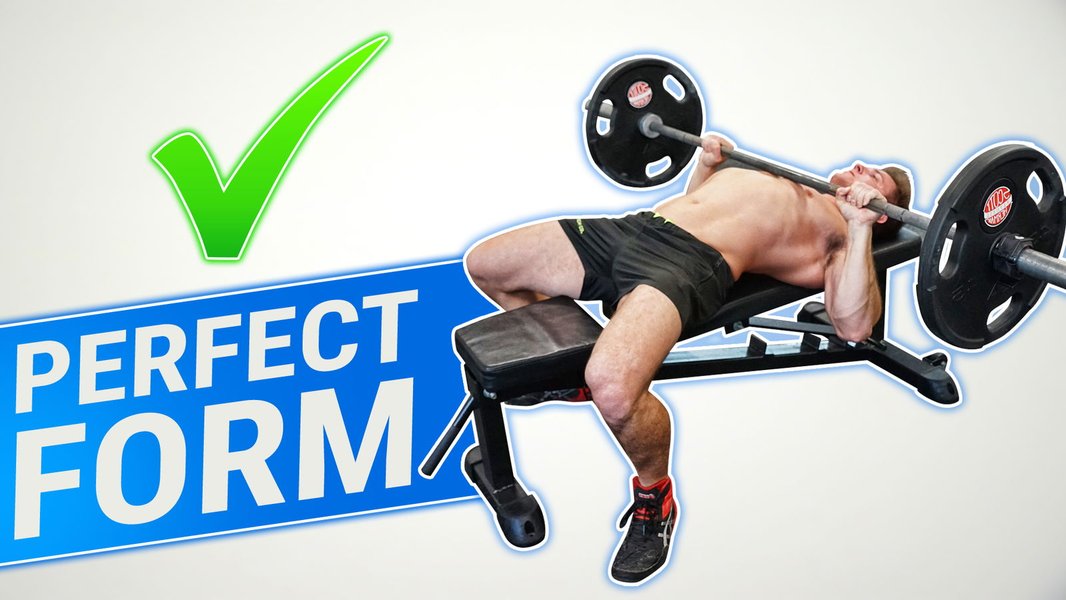
A person performing a barbell bench press on a flat bench.
The Dumbbell Bench Press: Range of Motion and Stabilization
Dumbbell bench presses offer a greater range of motion and demand more from your stabilizer muscles. Each hand works independently, requiring more control and balance, which can highlight and address unilateral strength imbalances. The increased range of motion also allows for a deeper eccentric stretch, which is beneficial for muscle hypertrophy.
However, the need for more stabilization means you generally cannot lift as much total weight with dumbbells as you can with a barbell. The transition to very heavy dumbbells can also become logistically challenging to set up. Your continued progression with dumbbell presses suggests that your pectoral and tricep strength, along with your general pressing mechanics, are strong. The challenge now is to translate that strength effectively to the barbell, which has a different stability requirement and bar path.
Why Your Barbell Bench Press May Be Stalled
Understanding why your barbell bench press is lagging behind your dumbbell progress is the first step to breaking the plateau. Several factors contribute to this common issue:
Differences in Stability and Muscle Recruitment
Stabilizer Muscle Dependence
As mentioned, dumbbells require more stabilization. If your barbell bench press is stuck, it might be due to a lack of strength in the muscles responsible for stabilizing the barbell (e.g., rotator cuff, upper back) rather than your primary pressing muscles. The barbell's fixed path doesn't challenge these muscles in the same way, so their weakness might only become apparent with heavier barbell loads.
Unilateral vs. Bilateral Control
Dumbbells allow for independent movement of each arm, which can compensate for minor strength discrepancies between your left and right sides. With a barbell, any imbalance becomes much more pronounced, forcing the stronger side to overcompensate or the weaker side to fail, leading to a stall.
Technical Flaws and Bar Path
The barbell bench press is a technically complex lift. Even slight deviations in form can significantly impact the amount of weight you can lift. Common technical issues include:
- Incorrect Bar Path: The optimal bar path in a bench press is not a straight line up and down. It typically involves lowering the bar to the mid-chest and pressing it slightly back towards the eyes. If your bar path is inefficient (e.g., too straight up, or drifting forward), it can put you in a mechanically disadvantaged position.
- Lack of Full Body Tension: A strong bench press relies on full-body tension, from your feet planted firmly on the ground, driving through your hips, to a tight upper back and shoulder blades pulled back and down. If you're not generating this tension, you're losing force transfer into the bar.
- Weak Lockout: If you're getting stuck towards the top of the lift, it often indicates weak triceps. Dumbbells, with their greater freedom of movement, might allow you to adjust and find an easier lockout path, whereas a barbell demands direct tricep strength.
- Weak Off the Chest: If you struggle at the bottom of the lift, it could be a weakness in your pectorals or lats. The lats play a crucial role in lowering the bar and initiating the drive off the chest.
Understanding and perfecting your bench press technique is vital for breaking plateaus and maximizing strength gains.
Programming and Progressive Overload
While you're progressing with dumbbells, your barbell programming might not be optimized for strength. For maximum strength gains on the barbell, it's often effective to lift in lower rep ranges (1-5 reps) with heavier weights and sufficient rest between sets. If you've been primarily focusing on higher reps for hypertrophy (which dumbbells are excellent for), you might not be adequately challenging your maximal strength on the barbell.
Also, simply doing more bench press isn't always the answer. Overtraining the same movement without variation or adequate recovery can lead to plateaus. Sometimes, taking a strategic break from the barbell bench press or incorporating variations can help.
Strategies to Break Your Barbell Bench Press Plateau
Now that we've identified the potential culprits, let's explore actionable strategies to get your barbell bench press moving again.
Refine Your Barbell Bench Press Technique
Technique is paramount for lifting heavier weights safely and effectively. Review and adjust your form with a critical eye:
- Full-Body Tightness: Before unracking, ensure your feet are firmly planted, hips pressed into the bench, and shoulder blades retracted and squeezed together. This creates a stable base and maximizes force transfer.
- Elbow Tuck: Keep your elbows tucked at approximately a 45-degree angle relative to your torso. Flaring them out to 90 degrees puts unnecessary strain on your shoulders and reduces tricep involvement.
- Controlled Descent and Explosive Ascent: Lower the bar to your mid-chest with control, using your lats to guide it down. Then, explode upwards, pressing through your feet and driving the bar swiftly off your chest. Some suggest a pause at the bottom (paused bench press) to build explosive strength and eliminate momentum.
- Optimal Grip Width: Experiment with grip width. While a wider grip may feel easier for some at the bottom, a slightly narrower grip (ring finger on the outer ring for some lifters) can often lead to stronger lockouts and better shoulder health.
Incorporate Barbell Variations and Accessory Work
To address specific weak points, integrate variations of the bench press and accessory exercises that target supporting muscle groups.
Bench Press Variations
- Paused Bench Press: Holding the bar still on your chest for 2-3 seconds eliminates the stretch reflex and builds raw strength off the chest and improves control.
- Tempo Bench Press: Controlling the speed of both the eccentric (lowering) and concentric (lifting) phases, especially a slow eccentric, enhances muscle engagement and control.
- Close-Grip Bench Press: This variation places more emphasis on the triceps, directly addressing lockout weaknesses.
- Incline Barbell Bench Press: Targets the upper chest and front deltoids, which are crucial for overall pressing strength.
- Floor Press: Performed lying on the floor, this variation limits the range of motion, emphasizing the middle and top portion of the press and improving lockout strength.
Accessory Exercises to Strengthen Supporting Muscles
A strong bench press isn't just about the chest. Your shoulders, triceps, back, and even glutes contribute significantly.
| Muscle Group Targeted | Recommended Accessory Exercises | Benefit for Bench Press |
|---|---|---|
| Triceps | Skullcrushers, Dips, Overhead Tricep Extensions, Close-Grip Push-ups | Crucial for lockout strength; often a weak link in bench press plateaus. |
| Shoulders (Deltoids) | Overhead Press (barbell or dumbbell), Lateral Raises, Front Raises | Strengthens the anterior and medial deltoids, supporting the pressing motion. |
| Upper Back & Lats | Barbell Rows, Dumbbell Rows, Lat Pulldowns, Face Pulls | Builds a solid shelf to press off, improves stability, and aids in controlled descent. |
| Stabilizer Muscles | Dumbbell Bench Press (as an accessory), Push-up variations, Planks | Enhances overall shoulder and core stability, which translates to barbell control. |
| Legs & Glutes | Glute Bridges, Leg Drive Drills | Improves leg drive, which is essential for generating full-body power during the press. |
Optimize Your Training Program
Increase Frequency
For some lifters, especially smaller ones, increasing the frequency of bench pressing (2-3 times per week) can help. This allows for more practice of the movement pattern and consistent exposure to the lift, which can drive neurological adaptations.
Vary Rep Ranges and Intensity
While you're progressing with reps and weight in dumbbell bench, shift your barbell focus. Incorporate cycles of heavy, low-rep sets (1-5 reps for strength) and moderate-rep sets (6-8 reps for hypertrophy) to provide varied stimuli. Progressive overload is key: consistently aim to add weight, reps, or sets over time, even if it's a small increment.
Utilize Variable Resistance (Chains or Bands)
Adding chains or resistance bands to your barbell bench press can help overcome sticking points by varying the resistance throughout the lift. The resistance increases as you press up, challenging your lockout strength more effectively.
The radar chart above visually compares the strengths of barbell and dumbbell bench presses across various training aspects. As you can see, while dumbbells excel in stabilizer engagement and offer a high potential for muscle hypertrophy due to a greater range of motion, barbells shine in pure strength development and the ease of applying progressive overload. The chart highlights that overcoming a barbell plateau often means leaning into its unique strengths, such as raw power and precise technique, while strategically using dumbbell-like benefits (like stabilizer work) as accessory training.
Recovery and Nutrition: The Unsung Heroes
Often overlooked, adequate recovery and proper nutrition are just as vital as your training program. Muscles grow and strengthen during rest, not during the workout itself.
- Prioritize Sleep: Aim for 7-9 hours of quality sleep per night to allow for muscle repair and hormone optimization.
- Balanced Nutrition: Ensure you're consuming enough protein to support muscle recovery and growth (around 1.6-2.2 grams per kilogram of body weight) and sufficient calories to fuel your workouts and recovery.
- Manage Stress: High stress levels can negatively impact recovery and strength gains.
Frequently Asked Questions
What is a bench press plateau?
Can I exclusively do dumbbell bench press and still get strong?
How often should I train bench press to break a plateau?
Should I deload to break a plateau?
What is "leg drive" in the bench press?
Conclusion
Breaking a barbell bench press plateau, especially when you're still progressing with dumbbells, requires a strategic and multifaceted approach. It's a clear signal that your body has adapted to your current stimulus, and it's time to introduce new challenges. By focusing on refining your barbell technique, intelligently incorporating variations and accessory exercises to target specific weaknesses (like tricep strength for lockout or upper back stability for a solid base), and optimizing your overall training program with principles like progressive overload and varied rep ranges, you can overcome this hurdle. Remember, consistency, patience, and a willingness to analyze and adjust your approach are key to long-term strength gains. Don't be afraid to step back, reassess, and implement these strategies; your next personal record is within reach.
Recommended Further Reading
- Discover the nuances of optimal bench press form for maximum strength.
- Explore the most effective accessory exercises to bolster your bench press.
- Learn how to systematically apply progressive overload to your bench press training.
- Understand the advantages of paused bench press and tempo training for breaking plateaus.
References
Last updated May 21, 2025