
Unlocking Precision: A Comprehensive Guide to Base Editing Technology
Exploring the Principles, Applications, and Future of Targeted DNA Modification
Key Highlights of Base Editing Technology
- Precision Editing: Base editing allows for targeted modification of DNA bases without creating double-strand breaks, offering a safer alternative to traditional CRISPR methods.
- Therapeutic Potential: Base editing holds immense promise for treating genetic diseases by correcting single-nucleotide mutations, which account for a significant portion of known pathogenic variants.
- Versatile Applications: Beyond medicine, base editing is used in synthetic biology, crop improvement, and evolutionary engineering, showcasing its broad applicability.
Understanding Base Editing: The Basics
Base editing is a revolutionary genome editing technology that enables the direct and irreversible conversion of one DNA base into another at a targeted genomic location. Unlike traditional CRISPR-Cas9 methods, base editing achieves this precision without inducing double-strand breaks (DSBs) in the DNA. This capability is particularly significant because many genetic diseases arise from point mutations, making base editing a promising tool for studying and treating these conditions.

Visualizing CRISPR-Cas9 Delivery
The image illustrates the delivery of CRISPR-Cas9 components into a cell, a crucial step in both traditional CRISPR and base editing technologies. Efficient delivery is essential for effective gene modification and therapeutic applications.
The Core Principle: Chemical Modification
At its core, base editing relies on the chemical modification of target nucleobases within the DNA sequence. This process involves using a deaminase enzyme to convert one base into another, effectively rewriting the genetic code at a specific location. Base editors are typically composed of a catalytically dead Cas9 (dCas9) or a Cas9 nickase fused to a deaminase enzyme. The dCas9 or Cas9 nickase is guided to the target site by a guide RNA (gRNA), while the deaminase performs the base conversion.
Base editing distinguishes itself by avoiding nucleic acid backbone cleavage, directly modifying target nucleobases. This approach minimizes the risk of unwanted insertions or deletions (indels) that can occur with DSB-based editing methods.
Types of Base Editors
Base editors are primarily classified into two main categories:
- Cytosine Base Editors (CBEs): CBEs facilitate the conversion of cytosine (C) to thymine (T). These editors use a cytidine deaminase enzyme, such as APOBEC, to deaminate cytosine, converting it to uracil (U). The uracil is then recognized as thymine during DNA replication, resulting in a C-to-T conversion.
- Adenine Base Editors (ABEs): ABEs mediate the conversion of adenine (A) to guanine (G). These editors employ a modified adenine deaminase enzyme to convert adenine to inosine (I), which is then recognized as guanine during replication, leading to an A-to-G conversion.
While CBEs and ABEs are the most common, researchers are also developing more advanced base editors capable of other base conversions and modifications.
Advantages of Base Editing Over Traditional CRISPR-Cas9
Base editing offers several key advantages over traditional CRISPR-Cas9 genome editing:
- Reduced Off-Target Effects: By avoiding DSBs, base editing minimizes the chances of off-target mutations and chromosomal rearrangements, enhancing its safety profile.
- Higher Precision: Base editors enable precise point mutations without the stochastic disruption associated with DSB repair mechanisms.
- Increased Efficiency: Base editing can achieve higher correction rates compared to homology-directed repair (HDR) in traditional CRISPR, particularly in non-dividing cells.
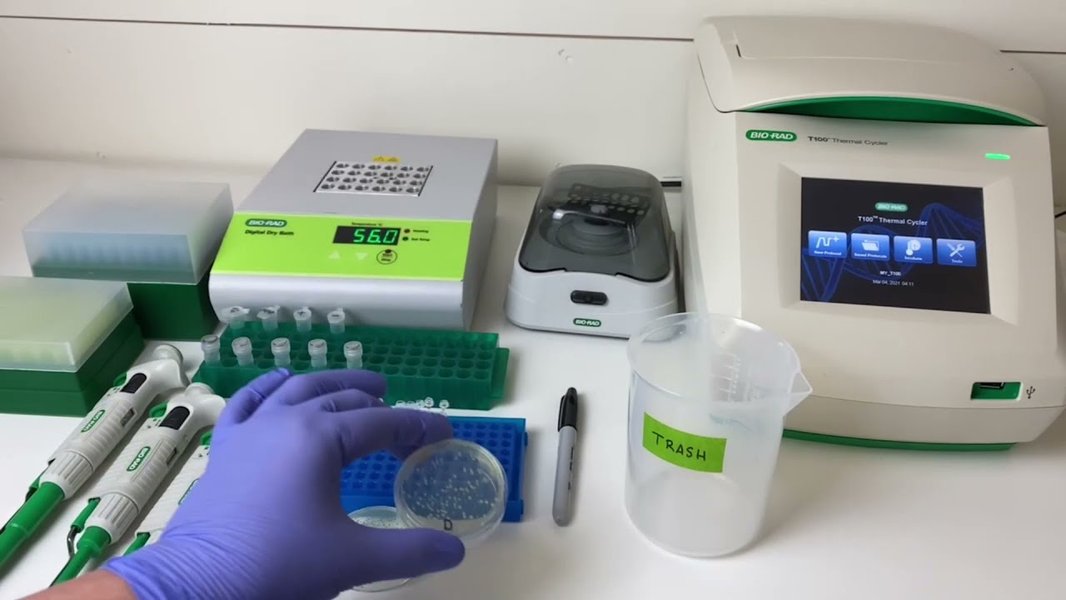
Genotyping CRISPR-Cas9 Edits
The image illustrates the process of genotyping to confirm successful CRISPR-Cas9 gene editing. Genotyping is crucial for verifying the accuracy and efficiency of base editing and other genome editing techniques.
Addressing the Limitations of CRISPR-Cas9
Traditional CRISPR-Cas9 systems rely on inducing DSBs at a specific locus, followed by cellular DNA repair mechanisms. This process can lead to random insertions or deletions (indels) of bases, which are often undesirable. Base editing overcomes this limitation by directly converting one DNA base into another without creating DSBs, thus increasing the efficiency and precision of gene correction.
While CRISPR-Cas9 has revolutionized genome editing, its reliance on DSBs can be problematic in some organisms. Base editing elegantly sidesteps these issues by creating knock-outs through direct base exchange.
Applications of Base Editing in Biomedicine
Base editing holds tremendous potential for treating a wide range of genetic diseases. Approximately half of known pathogenic genetic variants are due to single-nucleotide variations (SNVs), making base editing a highly relevant therapeutic approach.
Correcting Genetic Mutations
Base editing can correct disease-causing mutations by directly converting the incorrect base back to the wild-type sequence. This approach has shown promise in preclinical studies for various genetic disorders, including:
-
Sickle Cell Disease: Base editing can correct the point mutation in the HBB gene that causes sickle cell disease, offering a potential cure for this debilitating condition.
-
Cystic Fibrosis: Certain mutations in the CFTR gene responsible for cystic fibrosis can be corrected using base editing, restoring proper protein function.
-
Inherited Cardiomyopathies: Many inherited cardiomyopathies result from single-nucleotide changes, making them ideal targets for base editing-based gene therapies.
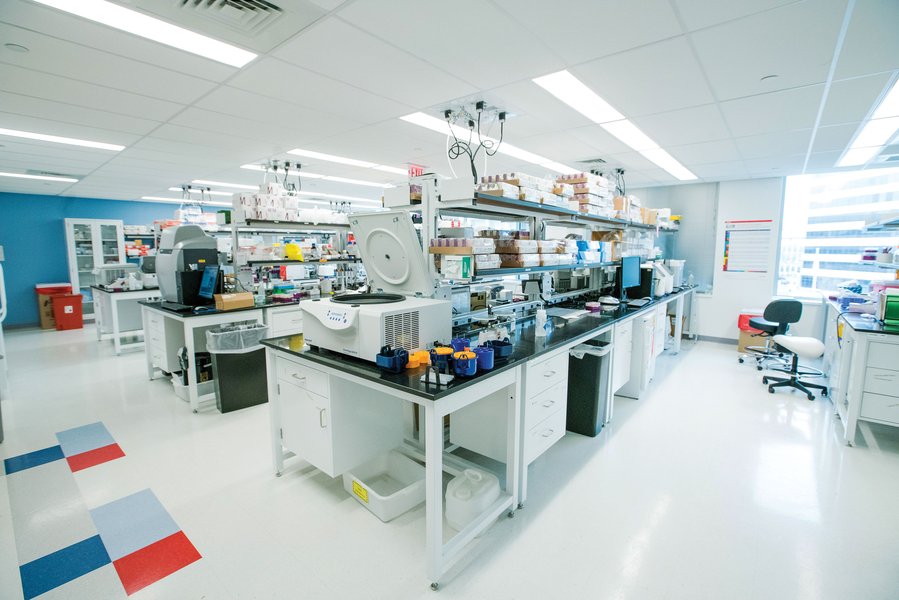
Industrial-Grade CRISPR Tools
The image showcases the advanced tools and technologies used in gene editing labs. These tools are essential for precise and efficient base editing, driving innovation in therapeutic applications.
Base Editing in Clinical Trials
The first clinical trials of base editing in humans have demonstrated promising results. For example, base editing has been used to lower cholesterol levels in patients with hypercholesterolemia, a major risk factor for heart disease. In another groundbreaking case, base editing was used to treat a young patient with treatment-resistant leukemia by modifying immune cells.
Branden Baptiste was the first person to receive base editing for sickle cell disease, marking a significant milestone in the application of this technology.
Applications Beyond Biomedicine
In addition to its therapeutic applications, base editing is also being used in various other fields, including:
Crop Improvement
Base editing is a valuable tool for targeted mutagenesis in crop development. Point mutations, or single nucleotide polymorphisms (SNPs), define key agronomic traits in various crop species. By precisely modifying these SNPs, researchers can improve crop yield, nutritional content, and disease resistance.
Synthetic Biology and Evolutionary Engineering
Base editing is used to create genetic model systems and to study gene function. It enables researchers to introduce specific point mutations into DNA or RNA, allowing them to investigate the effects of these mutations on cellular processes and phenotypes. Base editing systems like targeted AID-mediated mutagenesis (TAM) and CRISPR-X are used to create a wide spectrum of single-nucleotide variants for directed evolution applications.
Challenges and Future Directions
Despite its immense potential, base editing faces several challenges that need to be addressed to fully realize its therapeutic and research applications:
Delivery Methods
Efficient and safe delivery of base editors to target cells and tissues remains a significant hurdle. Various delivery methods are being explored, including viral vectors, nanoparticles, and direct delivery of ribonucleoprotein complexes.
Off-Target Effects
Although base editing reduces off-target effects compared to traditional CRISPR, it is still essential to minimize unintended base modifications at non-target sites. Researchers are working to improve the specificity of base editors through protein engineering and optimized gRNA design.
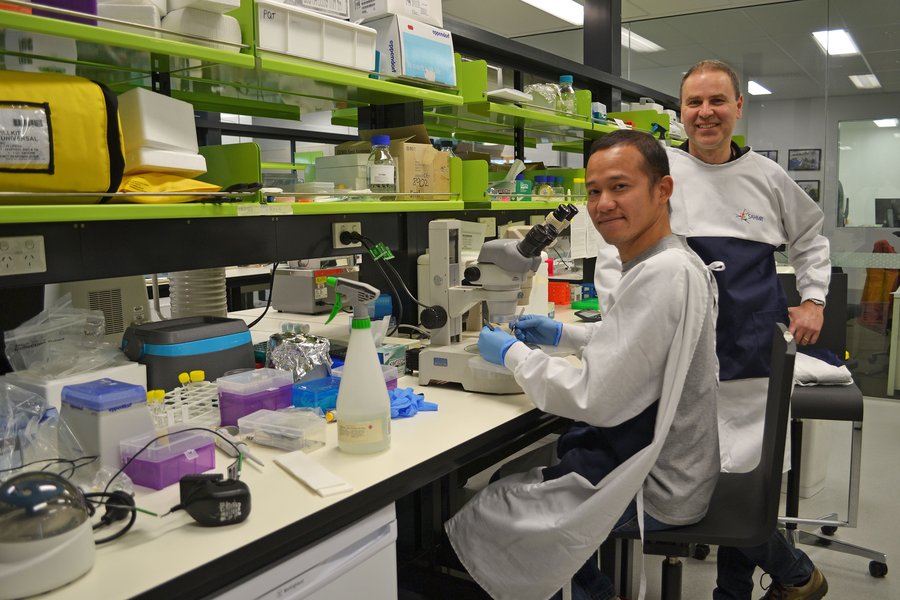
Gene Editing in the Lab
The image depicts scientists working in a gene editing laboratory, highlighting the collaborative and innovative environment driving advancements in base editing technology.
Editing Window Limitations
Base editors typically operate within a narrow editing window, limiting the range of bases that can be modified at a given target site. Expanding the editing window and developing base editors with broader PAM compatibility are ongoing areas of research.
Expanding the Base Editing Toolkit
Researchers are continuously developing new and improved base editors with enhanced activity, specificity, and versatility. This includes creating base editors that can perform additional base conversions, target RNA, and operate in a wider range of organisms.
Comparing Base Editing Technologies
Understanding the nuances of different base editing technologies is crucial for selecting the appropriate tool for a specific application. The following table summarizes the key characteristics of several base editing systems:
| Base Editor Type | Base Conversion | Enzyme | Advantages | Limitations | Applications |
|---|---|---|---|---|---|
| Cytosine Base Editors (CBEs) | C to T | APOBEC/AID | High efficiency, well-established | Potential off-target effects, narrow editing window | Correcting point mutations, gene inactivation |
| Adenine Base Editors (ABEs) | A to G | TadA | Precise, minimal indel formation | Lower efficiency compared to CBEs | Correcting point mutations, gene activation |
| Targeted AID-mediated Mutagenesis (TAM) | C to non-T | AID | Generates a wide spectrum of mutations | Lower precision, potential for off-target effects | Directed evolution, creating genetic diversity |
| CRISPR-X | C to non-T | AID | Generates a wide spectrum of mutations | Lower precision, potential for off-target effects | Directed evolution, creating genetic diversity |
FAQ: Frequently Asked Questions About Base Editing
What is the difference between base editing and traditional CRISPR-Cas9?
Base editing directly modifies DNA bases without creating double-strand breaks (DSBs), while traditional CRISPR-Cas9 induces DSBs to edit the genome. This difference results in higher precision and reduced off-target effects with base editing.
How efficient is base editing compared to other gene editing techniques?
Base editing can achieve higher correction rates compared to homology-directed repair (HDR) in traditional CRISPR, often reaching efficiencies of 15% to 75% with minimal indel formation.
What types of diseases can be treated with base editing?
Base editing holds promise for treating a wide range of genetic diseases caused by single-nucleotide variations (SNVs), including sickle cell disease, cystic fibrosis, and inherited cardiomyopathies.
What are the main challenges in base editing?
The main challenges include efficient delivery of base editors to target cells, minimizing off-target effects, expanding the editing window, and developing new base editors with enhanced capabilities.
Is base editing safe for use in humans?
Clinical trials of base editing in humans have shown promising results, but further research is needed to fully assess its long-term safety and efficacy.
References
Last updated April 17, 2025