
Understanding the Arithmetic of 10 + 10
A detailed exploration of basic addition and its significance
Key Insights
- Fundamental Concept: 10 + 10 = 20, reflecting the basic principle of addition.
- Educational Importance: This operation is foundational in mathematics, supporting early numeracy skills.
- Broad Applications: Basic arithmetic like this is integral to further studies in science, finance, and everyday problem-solving.
The Basic Principle of Addition
Addition is one of the four major arithmetic operations. At its core, it is the process of combining two or more numbers to obtain a sum. In the case of 10 + 10, we have two identical addends. The operation is executed by simply summing up the two numbers to arrive at the result: 20.
Understanding the Place Value System
The numerical system most commonly used is the decimal (base-10) system. The number 10 is composed of a one in the tens place and a zero in the units place. When you add another 10, you are essentially combining two units of ten. Thus, the sum of the two numbers represents two complete tens, resulting in the number 20.
Mathematical Representation
Formula Approach
Expressing the addition operation in mathematical terms, we use the formula:
\( 10 + 10 = 20 \)
Here, the plus sign "+" symbolizes the operation of addition, and the equal sign "=" indicates that the expression on the left-hand side is equal in value to the expression on the right-hand side.
Visual Aids in Understanding Addition
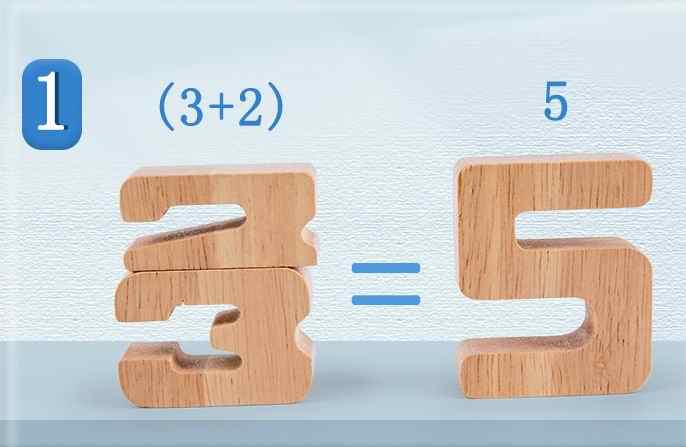
Understanding basic arithmetic is enhanced by visual representations. Consider a number line or a set of blocks. Each block represents the number 10. When you line up two blocks side-by-side, visually, they combine to make a new block representing 20. This method is especially useful in early education, where concrete examples can simplify abstract numerical concepts.
Exploring the Context and Importance of Basic Addition
Educational Foundations
The operation of 10 + 10 is more than a simple arithmetic task: it is a building block for all future mathematical learning. Mastering addition enables learners to transition to more complex operations like subtraction, multiplication, and division, which are critical for advanced problem solving in mathematics. In educational settings, educators often begin with tangible examples such as these to develop a strong numerical foundation.
Real-world Applications
Beyond the classroom, the ability to perform simple addition is vital in everyday activities. Whether it is managing finances, cooking, or planning activities, basic arithmetic helps in making quick decisions and performing estimations. For instance, if you have 10 apples and purchase another 10, you immediately know you have 20 apples in total. This basic numerical ability facilitates logical reasoning and efficient problem-solving in daily life.
Link to Advanced Mathematics
The simplicity of 10 + 10 serves as an introduction to more advanced mathematical topics. In algebra, arithmetic operations such as addition often extend into manipulating variables and forming equations. The process of combining like terms, understanding coefficients, and working through linear relationships all hinge on the basic concept of addition. Thus, a clear understanding of what 10 + 10 equals reinforces a learner’s ability to grasp more abstract mathematical theories later on.
Deep Dive into the Mechanics of Addition
Step-by-Step Process Explanation
Step 1: Identifying the Numbers
The calculation begins by recognizing the two addends, both of which are 10. Understanding each number’s role in the operation is crucial.
Step 2: Aligning the Numbers
In a traditional arithmetic method taught in schools, the numbers are aligned according to their place values (ones under ones, tens under tens). This alignment visually represents the structure of the decimal system.
Step 3: Summation of Corresponding Places
Proceed by adding the digits associated with each place:
- In the ones place: 0 + 0 equals 0.
- In the tens place: 1 + 1 equals 2.
Combining these results, the final sum is assembled as 20.
Practical Example Table
The following table illustrates the addition process in detail:
| Place Value | First Number | Second Number | Sum |
|---|---|---|---|
| Tens | 1 | 1 | 2 |
| Ones | 0 | 0 | 0 |
| Total | 20 | ||
Evaluating the Role of Arithmetic in Broader Contexts
Foundation for Advanced Learning
The exercise of adding 10 and 10, while simple, is representative of what is known as computational fluency. This fluency provides the foundation upon which all higher-level mathematics are built. It allows learners to:
- Quickly compute sums in mental arithmetic which is useful in everyday decision-making.
- Understand the additive properties of numbers, such as the commutative property which states that the order of addition does not affect the sum.
- Transition to algebraic thinking by recognizing and applying operations in various contexts.
Implications in Technology and Digital Media
In the digital age, elementary arithmetic forms the basis of many algorithms and computational functions. For instance, computer programming languages rely on such operations in simple arithmetic instructions. When a computer processes instructions like 10 + 10, it essentially translates human-understood mathematics into machine-level operations that can manipulate data and perform calculations rapidly.
Cultural and Social Dimensions
The simple calculation of 10 + 10 can also be found in various cultural and creative settings. For example, it is sometimes used in puzzles, games, or even as a basic exercise in many learning apps and teaching methodologies. Such exercises not only develop numerical abilities but also encourage logical thinking and problem-solving skills. Moreover, humor and creativity sometimes find their way into basic arithmetic, as people enjoy playing with numbers in various contexts, sometimes leading to jokes and alternative interpretations that are meant for entertainment rather than strict mathematical accuracy.
Historical Perspective and Evolution of Numerical Understanding
The Evolution of Numerical Systems
The process of addition has evolved through history as numerical systems developed across different civilizations. Ancient civilizations, including the Egyptians, Babylonians, and Greeks, used various methodologies to perform arithmetic. The modern decimal system, which is used to perform the addition of 10 + 10, has its roots in ancient India's numeral system, which was later transmitted to the Western world through Arabic scholars.
From Basic Calculation to Complex Problem Solving
Early numeric exercises like 10 + 10 have paved the way for breakthroughs in other fields such as engineering, economics, and computer science. A thorough understanding of simple operations enables the development of algorithms, the simplification of complex equations, and supports technological advancements that rely on computational efficiency.
Relevance in Modern Education
Even in today's digital and fast-paced era, the fundamentals of arithmetic are taught using simple examples like 10 + 10. Educators reinforce these concepts using interactive tools and visual aids that help students develop a clear understanding of how numbers combine. This foundational knowledge is critical as it forms the basis for engaging with more complex mathematical concepts later in a student’s academic journey.
Conclusion and Final Thoughts
In summary, the operation 10 + 10 is much more than a multiplication of two digits. It represents the essence of arithmetic – the process of combining numbers to yield a total. Through understanding how 10 + 10 equals 20, one gains insight into the fundamental principles of addition, the significance of place value, and the broader educational and real-world applications of basic mathematical operations.
Whether examined from a pure arithmetic point of view, as a stepping stone for deeper mathematical learning, or as a tool for everyday problem solving, the simplicity and power of basic addition cannot be overstated. The predictable nature of 10 + 10 providing a consistent sum of 20 aligns with the immutable rules of arithmetic that offer reliability and accuracy in all calculations.
This exploration illustrates that mastering basic arithmetic like addition is indispensable in fostering numerical literacy. It bridges the gap between abstract conceptual learning and practical application, ultimately empowering individuals across various disciplines. As foundational concepts build into more complex fields of mathematics and technology, the importance of understanding these basics, such as 10 + 10, continues to resonate throughout education and beyond.
References
- 10 plus 10 equals 20 - Brainly
- Plus 10 Game - Addicting Games
- Plus 10 - Play2Online
- 10 plus 10 Exercise - Service Design Doing
-
Microsoft Math Solver - 10+10
Recommended Related Queries

Last updated February 27, 2025