
Unpacking Your Belly Bulge: Beyond Just Fat
Discovering the Multiple Factors Behind Abdominal Protrusion When Relaxed
Key Insights
- Your belly bulge when relaxed may not solely be due to excess fat. While fat accumulation, particularly visceral fat, can contribute, other factors such as posture, muscle tone, bloating, and even underlying medical conditions can play a significant role.
- Subcutaneous fat is the pinchable fat under your skin, while visceral fat is deeper and surrounds organs. The feeling of not having much pinchable fat doesn't rule out the presence of visceral fat or other causes for abdominal distension.
- Addressing a relaxed belly bulge often requires a multi-faceted approach. This can involve improving posture, strengthening core muscles, managing diet for bloating, reducing stress, and in some cases, seeking medical advice to rule out other issues.
It's a common experience to feel like your stomach protrudes more when you relax compared to when you're consciously holding it in. You've noticed that the pinchable fat (subcutaneous fat) on your belly doesn't seem excessive, leading you to wonder what else could be causing this bulge. While the contents of your abdomen – your "guts" and food – certainly occupy space, the degree of protrusion when relaxed can be influenced by several factors beyond just immediate digestive contents or easily felt fat. This can include internal fat, also known as visceral fat, as well as aspects like muscle tone, posture, and even bloating.
Understanding Different Types of Abdominal Fat
The Distinction Between Subcutaneous and Visceral Fat
When you grab the skin on your belly, you are primarily feeling subcutaneous fat. This type of fat is stored just beneath the skin throughout your body and is the kind you can easily pinch between your fingers. It serves as energy storage and insulation. While excessive subcutaneous fat can contribute to a larger belly, it's not the only player.
Visceral fat, on the other hand, is located deeper within the abdominal cavity, surrounding your internal organs like the liver, intestines, and stomach. Unlike subcutaneous fat, visceral fat is metabolically active and can release substances that contribute to inflammation and increase the risk of various health problems, including heart disease and insulin resistance. Even if you don't have a large amount of pinchable subcutaneous fat, you could still have an accumulation of visceral fat, which can contribute to a protruding abdomen, especially when your abdominal muscles are relaxed.
Here's a comparison to highlight the key differences:
| Feature | Subcutaneous Fat | Visceral Fat |
|---|---|---|
| Location | Just beneath the skin | Deep within the abdominal cavity, surrounding organs |
| Feel | Soft, pinchable | Often feels firmer if present in excess |
| Health Risk | Generally less harmful in moderate amounts | Higher health risk, linked to metabolic diseases |
| Metabolic Activity | Less active | More metabolically active, releases cytokines |
While subcutaneous fat is visible and palpable, visceral fat is often referred to as "hidden" or "toxic" fat because its presence is not always obvious from external appearance alone. Its accumulation can contribute to a firm, distended abdomen.
Images can help visualize the difference between these two types of fat. Subcutaneous fat is the layer directly under the skin, while visceral fat is located deeper around the organs.
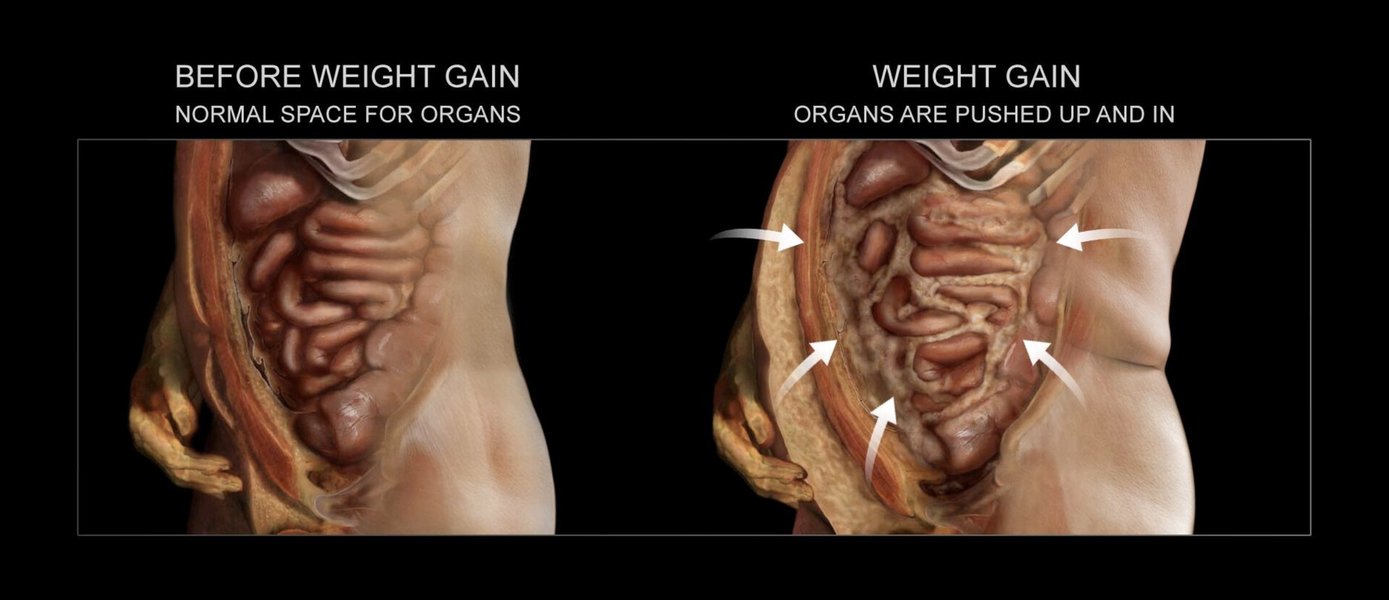
Illustration depicting the location of subcutaneous and visceral fat in the body.

A 3D scan illustrating visceral fat surrounding internal organs.
Beyond Fat: Other Contributors to Abdominal Bulge
Exploring Factors Beyond Adipose Tissue
Your observation that your stomach bulges when relaxed, despite not having excessive pinchable fat, points to the influence of factors other than just subcutaneous fat. The abdominal cavity contains not only fat but also your digestive organs, fluid, and gas. The positioning and containment of these elements are significantly affected by your muscles and posture.
Muscle Tone and Core Strength
The abdominal muscles, particularly the transverse abdominis which acts like a natural corset, play a crucial role in holding your internal organs in place and maintaining a relatively flat abdomen. When these muscles are relaxed or lack tone, the abdominal contents can push outwards, leading to a noticeable bulge. This is why your stomach may appear flatter when you engage or "flex" your abdominal muscles and protrude when you relax them. Weak abdominal muscles can contribute to this, especially if you have a sedentary lifestyle or if your exercise routine doesn't adequately target these deep core muscles.
A lack of co-contraction between the pelvic floor and deep abdominals can also lead to the lower abdomen bulging.
Posture
Poor posture can significantly impact the appearance of your abdomen. For instance, an anterior pelvic tilt, where the pelvis tips forward, can cause the lower back to arch excessively and the abdomen to protrude. Similarly, slouching or a rounded upper back can also alter the alignment of your torso and make the belly more prominent. Improving posture can help align your body in a way that naturally reduces the appearance of a bulge.

Visualizing how anterior pelvic tilt can contribute to a protruding abdomen.
Scoliosis, a curvature of the spine, can also affect posture and lead to an uneven or protruding abdomen.
Bloating and Digestive Issues
Bloating, caused by the accumulation of gas or fluid in the digestive system, is a very common reason for the abdomen to appear distended. This can be influenced by dietary choices, food intolerances or sensitivities, and digestive disorders. If the bulge fluctuates throughout the day or is associated with feelings of fullness, discomfort, or excessive gas, bloating is a likely culprit. When you relax your abdominal muscles, there is less resistance to the internal pressure from gas and digestive contents, making the bulge more noticeable.
Other Potential Factors
Several other factors can contribute to a belly bulge when relaxed:
-
Excess Skin: Following significant weight loss or pregnancy, loose skin around the abdomen can create a bulging appearance even without much underlying fat.
-
Diastasis Recti: This is a separation of the abdominal muscles, often occurring during or after pregnancy, which can lead to a noticeable bulge in the midline of the abdomen.
-
Stress and Hormones: Stress can affect digestion and hormone levels, potentially contributing to bloating and fat distribution.
-
Alcohol Consumption: Regular alcohol intake can contribute to weight gain and a more prominent abdomen.
-
Underlying Medical Conditions: While less common, certain medical conditions such as ascites (fluid buildup in the abdomen), hernias, or issues with the digestive tract can cause abdominal distension. If the bulge is sudden, persistent, painful, or accompanied by other concerning symptoms, it is important to seek medical advice.
Addressing the Relaxed Belly Bulge
Strategies for a Flatter Abdomen
Since the cause of a relaxed belly bulge can be multifaceted, addressing it often requires a combination of approaches:
Improving Core Strength and Muscle Tone
Engaging in exercises that strengthen the core muscles, particularly the transverse abdominis, can help improve abdominal tone and better support internal organs. Pilates and specific core-strengthening exercises are often recommended. Consistency is key to building muscle tone.
This video demonstrates exercises that can help flatten the lower belly by targeting core muscles.
Enhancing Posture
Practicing good posture while sitting and standing can make a noticeable difference in how your abdomen appears. Exercises and stretches that address postural imbalances, such as anterior pelvic tilt, can be beneficial. Being mindful of your posture throughout the day is important.
Dietary Adjustments and Managing Bloating
Identifying and avoiding foods that cause bloating is crucial if this is a significant factor for your bulge. This might involve keeping a food diary to identify triggers, reducing intake of carbonated drinks, or consulting a healthcare professional to test for food intolerances. Increasing fiber intake gradually and staying hydrated can also aid digestion and reduce bloating.
Stress Reduction
Managing stress through techniques like mindfulness, meditation, or yoga can have positive effects on both digestion and overall well-being, potentially reducing stress-related bloating and hormonal influences on fat distribution.
Maintaining a Healthy Weight
While you may not have a lot of pinchable fat, if you have excess visceral fat, weight management through a balanced diet and regular exercise can help reduce it. Even a modest weight loss can have significant health benefits, including a reduction in visceral fat.
Considering Medical Advice
If your belly bulge is persistent, sudden, painful, or accompanied by other concerning symptoms like changes in bowel habits, unexplained weight loss, or vomiting, it is essential to consult a doctor to rule out any underlying medical conditions that require specific treatment.
Frequently Asked Questions
Is it normal for the stomach to stick out when relaxed?
Yes, it is relatively normal for the abdomen to protrude somewhat when fully relaxed, even in individuals who are not overweight. When the abdominal muscles are relaxed, there is less support for the internal organs and digestive contents, which can cause the belly to appear more prominent. The degree of protrusion can vary based on individual anatomy, posture, muscle tone, and recent food intake or bloating.
Can poor posture cause my stomach to stick out?
Absolutely. Poor posture, such as anterior pelvic tilt or slouching, can significantly affect the alignment of your torso and make your abdomen appear more prominent. Correcting your posture can help improve the appearance of your belly.
How can I tell if my belly bulge is due to bloating or fat?
Bloating often fluctuates throughout the day and may be associated with feelings of fullness, gas, or discomfort after eating certain foods. A bulge due to fat, particularly subcutaneous fat, is generally more consistent. Visceral fat can contribute to a firmer, more consistently distended abdomen. Observing when the bulge is most noticeable and considering other symptoms can help differentiate between bloating and fat accumulation.
Are there exercises to specifically target a relaxed belly bulge?
Exercises that strengthen the deep core muscles, like the transverse abdominis, are particularly helpful for improving abdominal tone and reducing the appearance of a bulge when relaxed. Pilates, planks, and exercises that focus on drawing the navel towards the spine can be beneficial. However, spot reduction of fat is not possible; overall fat loss through diet and exercise is necessary to reduce fat accumulation.
When should I be concerned about a belly bulge?
While a relaxed belly bulge is often not a cause for serious concern, you should consult a doctor if the bulge is new, appears suddenly, is accompanied by pain, significant weight loss, changes in bowel habits, vomiting, or if you suspect an underlying medical condition.
References
Last updated May 13, 2025