

- Dual Foundations: The name "Bernoulli" primarily refers to two distinct yet fundamental concepts: Bernoulli's principle in fluid dynamics and the Bernoulli distribution in probability theory.
- Impactful Applications: Both concepts have wide-ranging practical applications, from explaining aircraft lift and designing fluid measurement devices to modeling binary outcomes in statistics and machine learning.
- Conservation of Energy: Bernoulli's principle is a direct consequence of the conservation of energy, elegantly linking pressure, velocity, and height in fluid flow.
The name "Bernoulli" resonates deeply across several scientific disciplines, primarily due to the extraordinary contributions of the Swiss Bernoulli family, particularly Daniel Bernoulli and Jacob Bernoulli. While the user's query is concise, it points to two cornerstone concepts: the Bernoulli distribution in probability and statistics, and Bernoulli's principle in fluid dynamics. These two pillars, though seemingly disparate, both owe their nomenclature to this influential family, laying foundational groundwork in their respective fields.
Daniel Bernoulli (1700–1782) was a pivotal figure whose work transcended mathematics and physics, notably in fluid mechanics. His groundbreaking treatise, Hydrodynamica (1738), introduced what is now known as Bernoulli's principle. Concurrently, the Bernoulli distribution, often attributed to his uncle Jacob Bernoulli (1655–1705), underpins much of modern probability theory, particularly concerning binary outcomes.
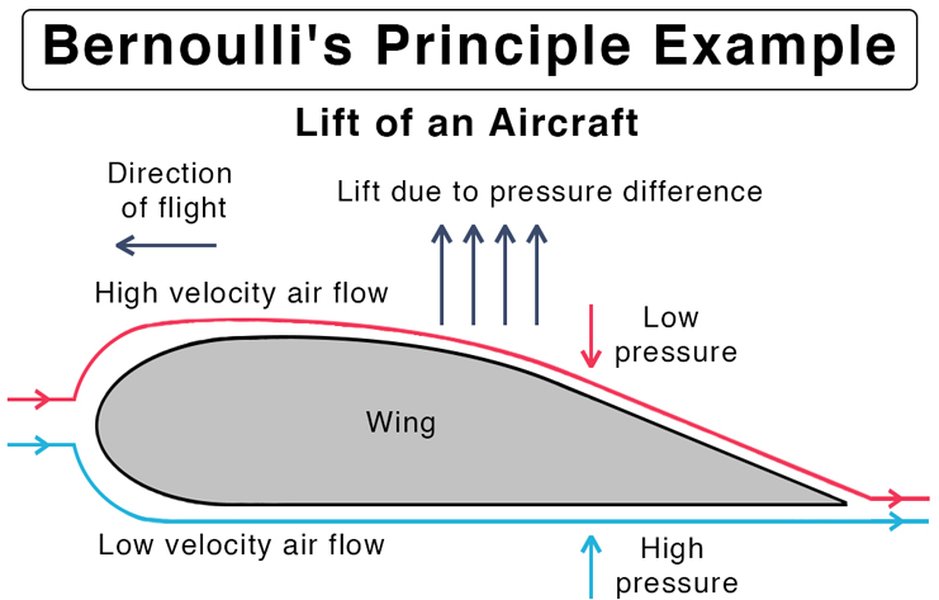
An illustrative diagram of Bernoulli's Principle, showing the inverse relationship between fluid velocity and pressure.
Understanding Fluid Behavior Through Energy Conservation
Bernoulli's principle is a fundamental concept in fluid dynamics, describing the relationship between the pressure, velocity, and height of a moving fluid. It is essentially a statement of the conservation of energy for fluids in steady, frictionless flow. This principle posits that an increase in the speed of a fluid occurs simultaneously with a decrease in its static pressure or a decrease in its potential energy. Conversely, where fluid speed is lower, the pressure is higher.
The Core Equation of Bernoulli's Principle
The mathematical representation of Bernoulli's principle, known as Bernoulli's equation, is given by:
\[ P + \frac{1}{2} \rho v^2 + \rho g h = \text{constant} \]Where:
- \(P\) is the static pressure of the fluid.
- \(\rho\) is the density of the fluid.
- \(v\) is the velocity of the fluid flow.
- \(g\) is the acceleration due to gravity.
- \(h\) is the elevation or height above a reference point.
This equation indicates that along a streamline, the sum of these three terms—static pressure, kinetic energy per unit volume (\(\frac{1}{2} \rho v^2\)), and potential energy per unit volume (\(\rho g h\))—remains constant. This means if one term increases, another must decrease to maintain the constant sum, reflecting the conservation of mechanical energy within the fluid system.
Real-World Applications and Engineering Marvels
The implications of Bernoulli's principle are far-reaching and underpin numerous technological advancements and natural phenomena:
- Aerodynamics and Aircraft Lift: One of the most famous applications is explaining how airplane wings generate lift. The curved shape of an airfoil causes air to flow faster over its upper surface than its lower surface. According to Bernoulli's principle, this higher velocity results in lower pressure above the wing and higher pressure below, creating an upward lift force.
- Fluid Flow Measurement Devices:
- Venturi Meters: These devices measure fluid flow rates by constricting the flow path. As the fluid speeds up in the narrow section, its pressure drops, which can be measured to determine the flow velocity.
- Pitot Tubes: Used primarily in aircraft to measure airspeed, Pitot tubes measure dynamic pressure (related to fluid velocity) by comparing total pressure to static pressure.
- Everyday Phenomena: Bernoulli's principle explains the aspiration effect in carburetors, the function of perfume atomizers, and even why a shower curtain might get pulled inwards during a hot shower.
- Hydraulics and Pipelines: It is crucial in designing efficient pipelines, nozzles, and understanding pressure changes in fluid transport systems.
This video provides a clear explanation of Bernoulli's equation and its various applications in fluid dynamics.
Assumptions and Limitations
While powerful, Bernoulli's principle is based on several idealizing assumptions:
- Inviscid Flow: It assumes no fluid viscosity, meaning no internal friction between fluid layers.
- Incompressible Fluid: The fluid density is assumed to be constant, which is generally true for liquids but an approximation for gases at high speeds.
- Steady Flow: The fluid velocity at any point in space does not change over time.
- Along a Streamline: The equation applies specifically to points along a single streamline, not necessarily across different streamlines.
- No Heat Transfer or Work: It assumes no heat is added to or removed from the fluid, and no work is done on or by the fluid.
For real-world applications, especially with turbulent or highly viscous flows, engineers often need to incorporate empirical corrections or use more complex computational fluid dynamics (CFD) models.
Modeling Simple Outcomes in Complex Systems
In the realm of probability and statistics, the Bernoulli distribution is a discrete probability distribution that models a random experiment with only two possible outcomes: "success" or "failure." It is the simplest possible probability distribution for a random variable and forms the building block for more complex distributions like the binomial distribution.
Defining the Bernoulli Experiment
A random variable \(X\) follows a Bernoulli distribution if it can take on only two values: 1 (representing "success") with a probability \(p\), and 0 (representing "failure") with a probability \(1-p\). Here, \(p\) is the probability of success, and it must satisfy \(0 \leq p \leq 1\). Examples include a single coin flip (heads/tails), a medical test result (positive/negative), or a customer purchase (yes/no).
Key Statistical Properties
The Bernoulli distribution is characterized by several important properties:
- Probability Mass Function (PMF): The probability of observing a particular outcome \(x\) is given by: \[ P(X = x) = p^x (1-p)^{1-x}, \quad x \in \{0, 1\} \]
- Mean (Expected Value): The average outcome of a Bernoulli trial is simply the probability of success: \[ E[X] = p \]
- Variance: The spread of the outcomes around the mean is given by: \[ \text{Var}(X) = p(1-p) \]
- Mode: If \(p > 0.5\), the mode is 1. If \(p < 0.5\), the mode is 0. If \(p = 0.5\), both 0 and 1 are modes.
Applications in Data Science and Beyond
The Bernoulli distribution finds extensive use in various fields:
- Machine Learning: It's fundamental in binary classification problems, such as predicting whether an email is spam (yes/no) or if a loan applicant will default (yes/no). Logistic regression, for instance, often models the probability of success in a Bernoulli trial.
- Quality Control: Assessing whether a manufactured item is defective or non-defective.
- A/B Testing: Comparing the success rates of two different versions of a webpage or product feature.
- Risk Assessment: Modeling the probability of an event occurring, like the likelihood of a system failure or a patient contracting a specific disease.
Distinct Concepts Sharing a Legacy
While both concepts bear the Bernoulli name, they operate in entirely different domains and address distinct types of problems. Bernoulli's principle is a deterministic physical law governing fluid mechanics, derived from energy conservation, explaining how fluid properties interrelate. The Bernoulli distribution, conversely, is a probabilistic model used to quantify the likelihood of binary events in random processes.
Here's a comparison of their fundamental characteristics:
| Feature | Bernoulli's Principle | Bernoulli Distribution |
|---|---|---|
| Domain | Fluid Dynamics (Physics) | Probability Theory (Mathematics, Statistics) |
| Core Idea | Conservation of energy in fluid flow (pressure, velocity, height relationship). | Modeling a single binary outcome (success/failure). |
| Nature | Deterministic law for ideal fluids. | Probabilistic model for random variables. |
| Mathematical Form | Equation relating P, \(\rho\), v, g, h. | Probability mass function (PMF) for x=0, 1. |
| Key Parameter | Fluid properties (\(\rho\)), gravity (g), constant energy. | Probability of success (p). |
| Primary Use | Explaining fluid behavior, designing flow systems (e.g., aircraft, pipes). | Modeling binary events, foundational for statistical analysis. |
Despite their differences, both concepts are testaments to the profound and lasting impact of the Bernoulli family on scientific thought. They represent distinct branches of knowledge but collectively highlight the family's intellectual versatility and enduring influence.
A Dynasty of Scientific Minds
The Bernoulli name is not just associated with these two concepts but represents an entire lineage of brilliant mathematicians and scientists from Basel, Switzerland. Daniel Bernoulli, Jacob Bernoulli, and others from this family made immense contributions across a spectrum of fields, including calculus, mechanics, astronomy, and more. Their collaborative efforts, and sometimes rivalries, pushed the boundaries of 18th-century scientific thought.
- Jacob Bernoulli (1655–1705): A pioneer in probability theory, known for his work on the law of large numbers and the Bernoulli numbers.
- Johann Bernoulli (1667–1748): Daniel's father, a significant contributor to calculus, who also taught Leonhard Euler.
- Daniel Bernoulli (1700–1782): The focus of much discussion here, renowned for fluid dynamics, kinetic theory of gases, and early contributions to economic utility theory (solving the St. Petersburg paradox).
Daniel Bernoulli's work on the kinetic theory of gases, detailed in Hydrodynamica, laid early groundwork for understanding gas pressure as the result of molecular impacts. His introduction of the concept of utility in economics was revolutionary, suggesting that people maximize satisfaction rather than purely monetary gain, a cornerstone of modern behavioral economics and risk assessment.
This mindmap illustrates the key contributions and relationships within the Bernoulli family's scientific legacy, linking various concepts to their respective originators.
FAQ
What is the main difference between Bernoulli's principle and the Bernoulli distribution?
Who were the key members of the Bernoulli family responsible for these concepts?
What are some practical applications of Bernoulli's principle?
Where is the Bernoulli distribution used in modern technology?
Conclusion
The term "Bernoulli" encapsulates a rich scientific heritage, predominantly marked by the contributions of Daniel and Jacob Bernoulli. While Bernoulli's principle offers profound insights into the mechanics of fluid flow, forming the bedrock of aerodynamics and hydraulic engineering, the Bernoulli distribution provides a foundational framework for understanding and modeling binary probabilistic events, essential to statistics, data science, and artificial intelligence. Together, these concepts underscore the family's intellectual prowess and enduring impact across physics, mathematics, and their countless applications in the modern world. Their legacies continue to inspire and inform scientific inquiry, demonstrating how fundamental ideas can bridge diverse fields and drive innovation.
Recommended Reading
- How does Bernoulli's principle apply to modern aircraft design?
- What is the relationship between Bernoulli and binomial distributions?
- Explore the historical context of the Bernoulli family's scientific contributions.
- How is the Bernoulli distribution used in machine learning algorithms?