
Optimizing .308 Winchester Loads for 168 Grain Sierra MatchKing
Unlocking Precision and Performance in Your Handloads
The .308 Winchester, a cartridge renowned for its inherent accuracy and versatility, truly shines when paired with meticulously crafted handloads. Among the vast array of bullet options, the 168-grain Sierra MatchKing (SMK) stands out as a consistent favorite for precision shooters. This detailed guide explores the optimal components and strategies for developing the "best" load for the 168-grain Sierra bullet in .308 caliber, drawing upon extensive experience and data from the reloading community.
Key Highlights for Your 168-grain Sierra .308 Load
- Powder Choice: IMR 4064 and Varget are consistently top contenders for optimal accuracy and performance with 168-grain Sierra MatchKing bullets in .308 Winchester. Other viable options include H4895, Reloder 15, and IMR 3031.
- Bullet Selection: While the 168-grain Sierra MatchKing (SMK) is a gold standard for accuracy in .308, the 175-grain SMK and other comparable match-grade bullets like Hornady's offerings are also excellent, particularly for longer ranges.
- Load Development Methodology: Achieving the "best" load requires systematic testing, starting with conservative charges and gradually working up to identify the optimal powder charge and seating depth for your specific rifle, always prioritizing safety and consulting reputable load manuals.
The Enduring Legacy of the .308 Winchester
Introduced in 1952, the .308 Winchester quickly established itself as a cornerstone in both hunting and precision shooting communities. Its balanced performance, moderate recoil, and exceptional accuracy have cemented its status as a top choice for a wide range of applications. Handloading for the .308 Winchester is a rewarding endeavor, allowing shooters to fine-tune ammunition to their specific rifle's characteristics, often yielding superior accuracy compared to factory ammunition.
The .308 Winchester is highly adaptable, accommodating bullet weights from as light as 100 grains up to 190 grains or even 240 grains, though heavier bullets may require faster barrel twists for stabilization. Its popularity is also due to its efficiency with medium-burn rate powders, contributing to consistent performance and manageable pressure.
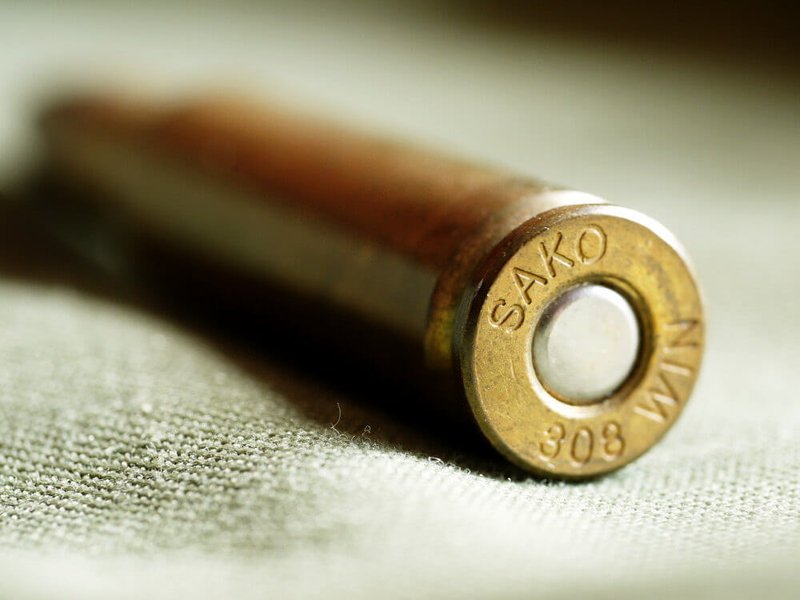
Various .308 Winchester ammunition, showcasing its common use.
Decoding the 168-Grain Sierra MatchKing
The 168-grain Sierra MatchKing (SMK) has long been considered a benchmark for precision in the .308 Winchester. Before the advent of the 175-grain SMK, the 168-grain version "ruled supreme" and was often referred to as a "heavy match" bullet. Its boat tail hollow point (HPBT) design contributes to excellent ballistic efficiency and stability, resulting in flatter trajectories and reduced wind drift. While primarily designed for target shooting and competition, some experienced hunters utilize them for their exceptional accuracy at long ranges, though Sierra explicitly advises against their use for hunting due to potential non-expansion on game.

Federal Premium Gold Medal ammunition featuring 168-grain Sierra MatchKing bullets.
Why 168 Grains?
The 168-grain weight offers a sweet spot for the .308 Winchester, balancing ballistic coefficient with barrel twist rate compatibility. Many factory .308 rifles come with a 1:10 or 1:12 twist rate, which generally stabilizes the 168-grain SMK effectively for ranges up to 800 yards. While the 175-grain SMK is often favored for distances beyond 800 yards due to its superior long-range performance, the 168-grain remains an "excellent option" for the .308 Win, being easy to load and tune.
Optimal Powder Choices for 168-grain SMKs
Selecting the right powder is paramount for achieving precision with your .308 handloads. Based on extensive reloading data and community feedback, several powders consistently deliver excellent results with 168-grain Sierra MatchKing bullets:
IMR 4064
IMR 4064 is frequently cited as a top-tier powder for the 168-grain SMK in .308 Winchester. Many reloaders report exceptional accuracy with this powder. Load data often suggests charges in the range of 42-43.5 grains. For instance, a "most accurate" load was reported at 43.5 grains with Winchester Large Rifle Primers and Hornady brass. Some historical data even indicates 42-43 grains of IMR 4064 in lightweight Western Cartridge Company cases could produce sub-.2-inch groups at 100 yards with special production 168s.
Varget
Varget is another highly popular and effective powder for 168-grain SMKs, known for its temperature stability. Recommended Varget loads for the 168-grain SMK often fall between 42 and 46 grains. Many shooters find success in the 44.5-46 grain range. For example, a "pet load" for 168-grain SMKs in a bolt-action rifle uses 45.0 grains of Varget with Lapua brass and Wolf LR primers at an overall length (OAL) of 2.800 inches.
Other Notable Powders
- IMR 4895 / H4895: The standard for .308 often includes 40 to 42 grains of 4895, with some reporting slightly better accuracy with H4895 for bullet weights between 150-180 grains.
- Reloder 15 (RL15): Some users report good results with RL15, with charges around 42-43 grains. However, RL15 has been noted by some to be more temperature-sensitive than IMR or Hodgdon powders.
- IMR 3031: This faster-burning powder can also be effective, with historical match loads using 39.0 grains of IMR 3031 with a 168-grain Sierra MK and a COAL of 2.800 inches, yielding excellent accuracy.
- IMR 8208 XBR: This powder is also a strong contender for load development with 168-grain SMKs, offering consistent results.
Developing Your Precision Load: A Systematic Approach
Finding the "best" load is not a one-size-fits-all solution; it's a process of systematic development tailored to your specific rifle. Every rifle, even of the same model, can have unique preferences regarding powder charge, seating depth, and components.
The Importance of Load Manuals and Safety
Always consult reputable, up-to-date load manuals (e.g., Sierra, Nosler, Hodgdon) before starting any reloading. The data provided serves as a guide, with minimum and maximum charge weights. Never exceed maximum listed loads, and always start with the minimum charge and work your way up cautiously, looking for pressure signs such as flattened primers, ejector marks, or sticky bolt lift. The loads presented here are for informational purposes and may not be safe in your specific firearm.
Starting Loads and Incremental Testing
A common methodology involves loading small groups (e.g., 3-5 rounds) with incrementally increasing powder charges (e.g., 0.3 to 0.5 grain increments). Fire these groups at a known distance (e.g., 100 yards) and observe the group size and point of impact. The goal is to find a "node" where velocity spreads are low and groups are tight, indicating a sweet spot where the barrel harmonics are stable.
Optimal Overall Cartridge Length (OAL)
The Overall Cartridge Length (OAL), or seating depth, significantly impacts accuracy. A common starting point for 168-grain SMKs in .308 Winchester is around 2.800 inches, often dictated by magazine length in many rifles. However, some reloaders adjust OAL to find the optimal "jump" or "kiss" to the rifling. Experimenting with seating depth in small increments (e.g., 0.005-inch changes) around your most accurate powder charge can further shrink group sizes.
Primers and Brass
For .308 Winchester, Large Rifle (LR) primers are standard. Brands like Federal, Winchester, and CCI are commonly used, with some shooters preferring match-grade primers (e.g., Federal 210M) for increased consistency. Lapua brass is highly regarded for its consistency and durability, contributing to greater accuracy. Winchester and Hornady brass are also good choices.
A Snapshot of Preferred .308 Loads with 168-grain Sierra
The following table summarizes some widely reported and successful load combinations for the 168-grain Sierra MatchKing in .308 Winchester. Remember, these are starting points for your own load development.
| Bullet (Grain) | Powder | Charge Weight (Grains) | Primer | Brass | COAL (inches) | Notes |
|---|---|---|---|---|---|---|
| 168 Sierra MatchKing (SMK) | IMR 4064 | 42.0 - 43.5 | Winchester LR / Federal 210M | Various (Hornady, Lapua) | 2.800 - 2.810 | Consistently accurate, often a "gold standard" starting point. |
| 168 Sierra MatchKing (SMK) | Varget | 44.0 - 46.0 | Wolf LR / CCI | Lapua | 2.800 | Popular for temperature stability; many find accuracy in upper range. |
| 168 Sierra MatchKing (SMK) | IMR 4895 / H4895 | 41.5 - 42.0 | Winchester LR | Military LC / WW / Rem | 2.800 | Reliable and accurate for general use. |
| 168 Sierra MatchKing (SMK) | Reloder 15 | 42.0 - 44.0 | CCI | Various | 2.800 | Effective, but some report temperature sensitivity. |
| 168 Sierra Tipped MatchKing (TMK) | Shooters World Tactical Rifle (AR2208) | 39.5 - 43.0 | Various | Various | 2.810 | Minimum to maximum load data provided. |
Visualizing Load Performance Parameters
To further illustrate the critical parameters that contribute to an optimal .308 Winchester load with 168-grain Sierra bullets, let's consider a radar chart. This chart will visually represent the subjective "performance score" of different load characteristics based on general consensus and reported results in the reloading community. A higher score on a spoke indicates a more favorable characteristic for achieving precision.
As depicted in the radar chart, IMR 4064 and Varget generally stand out across multiple performance metrics for the 168-grain Sierra MatchKing. Varget often shows a slight edge in temperature stability, making it a favorite for diverse shooting conditions, while IMR 4064 consistently offers excellent accuracy potential. Other powders like IMR 4895 and Reloder 15 also provide good performance, but may have varying characteristics in terms of stability or availability.
Deep Dive into .308 Winchester Reloading
The journey to finding your rifle's "pet load" is an engaging process of experimentation and refinement. While the 168-grain Sierra MatchKing is a fantastic starting point, understanding the nuances of reloading will yield the most consistent and accurate results.
The Impact of Barrel Twist Rate
Barrel twist rate is crucial for stabilizing bullets. For the 168-grain Sierra MatchKing, a 1:10 or 1:12 twist rate is generally suitable. Longer, "slinkier" bullets, such as the 175-grain SMK or heavier, may require a faster twist (e.g., 1:10) to stabilize sufficiently, especially if velocities are lower. An inadequate twist rate can lead to keyholing or poor accuracy.
Understanding Velocity and Pressure
While velocity is a factor in performance, especially at longer ranges, prioritizing extreme velocity spreads (ES) and standard deviation (SD) is more critical for accuracy. Loads that exhibit low ES and SD indicate consistent powder burn and bullet launch, leading to tighter groups. Always be mindful of pressure signs as you increase powder charges. A load that requires a mallet to open the bolt, as seen with some maximum 175 SMK loads, indicates excessive pressure and is unsafe.
Case Preparation and Consistency
Consistent case preparation is fundamental to accurate handloads. This includes uniforming primer pockets, deburring flash holes, trimming cases to consistent lengths, and neck sizing where appropriate (though full-length sizing is often necessary for semi-automatic rifles). Consistent case capacity and neck tension ensure uniform bullet seating and powder ignition.
Visualizing the Reloading Process
This video provides a practical step-by-step guide to developing precision loads for the .308 Winchester, focusing on the careful process of selecting components and conducting tests to achieve optimal accuracy. It highlights the hands-on nature of reloading and the attention to detail required.
Precision .308 Trainer Loads: A step-by-step guide to developing accurate handloads.
Frequently Asked Questions (FAQ)
What is the "best" powder for 168-grain Sierra MatchKing in .308?
Can I use 168-grain Sierra MatchKing bullets for hunting?
What is a good starting point for OAL (Overall Cartridge Length) with 168-grain SMKs?
Is the .308 Winchester still a viable cartridge for long-range shooting?
What are common pressure signs to look for when reloading?
Conclusion
Developing the "best" load for the 168-grain Sierra MatchKing in .308 Winchester is a rewarding journey that combines scientific precision with hands-on experimentation. While powders like IMR 4064 and Varget frequently emerge as top contenders due to their proven accuracy and consistency, the ultimate optimal load will be unique to your specific rifle. By meticulously following safe reloading practices, systematically testing various powder charges and seating depths, and understanding the characteristics of your components, you can unlock the full potential of this iconic cartridge and achieve exceptional precision.
Recommended Further Exploration
- Comparing .308 Winchester and 6.5 Creedmoor for long-range precision
- Advanced reloading techniques for extreme accuracy
- Understanding barrel twist rates and bullet stabilization
- Safe handloading practices and pressure signs identification
References
Last updated May 21, 2025