
Tired of Raking? Discover the Perfect Battery-Powered Leaf Blower for Your Yard
Cut the cord and ditch the gas: Your guide to the top cordless electric leaf blowers of 2025 for effortless yard cleanup.
Highlights: Key Takeaways
- Power Meets Portability: Modern battery blowers offer performance rivaling gas models, measured in CFM (air volume) and MPH (air speed), without the fumes, noise, or maintenance hassles.
- Top Brands Dominate: EGO, Husqvarna, Toro, Greenworks, and DEWALT consistently lead the pack with powerful, reliable, and user-friendly options for various needs and budgets.
- Battery Life is Crucial: Consider runtime needs based on yard size. Higher voltage (V) and amp-hours (Ah) generally mean more power and longer operation, often with interchangeable batteries across tool systems.
Understanding Key Features: What Makes a Great Battery Blower?
Choosing the right battery-powered leaf blower involves understanding a few key specifications that determine performance and usability. Making an informed choice means matching these features to your specific yard cleanup needs.
Air Power: CFM vs. MPH Explained
CFM (Cubic Feet per Minute)
CFM measures the volume of air the blower pushes out per minute. A higher CFM means the blower can move larger piles of leaves and debris more quickly. For typical suburban lawns, blowers in the 400-600 CFM range are often sufficient, while larger properties or heavier debris might benefit from models exceeding 700 CFM.
MPH (Miles Per Hour)
MPH measures the speed at which air exits the blower tube. Higher airspeed is better for dislodging stubborn or wet leaves, pine needles, and heavier debris stuck to surfaces. Many top models offer speeds well over 150 MPH.
Ideally, you want a good balance of both CFM and MPH. High CFM moves bulk, while high MPH provides the force to lift and move it.
Battery Matters: Voltage, Amp-Hours, and Runtime
The battery is the heart of a cordless blower. Key aspects include:
- Voltage (V): Higher voltage (e.g., 40V, 56V, 60V, 80V) generally translates to more potential power output.
- Amp-Hours (Ah): This indicates the battery's capacity or "fuel tank" size. Higher Ah ratings (e.g., 2.5Ah, 4.0Ah, 5.0Ah) typically result in longer runtime before needing a recharge.
- Runtime: This varies greatly depending on the power setting used, the battery size, and the specific model. Expect anywhere from 10-15 minutes on the highest settings to over an hour on lower settings or with larger batteries. Some high-end models like the Toro 60V Max can offer up to 120 minutes on lower settings with specific batteries.
- Battery Ecosystem: Many brands (EGO, DEWALT, Greenworks, Husqvarna, Ryobi, Toro) offer battery platforms where one battery fits multiple tools (mowers, trimmers, etc.), adding value and convenience.
Ergonomics and Weight: Comfort for the Long Haul
Since you'll be holding the blower, comfort is key:
- Weight: Handheld models typically range from 5 to 12 pounds (including battery). Lighter models reduce fatigue, but often have smaller batteries or less power. Consider your strength and how long you'll use the tool.
- Balance: A well-balanced blower feels lighter and is easier to maneuver.
- Handle Design: Look for comfortable grips, often with rubber overmolding.
- Backpack Models: For very large properties or professional use, backpack blowers distribute the weight onto your shoulders and back, reducing arm strain during prolonged operation.

Comfortable ergonomics are crucial for efficiently clearing leaves without fatigue.
Noise Levels: A Quieter Clean
Battery-powered blowers are significantly quieter than their gas counterparts, often operating below 70 decibels (dB), compared to gas blowers which can exceed 100 dB. This makes them ideal for residential areas with noise restrictions or for working early mornings without disturbing neighbors. Look for models advertised as "quiet" or check their dB rating.
Extra Features: Turbo Boost, Variable Speed, and More
- Variable Speed Trigger/Dial: Allows you to adjust airflow for different tasks – lower speed for delicate flower beds, higher speed for open lawn areas. This also helps conserve battery life.
- Turbo Boost Button: Provides a temporary surge of maximum power for tackling tough spots.
- Cruise Control: Locks the blower at a desired speed, reducing finger fatigue during extended use.
- Brushless Motor: Generally offers higher efficiency, longer runtime, more power, and increased tool lifespan compared to brushed motors.
- Nozzle Attachments: Some models include different nozzle shapes (e.g., concentrator nozzles) to optimize airflow for specific tasks.
Top Battery-Powered Electric Leaf Blowers for 2025
Based on numerous reviews and tests, several models consistently rise to the top. Here are some of the leading contenders:
The All-Around Champion: EGO Power+ Series
EGO Power+ frequently earns top marks across the board for its combination of power, battery performance, and user-friendly design within its robust 56V ARC Lithium™ battery system.
EGO Power+ LB7654 (765 CFM)
Often cited as the best overall cordless blower, the LB7654 boasts a massive 765 CFM airflow and speeds up to 200 MPH in turbo mode. It balances immense power with relatively lightweight design and good ergonomics. Runtime is solid, especially with 5.0Ah or larger batteries (around 25 minutes tested on high), making it suitable for medium to large yards.
EGO Power+ LB6504 (650 CFM)
Another strong performer, the LB6504 offers excellent power (650 CFM) and runtime (around 25-27 minutes tested with a 5.0Ah battery). It's praised for its comfortable handling, maneuverability, and efficient brushless motor. A great value within the EGO lineup.
The Powerhouse Performer: Husqvarna 350iB
The Husqvarna Leaf Blaster 350iB stands out in tests for its phenomenal blowing force (measured up to 26 Newtons), making it exceptionally effective on wet, heavy debris. It features excellent ergonomics, a long-lasting battery (part of Husqvarna's compatible system), variable speed trigger, cruise control, and turbo boost. It's a top choice for users needing serious power and durability for large properties.

Many brands like Ryobi, EGO, and Husqvarna offer powerful cordless blowers with advanced features.
Maximum Airflow for Large Yards: Toro 60V Max 900 CFM
If sheer air volume is your priority for clearing large areas (up to 1 acre or more), the Toro 60V Max 900 CFM model is a beast. It delivers an incredible 900 CFM, making quick work of extensive leaf coverage. Despite its power, it's reported to be well-balanced with intuitive controls. Its 4.0Ah battery can provide impressive runtime (up to 120 minutes on lower settings) and recharges relatively quickly (120 minutes).
Reliable and Versatile: Greenworks Options
Greenworks offers a solid range of battery blowers known for good performance and value, particularly within their 80V and 40V systems.
Greenworks 80V Models (Handheld & Backpack)
The 80V line, like the 580 CFM handheld model, provides ample power for yards up to half an acre. They also offer backpack models (like the BB361 or Pro 80V) which deliver professional-grade power and reduce arm fatigue for longer jobs, leveraging the interchangeable 80V battery system.
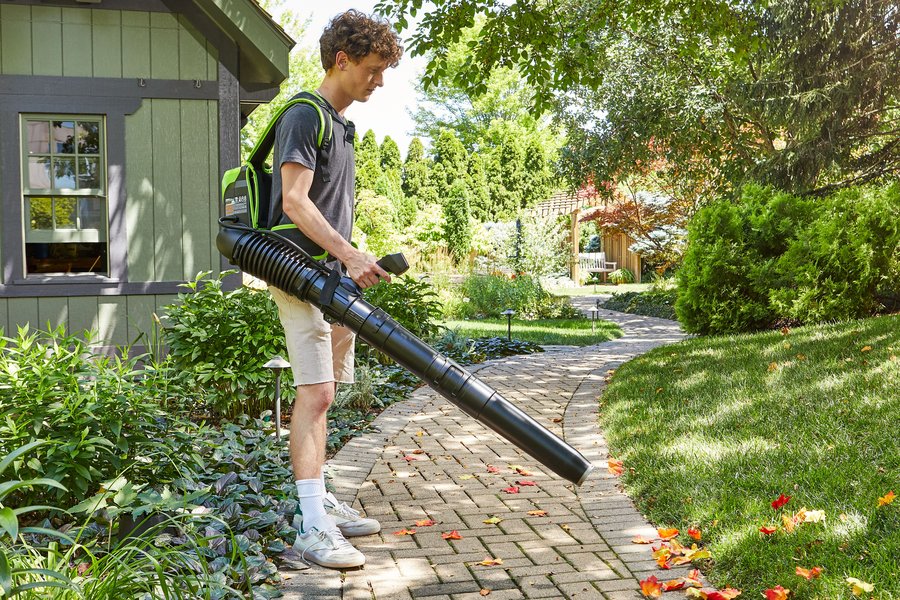
Greenworks backpack blowers offer comfort for extended use on larger properties.
Greenworks 40V Models (Budget-Friendly)
For smaller yards or budget-conscious buyers, Greenworks 40V blowers (e.g., 150 MPH models) offer reliable performance at an accessible price point. They are lightweight and easy to handle, suitable for clearing driveways, patios, and light leaf cover.
Professional Durability: DEWALT 60V MAX
Known for rugged construction, DEWALT's 60V MAX cordless blowers (offering up to 600 CFM) are popular choices for both homeowners and professionals who value durability and compatibility with DEWALT's extensive 60V MAX/20V MAX tool system. They provide a good balance of power and runtime.
Other Notable Contenders
- Cat 60-volt, 800-CFM: Recommended for those seeking maximum power and efficiency.
- ENHULK LBL1493J: Noted for delivering potent performance at a competitive price point.
Comparing the Top Contenders
Here's a quick comparison of some of the leading battery-powered leaf blowers based on key specifications mentioned in reviews. Note that weight often includes a common battery size (e.g., 4.0Ah or 5.0Ah) and can vary.
| Model | Max CFM | Max MPH | Voltage | Approx. Weight (w/ Battery) | Key Feature Highlight |
|---|---|---|---|---|---|
| EGO Power+ LB7654 | 765 | 200 | 56V | ~9-10 lbs | Top-tier power, balanced performance, large battery ecosystem. |
| Husqvarna 350iB | ~600+ (High Newton Force) | ~150+ | 36V/40V | ~10-11 lbs | Exceptional blowing force, great ergonomics, durable. |
| Toro 60V Max | 900 | 165 | 60V | ~12 lbs | Highest CFM for massive air volume, ideal for large properties. |
| Greenworks 80V (e.g., 580 CFM model) | 580 | 145 | 80V | ~9-10 lbs (Handheld) | Strong performance for the price, backpack options available. |
| DEWALT 60V MAX (e.g., 600 CFM model) | 600 | 125 | 60V | ~9-10 lbs | Durable build, part of large tool ecosystem. |
| Greenworks 40V (e.g., 150 MPH model) | ~135-400 | 150 | 40V | ~7-8 lbs | Lightweight, budget-friendly option for smaller tasks. |
Visualizing Blower Performance: Key Attributes Compared
This chart provides a visual comparison of some top-rated battery leaf blower models based on synthesized review data across key attributes. Scores are relative (1-10, higher is better) and reflect general consensus from reviews, not precise measurements.
Making Your Choice: A Decision Mindmap
Choosing the best battery blower depends on your individual circumstances. This mindmap outlines key factors to consider to help guide your decision:
(Patios, Driveways)"] sm_rec["Lower CFM/MPH (e.g., 150-400 CFM)
Focus on Lightweight, Budget
Ex: Greenworks 40V"] medium["Medium Yard / Dry Leaves"] med_rec["Mid-Range CFM/MPH (e.g., 400-650 CFM)
Balance Power & Runtime
Ex: EGO LB6504, Greenworks 80V"] large["Large Yard / Wet Leaves, Heavy Debris"] lg_rec["High CFM/MPH (e.g., 650+ CFM)
Prioritize Power & Runtime
Ex: EGO LB7654, Husqvarna 350iB, Toro 900 CFM"] power["Power Needs"] cfm["Need to move large piles? -> High CFM"] mph["Need to lift wet/stuck debris? -> High MPH"] turbo["Need occasional max power? -> Turbo Boost"] battery["Battery System"] runtime["How long do you need to work? -> Check Ah & Runtime Specs"] ecosystem["Do you own other tools? -> Consider Brand Compatibility (EGO, DEWALT, etc.)"] charge["How fast does it recharge?"] comfort["Ergonomics & Comfort"] weight["Consider tool weight vs. your strength"] balance["Look for well-balanced designs"] handle["Comfortable grip?"] backpack["Consider backpack for long use / large areas"] features["Additional Features"] speed["Variable Speed Control?"] cruise["Cruise Control?"] noise["Noise Level (dB)?"] budget["Budget"] low["Under $150 (Tool Only or Kit)"] mid["$150 - $300"] high["Over $300"]
See Them in Action: Battery Blower Showdown
Watching reviews and comparisons can provide valuable insights into real-world performance. This video tests and compares several popular battery-powered leaf blowers from top brands, showcasing their power and features:
This comparison demonstrates how different models handle tasks like moving piles of leaves and highlights differences in power output and handling, which can help you visualize how they might perform in your own yard.
Frequently Asked Questions (FAQ)
What kind of runtime can I realistically expect?
Runtime varies significantly based on the battery's Amp-hour (Ah) rating and the power setting used. On high or turbo modes, many blowers last 10-25 minutes. On lower speeds, runtime can extend to 30-60 minutes or even longer (up to 120 minutes claimed for some models like the Toro 900 CFM with specific batteries). Having a spare battery is recommended for larger jobs.
Is CFM or MPH more important?
Both are important, but for different reasons. High CFM (air volume) is crucial for moving large quantities of leaves quickly across open areas. High MPH (air speed) is needed to lift heavy, wet, or embedded debris. Look for a good balance, but prioritize CFM for moving bulk and MPH for dealing with stubborn spots.
Are batteries interchangeable between different brands?
Generally, no. Batteries are typically proprietary to a specific brand and often only compatible within that brand's voltage line (e.g., an EGO 56V battery works with other EGO 56V tools, but not a DEWALT tool). If you already own battery-powered tools from one brand, sticking with that brand's blower can save money on batteries and chargers.
Should I get a handheld or backpack blower?
Handheld blowers are lighter, more maneuverable, and sufficient for most residential yards. Backpack blowers distribute the weight across your back and shoulders, making them more comfortable for extended use (over 30-45 minutes) or clearing very large properties. They often offer higher power and longer runtimes but are heavier overall and less agile in tight spaces.
How much quieter are battery blowers compared to gas?
Significantly quieter. Most battery blowers operate in the 60-70 decibel (dB) range, which is comparable to a normal conversation or a washing machine. Gas blowers often exceed 90-100 dB, which is loud enough to require hearing protection and can easily disturb neighbors. This makes battery models much more pleasant to use and neighborhood-friendly.
Recommended Reads
- Explore the quietest battery leaf blowers suitable for noise-sensitive neighborhoods.
- Compare runtimes of different battery blowers specifically for managing large properties.
- Discover top-value battery leaf blowers available for under $200.
- Understand the advantages and disadvantages of backpack versus handheld battery blowers.
References

Last updated May 5, 2025