
Unlock Peak Performance: The Ultimate Guide to Core-Strengthening Exercises
Discover the most effective movements to build stability, power, and prevent injury.
Developing a strong core is fundamental to overall physical health and athletic prowess. It's more than just aiming for visible abs; a robust core provides spinal support, improves posture, enhances balance, boosts power transfer in movements, and significantly reduces the risk of injury. The core musculature includes the rectus abdominis ("six-pack"), obliques (sides), transverse abdominis (deepest layer), erector spinae (lower back), multifidus, pelvic floor, and even muscles like the glutes and hip flexors contribute to core stability.
Highlights: Building Your Foundation
- Focus on Functionality: The best core exercises often mimic real-world movements and challenge stability across multiple planes (front-to-back, side-to-side, rotational).
- Prioritize Quality over Quantity: Proper form and controlled execution are paramount to effectively target core muscles and prevent back strain. Avoid rushing through repetitions.
- Variety is Key: Incorporate a mix of isometric holds (like planks), dynamic movements (like twists and crunches), and anti-movement exercises (resisting rotation or bending) for comprehensive development.
Mastering Foundational Core Stability
These exercises form the bedrock of core strength, focusing on stabilization and endurance, often with minimal spinal movement.
The Plank: A Core Staple
The plank is a classic isometric exercise renowned for its ability to engage the entire core complex simultaneously, including the deep transverse abdominis, rectus abdominis, obliques, lower back muscles, and even shoulders and glutes.
How to Perform a Standard Plank:
Position yourself face down, resting on your forearms and toes. Ensure your elbows are directly beneath your shoulders and your body forms a straight line from head to heels. Engage your abdominal muscles by drawing your belly button towards your spine, keeping your hips level and avoiding sagging or arching your back. Hold this position, focusing on steady breathing.
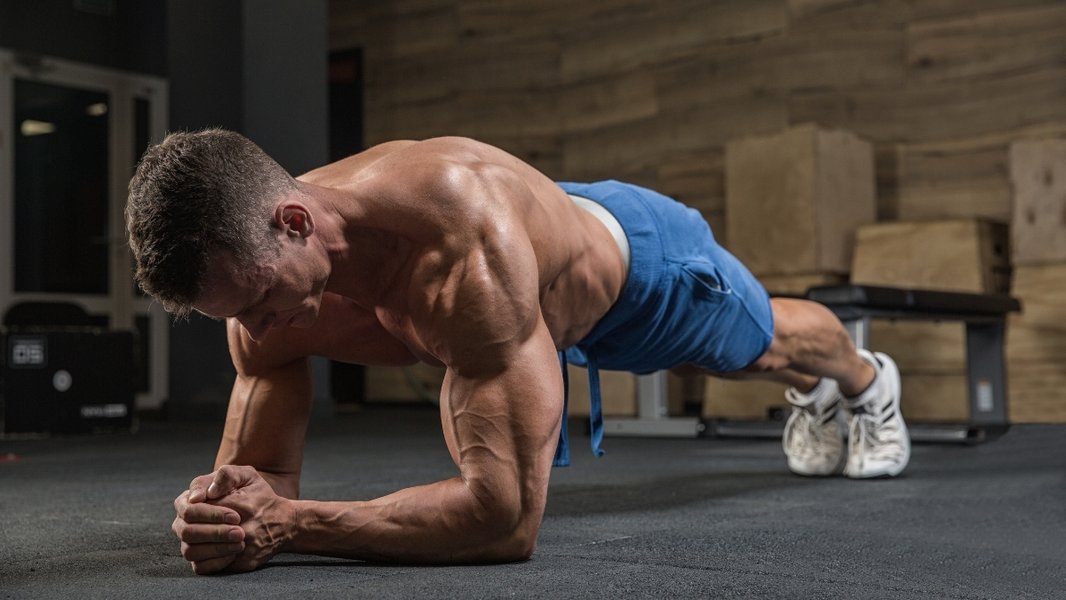
A standard forearm plank requires maintaining a straight line from head to heels.
Plank Variations:
- Side Plank: Targets the obliques and improves lateral stability. Support your body on one forearm and the side of your foot, keeping the body straight.
- Plank with Shoulder Taps: Increases the anti-rotational challenge. From a high plank (on hands), slowly tap one shoulder with the opposite hand, minimizing hip movement.
- Modified/Knee Plank: A beginner-friendly option performed with knees on the ground.
- Plank Hip Taps/Dips: Adds dynamic movement to challenge the obliques further.
Dead Bug: Controlled Coordination
The Dead Bug exercise is excellent for enhancing core control, coordination, and strengthening the deep transverse abdominis without putting stress on the lower back.
How to Perform:
Lie flat on your back with your arms extended straight up towards the ceiling and your knees bent at a 90-degree angle directly over your hips (tabletop position). Engage your core, ensuring your lower back stays pressed gently into the floor. Slowly lower your right arm straight back behind your head and simultaneously extend your left leg straight out, hovering just above the floor. Return to the starting position with control and repeat on the opposite side (left arm, right leg). The key is slow, deliberate movement while maintaining core tension and back position.
Bird Dog: Balancing Act
Similar to the Dead Bug but performed from a quadruped (hands and knees) position, the Bird Dog enhances stability, balance, and strengthens the muscles along the spine and the glutes.
How to Perform:
Start on all fours, with hands directly under shoulders and knees under hips. Engage your core to keep your back flat and hips stable. Extend your right arm straight forward and simultaneously extend your left leg straight back, keeping both parallel to the floor. Hold briefly, focusing on balance and minimal torso movement, then return to the start and repeat on the opposite side (left arm, right leg).
Glute Bridge: Posterior Power
While often seen as a glute exercise, the bridge is crucial for core health as it strengthens the lower back, glutes, and hamstrings, which work synergistically with the abdominal muscles for overall trunk stability.
How to Perform:
Lie on your back with knees bent, feet flat on the floor hip-width apart, and arms resting by your sides. Engage your core and squeeze your glutes to lift your hips off the floor until your body forms a straight line from shoulders to knees. Hold the peak contraction briefly, then slowly lower back down.
Bridge Variations:
- Single-Leg Glute Bridge: Increases the challenge by lifting one leg off the floor while bridging.
Dynamic and Rotational Core Power
These exercises involve movement and often target rotational strength and power, essential for many sports and daily activities.
Bicycle Crunches: Oblique Activation
A dynamic movement that effectively targets both the rectus abdominis and the obliques simultaneously.
How to Perform:
Lie on your back with hands lightly behind your head (avoid pulling on your neck). Lift your shoulders off the ground and bring one knee towards your chest while twisting your torso to bring the opposite elbow towards that knee. Alternate sides in a controlled "pedaling" motion, keeping the core engaged throughout.
Russian Twists: Rotational Strength
This exercise specifically targets the obliques and improves the core's ability to generate and control rotational force.
How to Perform:
Sit on the floor with your knees bent and feet either flat on the floor (easier) or lifted slightly off the ground (harder). Lean back slightly, maintaining a straight spine and engaging your core. Clasp your hands together (or hold a weight/medicine ball) and twist your torso from side to side, tapping the floor or bringing the weight towards the floor on each side. Control the movement, focusing on rotating through the torso, not just moving the arms.
Medicine Ball Slams: Explosive Power
Medicine ball slams are a fantastic full-body exercise that heavily engages the core, particularly during the forceful downward movement and the control required to decelerate.
How to Perform:
Stand with feet shoulder-width apart, holding a medicine ball. Raise the ball overhead, slightly extending your hips and back. Engage your core and forcefully slam the ball down onto the ground just in front of you, hinging at the hips and bending your knees as you follow through. Catch the ball on the rebound (or pick it up) and repeat. Focus on generating power from the core and hips.
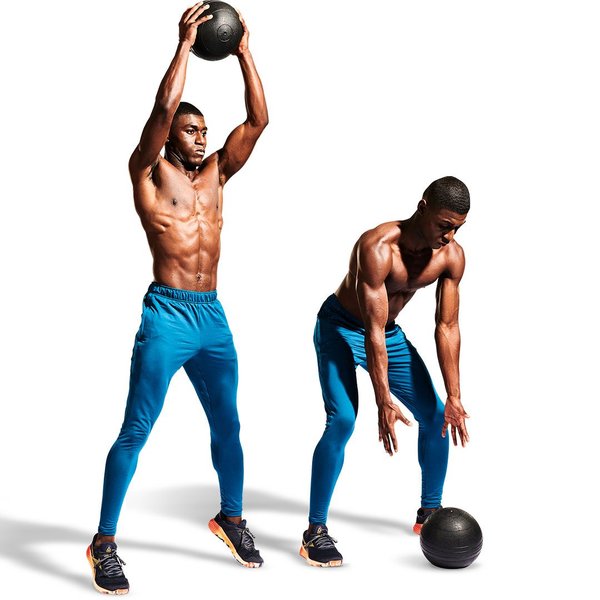
Medicine ball slams develop explosive core power.
Advanced Core Challenges
Once you've mastered the fundamentals, these exercises offer a greater challenge to build superior core strength and stability.
Ab Wheel Rollouts
This demanding exercise significantly challenges the entire anterior core (rectus abdominis, obliques, transverse abdominis) and requires substantial stability to perform safely.
How to Perform:
Kneel on the floor holding the handles of an ab wheel directly under your shoulders. Keeping your core braced and back flat, slowly roll the wheel forward, extending your body as far as you can control without letting your lower back sag. Use your core strength to pull the wheel back towards your knees, returning to the starting position. Start with a limited range of motion and gradually increase as strength improves.
Barbell Rollouts
Similar to the ab wheel rollout but performed with a barbell loaded with plates, offering adjustable resistance and a greater stability challenge.
Lying Leg Raises
While seemingly simple, controlling leg raises without arching the lower back effectively targets the lower rectus abdominis and hip flexors.
How to Perform:
Lie flat on your back with legs straight (or slightly bent for less intensity). Place your hands under your lower back for support if needed. Keeping your core tight and lower back pressed into the floor, slowly raise your legs towards the ceiling until they are perpendicular to the floor. Slowly lower them back down with control, stopping just before they touch the floor. Avoid using momentum.
Compound Lifts: The Indirect Core Builders
Don't underestimate the core-building power of heavy compound exercises.
Squats and Deadlifts
While primarily targeting the legs and back, heavy squats and deadlifts require immense core activation to stabilize the spine and transfer force efficiently. Your core works overtime to maintain rigidity and prevent buckling under load, making these lifts highly effective indirect core strengtheners.
Visualizing Core Exercise Effectiveness
This chart provides a conceptual comparison of various core exercises across key training dimensions. Scores are relative estimates (out of 10) indicating the typical focus of each exercise, helping you choose movements based on your goals. Higher scores suggest a stronger emphasis on that particular dimension.
Understanding Core Anatomy and Exercise Mapping
This mindmap illustrates the key muscle groups comprising the core and links them to some of the effective exercises discussed. Visualizing these connections can help in structuring a well-rounded core training program.
(Front)"] id1a1["Rectus Abdominis
('Six-Pack')"] id1a1a["Bicycle Crunches"] id1a1b["Leg Raises"] id1a1c["Ab Wheel Rollouts"] id1a2["Transverse Abdominis
(Deep Stabilizer)"] id1a2a["Planks"] id1a2b["Dead Bugs"] id1a2c["Bird Dog"] id1b["Lateral Core
(Sides)"] id1b1["Obliques"] id1b1a["Side Planks"] id1b1b["Russian Twists"] id1b1c["Bicycle Crunches"] id1c["Posterior Core
(Back)"] id1c1["Erector Spinae"] id1c1a["Squats / Deadlifts"] id1c1b["Bird Dog"] id1c1c["Glute Bridges"] id1c2["Multifidus"] id1c2a["Planks"] id1c2b["Bird Dog"] id2["Key Exercise Types"] id2a["Isometric/Stabilization"] id2a1["Plank Variations"] id2a2["Dead Bug"] id2a3["Bird Dog"] id2b["Dynamic Movement"] id2b1["Bicycle Crunches"] id2b2["Leg Raises"] id2b3["Medicine Ball Slams"] id2c["Rotational/Anti-Rotational"] id2c1["Russian Twists"] id2c2["Side Planks"] id2c3["Plank w/ Shoulder Taps"] id2d["Compound Lifts (Indirect)"] id2d1["Squats"] id2d2["Deadlifts"]
Expert Insights on Functional Core Training
Understanding functional core patterns is crucial for building strength that translates to everyday life and athletic activities. This video delves into 8 essential core patterns that a well-rounded training program should address, moving beyond basic crunches to encompass rotational, anti-rotational, and stability movements.
The video emphasizes incorporating exercises that challenge the core's ability to resist unwanted movement (like anti-rotation presses or Pallof presses) as well as its ability to generate force dynamically (like medicine ball throws or chops). This functional approach ensures that your core strength supports complex movements, improves power transfer, and protects your spine during various activities.
Core Exercise Summary Table
This table provides a quick reference for some of the top core exercises, highlighting their primary target areas and general difficulty level.
| Exercise | Primary Target Muscles | Type | Difficulty / Progression |
|---|---|---|---|
| Plank | Transverse Abdominis, Rectus Abdominis, Obliques, Back Extensors | Isometric Stability | Beginner (Knee Plank) to Advanced (Variations) |
| Side Plank | Obliques, Transverse Abdominis, Gluteus Medius | Isometric Lateral Stability | Beginner (Knee Side Plank) to Advanced (Hip Dips) |
| Dead Bug | Transverse Abdominis, Rectus Abdominis, Obliques, Coordination | Dynamic Stability / Control | Beginner to Intermediate |
| Bird Dog | Erector Spinae, Glutes, Transverse Abdominis, Balance | Dynamic Stability / Control | Beginner to Intermediate |
| Glute Bridge | Glutes, Hamstrings, Erector Spinae, Transverse Abdominis | Dynamic Posterior Chain | Beginner (Two Legs) to Advanced (Single Leg) |
| Bicycle Crunch | Rectus Abdominis, Obliques | Dynamic Rotation | Intermediate |
| Russian Twist | Obliques, Rectus Abdominis | Dynamic Rotation | Intermediate (Feet Down) to Advanced (Feet Up, Weighted) |
| Leg Raise | Lower Rectus Abdominis, Hip Flexors | Dynamic Anterior Chain | Intermediate to Advanced (Focus on control) |
| Ab Wheel Rollout | Rectus Abdominis, Obliques, Transverse Abdominis, Lats, Shoulders | Dynamic Anti-Extension | Advanced |
| Medicine Ball Slam | Full Core, Lats, Shoulders, Hips | Explosive Power | Intermediate to Advanced |
| Squat / Deadlift | Full Body (Legs, Back, Glutes) + Significant Core Bracing | Compound Strength | Requires Proper Form / Varies with Load |
Optimizing Your Core Training
To maximize results and minimize injury risk, keep these principles in mind:
- Master Proper Form: Prioritize correct technique over speed or number of repetitions. Watch videos, use mirrors, or ask a professional for guidance.
- Engage Your Core Consciously: Practice the "abdominal draw-in" or bracing maneuver – gently pulling your belly button towards your spine or tensing as if preparing for a punch – to activate deep stabilizing muscles.
- Breathe Correctly: Don't hold your breath. Generally, exhale during the exertion phase (e.g., lifting in a crunch, twisting) and inhale during the easier phase (e.g., lowering). For isometric holds like planks, maintain steady, controlled breathing.
- Listen to Your Body: Avoid pushing through sharp pain. Muscle fatigue is expected, but pain can signal improper form or injury.
- Be Consistent: Aim for 2-3 dedicated core sessions per week, allowing rest days for recovery and muscle growth. A 15-20 minute focused workout can be very effective.
- Progress Gradually: Start with exercises appropriate for your fitness level and gradually increase duration, repetitions, sets, or difficulty (e.g., adding weight, using variations).
- Think Beyond Crunches: While crunches target the rectus abdominis, they don't work the entire core and can strain the neck or back if done improperly. Prioritize exercises like planks, dead bugs, and rotational movements for a more balanced approach.
- Integrate Core Work: Remember that your core is engaged during most compound exercises (squats, deadlifts, overhead presses) and many daily activities. Functional core strength supports everything you do.
Frequently Asked Questions (FAQ)
What muscles make up the 'core'?
The core encompasses more than just the "abs." It includes multiple muscle groups surrounding your trunk:
- Rectus Abdominis: The "six-pack" muscles at the front, responsible for flexing the spine (like in crunches).
- Obliques (Internal and External): Located on the sides, responsible for rotation and side bending.
- Transverse Abdominis: The deepest abdominal layer, acting like a corset to stabilize the spine and pelvis.
- Erector Spinae: Muscles running along the spine in the lower back, responsible for back extension.
- Multifidus: Small muscles deep in the back that stabilize spinal segments.
- Pelvic Floor Muscles: Support pelvic organs and contribute to core stability.
- Diaphragm: The primary breathing muscle, also plays a role in core stability.
- Muscles like the glutes and hip flexors also contribute significantly to stabilizing the pelvis and trunk.
How often should I train my core?
For most people, targeting the core 2-3 times per week with dedicated exercises is sufficient. Your core muscles, like others, need time to recover and rebuild. Remember that your core also gets worked indirectly during many other exercises (like squats, deadlifts, push-ups, rows) and daily activities. Listen to your body and ensure adequate rest between intense sessions.
Are sit-ups bad for my back?
Traditional sit-ups can potentially place excessive stress on the lumbar spine (lower back) due to the repeated spinal flexion motion, especially if performed incorrectly or with weak supporting muscles. They also primarily target the rectus abdominis and hip flexors, neglecting other crucial core muscles like the transverse abdominis and obliques. While not inherently "bad" for everyone, many experts recommend prioritizing exercises like planks, dead bugs, bird dogs, and anti-rotation movements that build stability and strength with less spinal stress and engage a wider range of core muscles.
Do I need equipment for a good core workout?
No, you can get an excellent core workout using only your bodyweight. Exercises like planks (and variations), dead bugs, bird dogs, glute bridges, bicycle crunches, and leg raises require no equipment and are highly effective. Equipment like medicine balls, resistance bands, stability balls, or an ab wheel can add variety and increase the challenge as you get stronger, but they are not essential for building a strong core foundation.
Recommended
- What are the specific benefits of functional core training for athletes?
- Which core exercises should I avoid if I have lower back pain?
- How can I learn to properly engage my deep core muscles like the transverse abdominis?
- What is the role of core strength in preventing common sports injuries?
References
Last updated May 5, 2025