
Forge a Powerful Physique: Your Ultimate Day 1 Chest & Back Workout
Master compound movements and integrate dynamic bodyweight exercises for unparalleled upper body strength and hypertrophy.

- 1.Workout Highlights for Optimal Growth
- 2.The Synergy of Chest and Back Training
- 3.Comprehensive Day 1 Workout Routine: Chest & Back Dominance
- 4.Optimizing Your Training: Key Considerations
- 5.Visualizing Workout Focus Areas
- 6.Targeting Muscle Groups: A Mindmap Overview
- 7.Exercise Equipment Versatility Breakdown
- 8.Deep Dive: The Science of Supersets and Muscle Pump
- 9.Table: Exercise Benefits and Bodyweight Alternatives
- 10.Frequently Asked Questions (FAQ)
- 11.Conclusion: Building a Formidable Upper Body
- 12.Recommended Further Exploration
- 13.Referenced Search Results
Workout Highlights for Optimal Growth
- Strategic Supersets: Pairing opposing muscle groups like chest and back allows for a highly efficient workout, maximizing "pump" and reducing overall training time.
- Compound Foundation: Prioritize heavy, multi-joint exercises such as Barbell Bench Press and Bent-Over Barbell Rows to build foundational strength and stimulate significant muscle growth.
- Bodyweight Integration: Incorporate versatile bodyweight exercises like Pull-ups, Push-ups, and Dips to enhance muscular endurance, stability, and provide scalable options for all fitness levels.
Developing a strong and well-defined upper body requires a strategic approach, especially when combining antagonistic muscle groups like the chest and back. This Day 1 workout, designed as part of a two-day split, leverages the synergistic benefits of training these groups together. By integrating both free weights and bodyweight exercises, this routine ensures comprehensive muscle engagement, promotes hypertrophy, and enhances functional strength. The emphasis is on compound movements for maximum stimulus, complemented by isolation and bodyweight options for complete development and versatility.
The Synergy of Chest and Back Training
Training chest and back on the same day offers numerous advantages. This approach, often championed by bodybuilding legends, facilitates a phenomenon known as "antagonistic supersetting." By working one muscle group (e.g., chest) while its opposing muscle group (e.g., back) recovers, you can minimize rest times, increase workout density, and achieve a significant "pump." This method not only saves time but also enhances blood flow and nutrient delivery to the working muscles, promoting greater muscle growth and endurance.
Pre-Workout Preparation: Dynamic Warm-Up
Before diving into intense lifting, a thorough warm-up is crucial to prepare your muscles, increase blood flow, and reduce the risk of injury. Dedicate 5-10 minutes to light cardiovascular activity, such as jumping jacks or a light jog. Follow this with dynamic stretches that target the shoulders, chest, and back. Examples include arm circles, torso twists, cat-cow stretches, and light sets of the initial exercises with minimal weight.
Comprehensive Day 1 Workout Routine: Chest & Back Dominance
This routine is designed for intermediate to advanced individuals, focusing on optimal sets, reps, and exercise selection. Beginners can modify by reducing sets or reps as needed, while advanced lifters may consider adding an extra set to some exercises for increased volume. Rest periods between sets should generally be 60-90 seconds, with shorter rests (around 60 seconds) for supersets to maintain intensity.
Phase 1: Strength and Mass Building Supersets
Begin your workout with heavy compound movements to elicit the strongest muscle growth response. These exercises allow you to lift the most weight and engage the maximum number of muscle fibers.
Superset 1: Foundational Strength
-
A1: Barbell Bench Press (Chest)
- Sets & Reps: 3-4 sets of 5-8 repetitions.
- Focus: This is a cornerstone for overall chest development. Lie on a flat bench, grip the barbell slightly wider than shoulder-width, and lower it to your mid-chest before pressing it back up. Maintain control throughout the movement, focusing on a full range of motion.
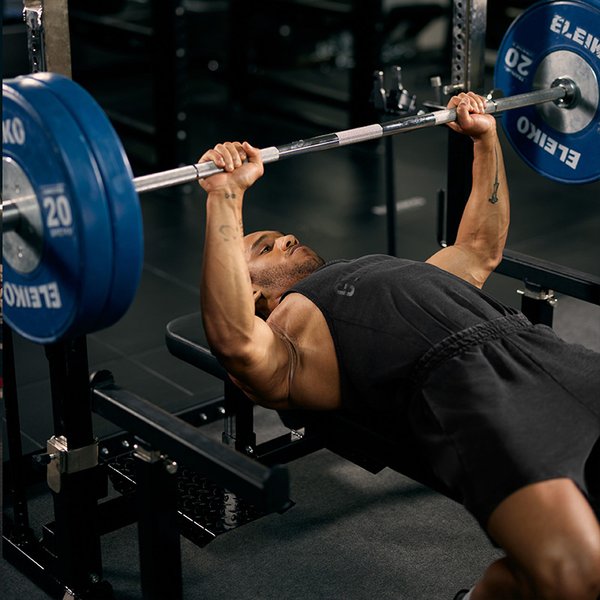
The foundational Barbell Bench Press, essential for chest development. -
A2: Bent-Over Barbell Row (Back)
- Sets & Reps: 3-4 sets of 8-10 repetitions.
- Focus: This exercise targets the entire back, particularly the lats and rhomboids, building thickness. Hinge at your hips, keeping a neutral spine, and pull the barbell towards your lower chest. Squeeze your shoulder blades together at the top of the movement.
- Bodyweight Option: Inverted Rows (4 sets of 10-12 reps). Use a sturdy low bar or TRX straps. Keep your body straight and pull your chest towards the bar.
Superset 2: Upper Chest and Back Width
-
B1: Incline Dumbbell Press (Chest)
- Sets & Reps: 3 sets of 10-12 repetitions.
- Focus: Targets the often-underdeveloped upper chest, contributing to a more complete pectoral development. Set an incline bench to 30-45 degrees. Press dumbbells upwards, focusing on squeezing the upper chest at the peak contraction.
-
B2: Pull-ups (Back - Bodyweight)
- Sets & Reps: 3 sets of as many reps as possible (AMRAP).
- Focus: Crucial for developing back width and upper back strength. Use a wide grip. If standard pull-ups are challenging, use an assisted pull-up machine or resistance bands. Focus on pulling yourself up until your chin clears the bar, and control the descent.
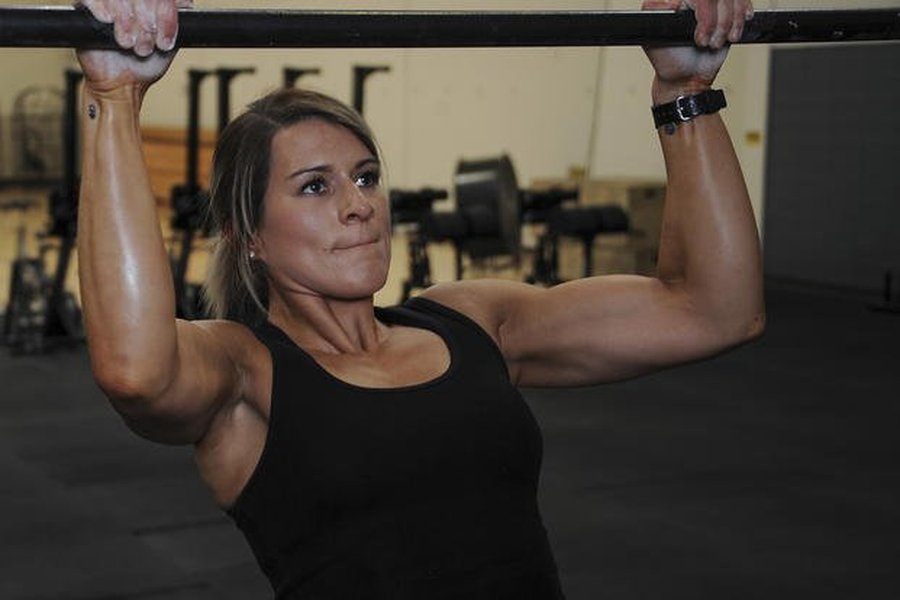
Pull-ups are a powerful bodyweight exercise for developing back width.
Phase 2: Bodyweight and Accessory Movements
These exercises enhance muscle endurance, target specific areas for definition, and provide excellent options for varying intensity or when equipment is limited.
Chest Bodyweight Circuit
-
C1: Standard Push-ups (Bodyweight)
- Sets & Reps: 3 sets of AMRAP.
- Focus: A fundamental bodyweight exercise for chest, shoulders, and triceps. Vary hand positions (e.g., standard, wide, close/diamond) to target different areas of the chest. Maintain a straight body line from head to heels.
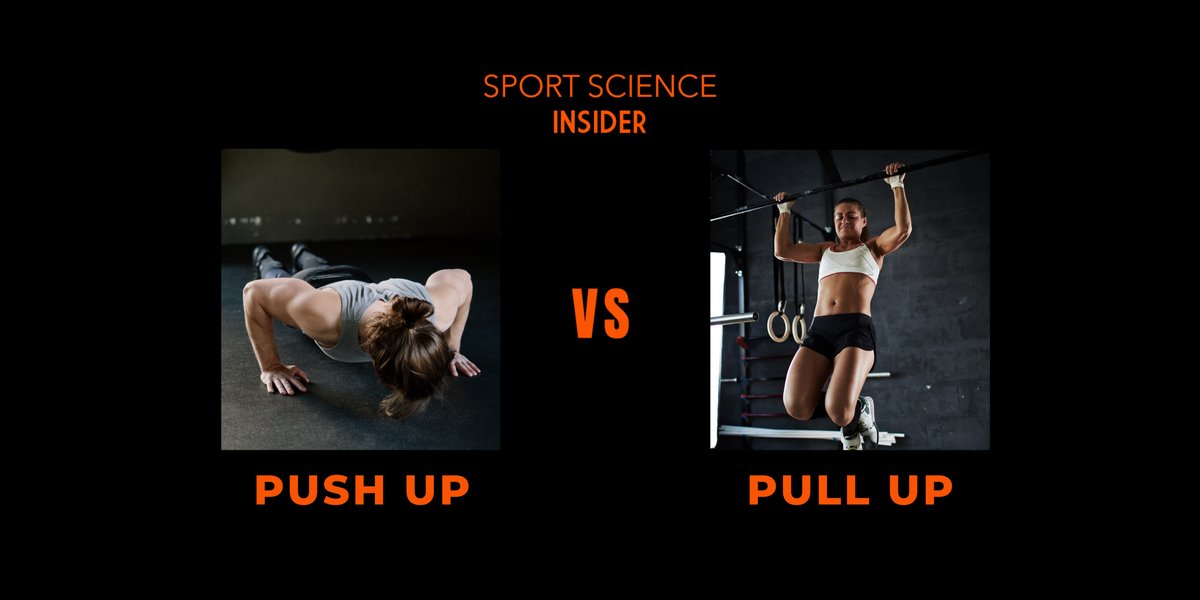
Push-ups are a versatile bodyweight exercise for chest and triceps. -
C2: Dips (Bodyweight)
- Sets & Reps: 3 sets of 8-12 repetitions.
- Focus: Excellent for targeting the lower chest and triceps. Use parallel bars or a sturdy surface. Lower your body until your shoulders are below your elbows, keeping your torso leaning slightly forward to emphasize the chest.
-
C3: Pike Push-ups (Bodyweight)
- Sets & Reps: 3 sets of 8-12 repetitions.
- Focus: A challenging bodyweight exercise that targets the upper chest and shoulders. Start in a downward-dog position with hips elevated, and lower your head towards the ground between your hands.
Back Bodyweight & Isolation
-
D1: Dumbbell Flyes (Chest Isolation)
- Sets & Reps: 2-3 sets of 10-15 repetitions.
- Focus: An isolation exercise to stretch and contract the pectoral muscles. Lie on a flat bench with dumbbells. With a slight bend in your elbows, lower the dumbbells out to the sides in an arc, feeling a stretch in your chest, then bring them back together over your chest.
-
D2: Dumbbell Pullovers (Chest/Back Isolation)
- Sets & Reps: 2-3 sets of 12-15 repetitions.
- Focus: This unique exercise targets both the lats and helps expand the rib cage, while also engaging the chest. Lie perpendicular to a bench, holding one dumbbell with both hands above your chest. Lower the dumbbell behind your head in an arc, feeling a stretch, then bring it back over your chest.
-
D3: Superman Holds (Back - Bodyweight)
- Sets & Reps: 3 sets of 30-second holds.
- Focus: Activates the lower back, glutes, and improves core stability. Lie face down on the floor with arms extended forward. Simultaneously lift your arms, chest, and legs off the ground, squeezing your lower back and glutes. Hold for the prescribed time.
Optimizing Your Training: Key Considerations
To maximize the effectiveness of this workout, pay attention to these crucial aspects of your training:
Rep Ranges and Progression
For compound movements, the 5-8 or 8-10 rep range is ideal for building strength and promoting muscle hypertrophy. For accessory and isolation exercises, aim for 10-15 reps to focus on muscular endurance and shape. For bodyweight exercises like pull-ups and push-ups, performing "as many reps as possible" (AMRAP) with good form ensures you are pushing your muscles to their limit, facilitating progressive overload. To continue making gains, aim to increase weight or reps weekly, but always prioritize proper form over lifting heavier weights.
Workout Volume and Frequency
This routine encompasses a total of approximately 18-25 working sets, aligning with recommendations for effective hypertrophy training. Performing this chest and back workout as Day 1 of a 2-day split is effective, allowing for adequate recovery. Ensure at least 48 hours of rest between sessions targeting the same muscle groups. Incorporate cool-down stretches at the end of your workout to improve flexibility and aid in muscle recovery.
Visualizing Workout Focus Areas
To better understand the emphasis of this workout across different training aspects, here's a radar chart illustrating the focus on strength, hypertrophy, endurance, and bodyweight integration. Each attribute is scored on a scale of 1 to 5, reflecting its prominence in the routine.
This radar chart visually represents how the suggested Day 1 workout is balanced across critical training dimensions. It scores highly on hypertrophy and bodyweight integration due to the diverse exercise selection and progressive overload principles. Strength development is robust through the heavy compound lifts, and endurance is built via higher rep ranges and AMRAP sets. The use of supersets contributes to high efficiency.
Targeting Muscle Groups: A Mindmap Overview
This mindmap illustrates the primary and secondary muscle groups targeted by the exercises within this comprehensive chest and back workout. It visually breaks down how each exercise contributes to overall upper body development.
This mindmap clearly illustrates how each exercise contributes to the development of specific muscle groups, ensuring a balanced and comprehensive workout. It highlights the primary targets as well as the secondary muscles that are engaged, providing a holistic view of the routine's anatomical impact.
Exercise Equipment Versatility Breakdown
This bar chart provides an overview of the equipment versatility for this workout, evaluating how many exercises can be performed with different types of equipment. This indicates the adaptability of the routine, whether you have access to a full gym or are limited to bodyweight options.
The bar chart demonstrates the significant versatility of this workout, with a strong emphasis on bodyweight exercises, making it accessible even without a fully equipped gym. Barbells and dumbbells remain core components for strength and hypertrophy, while machines offer assisted options for certain movements.
Deep Dive: The Science of Supersets and Muscle Pump
The concept of supersetting, particularly with antagonistic muscle groups like the chest and back, is a powerful training technique. When you perform a set of a pushing exercise (e.g., Bench Press) followed immediately by a pulling exercise (e.g., Bent-Over Row) with minimal rest, several physiological benefits occur. One of the most notable is the "pump," a temporary increase in muscle size due to increased blood flow and cellular swelling. While often associated with aesthetic appeal, this increased blood flow delivers more oxygen and nutrients to the working muscles, and removes metabolic byproducts, potentially enhancing recovery and signaling pathways for muscle growth. Furthermore, training opposing muscle groups can lead to reciprocal inhibition, meaning that when one muscle contracts, its antagonist relaxes, which can theoretically allow for greater force production in the subsequent exercise. This method enhances workout density, allowing you to accomplish more work in less time, which is ideal for busy schedules while still promoting significant gains.
Related Video: The Perfect Chest and Back Workout for Mass
To further visualize and understand the execution of an effective chest and back workout, here's a highly relevant video. This video delves into strategies for maximizing muscle mass in these areas, offering practical demonstrations and tips that complement the structured routine provided above. It emphasizes proper form and intensity, which are critical for achieving optimal results and preventing injury.
This video provides an excellent visual aid for understanding the mechanics and flow of a chest and back workout. It reinforces the importance of proper technique for each exercise, highlighting how small adjustments can lead to significant improvements in muscle activation and growth. Watching the demonstrations can help refine your form, ensuring you get the most out of every repetition and set.
Table: Exercise Benefits and Bodyweight Alternatives
This table summarizes the primary benefits of key exercises in the routine and offers practical bodyweight alternatives, ensuring flexibility in your training regimen regardless of equipment availability.
| Exercise | Primary Muscles Targeted | Key Benefit | Bodyweight Alternative(s) |
|---|---|---|---|
| Barbell Bench Press | Pectoralis Major, Anterior Deltoids, Triceps | Foundational strength & mass for chest. | Standard Push-ups, Incline Push-ups |
| Bent-Over Barbell Row | Latissimus Dorsi, Rhomboids, Trapezius | Back thickness and overall pulling strength. | Inverted Rows, Prone Pulls |
| Incline Dumbbell Press | Upper Pectoralis, Anterior Deltoids | Upper chest development and definition. | Pike Push-ups (indirectly), Feet-Elevated Push-ups |
| Pull-ups | Latissimus Dorsi, Biceps, Trapezius | Back width, upper back strength, grip. | Assisted Pull-ups, Lat Pulldowns (machine) |
| Dips | Lower Pectoralis, Triceps, Anterior Deltoids | Lower chest emphasis, triceps strength. | Decline Push-ups, Bench Dips (for triceps focus) |
| Dumbbell Flyes | Pectoralis Major (outer & inner) | Pectoral stretch, muscle separation. | Resistance Band Flyes, Wide-Grip Push-ups |
| Dumbbell Pullovers | Latissimus Dorsi, Pectoralis Major | Lat development, ribcage expansion, chest stretch. | No direct bodyweight equivalent for the full range of motion. |
| Superman Holds | Erector Spinae, Glutes, Hamstrings | Lower back strength, core stability. |
This table provides a concise overview, allowing you to quickly identify the purpose of each exercise and find suitable bodyweight alternatives if you're training at home or with limited equipment.
Frequently Asked Questions (FAQ)
What is a "Day 1 of 2" workout split?
Why train chest and back together?
How important are bodyweight exercises in this routine?
What should my rest periods be between sets?
Can I adjust the rep ranges or sets?
Conclusion: Building a Formidable Upper Body
This comprehensive Day 1 Chest and Back workout provides a robust framework for building significant upper body strength, muscle mass, and endurance. By strategically combining heavy compound lifts with versatile bodyweight exercises and incorporating the efficiency of supersets, this routine ensures that every major muscle group in your chest and back receives optimal stimulation. Consistency, proper form, and progressive overload are the cornerstones of long-term success. Embrace the challenge, listen to your body, and enjoy the transformative journey towards a powerful and well-developed physique.
Recommended Further Exploration
- How to optimize progressive overload for muscle growth?
- Benefits of training antagonistic muscle groups together
- Best warm-up and cool-down routines for upper body workouts
- Nutrition and recovery strategies for muscle building