
Unlock Flawless Finishes: Discover the Secrets of Paint Open Time Extenders
Extend your paint's workability for smoother application, perfect blending, and professional results, no matter the conditions.
Whether you're an artist striving for seamless color transitions, a DIY enthusiast tackling a home renovation, or a professional painter aiming for impeccable surfaces, the drying time of your paint can be a critical factor. Paint open time extenders, also known as retarders, are specially formulated additives designed to prolong this crucial window, giving you more time to work with your paint. This comprehensive guide delves into the best open time extenders available, helping you choose the right product to achieve a superior finish, reduce imperfections, and make your painting projects more manageable and enjoyable.
Key Insights: Elevating Your Paint Game
- Extended Workability: Open time extenders significantly slow down the paint's drying process, providing a longer window to apply, blend, and perfect your paint job.
- Paint Type Specificity: The best extender depends heavily on your paint type (acrylic, latex, oil-based, or waterborne), as formulations are tailored for specific chemistries.
- Enhanced Finish Quality: By allowing more time for paint to level, these additives help minimize brush strokes and roller marks, leading to a smoother, more professional appearance.
Understanding Paint Open Time Extenders
Paint open time refers to the duration paint remains wet enough on a surface to be worked with—allowing for brushing, rolling, blending, or correcting imperfections without causing issues like dragging, lap marks, or uneven texture. Open time extenders are chemical additives that primarily work by slowing down the evaporation rate of the solvent (water in latex and acrylics, or mineral spirits in oil paints) within the paint. This delay gives painters more control, especially in challenging environmental conditions such as high temperatures, low humidity, or breezy areas, all of which accelerate drying.
Using an extender can be the difference between a frustrating painting experience riddled with flaws and a satisfying project that yields a beautiful, uniform finish. They are particularly valuable for techniques requiring wet-on-wet blending, large surface applications where maintaining a wet edge is crucial, and for achieving spray-like finishes with brushes or rollers.

A visual representation of how paint forms a film as it dries. Extenders slow this process.
Choosing the Right Extender: A Match for Every Paint
The effectiveness of an open time extender hinges on its compatibility with the specific paint chemistry. Using an incorrect extender can lead to adverse effects such as poor adhesion, changes in sheen, or prolonged cure times. Here’s a breakdown of extenders suited for common paint types:
For Acrylic Paints (Artists & Crafters)
Acrylic paints are notorious for their fast drying times due to rapid water evaporation. This can be a challenge for artists who need more time for blending, layering, or detailed brushwork. Acrylic retarders or specific acrylic extender mediums are the solution.
- Liquitex Professional Slow-Dri Blending Medium: A highly popular choice, this medium extends drying time significantly (by up to 40% or more depending on the amount used), improves color blending, and maintains the paint's integrity. It's binder-free and can be mixed directly into the paint.
- Golden Retarder: Another artist-grade product, Golden Retarder is a concentrated additive that slows drying. A small amount is usually sufficient. It's essential not to overuse it, as too much can interfere with film formation.
- Grumbacher Acrylic Retarder: This product is effective for slowing down the drying process, allowing for smoother application and blending. It helps maintain paint viscosity and is suitable for various acrylic painting techniques.
- U.S. Art Supply Acrylic Retarder Liquid: Often used for acrylic pouring and techniques requiring extended workability, this retarder helps prevent paint from skinning over too quickly on the palette or canvas.
- Tamiya Acrylic Paint Retarder: Specifically formulated for modelers and fine-scale painters using Tamiya acrylics, this retarder improves flow and reduces brush marks for delicate applications.
These products allow artists to employ techniques typically associated with oil paints, such as soft gradations and complex layering, with the convenience and easy cleanup of acrylics.

Liquitex Slow-Dri Blending Medium is a popular choice for extending the working time of acrylic paints.
For Latex (Water-Based) Paints (Home Improvement & Professional Painting)
Latex paints, commonly used for walls, trim, and exteriors, also benefit greatly from open time extenders, especially in non-ideal conditions. These extenders help prevent lap marks and ensure a smoother finish with brushes and rollers.
- Floetrol (by Flood/PPG): A widely recognized latex paint conditioner, Floetrol improves flow and leveling, reduces brush and roller marks, and extends the wet edge time. It's a go-to for many DIYers and professional painters.
- Benjamin Moore 518 Extender: Specifically designed for Benjamin Moore's low-VOC and zero-VOC latex paints (like Aura and Natura), this extender helps maintain a wet edge, especially in hot and dry climates, without increasing VOC content. It's solvent-free.
- Sunnyside M-1 Latex Paint Additive & Extender: This product extends open time by 10-15 minutes, improves flow, and helps eliminate roller marks. It's also beneficial for spray applications, allowing for smoother atomization.
- XIM Latex X-Tender: Another option that increases the open time for latex paints, improving application with brushes and rollers and helping to achieve a more uniform appearance.
- Fusion Mineral Paint Extender: While excellent for their specific furniture paint line, this non-toxic extender can also be used with other water-based paints to increase open time and minimize brush strokes, particularly favored in decorative painting.
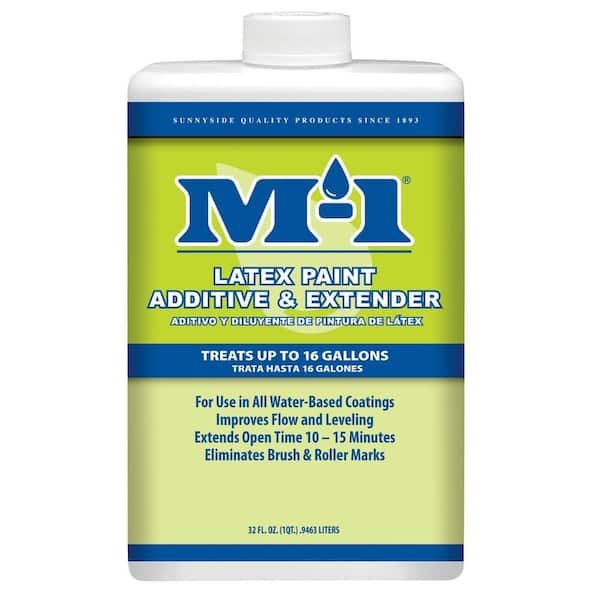
Sunnyside M-1 Latex Paint Additive & Extender helps improve flow and extend open time for latex paints.
For Oil-Based Paints
Oil paints naturally have a much longer open time than water-based paints. However, in certain situations (e.g., very warm, breezy conditions or with fast-drying alkyd-modified oils), an extender might still be beneficial.
- Penetrol (by Flood/PPG): This is the oil-based counterpart to Floetrol. It enhances penetration, adhesion, and flow of oil-based paints and varnishes, effectively extending their workability.
- Mineral Spirits or Turpentine: While primarily used as thinners, small amounts can sometimes extend open time, but excessive use can weaken the paint film and dull the sheen. Specialized oil painting mediums are generally preferred.
- Alkyd Mediums with Slower Solvents: Some alkyd mediums are formulated to extend drying time while enhancing flow and gloss.
For Low-VOC and Zero-VOC Waterborne Paints (Eco-Friendly Options)
With the increasing demand for environmentally friendly paints, specialized extenders have been developed for modern low-VOC and zero-VOC waterborne formulations, including acrylic and polyurethane dispersions.
- Rhodoline® OTE Series (by Syensqo, formerly Solvay/Clariant): These are advanced, APE-free (Alkylphenol Ethoxylate-free) and solvent-free additives designed specifically for low- to zero-VOC waterborne paints, coatings, and adhesives. They effectively extend open time, improve workability, and maintain film properties like gloss and leveling, crucial for high-performance architectural and industrial coatings.
- Other Dispersing and Wetting Agents: Some high-performance dispersing and wetting agents can also function as open time extenders by improving pigment dispersion and film formation characteristics.
Visualizing Extender Performance Factors
Choosing an open time extender involves balancing several factors. The radar chart below provides a conceptual comparison of how different types of extenders might perform across key attributes. Note that performance can vary based on specific product formulations and environmental conditions. This chart represents general tendencies rather than precise data.
This chart illustrates that artist-focused acrylic retarders excel in blending capability, while latex conditioners are user-friendly and effective at reducing brush marks for general painting. Low-VOC extenders offer a good balance with minimal environmental impact. Oil paint mediums inherently provide long open times and excellent flow.
Key Benefits and Usage Tips
Advantages of Using Paint Extenders
- Improved Flow and Leveling: Extenders help the paint spread more evenly and settle into a smoother film, reducing the appearance of textures from brushes or rollers.
- Minimized Brush and Roller Marks: The extended wet time allows marks to level out before the paint sets.
- Enhanced Blending: Crucial for artists and decorative painters, extenders facilitate softer transitions between colors.
- Prevention of Paint Skinning: For acrylics, retarders can prevent a skin from forming on paint in palettes or containers.
- Better Performance in Adverse Conditions: They counteract the effects of hot, dry, or windy weather that cause paint to dry too quickly.
- Reduced Lap Marks: When painting large areas, maintaining a wet edge is easier, preventing unsightly lines where fresh paint overlaps partially dried paint.
This video demonstrates the importance of using a paint extender to prevent premature drying, offering practical insights into its application and benefits.
Important Usage Considerations
- Follow Manufacturer's Ratios: Always adhere to the recommended mixing ratios (usually a small percentage, e.g., 5-15% extender to paint volume). Overuse can negatively impact the paint's properties, such as weakening the dried film, causing excessive tackiness, or significantly prolonging cure time.
- Thorough Mixing: Ensure the extender is completely and evenly mixed into the paint.
- Test First: Before applying to your main project, test the paint-extender mixture on a small, inconspicuous area or a scrap piece to observe its effect on drying time, color, and sheen.
- Impact on Cure Time: While open time is extended, the overall cure time (the time it takes for the paint to reach its full hardness and durability) may also be lengthened. Be mindful of this for recoating or putting surfaces into service.
- Environmental Factors: Temperature and humidity still play a role. You might need to adjust the amount of extender based on ambient conditions.
- Not a Thinner (Usually): Most extenders are not primarily designed to thin the paint's viscosity, though some may have a slight thinning effect. If thinning is required, use the appropriate thinner for your paint type in conjunction with or separately from the extender.
- Clean Up: Clean up procedures generally remain the same as for the paint itself (soap and water for latex/acrylics, mineral spirits for oils).
Comparative Overview of Popular Paint Extenders
To help you navigate the options, the table below summarizes some frequently recommended open time extenders, their compatible paint types, and key benefits. This provides a quick reference for selecting an appropriate product for your specific needs.
| Extender Name | Paint Type Compatibility | Primary Benefits | Notes |
|---|---|---|---|
| Liquitex Professional Slow-Dri Blending Medium | Acrylic | Significantly extends drying time, enhances blending, reduces paint skinning on palette. | Ideal for artists; use sparingly as it's concentrated. |
| Golden Retarder | Acrylic | Slows drying effectively, good for wet-on-wet techniques and glazing. | Highly concentrated; do not exceed recommended ratios. |
| Grumbacher Acrylic Retarder | Acrylic | Slows drying, facilitates smoother application and blending, maintains viscosity. | Suitable for both professional and hobbyist use. |
| Floetrol | Latex (Water-based) | Improves flow and leveling, reduces brush/roller marks, extends wet edge. | Popular for interior/exterior house painting; helps with spray applications. |
| Benjamin Moore 518 Extender | Benjamin Moore Low/Zero-VOC Latex Paints | Maintains wet edge in hot/dry conditions, solvent-free, doesn't increase VOCs. | Optimized for Aura, Natura, and other BM waterborne paints. |
| Sunnyside M-1 Latex Paint Additive & Extender | Latex (Water-based) | Extends open time by 10-15 minutes, improves flow, eliminates roller marks. | Good for large surfaces and can aid in spraying thicker coatings. |
| Penetrol | Oil-Based Paints & Varnishes | Improves flow, penetration, adhesion, and extends workability. | The oil-based equivalent of Floetrol. |
| Rhodoline® OTE Series | Low/Zero-VOC Waterborne Paints (Acrylic, PU) | Extends open time, APE-free, solvent-free, maintains gloss and leveling. | High-performance additive for eco-friendly architectural/industrial coatings. |
| Fusion Mineral Paint Extender | Water-based paints (including their specific line and other acrylics) | Increases open time, minimizes brush strokes, non-toxic. | Excellent for furniture and decorative painting; improves self-leveling. |

Fusion Mineral Paint Extender is a non-toxic option for water-based paints, popular for achieving smooth finishes in decorative work.
Mindmap: Navigating Paint Open Time Extenders
This mindmap provides a visual summary of the key aspects of paint open time extenders, from their fundamental purpose to selection criteria and application tips. It helps to quickly grasp the interconnected concepts related to these useful additives.
(Hot, Dry, Windy)"] id2e["Prevents Paint Skinning (e.g., on palette)"] id3["Types by Paint Compatibility"] id3a["Acrylic Paints"] id3aa["Examples: Liquitex Slow-Dri, Golden Retarder, Grumbacher Retarder"] id3ab["Purpose: Fine art, blending, layering"] id3b["Latex (Water-Based) Paints"] id3ba["Examples: Floetrol, BM 518 Extender, M-1 Latex Additive"] id3bb["Purpose: Architectural painting (walls, trim)"] id3c["Oil-Based Paints"] id3ca["Examples: Penetrol, Specialized Oil Mediums"] id3cb["Purpose: Traditional oil painting, specific industrial uses"] id3d["Low-VOC / Waterborne Coatings"] id3da["Examples: Rhodoline OTE Series"] id3db["Purpose: Eco-friendly formulations, high-performance finishes"] id4["Key Considerations When Using"] id4a["Correct Mixing Ratios (Crucial!)"] id4b["Potential Impact on Cure Time"] id4c["Environmental Conditions (Temp/Humidity)"] id4d["Test on Small Area First"] id4e["Thorough Mixing with Paint"] id4f["Not a Primary Thinner"]
This mindmap highlights that open time extenders are versatile tools, but their successful use depends on understanding the specific paint type, desired outcome, and proper application techniques.
Frequently Asked Questions (FAQ)
What exactly is "open time" in painting?
Open time refers to the period after paint application during which the paint remains wet enough to be worked or blended without causing defects like brush marks, dragging, or lap marks. Once this window closes, the paint begins to set and further manipulation can ruin the finish.
How much paint extender should I add to my paint?
Always follow the manufacturer's instructions on the product label. Typically, extenders are added in small percentages, often ranging from 5% to 15% of the paint volume. Some concentrated artist retarders may require even less. Overusing an extender can negatively affect paint adhesion, cure time, and final film properties.
Can I use water to extend the open time of acrylic paints?
While adding water to acrylics will thin them and can slightly increase workability initially, it's not a true open time extender. Water can dilute the acrylic binder, potentially weakening the paint film if too much is used. Dedicated acrylic retarders or blending mediums are formulated to slow drying without compromising the paint's integrity.
Do open time extenders affect the final color or sheen of the paint?
When used correctly according to manufacturer guidelines, most quality open time extenders are designed to have minimal to no impact on the paint's color or sheen. However, over-addition or using an incompatible extender could potentially alter these properties. Always test on a small area first.
Will using an extender significantly increase the paint's overall cure time?
Yes, extending the open (drying) time will typically also extend the full cure time of the paint. The paint will remain softer or tackier for longer. This is important to consider for recoating schedules or when the painted surface needs to withstand use or cleaning.
Recommended Further Exploration
- How do environmental conditions like humidity and temperature affect paint drying time?
- What are the differences between paint retarders, flow improvers, and thinners?
- Can I make a DIY paint open time extender safely and effectively?
- Are there specific open time extenders recommended for automotive paints or industrial coatings?
References
 amazon.com
amazon.com
amazon.com
Last updated May 12, 2025