
Unlock the Past: Master History with Effective Learning Strategies
Move beyond memorization to truly understand and connect with historical narratives through proven techniques.
Essential Insights
- Context is Crucial: Understanding the 'why' and 'how' behind events, people, and ideas is more effective than simply memorizing names and dates. Grasp the broader social, political, and economic landscapes.
- Active Engagement Enhances Retention: Actively processing information through analysis, comparison, discussion, and questioning sources leads to deeper understanding and better recall compared to passive reading.
- Diverse Methods Yield Best Results: Combining visual aids (timelines, maps, mind maps), varied study techniques (SQ3R, spaced repetition), and diverse resources (primary sources, documentaries, museums) caters to different learning styles and reinforces knowledge.
Laying the Foundation: Context is King
History is far more than a collection of isolated facts. To truly learn it, you must understand the intricate web of connections that shape historical narratives. Focusing on context transforms learning from a memory exercise into an exploration of human experience.
Understand the Big Picture
Grasping the Narrative Flow
Before diving into details, get a sense of the overall story. Read introductory sections, chapter summaries, or even course syllabi to understand the main themes, arguments, and chronological flow. This creates a mental scaffold upon which you can hang specific details, making them easier to remember and understand.
Grasp Historical Context
The Environment of Events
Events don't happen in a vacuum. Always consider the surrounding social structures, political climates, economic conditions, and prevailing ideas of the time. Asking questions like "What was daily life like?" or "What were the major political tensions?" provides crucial background that illuminates why events unfolded as they did.
Connect the Dots
Analyzing Cause and Effect
Actively look for cause-and-effect relationships. How did one event lead to another? How did the actions of certain individuals or groups influence outcomes? Understanding these connections is fundamental to historical analysis and helps move beyond simple descriptions to deeper comprehension.
Active Engagement Strategies: Making History Stick
Passive reading is often ineffective for long-term retention. Engaging actively with historical material forces your brain to process information more deeply, leading to better understanding and recall. Research consistently shows that active learners perform better.
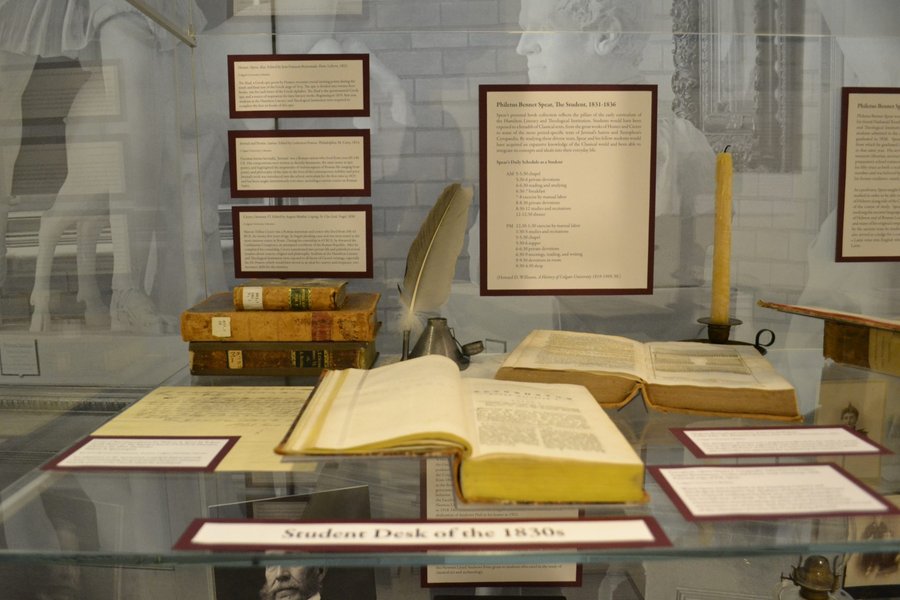
A student desk from the 1830s evokes the long tradition of historical study.
Go Beyond Rote Memorization
Focus on Understanding and Application
While some memorization (key dates, figures, places) is necessary, it shouldn't be the primary goal. Focus instead on understanding the significance of these details. How do they fit into the larger narrative? How do historical events or ideas relate to broader themes or even contemporary issues? This analytical approach is far more valuable.
Ask Critical Questions
Interrogating the Past
Constantly question the material. Why did this event happen? What were its short-term and long-term consequences? Whose perspectives are represented, and whose are missing? Compare different interpretations of the same event. This critical inquiry stimulates deeper thought and analysis.
Discuss and Debate
Learning Through Interaction
Talking about historical topics with peers, tutors, or in study groups can significantly enhance understanding. Explaining concepts to others helps solidify your own knowledge, while hearing different perspectives can challenge your assumptions and broaden your viewpoint.
Organizing Information Visually and Logically
History often involves complex sequences of events, numerous figures, and shifting geographical boundaries. Using visual and organizational tools can simplify this complexity, making information more digestible and memorable.
Leverage Visual Aids
Visual representations cater to different learning styles and can make abstract historical concepts more concrete.
Timelines: Mapping Chronology
Timelines are indispensable for understanding the sequence of events. Create them to visualize historical progression. A useful exercise is to draw a blank timeline and try filling it in from memory, then check against your notes to identify gaps – this reinforces recall.
Maps & Atlases: Understanding Geography
Geography often shapes history. Use historical maps and atlases to understand territorial changes, trade routes, migration patterns, and the locations of significant events. Visualizing the "where" provides crucial context.
Mind Maps & Charts: Connecting Concepts
Mind maps are excellent for exploring relationships between a central topic (like an event or era) and related themes, figures, causes, and effects. Charts can effectively compare different viewpoints, societal structures, or historical developments.
Visualize Key Historical Learning Approaches
The mindmap below illustrates the interconnected nature of effective history learning strategies. It branches out from the central goal to encompass foundational principles, active techniques, organizational methods, diverse resources, and structured study habits.
(Social, Political, Economic)"] id1b["Grasp the Big Picture
(Narrative Flow)"] id1c["Focus on Cause & Effect"] id1d["Go Beyond Rote Memorization"] id2["Active Engagement"] id2a["Critical Questioning
(Why? Impact?)"] id2b["Analyze & Compare Perspectives"] id2c["Discuss & Debate Ideas"] id2d["Connect Past to Present"] id3["Organization & Visualization"] id3a["Visual Aids"] id3a1["Timelines"] id3a2["Maps & Atlases"] id3a3["Mind Maps & Charts"] id3b["Effective Note-Taking"] id3b1["Chronological / Thematic"] id3b2["Summarize Key Points"] id3b3["Color-Coding"] id4["Study Techniques"] id4a["SQ3R Method
(Survey, Question, Read, Recite, Review)"] id4b["Spaced Repetition"] id4c["Active Recall
(Self-Testing, Flashcards)"] id4d["Pomodoro Technique"] id5["Diverse Resources"] id5a["Primary & Secondary Sources"] id5b["Books & Biographies"] id5c["Online Courses & Lectures"] id5d["Documentaries & Films"] id5e["Museums & Historical Sites"] id5f["Podcasts & Audio"] id6["Structured Learning"] id6a["Break Down Topics"] id6b["Consistent Study Schedule"] id6c["Consult Multiple Sources
(Avoid Bias)"] id6d["Regular Review"]
Master Note-Taking
Your notes are a crucial study tool. Organize them effectively to reflect the structure of historical information.
Logical Organization
Organize notes chronologically to follow the timeline of events or thematically to group related concepts. This structure helps you retrieve information later.
Summarize and Synthesize
Don't just copy text. Summarize key arguments, events, and figures in your own words. This processing aids comprehension.
Use Visual Cues
Highlighting or using color-coded notes for different themes, periods, or types of information (e.g., dates, names, concepts) can make reviewing easier and more effective.
Effective Study Techniques: Reinforcing Knowledge
Employing proven study methods can significantly boost your learning efficiency and long-term retention of historical information.

A dedicated study space can aid focus when employing learning techniques.
Proven Methods
SQ3R (Survey, Question, Read, Recite, Review)
This structured reading technique encourages active engagement. Survey the material first, formulate questions, read to find answers, recite the information aloud or in writing, and review periodically.
Pomodoro Technique
Work in focused bursts (e.g., 25 minutes) followed by short breaks. This can help maintain concentration and prevent burnout during long study sessions.
Strategic Memorization
Contextualize Facts
When memorizing dates or names is necessary, always link them to their context – the event, its significance, and related figures. This makes them meaningful rather than isolated data points.
Use Mnemonics
Acronyms, rhymes, or visual imagery can sometimes help memorize lists or sequences, but use them as aids, not replacements for understanding.
Spaced Repetition & Active Recall
Review at Intervals
Instead of cramming, review material at increasing intervals (e.g., after a day, a week, a month). This technique, known as spaced repetition, significantly improves long-term memory.
Test Yourself
Actively recalling information (e.g., through flashcards, practice questions, or trying to explain a topic from memory) is far more effective for strengthening memory than passively rereading notes.
Relative Effectiveness of History Learning Strategies
The radar chart below provides a conceptual overview of the perceived effectiveness of various approaches to learning history, based on educational principles. Higher scores indicate greater importance for deep, lasting understanding. Note that all these strategies are valuable and often work best in combination.
As illustrated, strategies emphasizing understanding, active engagement, and critical thinking are generally considered most effective for deep historical learning, while reliance solely on rote memorization is least effective.
Expanding Your Horizons: Diverse Resources
Limiting yourself to a single textbook provides only one perspective. Explore a variety of resources to gain a richer, more nuanced understanding of the past and make learning more engaging.
Primary vs. Secondary Sources
Understanding Source Types
Learn to distinguish between primary sources (eyewitness accounts, documents from the period) and secondary sources (historians' interpretations). Critically evaluate both for bias, perspective, and reliability.
Reading Widely
Books, Biographies, and Fiction
Supplement textbooks with in-depth historical monographs, biographies that bring figures to life, and even well-researched historical fiction (while remaining critical of its accuracy). These offer different layers of detail and narrative style.
Digital Learning
Online Courses, Documentaries, and Podcasts
Leverage the wealth of online resources. Platforms like Coursera, edX, Khan Academy offer structured courses. Documentaries provide visual context (verify their accuracy), and history podcasts offer engaging narratives and expert interviews on the go.
Featured Video: Rethinking History Learning
This video discusses effective approaches to studying history, emphasizing understanding and analysis over simple memorization. It aligns with the core principles of contextual learning and active engagement discussed throughout this guide, offering valuable perspectives on how to approach the subject for deeper comprehension.
Experiential Learning
Museums, Sites, and Oral Histories
Visiting museums, historical sites, or even local cemeteries can provide a tangible connection to the past. Seeing artifacts, walking historic grounds, or listening to elders recount their experiences (oral history) can make history feel more real and impactful.

Museums offer hands-on experiences that bring history to life.
Structuring Your Learning Journey
Effectively learning history also requires structure and discipline. A systematic approach helps manage the vastness of the subject and ensures consistent progress.
Break It Down
Manageable Chunks
Don't try to learn everything at once. Break down large topics into smaller, manageable sections, focusing on specific periods, themes, or geographical regions for a set duration. This allows for deeper exploration without feeling overwhelmed.
Time Management
Consistency is Key
Establish a regular study schedule. Consistent, shorter study sessions are generally more effective than infrequent, long cramming sessions. Allocate specific time slots for reading, note-taking, reviewing, and practice.
Consult Multiple Sources
Gain a Rounded View
No single source holds the complete truth. Always consult multiple accounts and perspectives on historical events. Recognizing different interpretations and potential biases is a hallmark of sophisticated historical thinking.
Comparing History Learning Resources
Different resources offer unique advantages and disadvantages. The table below provides a comparative overview to help you choose the best tools for your learning goals.
| Resource Type | Pros | Cons | Best For |
|---|---|---|---|
| Textbooks | Structured overview, comprehensive coverage, often aligned with curriculum. | Can be dry, may present a single narrative, limited depth on specific topics. | Foundation building, course requirements, broad understanding. |
| Primary Sources | Direct connection to the past, authentic voice, encourages interpretation. | Can be difficult to understand (language, context), may reflect strong bias, requires careful analysis. | Deep analysis, understanding perspectives of the time, research. |
| Scholarly Articles/Books | In-depth analysis, specialized topics, based on rigorous research. | Can be dense and academic, may require background knowledge. | Detailed understanding of specific events or themes, research papers. |
| Documentaries/Films | Visually engaging, brings events to life, accessible narrative. | Potential for inaccuracy or dramatization, often simplifies complex issues, passive consumption. | Introduction to a topic, visual context, sparking interest (verify accuracy). |
| Online Courses (e.g., Coursera, edX) | Structured learning, expert lectures, often interactive, flexible pace. | Quality varies, may require self-discipline, potential cost. | Guided learning, exploring new topics, supplementing formal education. |
| Museums/Historical Sites | Tangible connection, immersive experience, artifact-based learning. | Geographically limited, interpretation curated by institution, can be superficial without preparation. | Experiential learning, connecting with physical evidence, enhancing engagement. |
| Podcasts | Engaging storytelling, accessible format (listening on the go), diverse topics. | Accuracy varies widely, can lack depth, potential for strong narrative bias. | Broadening knowledge, convenient learning, exploring niche topics (vet sources). |
Frequently Asked Questions (FAQ)
How can I remember historical dates effectively?
Focus on associating dates with the *significance* of the event rather than memorizing them in isolation. Create timelines to see the sequence. Link dates to key turning points or cause-and-effect relationships. Use active recall (flashcards, self-quizzing) focusing on the date *and* its context. While some key dates are important anchors, understanding the chronological flow and significance is more crucial than memorizing hundreds of specific dates.
Is it better to focus on one historical period deeply or learn broadly?
Both approaches have value. Starting broad helps you understand the larger context and connections across time (the "big picture"). Once you have a foundational understanding, diving deep into specific periods or themes that interest you allows for more nuanced analysis and expertise. Often, a combination works best: maintain a general awareness while developing deeper knowledge in areas of particular interest or relevance to your goals.
How do I deal with conflicting historical accounts or bias?
Recognizing bias and differing interpretations is a core historical skill. Always ask: Who wrote this? When? Why? For whom? Compare multiple sources on the same event to identify points of agreement and disagreement. Consider the author's background, potential motives, and the type of source (primary vs. secondary). Acknowledging conflicting accounts leads to a more sophisticated understanding than seeking a single "correct" version.
How much time should I dedicate to studying history?
The ideal amount of time varies depending on your goals (e.g., passing a class, personal enrichment) and the complexity of the material. Consistency is more important than duration. Aim for regular, focused study sessions (e.g., 30-60 minutes several times a week) rather than infrequent marathon sessions. Employ active learning techniques during your study time to maximize effectiveness.
Recommended Further Exploration
- How do historians use primary sources effectively?
- What are the benefits of using visual aids like timelines in history?
- Compare different historical interpretations of a major event.
- Explore online platforms for learning history courses.
References
Last updated May 4, 2025