
Unlock the Secrets to Mastering Japanese: Your Comprehensive Guide for 2025
Discover a proven, multi-faceted approach to learning Japanese, combining foundational knowledge, immersive techniques, and modern tools.
Essential Insights: Your Japanese Learning Kickstart
- Master the Scripts First: Begin your journey by thoroughly learning Hiragana and Katakana, the phonetic building blocks of Japanese, before tackling Kanji.
- Embrace Consistent Immersion: Integrate Japanese into your daily life through media, apps, and even changing device settings. Consistency is more effective than sporadic long sessions.
- Prioritize Active Practice: Move beyond passive learning by actively speaking, writing, and engaging with the language, ideally with native speakers, tutors, or AI-powered tools.
Learning Japanese is a rewarding journey that opens doors to a rich culture and unique modes of expression. As of May 2025, a wealth of resources and methodologies are available, making it more accessible than ever. The most effective approach is a blend of structured study, consistent practice, and deep immersion. This guide synthesizes expert advice to provide a comprehensive roadmap to Japanese proficiency.
Laying the Groundwork: The Pillars of Japanese Language
A strong foundation is crucial for long-term success in learning Japanese. This involves understanding its unique writing systems and building a core vocabulary and grammatical understanding.
Conquering the Japanese Writing Systems
Japanese utilizes three distinct scripts. Mastering them sequentially is generally recommended.
Hiragana (ひらがな)
Start with Hiragana, a syllabary of phonetic characters representing native Japanese sounds and grammatical particles. It's essential for basic reading and pronunciation. Tools like Tofugu’s Hiragana Guide and flashcard apps (e.g., Anki) are excellent for memorization. Daily practice writing these characters will solidify your learning.
Katakana (カタカナ)
Once Hiragana is familiar, move on to Katakana. This script is primarily used for foreign loanwords, onomatopoeia, and emphasis. It shares many sounds with Hiragana but has different character forms. Consistent practice is key here as well.
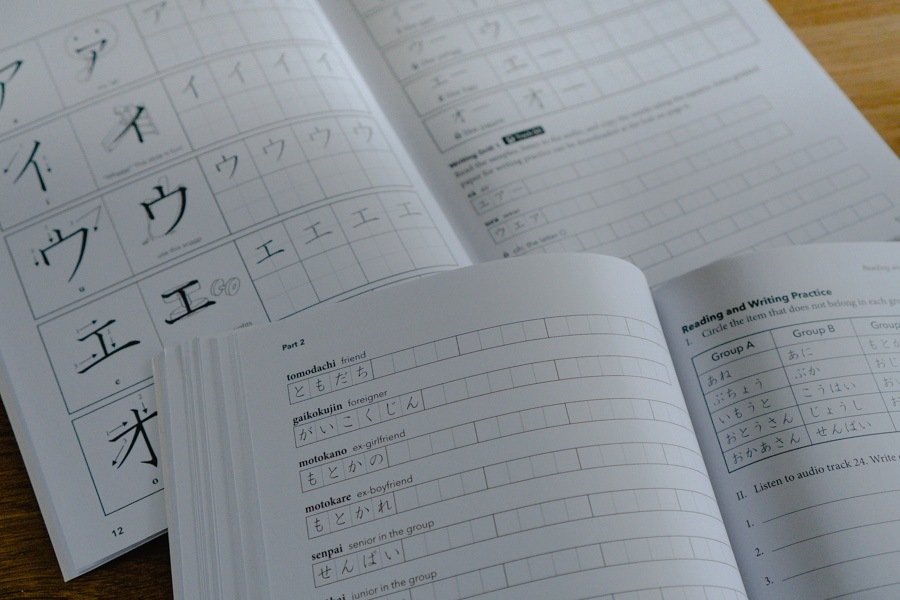
A collection of Japanese learning books, highlighting the importance of foundational materials.
Kanji (漢字)
Kanji are logographic characters adopted from Chinese, each representing a concept or word. There are thousands of common Kanji, making them a significant challenge. It's advised to:
- Start Early: Begin learning basic Kanji soon after mastering Hiragana and Katakana. Kanji make sentences shorter and easier to read once you're familiar with them.
- Adopt a Vocabulary-First Approach: Learn Kanji in the context of vocabulary words rather than in isolation. This helps with retention and practical application.
- Use Spaced Repetition Systems (SRS): Tools like WaniKani or the Kodansha Kanji Learner's Course (KKLC), often incorporating SRS, are highly effective for memorizing Kanji and their readings.
- Focus on High-Frequency Kanji: Prioritize learning the most commonly used characters first.
Building Vocabulary and Understanding Grammar
Vocabulary Acquisition
A robust vocabulary is essential. Focus on high-frequency words initially and integrate vocabulary learning with Kanji study. SRS flashcard apps are invaluable for memorizing and reviewing words.
Grasping Japanese Grammar
Japanese grammar differs significantly from English, particularly in sentence structure (SOV - Subject-Object-Verb) and the use of particles.
- Use reputable textbooks like "Genki" or online resources such as "Tae Kim's Guide to Learning Japanese" or the Bunpo app for structured grammar lessons.
- Focus on understanding basic sentence patterns and particle usage.
- Balance direct grammar study with extensive input (reading and listening) to see grammar used in context.

A page from the popular Genki textbook, illustrating a typical dialogue used for learning.
Effective Learning Strategies: Consistency, Immersion, and Practice
Beyond foundational knowledge, certain strategies significantly accelerate language acquisition.
The Power of Daily Consistency
Regular, short study sessions are more effective than infrequent, long ones. Aim for at least 15-30 minutes of focused Japanese study daily. This consistency aids memory retention and builds a sustainable learning habit, preventing burnout.
Immersing Yourself in Japanese
Immersion is a powerful technique to internalize the language naturally. Even without living in Japan, you can create an immersive environment:
- Media Consumption: Watch Japanese anime, dramas, movies, and YouTube videos (with or without subtitles, depending on your level). Listen to Japanese music and podcasts like "Nihongo Con Teppei." This helps with listening comprehension, pronunciation, and exposure to colloquialisms.
- Change Device Language: Switch your phone, computer, and social media settings to Japanese. This provides constant, practical exposure.
- Label Your Environment: Place Japanese labels on household items to passively learn vocabulary.
- AJATT (All Japanese All The Time): For dedicated learners, this approach involves maximizing exposure to Japanese in every aspect of daily life.

"Japanese the Manga Way" - a resource for learning Japanese through manga, an immersive and enjoyable medium.
Active Learning: Speaking, Reading, and Writing
Active engagement is crucial for developing fluency.
Speaking Practice
This is often considered the most direct path to fluency.
- Find language exchange partners (online or local meetups).
- Work with a tutor.
- Practice with AI chatbots like TalkPal, ChatGPT, or Gemini, which can offer conversational practice and feedback.
- Mimic native speakers' pronunciation from audio or video content. Even singing Japanese songs karaoke-style can help.
Reading Practice
Start with simpler materials and gradually increase difficulty:
- Children's books or graded readers.
- Manga (especially those with furigana - phonetic guides for Kanji).
- Light novels, and eventually, newspapers or more complex literature.
Writing Practice
Reinforce grammar and vocabulary by:
- Copying sentences and passages.
- Creating your own sentences using new grammar and vocabulary.
- Writing short journal entries, stories, or even haikus in Japanese.
Visualizing Learning Effectiveness
Different aspects of language learning contribute uniquely to overall proficiency. The radar chart below offers a conceptual look at how various approaches might emphasize these aspects. Note that individual experiences can vary, and this chart represents general tendencies rather than precise data.
This chart suggests that while app-based learning can be strong for vocabulary and consistency, full immersion in Japan naturally excels in speaking, listening, and cultural understanding. A balanced approach often combines elements from different methods.
Leveraging Technology and Resources in 2025
The landscape of language learning is continually evolving, with many tools available to support your Japanese studies.
Modern Language Learning Apps and AI
- Comprehensive Apps: Platforms like Duolingo, LingoDeer, Busuu, and Pimsleur offer structured lessons covering various skills. LingQ is excellent for reading-based learning with integrated dictionaries.
- Specialized Tools: WaniKani (Kanji), Bunpo (grammar), and Anki (SRS flashcards) are highly recommended for specific aspects of Japanese.
- AI-Powered Assistants: AI tools like ChatGPT and Google's Gemini can provide personalized practice, grammar explanations, and even simulate conversations, revolutionizing interactive learning in 2025.
Traditional and Community Resources
- Textbooks: "Genki," "Minna no Nihongo," and "Tae Kim's Guide to Japanese Grammar" remain popular choices for structured learning.
- Online Courses and Tutors: Websites offering access to online Japanese teachers or structured courses provide personalized guidance. Consider options like Japanese Language Delhi or platforms connecting students with tutors.
- Dictionaries: A good dictionary is indispensable. Weblio is a comprehensive online J-E/E-J dictionary.
- Community Support: Engage with fellow learners on forums like Reddit's r/LearnJapanese for tips, resources, and motivation.
Structuring Your Japanese Learning Journey: A Mindmap
The path to learning Japanese involves several interconnected components. This mindmap provides a visual overview of these elements and how they relate to each other, helping you structure your approach.
Learning Journey"] id1["Foundational Scripts"] id1a["Hiragana (ひらがな)"] id1b["Katakana (カタカナ)"] id2["Core Building Blocks"] id2a["Kanji (漢字)
- Contextual Learning
- Spaced Repetition (SRS)"] id2b["Vocabulary
- High Frequency First
- Thematic Learning"] id2c["Grammar
- Sentence Structure (SOV)
- Particles
- Verb Conjugations"] id3["Active Practice & Immersion"] id3a["Listening
- Music, Podcasts
- Anime, Dramas"] id3b["Speaking
- Language Partners
- Tutors, AI Chatbots
- Shadowing"] id3c["Reading
- Manga, Graded Readers
- News, Books"] id3d["Writing
- Exercises, Journaling
- Creative Writing (Haiku)"] id3e["Cultural Immersion
- Media, Food, Traditions
- Understanding Nuances"] id4["Tools & Resources"] id4a["Language Apps
- Duolingo, LingQ, Anki
- WaniKani, Bunpo"] id4b["Textbooks & Guides
- Genki, Tae Kim"] id4c["Online Communities
- Forums, Social Media Groups"] id4d["AI Assistants
- ChatGPT, Gemini"] id5["Sustaining Progress"] id5a["Consistency
- Daily Study Habits"] id5b["Goal Setting
- Short & Long-Term Milestones
- JLPT Preparation (Optional)"] id5c["Enjoyment & Motivation
- Personal Interests
- Tracking Progress"] id5d["Personalization
- Adapting to Learning Style"]
This mindmap illustrates that mastering Japanese is not a linear process but a web of interconnected activities. Building a solid foundation in scripts allows for effective vocabulary and grammar acquisition, which is then reinforced and expanded through active practice and immersion, supported by various tools and sustained by consistent effort and motivation.
A Step-by-Step Approach to Learning Japanese
While everyone's journey is unique, a structured plan can be beneficial. The table below outlines key focus areas and recommended tools for different stages of learning, based on expert advice.
| Stage | Focus | Recommended Tools & Tips |
|---|---|---|
| 1. Beginner (Months 1-3) | Hiragana & Katakana Mastery, Basic Vocabulary & Greetings, Simple Sentence Structures | Tofugu guides, Anki/Memrise for Kana, Duolingo/LingoDeer for basics, YouTube channels for beginners (e.g., JapanesePod101 snippets). Focus on pronunciation. |
| 2. Upper Beginner (Months 4-6) | Introduction to Kanji (high-frequency), Basic Grammar (particles, verb conjugations), Expanding Vocabulary | WaniKani (for Kanji), Genki I textbook, Tae Kim's Grammar Guide, Bunpo app. Start reading very simple manga or graded readers. |
| 3. Intermediate (Months 7-18) | Intermediate Kanji & Vocabulary, More Complex Grammar, Improving Listening Comprehension, Basic Conversation | Genki II, Tobira, Continued WaniKani/Kanji study, Listening to podcasts (Nihongo Con Teppei), Watching anime/dramas with Japanese subtitles, Language exchange partners (HelloTalk, Tandem). |
| 4. Upper Intermediate (Months 18-36) | Advanced Kanji & Nuanced Vocabulary, Complex Sentence Structures, Reading Authentic Materials, Fluency in Conversation | Reading Japanese novels, newspapers, articles. Watching unsubtitled media. Engaging in deeper conversations. Consider JLPT N2/N1 preparation materials. |
| 5. Advanced (Beyond 36 Months) | Mastery of Specialized Vocabulary, Understanding Cultural Nuances, Near-Native Fluency | Consuming diverse native-level content, professional use of Japanese, deep cultural engagement. Continuous learning and refinement. |
This timeline is a general guideline; individual progress will vary based on effort, aptitude, and immersion levels.
Getting Started: A Video Guide
For those wondering exactly where to begin, the following video offers practical advice on how to start learning Japanese from scratch, covering foundational elements like pronunciation, basic vocabulary, and an introduction to Kanji.
This video, "How to Start Learning Japanese from NOTHING," provides a beginner-friendly overview of initial steps, test-taking strategies, pronunciation tips, and how to approach vocabulary and Kanji effectively using tools like Anki.
Advanced Considerations: Personalization and Full Immersion
Personalizing Your Learning Plan
The "best" way to learn Japanese is ultimately the method that works best for you. Consider your learning style (visual, auditory, kinesthetic, reading/writing), your goals (travel, career, enjoying media), and your available time. Tailor your study plan accordingly. If you love anime, use it as a learning tool. If you're a social learner, prioritize language exchange.
The Option of Studying in Japan
For those who have the opportunity, studying in Japan offers the most intensive immersion. Being surrounded by the language and culture accelerates learning significantly, providing constant real-life practice. Many language schools cater to foreign students.

A typical Japanese language classroom setting, illustrating an immersive learning environment.
FAQ: Learning Japanese
How long does it typically take to learn Japanese?
Is Japanese a difficult language to learn for English speakers?
What is the most important first step in learning Japanese?
Can I learn Japanese primarily through anime and manga?
What are some common mistakes to avoid when learning Japanese?
Conclusion
The most effective way to learn Japanese in 2025 is a holistic approach that combines mastering the foundational writing systems, consistent daily practice, active engagement through speaking and writing, and strategic immersion in the language and culture. Leveraging the plethora of available resources, from traditional textbooks and classes to modern apps and AI tools, allows learners to tailor a study plan that suits their individual style and goals. Remember that consistency, patience, and finding enjoyable ways to interact with Japanese are key to long-term success and fluency. The journey is challenging but immensely rewarding.
Recommended Further Exploration
- What are the best mobile apps for learning Japanese Kanji in 2025?
- How can I effectively use the AJATT (All Japanese All The Time) method for language immersion?
- Compare the Genki vs Minna no Nihongo textbook series for beginner Japanese learners.
- What are practical strategies for finding Japanese language exchange partners online?