
Unveiling Beta-Sitosterol's Power: Accelerating Healing in Wounds and Burns
Explore how this plant-derived compound significantly enhances tissue repair, particularly full epithelialization, with supporting data.
Key Healing Insights: Beta-Sitosterol's Impact
- Accelerated Epithelialization: Beta-sitosterol demonstrably speeds up the formation of new skin, a critical step in wound closure, often reducing healing times by several days in burn and wound models.
- Multi-Faceted Mechanism: Its effectiveness stems from promoting angiogenesis (new blood vessel formation), enhancing collagen deposition, reducing inflammation, and modulating key cellular repair pathways.
- Significant Wound Reduction: Studies report notable decreases in wound size, with some indicating up to 30-50% faster reduction in the initial week of treatment with beta-sitosterol-based ointments.
The Science Behind Beta-Sitosterol in Tissue Regeneration
Beta-sitosterol, a naturally occurring phytosterol found in various plants, has garnered significant attention for its remarkable properties in promoting the healing of wounds and burns. Its role is particularly prominent in accelerating full epithelialization—the process by which epithelial cells migrate and proliferate to cover a denuded surface, thereby restoring the skin's protective barrier. This compound is a key active ingredient in several topical formulations, most notably Moist Exposed Burn Ointment (MEBO), which is widely used, especially in Asia and the Middle East, and typically contains around 0.25% beta-sitosterol.
Promoting Full Epithelialization: The Cornerstone of Healing
Full epithelialization is a critical endpoint in wound healing, signifying the restoration of skin integrity. Beta-sitosterol plays a pivotal role in this stage through several mechanisms:
Stimulating Epithelial Cell Activity
Research indicates that beta-sitosterol enhances the migration and proliferation of keratinocytes, the primary cells forming the epidermis. This accelerated cellular activity leads to quicker wound coverage. Studies on various wound models, including oral traumatic ulcers and cutaneous wounds, have shown that beta-sitosterol treatment results in faster re-epithelialization, improved basement membrane continuity, and a more rapid formation of a new, continuous epithelial layer. In some animal models, complete epithelial sealing has been observed within 7-10 days in beta-sitosterol-treated groups, significantly faster than controls.
Modulating the Wound Environment
Beta-sitosterol contributes to a healing-conducive environment. By maintaining moisture and providing nutritional substrates, as seen in MEBO formulations (which often include sesame oil and beeswax), it supports cellular functions essential for epithelialization. This moist environment prevents desiccation and facilitates cell migration across the wound bed.
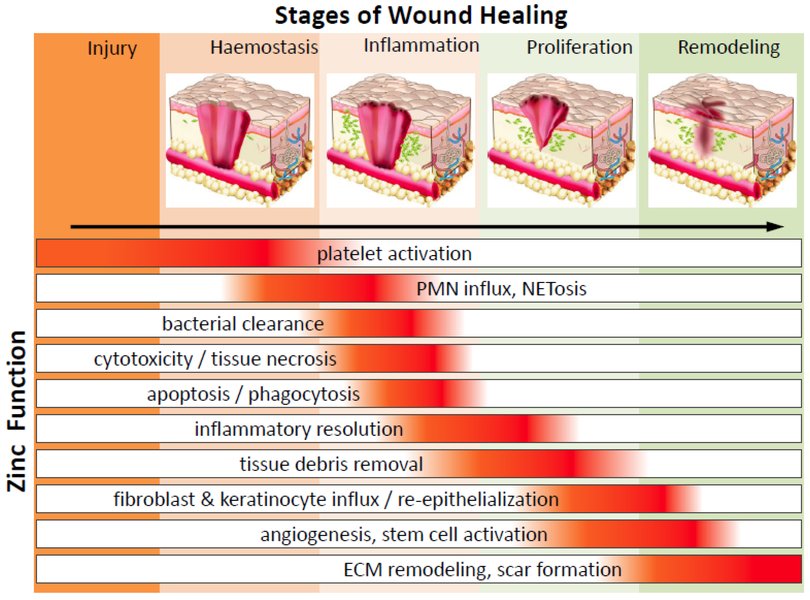
Illustrative diagram showing the different phases of wound healing, including inflammation, proliferation (which includes epithelialization and angiogenesis), and remodeling. Beta-sitosterol influences multiple stages.
Key Mechanisms Driving Healing
The efficacy of beta-sitosterol is not limited to epithelialization; it influences a cascade of biological processes crucial for comprehensive wound repair.
Anti-inflammatory Action
Chronic or excessive inflammation can impede healing. Beta-sitosterol exhibits potent anti-inflammatory properties, partly by inhibiting signaling pathways like NF-κB and reducing the expression of pro-inflammatory cytokines such as IL-1β and TNF-α. This modulation of the inflammatory response helps shorten the inflammatory phase, reducing pain and swelling, and preventing excessive tissue damage and fibrosis, thereby creating a better environment for subsequent repair processes.
Promotion of Angiogenesis
Angiogenesis, the formation of new blood vessels from pre-existing ones, is vital for supplying oxygen, nutrients, and growth factors to the healing tissue. Beta-sitosterol has been shown to promote angiogenesis. Studies on diabetic ulcer wounds in rats revealed that beta-sitosterol treatment enhanced neovascularization, enriching signaling pathways such as MAPK, mTOR, and VEGF, which are critical for vascular growth and tissue regeneration.
Enhancement of Collagen Deposition
Collagen is the primary structural protein in the skin, providing strength and integrity to the healing tissue. Beta-sitosterol stimulates collagen synthesis and deposition by fibroblasts. Increased and well-organized collagen fibers contribute to stronger repaired tissue and can influence the quality of scar formation. Comparative studies have demonstrated enhanced collagen content in beta-sitosterol-treated wounds.
Macrophage Polarization
Beta-sitosterol influences macrophage activity, promoting a shift towards M2 macrophages. M2 macrophages are associated with the resolution of inflammation and tissue repair, releasing anti-inflammatory cytokines and growth factors that support cell proliferation and matrix remodeling, further aiding the healing cascade.

Classification of burn injuries by depth (Superficial, Superficial Partial-Thickness, Deep Partial-Thickness, Full-Thickness). Beta-sitosterol has shown efficacy across various burn depths.
Numerical Insights: Quantifying Beta-Sitosterol's Efficacy
While the biological mechanisms are compelling, the numerical data from various studies further underscore beta-sitosterol's effectiveness.
Accelerated Healing Times and Wound Closure
- Time to Complete Healing: Clinical observations and comparative studies suggest that beta-sitosterol-containing ointments can reduce the overall healing time. For instance, in moderate burns, wounds treated with beta-sitosterol healed, on average, 3-5 days sooner than those treated with some conventional therapies like silver sulfadiazine.
- Wound Size Reduction: Topical application of beta-sitosterol has led to a statistically significant decrease in wound size. Some studies have reported up to a 30-50% faster reduction in the wound or burn area within the first week of treatment.
- Epithelialization Rates in Burns: In studies involving children with second and third-degree burns (up to 20% Total Body Surface Area - TBSA), beta-sitosterol ointment facilitated spontaneous healing of second-degree burns with normal skin regeneration. For third-degree burns, it promoted rapid eschar liquefaction and early granulation tissue formation (often within the first week), leading to successful skin graft take and complete epithelialization of treated areas.
Cellular and Molecular Metrics
- Enzyme Inhibition: Some beta-sitosterol derivatives have shown potent inhibitory activity against Na+/K+-ATPase, an enzyme involved in cell growth regulation. IC50 values for potent derivatives have been reported as low as 2.2 μM, compared to 7.6 μM for pure beta-sitosterol, indicating enhanced bioactivity. These derivatives demonstrated high wound healing activity in vivo, accelerating the healing process.
- Antimicrobial Action: While beta-sitosterol itself has modest direct antimicrobial activity, formulations like MEBO (which often include other antimicrobial plant extracts like berberine) exhibit a definite antimicrobial action effective against resistant organisms, crucial for preventing infection and ensuring uninterrupted healing.
The following table summarizes some of the key numerical findings associated with beta-sitosterol treatment in wound and burn healing:
| Parameter | Observed Effect with Beta-Sitosterol | Notes |
|---|---|---|
| Time to Epithelialization (Animal Models) | ~7–10 days for complete sealing | Significantly faster than untreated controls. |
| Reduction in Healing Time (Moderate Burns) | 3-5 days sooner | Compared to some standard treatments. |
| Wound Size Reduction (First Week) | Up to 30-50% faster | Compared to untreated controls. |
| Beta-Sitosterol Concentration in MEBO | Typically 0.25% | Commonly used effective concentration. |
| Angiogenesis | Increased capillary density | Quantitative histological analyses in animal models. |
| Collagen Deposition | Enhanced amount and organization | Contributes to improved wound strength. |
| IC50 for Na+/K+-ATPase Inhibition (Derivatives) | As low as 2.2 μM | Indicating enhanced bioactivity related to cell proliferation. |
Visualizing Beta-Sitosterol's Healing Profile
To better understand the comparative effectiveness of beta-sitosterol, the radar chart below illustrates its impact on various crucial aspects of wound healing. The scores are representative, based on collective findings from multiple studies, comparing beta-sitosterol's general performance against a hypothetical baseline (e.g., minimal intervention or less effective treatments). Higher scores indicate greater positive impact.
This chart visually summarizes how beta-sitosterol generally outperforms baseline conditions across key healing metrics, highlighting its comprehensive benefits in wound care.
Mapping Beta-Sitosterol's Multifaceted Role in Healing
Beta-sitosterol's impact on wound healing is complex, involving various interconnected biological processes. The mindmap below illustrates these multifaceted roles, from its direct effects on cells involved in repair to its broader influence on the wound environment.
This mindmap provides a visual overview of how beta-sitosterol orchestrates various healing processes, leading to improved outcomes in the management of wounds and burns.
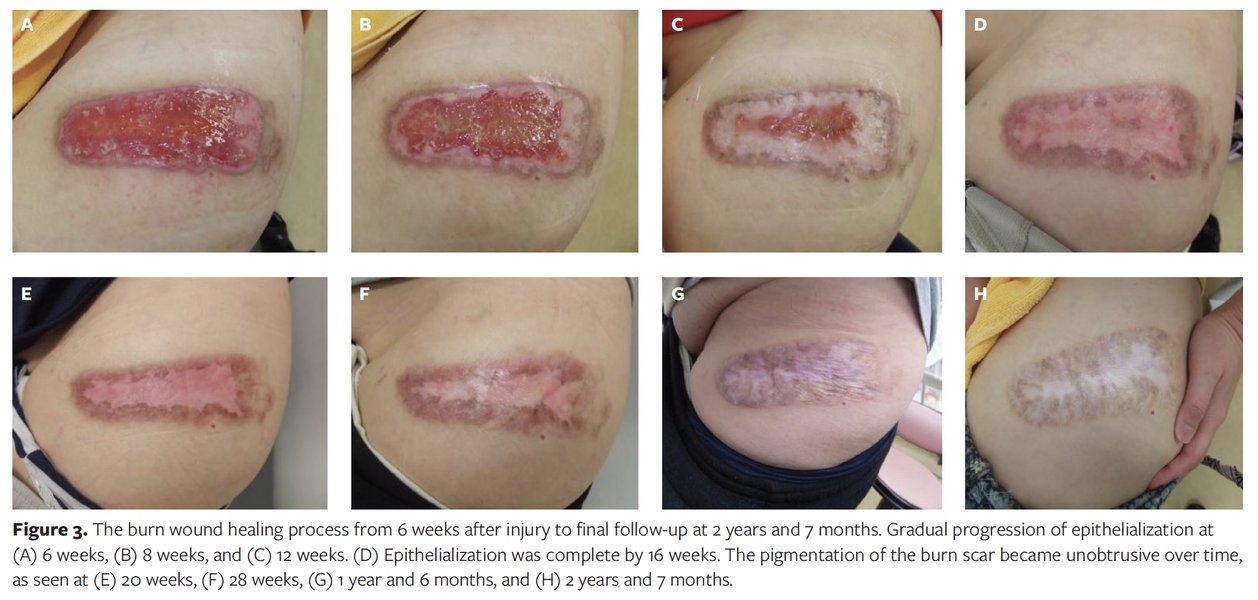
Image depicting the stages of healing in a full-thickness burn wound, a scenario where beta-sitosterol-containing ointments have shown utility in promoting granulation and epithelialization.
Frequently Asked Questions (FAQ)
What is beta-sitosterol and where is it found?
Beta-sitosterol is a type of phytosterol, which is a plant-derived sterol compound structurally similar to cholesterol. It is naturally present in a wide variety of plants, including fruits, vegetables, nuts, and seeds. It's a key component of many herbal remedies and is also isolated for use in dietary supplements and topical medical preparations due to its various health benefits, including wound healing.
How does beta-sitosterol specifically promote full epithelialization?
Beta-sitosterol promotes full epithelialization by stimulating the migration and proliferation of keratinocytes (skin cells), which are essential for covering the wound surface. It also helps in creating a favorable wound environment by reducing inflammation, promoting angiogenesis (new blood vessel formation for nutrient supply), and enhancing the continuity of the basement membrane, which is the foundation for new epithelial tissue. This leads to faster and more complete skin barrier restoration.
Is beta-sitosterol effective for all types of burns?
Beta-sitosterol, particularly in formulations like MEBO, has shown efficacy in treating various types of burns, including first-degree (e.g., sunburns), second-degree (superficial and deep partial-thickness), and even in managing third-degree (full-thickness) burns. In third-degree burns, it aids in debridement, eschar liquefaction, and preparing the wound bed for skin grafting by promoting granulation tissue formation.
Are there any known side effects of topical beta-sitosterol?
Topical application of beta-sitosterol, as in ointments like MEBO, is generally considered safe and well-tolerated. Adverse reactions are rare. The formulations are designed to be non-irritating and to support a moist healing environment. As with any topical product, individual sensitivities can occur, but widespread systemic side effects from topical use are not commonly reported. Studies have highlighted its safety, even in pediatric populations.
How quickly can results be seen with beta-sitosterol treatment for wounds or burns?
The speed of results can vary depending on the type, size, and depth of the wound or burn, as well as individual patient factors. However, benefits like pain relief and initial signs of healing (e.g., reduced inflammation, start of granulation) can often be observed within a few days of starting treatment. Significant wound size reduction (e.g., 30-50%) has been noted within the first week in some studies, and complete epithelialization in animal models has been reported within 7-10 days for certain wound types.
Recommended Further Exploration
- What are the comparative outcomes when beta-sitosterol treatments are used versus other standard topical agents for burn care?
- How does beta-sitosterol specifically influence the cellular and molecular pathways to improve healing in chronic diabetic wounds?
- Can combining beta-sitosterol with other natural compounds enhance its wound healing efficacy further?
- What is known about the quality of scarring and long-term cosmetic appearance of skin after treatment with beta-sitosterol-based ointments?
References

Last updated May 8, 2025