
Mastering Bibliography Organization: A Comprehensive Guide to Alphabetical Ordering
Unlock the secrets to perfectly ordered bibliographies, enhancing clarity and academic rigor in your work.
Key Insights into Bibliography Alphabetization
- Primary Rule: Author's Last Name First. The foundational principle across most citation styles (MLA, APA, Chicago) is to alphabetize entries by the last name (surname) of the primary author.
- Handling Sources Without an Author: Prioritize the Title. If an author is not identified, the entry is alphabetized by the work's title, strictly ignoring initial articles such as "A," "An," or "The."
- Consistency is Crucial Across Citation Styles. While general rules apply, specific nuances exist for MLA, APA, and Chicago styles, particularly concerning multiple works by the same author or organizational authors.
Organizing a bibliography alphabetically is a cornerstone of academic writing, ensuring that readers can easily locate sources and that your work adheres to professional standards. The primary method for arranging entries is by the author's last name. However, when an author is absent, the rules shift to prioritize the title of the work or, in specific cases, the name of the organization or website. This comprehensive guide will delve into these rules, providing clear, actionable steps for constructing a well-organized bibliography, regardless of the citation style you are using.
The Core Principle: Alphabetizing by Author's Last Name
The fundamental rule for alphabetizing a bibliography is to arrange entries by the last name of the first author listed. This "letter-by-letter" method means you compare the first letter, then the second, and so on, until a difference in spelling determines the order.
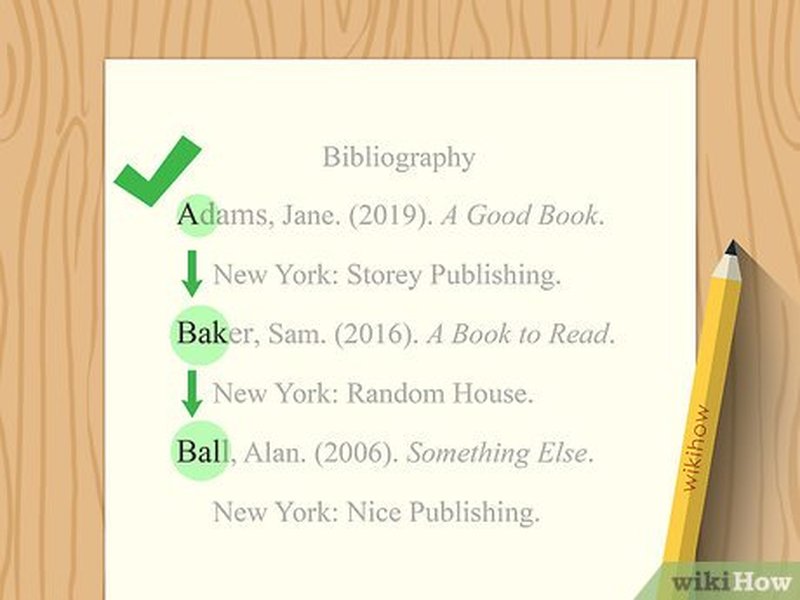 A visual representation of sorting bibliography entries by author's last name.
Navigating Multiple Authors with the Same Surname
If you have multiple works by different authors who share the same last name, the entries should be further alphabetized by their first names or initials. For example, "Smith, A." would precede "Smith, J."
Ordering Multiple Works by the Same Author
When an author has several works included in your bibliography, the ordering rules can vary slightly depending on the citation style.
Chronological vs. Title-Based Ordering
- APA Style: Works by the same author are typically listed chronologically, from the earliest publication date to the latest. If multiple works by the same author were published in the same year, they are then alphabetized by their titles.
- MLA and Chicago Styles: These styles generally list multiple works by the same author alphabetically by title (ignoring initial articles like "A," "An," or "The").
Handling Sources Without a Named Author
When a source lacks a clearly identifiable author, the alphabetization shifts from the author's name to the title of the work. This is a common scenario for certain types of web pages, anonymous works, or organizational publications.
 An example demonstrating how titles are used for alphabetization when an author is absent.
Alphabetizing by Title: The "First Significant Word" Rule
When alphabetizing by title, you must disregard initial definite or indefinite articles ("A," "An," or "The"). For instance, "The Guardian" would be alphabetized under "G" for "Guardian," not "T." This ensures consistency and logical organization.
When to Use a Website or Organization Name as the Author
While generally, you should prioritize the title if no author is present for web sources, there are exceptions. If the website itself acts as the author (e.g., a corporate or institutional author like the "American Psychological Association" or "World Health Organization"), then the organization's name is used for alphabetization. Treat it as you would a personal author.
Nuances Across Major Citation Styles
While the core principles of alphabetization remain consistent, each major citation style—MLA, APA, and Chicago—has specific guidelines that warrant attention. Understanding these variations is crucial for academic integrity.
MLA (Modern Language Association) Style
- Works Cited: MLA bibliographies, known as "Works Cited" pages, are alphabetized by the last name of the first author or by the title if no author is listed.
- Initial Articles: Initial articles ("A," "An," "The") in titles are always ignored for alphabetization.
- Multiple Works by Same Author: MLA typically lists multiple works by the same author alphabetically by title, not chronologically by date.
APA (American Psychological Association) Style
- Reference List: APA reference lists are alphabetized by the last name of the first author.
- Unknown Author: If the author is unknown, the source title is moved to the author position and used for alphabetization, ignoring initial articles.
- Multiple Works by Same Author: Works by the same author are arranged chronologically from earliest to latest publication. If two works have the same publication date, they are ordered alphabetically by title. APA uses a strict "letter-by-letter" system.
Chicago (Chicago Manual of Style) Style
- Bibliography: Chicago style bibliographies are generally alphabetized by the author's last name or by title if no author is present.
- Initial Articles: Similar to other styles, initial articles ("A," "An," "The") are disregarded when alphabetizing by title.
- Multiple Works by Same Author: If there are multiple works by the same author, they are listed alphabetically by title (ignoring articles) before any co-authored works by that individual. Some specific contexts might call for chronological ordering.
Practical Application and Tools for Organization
Creating a perfectly alphabetized bibliography can be a meticulous task, but various tools and techniques can streamline the process.
Illustrative Table of Alphabetization Rules
To summarize the key rules and nuances discussed, the following table provides a quick reference for bibliography alphabetization:
| Scenario | Primary Alphabetization Rule | Secondary Rule (if applicable) | Common Citation Style Nuances |
|---|---|---|---|
| Single Author | Author's Last Name | N/A | Consistent across all styles. |
| Multiple Authors, Same Last Name | Author's Last Name | First Name or Initials | Consistent across all styles. |
| Multiple Works by Same Author | Author's Last Name | By Title (ignoring articles) or Chronological Date | MLA/Chicago: By Title. APA: Chronological, then By Title for same year. |
| No Named Author | First Significant Word of Title (ignoring "A," "An," "The") | N/A | Consistent across all styles. |
| Organizational Author | Organization Name | N/A | Treated as a personal author. |
| Title Starts with Numeral | Treat Numeral as Spelled Out | N/A | e.g., "360.com" under "T" for "Three Hundred Sixty." |
Leveraging Digital Tools for Efficiency
In today's digital age, numerous online tools and software can significantly simplify the process of alphabetizing your bibliography:
- Online Alphabetizers: Websites dedicated to alphabetizing lists can quickly sort your copied and pasted references.
- Citation Generators: Tools like Bibliography.com's generator can automatically create citations in your chosen style and often arrange them alphabetically.
- Reference Management Software: Programs such as Zotero, Mendeley, or EndNote allow you to manage your sources, generate citations, and compile bibliographies in various formats, ensuring correct alphabetical order.
The Interplay of Organization and Academic Integrity
Properly organizing your bibliography goes beyond mere formatting; it's a critical component of academic integrity. A well-structured bibliography allows readers to verify your sources, explore your research, and understand the intellectual foundation of your work.
The radar chart above illustrates the comparative strengths of author-based versus title-based bibliography organization across several key criteria, alongside the overall importance of meticulous bibliography organization. Author-based organization excels in clarity of source attribution and reader navigation, as it's the most intuitive method. Title-based organization becomes critical for handling special cases where no author is present, demonstrating high accuracy when executed correctly by ignoring initial articles. Consistency in formatting and adherence to style guides are vital for both approaches, highlighting their collective contribution to a professionally presented bibliography. The overall importance section emphasizes that a well-organized bibliography is a fundamental aspect of credible academic work, supporting discoverability and validation of research sources.
Understanding the "Why": The Purpose of Alphabetical Order
The practice of alphabetizing bibliographies serves multiple crucial purposes in academic and professional contexts. It is not merely a stylistic choice but a functional requirement that enhances the usability and credibility of your work.
The mindmap above visually articulates the multifaceted reasons behind alphabetizing a bibliography. At its core, the practice enhances reader access by allowing for quick source location and promoting a logical flow through your references. It upholds academic standards, bolstering the credibility and authority of your work while also serving as a critical measure to reduce the risk of plagiarism. Furthermore, alphabetical ordering promotes consistency in formatting, making the bibliography easier to review and ensuring a standardized presentation. Lastly, it critically facilitates cross-referencing, providing a seamless link between in-text citations and the full bibliographic entries.
Video Resource: Alphabetizing References in Word
For those who frequently use Microsoft Word for academic writing, mastering the built-in features for bibliography management can save significant time and effort. The video below provides a practical demonstration of how to arrange your reference list into alphabetical order efficiently within Word, a skill particularly useful for adhering to styles like APA.
This video, "Alphabetizing Your Reference List," directly addresses the practical aspect of organizing bibliographies. It focuses on using Microsoft Word's features to sort references alphabetically, a common requirement, especially for APA style. By demonstrating how to utilize word processing tools, it complements the theoretical rules of alphabetization, providing a valuable resource for students and researchers looking to streamline their bibliography creation process. The tutorial illustrates the ease with which one can ensure a meticulously ordered reference list, thereby improving the overall professionalism and usability of academic papers.
Frequently Asked Questions (FAQ)
What is the primary rule for alphabetizing a bibliography?
How do I alphabetize a source if there is no author?
Should I alphabetize by website name if there's no author?
How do different citation styles handle multiple works by the same author?
What if a title starts with a number?
Conclusion
Properly organizing a bibliography alphabetically, whether by author's last name or by title, is a fundamental skill in academic and professional writing. This practice ensures that your work is clear, consistent, and adheres to established academic standards. By understanding the core rules and the specific nuances of different citation styles, you can create bibliographies that are not only accurate but also highly accessible to your readers. Leveraging available digital tools can further simplify this process, allowing you to focus on the content and quality of your research.
Recommended Further Reading
- Explore detailed MLA bibliography formatting guidelines for advanced scenarios.
- Discover advanced APA reference list organization tips for complex sources.
- Review comprehensive Chicago style bibliography examples for various source types.
- Compare the best citation management software to automate your bibliography creation.