
Unlock Bicep Growth Without Derailing Your Bench Press: Your 12-Week Hypertrophy Plan
A specialized program to build impressive biceps while ensuring your strength gains on the bench press continue an upward trajectory.
You're dedicated to your 5x5 bench press routine and now want to focus on building bigger, more defined biceps on your alternate training days. This is a common and achievable goal! Transitioning from shrugs to a targeted biceps hypertrophy program requires a smart approach to maximize muscle growth, prevent injuries, and, crucially, ensure it doesn't negatively impact your bench press progression. This comprehensive 12-week plan is designed with your specific needs and equipment (barbell, EZ barbell, dumbbells, cables) in mind, focusing on evidence-based hypertrophy principles.
Key Highlights of Your Biceps Program
- Strategic Bicep Specialization: This program is meticulously designed to fit alongside your existing 5x5 bench press routine, ensuring bicep development enhances, rather than hinders, your primary strength goals.
- Progressive Overload & Exercise Variety: You'll systematically increase the challenge to your biceps using a mix of exercises targeting different muscle fibers, ensuring continuous adaptation and growth over 12 weeks.
- Injury Prevention & Optimal Recovery: Emphasis on proper form, controlled movements, and adequate rest is built-in to keep you training consistently and safely, paving the way for sustained gains.
Understanding Your Biceps & The Path to Growth
Before diving into the program, let's briefly touch upon the muscles we're targeting and how they grow.
Biceps Anatomy 101
Your "biceps" are primarily composed of three muscles:
- Biceps Brachii (Short Head): Located on the inner side of the upper arm, contributing to arm thickness.
- Biceps Brachii (Long Head): Runs along the outer side of the upper arm, crucial for creating the "peak" of the bicep.
- Brachialis: Lies underneath the biceps brachii and contributes significantly to upper arm thickness, pushing the biceps up and making it appear larger.
- Brachioradialis: A forearm muscle that also assists in elbow flexion, especially with neutral or pronated grips (like hammer curls or reverse curls).
A well-rounded program will target all these areas for balanced and aesthetically pleasing arm development.
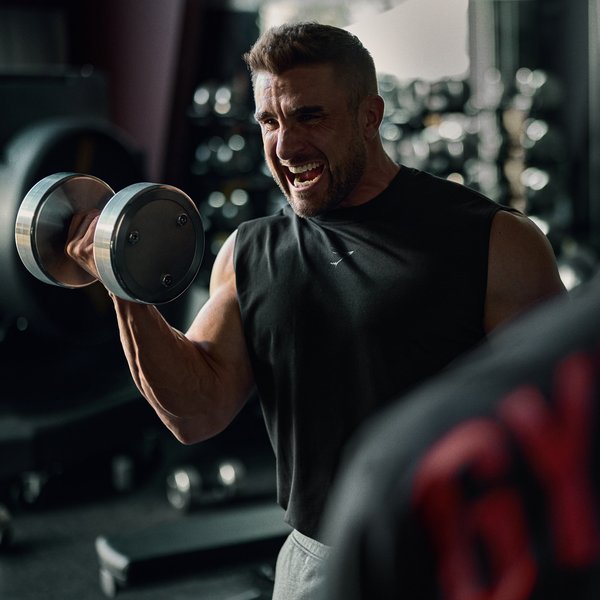
Targeting different heads of the biceps is key for complete development.
Core Principles of Muscle Hypertrophy
Muscle hypertrophy (growth) is primarily driven by:
- Progressive Overload: Gradually increasing the demands placed on your muscles over time. This can be through lifting heavier weights, doing more reps/sets, or improving form and control.
- Mechanical Tension: Lifting challenging weights through a full range of motion.
- Muscle Damage: Micro-tears in muscle fibers that stimulate repair and growth (this is the soreness you often feel).
- Metabolic Stress: The "burn" or "pump" feeling, often achieved with moderate to higher reps and shorter rest periods.
- Adequate Nutrition & Recovery: Muscles grow during rest, fueled by sufficient protein and calories. Sleep is paramount.
Crafting Your 12-Week Biceps Hypertrophy Blueprint
This program is built upon the following pillars to maximize your bicep growth without compromising your 87.5 kg 5x5 bench press progression or leading to injury.
Program Design Philosophy
Volume and Frequency
You'll train biceps 3 times per week, with each session comprising 6 working sets. This moderate volume is effective for stimulating hypertrophy in a smaller muscle group like the biceps, especially when combined with good intensity and exercise selection, and it helps manage fatigue to protect your bench press performance. Your current biceps work (reverse barbell curls at 17.5 kg and hammer curls at 10 kg) provides a good reference for starting weights.
Progressive Overload Strategy
The cornerstone of this program. Each week, or every few weeks, you'll aim to:
- Increase the weight lifted for the target rep range.
- Perform more repetitions with the same weight.
- In later phases, potentially add a set to a key exercise if recovery allows, or use intensity techniques.
- Improve exercise form and mind-muscle connection.
Exercise Variety
We'll use your available equipment (barbells, EZ barbells, dumbbells, cables) to incorporate a mix of exercises. This ensures all aspects of the biceps and related elbow flexors are targeted from different angles and with varying resistance profiles, promoting balanced development and preventing plateaus.
Minimizing Bench Press Interference
Biceps are involved as stabilizers in the bench press. While stronger biceps can be beneficial, excessive bicep fatigue could potentially affect your pressing. This program mitigates this by:
- Keeping direct bicep volume moderate (6 working sets per session).
- Scheduling bicep workouts on non-bench days, ideally allowing at least one day of rest or a lighter activity day before a heavy bench session if possible (e.g., Biceps Day 1 after Bench Day 1).
- Focusing on controlled movements rather than ego lifting, which reduces systemic fatigue.
A sample weekly schedule could be:
- Monday: Bench Press (5x5)
- Tuesday: Biceps Hypertrophy Session 1
- Wednesday: Bench Press (5x5)
- Thursday: Biceps Hypertrophy Session 2
- Friday: Bench Press (5x5)
- Saturday: Biceps Hypertrophy Session 3
- Sunday: Rest
Injury Prevention
This is paramount. Strategies include:
- Thorough Warm-ups: 5-10 minutes of light cardio and dynamic arm/shoulder stretches before each session.
- Proper Form: Prioritize technique over weight. Avoid swinging or using momentum. Controlled eccentrics (lowering phase) are crucial.
- Listen to Your Body: If you feel pain (not muscle burn), stop or modify the exercise. Don't push through sharp or joint pain.
- Gradual Progression: Don't increase weight too quickly.
- Cool-downs: Gentle static stretches for the biceps and forearms after each workout.
The 12-Week Biceps Hypertrophy Program
This program is divided into three 4-week phases. Aim for a weight that challenges you within the target rep range, leaving 1-2 Reps in Reserve (RIR) – meaning you could have done 1-2 more reps with good form if you pushed to failure. Rest 60-90 seconds between sets.
| Week | Phase Focus | Biceps Session 1 (e.g., Tuesday) | Biceps Session 2 (e.g., Thursday) | Biceps Session 3 (e.g., Saturday) | Notes & Progression Guidelines |
|---|---|---|---|---|---|
| Phase 1: Foundation & Form (Weeks 1-4) | |||||
| 1-4 | Mastering form, establishing mind-muscle connection, building work capacity. |
1. EZ Bar Curl: 3 sets x 8-12 reps 2. Dumbbell Hammer Curl: 3 sets x 10-15 reps |
1. Barbell Reverse Curl: 3 sets x 10-15 reps (start with ~17.5kg) 2. Incline Dumbbell Curl: 3 sets x 8-12 reps |
1. Cable Curl (Straight Bar): 3 sets x 10-15 reps 2. Dumbbell Concentration Curl: 3 sets x 10-15 reps/arm |
Start with weights you can control perfectly for the target reps. Focus on a 2-second lift (concentric), 1-second squeeze at the top, and 3-second lower (eccentric). If you hit the upper end of the rep range for all sets, increase weight by 2.5-5% next week. Your current 17.5kg for reverse curls and 10kg for hammer curls are good starting points for those specific exercises. |
| Phase 2: Intensification & Growth (Weeks 5-8) | |||||
| 5-8 | Increasing intensity via weight, slight volume increase on one exercise. |
1. Barbell Curl (Straight or EZ): 3-4 sets x 6-10 reps 2. Alternating Dumbbell Hammer Curl: 3 sets x 8-12 reps/arm |
1. Preacher Curl (EZ Bar or Dumbbell): 3 sets x 8-12 reps 2. Cable Rope Hammer Curl: 3 sets x 10-15 reps |
1. Incline Dumbbell Curl (focus on stretch): 3-4 sets x 8-12 reps 2. Reverse Barbell Curl: 3 sets x 8-12 reps |
Increase weight from Phase 1. Aim for the lower end of the rep range with heavier weights. For the exercise with 3-4 sets, you can do 3 sets in week 5-6 and progress to 4 sets in week 7-8 if recovery is good. Prioritize controlled negatives. |
| Phase 3: Peaking & Consolidation (Weeks 9-12) | |||||
| 9-12 | Pushing strength in hypertrophy ranges, incorporating intensity techniques if appropriate (e.g., drop sets on last set of one exercise per workout). |
1. Heavy Barbell/EZ Bar Curl: 3 sets x 5-8 reps 2. Concentration Curl (Dumbbell): 3 sets x 10-12 reps/arm (focus on peak contraction) |
1. Cable Curl (Single Arm, across body): 3 sets x 10-15 reps/arm 2. Dumbbell Hammer Curl (Heavy): 3 sets x 6-10 reps |
1. Preacher Curl (Machine or EZ Bar): 3 sets x 8-10 reps (consider a drop set on final set) 2. Reverse Grip Cable Curl: 3 sets x 10-15 reps |
Focus on lifting heavier while maintaining excellent form. If using an intensity technique like a drop set, do it on the final set of only one exercise per workout to manage fatigue. Ensure bench press performance is not suffering; if so, slightly reduce bicep intensity or volume. |
Your Arsenal: Bicep Exercise Deep Dive
Here's a closer look at some key exercises in your program and why they're effective:
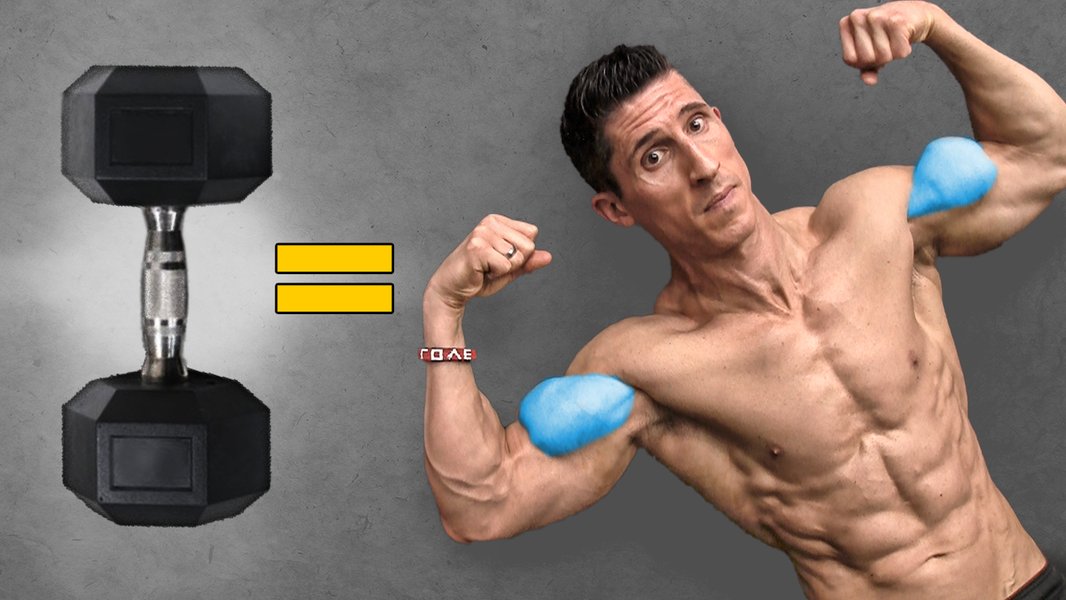
Dumbbells offer versatility for targeting biceps from multiple angles.
Barbell / EZ Bar Curls
Why: Classic mass builders. The EZ bar can be more wrist-friendly for some. Allows for heavier loads, targeting both heads of the biceps brachii.
How:
Keep elbows pinned to your sides, avoid using momentum or leaning back. Control the weight throughout the movement.Dumbbell Curls (Incline, Concentration, Hammer)
Incline Dumbbell Curl:
Why: Performed on an incline bench, this position pre-stretches the long head of the biceps, leading to a greater range of motion and growth stimulus.Concentration Curl:
Why: Excellent for isolating the biceps and focusing on the "peak." Minimizes cheating.Hammer Curl:
Why: Neutral grip targets the brachialis and brachioradialis, adding thickness and width to your arms. Also good for forearm development.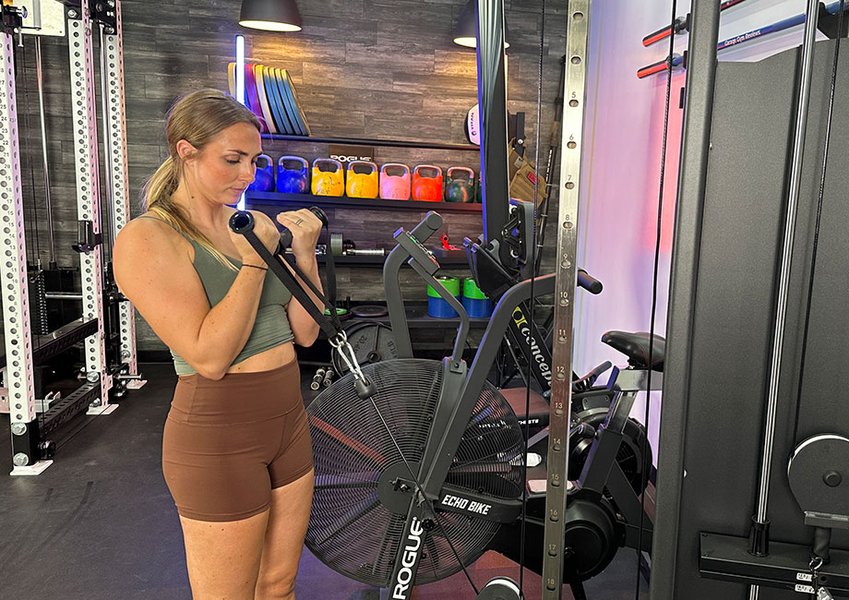
Cable exercises provide constant tension throughout the bicep curl.
Cable Curls (Straight Bar, Rope, Single Arm)
Why: Cables provide constant tension throughout the entire range of motion, which can be beneficial for hypertrophy. Various attachments allow for hitting the muscle from different angles.
How:
Maintain control and avoid letting the weight stack jerk. Focus on squeezing the biceps at the top.Reverse Curls (Barbell or Cable)
Why: Pronated (palms down) grip emphasizes the brachialis and brachioradialis, contributing to fuller arms and stronger grip.
Preacher Curls (EZ Bar, Dumbbell, or Machine)
Why: Isolates the biceps by preventing shoulder involvement and momentum. Great for developing the lower part of the biceps and the short head.
Bicep Exercise Effectiveness Radar
This chart offers a visual comparison of common bicep exercises based on various hypertrophic factors. These are general ratings and individual experiences may vary. The scale is 1 (Lower) to 5 (Higher).
Visualizing Your Bicep Hypertrophy Strategy
This mindmap illustrates the interconnected components of your 12-week biceps growth plan, emphasizing how each element contributes to your overall success while protecting your bench press progress.
(Weight, Reps, Sets, Form)"] id1b["Exercise Variety
(Angles, Grips, Equipment)"] id1c["Optimal Volume & Intensity
(6 sets/session, RIR 1-2)"] id1d["Consistency is Key"] id2["12-Week Program Structure"] id2a["Phase 1: Foundation (Wks 1-4)"] id2b["Phase 2: Intensification (Wks 5-8)"] id2c["Phase 3: Peaking (Wks 9-12)"] id2d["3 Bicep Sessions / Week"] id3["Key Considerations"] id3a["No Negative Bench Impact
(Fatigue Management, Scheduling)"] id3b["Injury Prevention Focus
(Warm-up, Form, Cool-down)"] id3c["Nutrition for Growth
(Protein, Caloric Surplus)"] id3d["Adequate Rest & Recovery
(Sleep, Listen to Body)"] id4["Exercise Selection Categories"] id4a["Mass Builders
(Barbell/EZ Curls)"] id4b["Peak & Isolation
(Concentration, Preacher Curls)"] id4c["Width & Thickness
(Hammer, Reverse Curls)"] id4d["Constant Tension
(Cable Variations)"]
Expert Insights: Perfecting Your Bicep Training
To complement your program, this video from Athlean-X offers valuable insights into structuring an effective biceps workout, covering aspects like exercise selection, sets, and reps which align with the principles of your new plan. Understanding the 'why' behind your training can significantly boost your results.
This video emphasizes the importance of hitting the biceps from different angles and using proper form, concepts that are integral to the 12-week program designed for you. It discusses how to effectively target both the long and short heads of the biceps, as well as the brachialis, for complete arm development – precisely what your varied exercise selection aims to achieve.
Frequently Asked Questions (FAQ)
How much rest should I take between sets?
For hypertrophy, resting 60-90 seconds between sets is generally optimal. This allows for sufficient recovery to perform the next set with good form and intensity, while also inducing some metabolic stress beneficial for growth.
What if I hit a plateau in my bicep growth or strength?
Plateaus are normal. If you hit one:
- Review your progressive overload: Are you consistently trying to lift more, do more reps, or improve form?
- Check your nutrition and recovery: Are you eating enough calories and protein? Are you getting enough sleep?
- Consider a deload week: Reduce training volume and intensity for a week to allow for full recovery.
- Vary exercises: While this program has variety, after 12 weeks, you might switch some exercises for others you haven't done in a while.
- Change rep ranges or training techniques: You could try a phase of higher reps (15-20) or incorporate intensity techniques like drop sets or rest-pause sets more strategically (but be mindful of recovery).
The program specifies 6 working sets. Can I do more if I feel good?
The program starts with 6 working sets to ensure it doesn't interfere with your bench press recovery and progression. For biceps, a smaller muscle group, this volume, when performed with high intensity and good form, can be very effective. Phase 2 allows for a slight increase on one exercise (3-4 sets). Adding more volume should be done cautiously and only if:
- Your bench press is still progressing well.
- You are recovering adequately (no excessive soreness or fatigue).
- You've been consistent with the program for several weeks.
How important is nutrition for this bicep program?
Extremely important! Muscle growth requires energy and building blocks. You need:
- Sufficient Calories: A slight caloric surplus (eating more calories than you burn) is generally needed to build muscle. Aim for 250-500 calories above your maintenance level.
- Adequate Protein: Protein provides the amino acids necessary for muscle repair and growth. Aim for 1.6-2.2 grams of protein per kilogram of body weight daily.
- Balanced Macronutrients: Don't neglect carbohydrates (for energy) and healthy fats (for hormone production and overall health).
- Hydration: Drink plenty of water.
When can I expect to see results from this program?
Individual results vary based on genetics, consistency, effort, nutrition, and recovery. However, with consistent adherence to this 12-week program:
- You might start feeling stronger and noticing better muscle pumps within the first 2-4 weeks.
- Noticeable changes in muscle size (hypertrophy) typically become more apparent after 6-8 weeks of consistent, progressive training and proper nutrition.
- By the end of 12 weeks, you should see measurable improvements in bicep size and definition, provided all other factors are aligned.
Recommended Further Exploration
To deepen your understanding and optimize your training, consider exploring these related queries:
- How does bicep training affect bench press performance and stabilization?
- Advanced techniques for bicep hypertrophy after completing a 12-week program.
- Nutritional strategies to maximize muscle growth while managing body fat.
- Common mistakes to avoid in bicep training for long-term progress.
References
Last updated May 8, 2025