
Unpacking the "One Big Beautiful Bill": A Comprehensive Analysis of Its Far-Reaching Impact
Examining the Economic, Social, and Fiscal Implications of the Landmark Legislation
Key Highlights of the "One Big Beautiful Bill"
- Extensive Tax Modifications: The bill seeks to make permanent the 2017 Trump tax cuts, introduce new tax exemptions for tips and overtime, and provide deductions for auto loan interest, significantly impacting individual and corporate tax burdens.
- Major Social Safety Net Reforms: It proposes substantial cuts to programs like Medicaid and the Supplemental Nutrition Assistance Program (SNAP), along with stricter work requirements, which could lead to millions losing essential benefits.
- Significant Fiscal Ramifications: Despite claims of economic growth, analyses suggest the bill could add trillions to the national debt while disproportionately benefiting higher-income individuals and corporations, raising concerns about its long-term financial sustainability and equity.
The "One Big Beautiful Bill," a comprehensive legislative package recently passed by the House of Representatives, represents a sweeping overhaul of U.S. tax policy, social safety nets, and fiscal priorities. Dubbed by its proponents as a catalyst for economic growth and individual prosperity, the bill has ignited intense debate over its multifaceted implications. This analysis delves into the core components of the bill, meticulously examining its intended benefits and potential drawbacks across various sectors of American society and the economy.
The Genesis and Intent Behind the "One Big Beautiful Bill"
A Vision for "America First" Economic Resurgence
The "One Big Beautiful Bill Act of 2025" (OBBBA) is positioned by its Republican authors as a legislative vehicle to deliver on President Trump's "America First" agenda. This reconciliation bill, designed to set the budget for the year ahead and raise the debt ceiling, reflects a clear prioritization of tax cuts, deregulation, and specific spending allocations. Proponents argue that its measures will stimulate economic growth, create jobs, and allow Americans to retain more of their earnings, thereby fostering greater prosperity and opportunity.
Driving Principles: Tax Cuts and Fiscal Conservatism (with a twist)
At its heart, the OBBBA aims to make permanent many provisions of the 2017 Tax Cuts and Jobs Act (TCJA), which lowered taxes for individuals and corporations. This extension is touted as a critical step to prevent looming tax hikes and ensure continued economic stability. Additionally, the bill includes provisions aimed at reducing government spending on social programs, securing borders, and strengthening the military, aligning with a broader fiscal conservative philosophy. However, critics point out that despite claims of fiscal responsibility, the bill is projected to significantly increase the national debt, challenging the traditional conservative stance on deficit reduction.
The Pros: Envisioned Benefits and Economic Stimulus
Fueling Growth and Empowering Taxpayers
Supporters of the "One Big Beautiful Bill" highlight several key areas where they believe the legislation will deliver significant positive impacts. These benefits largely revolve around tax relief, economic incentives, and what they describe as a more streamlined and accountable government.
Extending and Expanding Tax Cuts for Individuals and Businesses
A cornerstone of the bill is the permanent extension of the 2017 Trump tax cuts. This means that lower individual income tax rates, the expanded standard deduction, and the 20% deduction for qualified business income (Section 199A) for pass-through entities would remain in effect. This is anticipated to provide continued tax relief for millions of American families and small businesses, potentially leading to increased disposable income and greater investment. For example, a family of four could see an additional $1,300 tax cut compared to what they pay today, resulting in higher wages and incomes for many Americans. The bill also reintroduces expensing for investment in equipment and domestic research and development (R&D), and brings back the TCJA’s less restrictive limitation on interest deductions, which are seen as crucial for encouraging business investment.
Moreover, the bill introduces several new tax exemptions aimed at specific segments of the workforce. These include:
- No Tax on Tips: This provision would exempt tips from federal income tax, a measure intended to directly benefit service industry workers such as those in restaurants, bars, and beauty salons.
- No Tax on Overtime: Similar to tips, overtime pay would be exempt from federal income tax, aiming to provide additional financial relief for hardworking Americans.
- Auto Loan Interest Deduction: The bill allows for tax deductions on up to $10,000 in interest on auto loans for cars assembled in the U.S., a move designed to incentivize domestic auto purchases and support the American manufacturing sector.
Streamlining Government and Addressing Border Security
Beyond tax policy, the bill also addresses areas such as government efficiency and border security. It includes provisions to eliminate what proponents consider "waste, fraud, and abuse," particularly by ending benefits for non-citizens who are deemed to be "gaming the system." This includes requiring Social Security numbers for individuals claiming tax credits and deductions, ending eligibility for Obamacare premium tax credits and Medicare for undocumented immigrants, and imposing new fees on remittance payments sent by non-U.S. citizens to foreign countries. The bill also earmarks significant funding for border security, including the construction of a border wall and the deployment of advanced technology, fulfilling a key campaign promise. These measures are presented as efforts to restore "sanity to government" and prioritize American citizens.
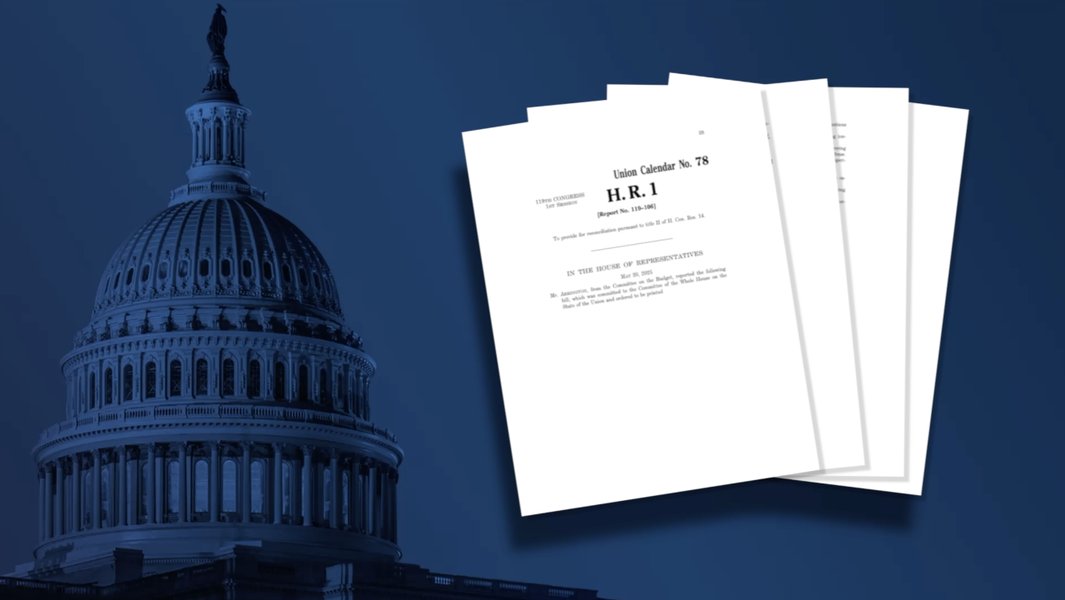
Visual representation of the "Big Beautiful Bill's" projected impact on households.
The Cons: Criticisms and Potential Adverse Consequences
Concerns Over Equity, Social Impact, and Fiscal Responsibility
While proponents champion the bill, a significant chorus of critics, including Democrats, policy think tanks, and healthcare advocates, raises serious concerns about its potential negative repercussions. These criticisms primarily center on issues of equity, the impact on vulnerable populations, and long-term fiscal stability.
Disproportionate Benefits and Increased Debt
A major point of contention is the bill's distributional effects. Analyses from organizations like the Congressional Budget Office (CBO) and the Tax Policy Center suggest that the tax cuts disproportionately favor corporations and wealthy Americans. For instance, the top 20% of earners are projected to receive 60% of the benefits, with the top 1% gaining the most. More than two-thirds of the total tax cuts could go to those with annual incomes of about $217,000 or more. This has led to accusations that the bill is a "giveaway to the rich," further exacerbating income inequality. Furthermore, despite its "fiscally responsible" rhetoric, the bill is projected to add nearly $4 trillion to the national deficit over the next decade, increasing the national debt by an estimated $3.1 trillion, including interest. This level of deficit spending could trigger automatic reductions in critical programs like Medicare, potentially impacting healthcare for senior citizens.
Cuts to Social Safety Net Programs and Healthcare Access
Perhaps the most significant area of concern revolves around the proposed cuts and changes to social safety net programs. The bill aims to slash spending on Medicaid, which provides healthcare to low-income and disabled Americans, and the Supplemental Nutrition Assistance Program (SNAP), which helps families afford groceries.
- Medicaid: The bill imposes the strictest work requirements in Medicaid history. Experts predict that these changes could result in between 8 million and 15 million people losing healthcare coverage. Some analyses suggest as many as 5.2 million people could be removed from Medicaid, with disproportionate impacts in states that expanded Medicaid under the Affordable Care Act.
- SNAP: The bill would reduce spending on food aid by about $267 billion, with forecasts suggesting that approximately a quarter of SNAP recipients, or nearly 11 million people, could leave the program.
Student Loan and Education Impacts
The bill also includes significant changes to federal student loan programs. It proposes repealing student loan relief regulations enacted by the current administration and reducing the number of repayment plans for federally held loans to just two. Additionally, it would impose substantial caps on loans for parents and undergraduate students and eliminate a lending program for future graduate students. These changes could make higher education less accessible and more financially burdensome for many students and families.
Complexity and Special Interest Provisions
Some analyses suggest the bill further complicates the tax code with new rules and compliance costs that may outweigh potential benefits for many taxpayers. Provisions like the "no tax on tips" and "no tax on overtime" come with various conditions that could require extensive IRS guidance. Furthermore, the bill includes tax breaks for specific industries or groups, such as the elimination of a longstanding $200 tax on gun silencers and continued deductions for certain real estate professionals, raising concerns about special interest influence.
To summarize the complex interplay of pros and cons, let's consider a radar chart demonstrating perceived impacts:
This radar chart visually represents the qualitative assessment of various aspects of the "One Big Beautiful Bill." The 'Perceived Pros' dataset shows higher values for areas like "Tax Relief for Wealthy" and "Border Security," reflecting the bill's stated objectives and potential positive impacts for specific groups. Conversely, the 'Perceived Cons' dataset scores highly on "Healthcare Access," "Food Security," and "Student Loan Affordability," indicating the significant concerns raised by critics regarding the bill's social ramifications and impact on vulnerable populations. The chart also highlights differing views on "Economic Growth Potential" and "Fiscal Responsibility/Debt Reduction," underscoring the ongoing debate surrounding the bill's broader economic consequences.
A Deeper Dive: Analyzing Key Policy Changes
Understanding the Specifics and Their Projected Outcomes
To fully grasp the "One Big Beautiful Bill," it's crucial to examine some of its most impactful provisions in detail.
The SALT Deduction Cap
One of the most intensely debated aspects of the bill was the State and Local Tax (SALT) deduction cap. Previously, the 2017 tax law capped this deduction at $10,000, which disproportionately affected taxpayers in high-tax states. The "One Big Beautiful Bill" raises this cap to $40,000 for incomes up to $500,000, with a phase-down for higher incomes. This change was a key demand from House Republicans representing these states and is expected to provide significant tax relief to a segment of higher-income earners.
"MAGA" Accounts and Child Tax Credit
The bill proposes the creation of "Money Account for Growth Advancement" (MAGA) accounts, which are tax-exempt trust accounts for U.S. citizens under age 18. These accounts would receive a one-time $1,000 federal credit for eligible children born between 2025 and 2028, with funds usable for qualified expenses like higher education and first-time home purchases. Additionally, the bill aims to expand and index the Child Tax Credit to inflation, providing further financial relief to families. However, eligibility for refundable tax credits, including the Child Tax Credit, will require a Social Security number, which critics argue excludes certain immigrant families.
Taxation of University Endowments
The legislation also targets "elite" universities with large endowments, proposing to tax certain university endowments at the corporate tax rate. This move is presented as a way to hold these institutions accountable, as some are perceived to operate more like large commercial businesses than centers of higher learning, failing to adequately use their endowments to enhance student services and education.
Investment in Infrastructure and Defense
The bill includes significant investments in infrastructure and defense. This includes $12.5 billion for modernizing the Federal Aviation Administration's air traffic facilities and infrastructure, addressing long-standing issues like staffing shortages and antiquated equipment. It also allocates $150 billion in increased military funding, including authorization for shipbuilding and missile defense systems, alongside billions for border protection. These investments are presented as crucial for national security and economic competitiveness.
Here's a table summarizing the key policy changes and their projected impacts:
| Policy Area | Key Provision | Intended Pros | Potential Cons / Criticisms |
|---|---|---|---|
| Individual Taxes | Permanent extension of 2017 tax cuts; no tax on tips/overtime; auto loan interest deduction. | Increased disposable income, stimulate spending, benefit service workers and auto buyers. | Disproportionately benefits wealthy; temporary nature of some new breaks; adds to national debt. |
| Corporate/Business Taxes | Permanent extension of 2017 corporate rates; expensing for R&D/equipment; 199A deduction. | Encourage business investment, foster economic growth, support small businesses. | Favors large corporations; less effective than other measures for growth; further complicates tax code. |
| Social Safety Net | Stricter Medicaid work requirements; SNAP spending cuts; end benefits for "illegal immigrants." | Reduce "waste, fraud, and abuse"; promote self-sufficiency; secure border. | Millions lose healthcare/food aid; disproportionately affects vulnerable populations; increased poverty. |
| Education/Student Loans | Repeal Biden-era student loan relief; reduce repayment plans; cap student/parent loans. | Fiscal savings for government. | Increased student debt burden; reduced access to higher education; less flexible repayment options. |
| Border Security | Funding for border wall construction; enhanced technology; fees on remittances. | Secure borders; control immigration; eliminate benefits for undocumented individuals. | Ethical concerns over remittance taxes; potential human rights issues; significant cost. |
| Fiscal Impact | Increases debt ceiling; projected multi-trillion dollar deficit increase. | Allows government to meet financial obligations. | Massive increase in national debt; potential cuts to Medicare; intergenerational burden. |
Broader Context and Political Ramifications
The Bill's Journey and Future Prospects
The "One Big Beautiful Bill" passed the House of Representatives by a razor-thin margin, a testament to the intense negotiations and divisions within the Republican party itself. The bill now moves to the Senate, where it is expected to face significant opposition and potential revisions. The reconciliation process allows the bill to pass with a simple majority in the Senate, bypassing the usual 60-vote threshold, but it still faces hurdles, including the need to maintain party unity and navigate procedural challenges.
An unbiased look at the pros and cons of the "Big Beautiful Bill" and its implications for everyday Americans.
This video provides an excellent unbiased overview of the "One Big Beautiful Bill," breaking down its various components and discussing what they could mean for the average American. It delves into the potential tax breaks and budget cuts, offering a balanced perspective that helps to contextualize the complex legislative details presented in this analysis. Understanding these broader implications is vital for comprehending the bill's overall impact.
Frequently Asked Questions (FAQ)
What is the "One Big Beautiful Bill"?
How does the bill affect my taxes?
Will the "Big Beautiful Bill" cut healthcare or food assistance?
What are the main criticisms of the bill?
Conclusion: A Divisive Path Forward
The "One Big Beautiful Bill" stands as a highly contentious piece of legislation, emblematic of the deep ideological divides within American politics. While its proponents envision a future of sustained economic growth, lower taxes, and greater national security, critics foresee a landscape of increased inequality, diminished social safety nets, and an escalating national debt. The bill's journey through Congress reflects a high-stakes battle over the nation's fiscal direction and its commitment to various segments of its population. Its ultimate impact, should it become law, will depend on how its complex provisions interact with economic realities and societal needs, setting a definitive course for the coming years.
Recommended Further Reading
- Explore a detailed analysis of the proposed Medicaid work requirements and their historical context.
- Investigate the long-term economic effects of extensive tax cuts on the national debt and economic growth.
- Understand the social consequences and community impacts of significant reductions to SNAP benefits.
- Learn about the history and procedural significance of budget reconciliation bills in U.S. Congress.