
The Unstoppable Machine: How the 1975-76 Cincinnati Reds Forged a Baseball Dynasty
A look back at the two-year reign of terror by one of MLB's most formidable teams ever assembled.
The mid-1970s in Major League Baseball were dominated by a fearsome force emerging from Cincinnati. The Reds teams of 1975 and 1976, famously dubbed the "Big Red Machine," etched their names into baseball immortality with a combination of potent offense, solid pitching, stellar defense, and an unyielding will to win. Their performance over these two seasons established them as one of the greatest dynasties in the sport's history, a benchmark against which other great teams are often measured.
At a Glance: The Big Red Machine's Peak
- Back-to-Back World Series Champions: The Reds conquered the baseball world in consecutive years, defeating the Boston Red Sox in 1975 and the New York Yankees in 1976.
- The Legendary "Great Eight": Their iconic starting lineup, featuring multiple Hall of Famers, was one of the most potent and balanced offensive units ever seen.
- Unprecedented Postseason Perfection: The 1976 team achieved a flawless 7-0 record in the postseason, a feat unmatched in the divisional playoff era.
The Genesis of a Juggernaut
While the "Big Red Machine" nickname was coined earlier in the 1970s, the 1975 and 1976 seasons represented the absolute zenith of this powerhouse. Under the astute management of Sparky Anderson, the Reds showcased a brand of baseball that was both thrilling and ruthlessly efficient. Their dominance was built on a core of exceptional talent, strategic acumen, and remarkable team chemistry.
The Glorious 1975 Campaign: Champions Forged in Fire
The 1975 Cincinnati Reds were a force to be reckoned with, steamrolling through the regular season and culminating in a dramatic World Series victory.
Regular Season Prowess
The Reds finished with an MLB-best record of 108 wins and 54 losses, clinching the National League West Division by an astounding 20 games over the Los Angeles Dodgers. Their dominance was particularly evident at home in Riverfront Stadium, where they posted a remarkable 64-17 record – still the best home record by any National League team and the second-best in MLB history. They secured their playoff spot on September 7th, the earliest clinch date in a 162-game season at that time.
Offensive Might and Pitching Stability
The offense was a juggernaut, scoring 840 runs, leading the National League. Second baseman Joe Morgan had a spectacular year, earning the National League MVP award. The pitching staff was also elite, boasting a team ERA of 3.37, ranking third in the NL, and allowing only 586 runs. Key starters like Gary Nolan, Jack Billingham, and Don Gullett provided consistent quality innings.
A World Series for the Ages
In the postseason, the Reds first swept the Pittsburgh Pirates in three straight games in the National League Championship Series (NLCS). They then faced the Boston Red Sox in what is widely considered one of the greatest World Series ever played. After a hard-fought, back-and-forth seven-game classic, the Reds emerged victorious. Pete Rose, who batted .370, was named the World Series MVP, delivering clutch performances throughout the series, including the go-ahead single in the 9th inning of Game 7.
The Indomitable 1976 Campaign: Perfection Achieved
Building on their 1975 triumph, the 1976 Reds delivered an even more dominant postseason performance, cementing their legacy as an all-time great team.
Sustained Excellence
The Reds continued their reign in the National League West, finishing with a record of 102 wins and 60 losses, ten games ahead of the Dodgers. Their offense was historically potent, leading the league in nearly every significant category, including runs scored (857), team batting average (.280), on-base percentage (.357), and slugging percentage (.424). They led the NL in hits, doubles, triples, home runs, total bases, stolen bases, walks, and RBI.
An Unstoppable Offense
Joe Morgan captured his second consecutive NL MVP award, a testament to his all-around brilliance. While the pitching staff was still strong (3.51 team ERA, 5th in the NL), it was the offense that truly set this team apart, described by baseball historian Bill James as "probably the most diverse, broad-based offense in the history of baseball."
Flawless Postseason Conquest
The 1976 postseason was a masterclass in dominance. The Reds swept the Philadelphia Phillies in three games in the NLCS. They then advanced to the World Series to face the New York Yankees, where they delivered another stunning sweep in four games. This perfect 7-0 run through the playoffs made them the only team in baseball history to sweep through an entire postseason in the divisional era. Catcher Johnny Bench was named the World Series MVP after batting an incredible .533 with two home runs.
The "Great Eight": Architects of Dominance
Central to the Big Red Machine's success was its legendary starting lineup, affectionately known as the "Great Eight." This remarkable assembly of talent included:
- Pete Rose (Third Base/Outfield): The "Hit King" and ultimate catalyst.
- Joe Morgan (Second Base): A two-time MVP, combining power, speed, and on-base skills.
- Johnny Bench (Catcher): Arguably the greatest catcher of all time, a force offensively and defensively.
- Tony Pérez (First Base): A consistent run-producer and clubhouse leader.
- Dave Concepción (Shortstop): A slick-fielding shortstop with a reliable bat.
- Ken Griffey Sr. (Right Field): A high-average hitter with speed.
- César Gerónimo (Center Field): An exceptional defensive outfielder.
- George Foster (Left Field): A powerful slugger who would later win an MVP award.
Though this exact lineup only started together in 63 regular-season games from its formation on May 9, 1975, through the end of the 1976 season, they played together in all postseason games during this period, becoming synonymous with the team's overwhelming offensive prowess and championship pedigree. Their collective talent, chemistry, and ability to perform in clutch situations were unparalleled.
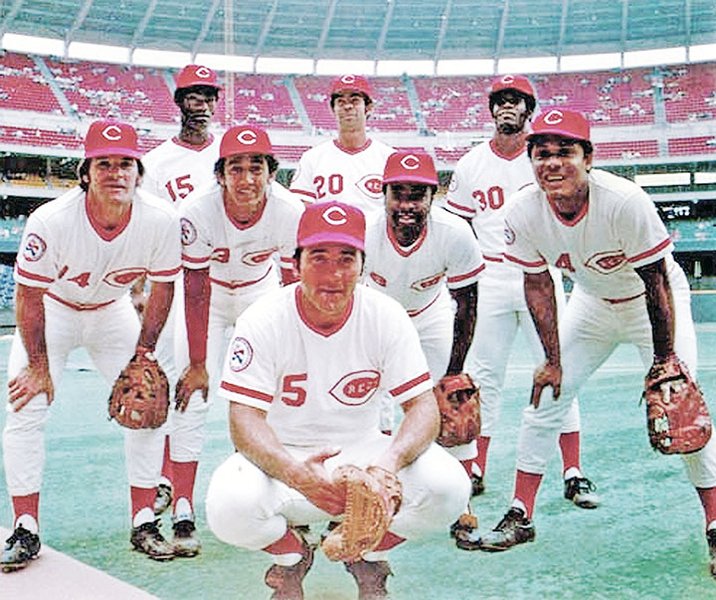
The iconic "Great Eight" starting lineup of the 1975-76 Cincinnati Reds.
Visualizing Team Strengths: A Comparative Look
While both the 1975 and 1976 Reds teams were historically great, they exhibited slightly different strengths. The following chart provides a visual comparison across several key performance indicators, based on their overall impact and achievements during those seasons. The scores are on a scale of 5 to 10, with 10 representing peak historical performance in that category.
As the chart illustrates, the 1975 team perhaps had a slight edge in regular-season wins and overall pitching depth, evidenced by their superior ERA and runs allowed. However, the 1976 team showcased arguably more overwhelming offensive firepower and achieved unparalleled postseason perfection with their flawless playoff run.
The Anatomy of a Dynasty: A Mindmap View
The success of the Big Red Machine was a complex interplay of various factors. This mindmap provides a simplified overview of the core components that contributed to their historic greatness during the 1975-1976 seasons.
(vs. Red Sox)"] id1c["Joe Morgan: NL MVP"] id1d["Pete Rose: WS MVP"] id1e["Stronger Pitching Staff (ERA 3.37)"] id2["1976 Season"] id2a["102-60 Record"] id2b["World Series Champions
(Swept Yankees)"] id2c["Joe Morgan: NL MVP"] id2d["Johnny Bench: WS MVP"] id2e["Historically Dominant Offense"] id2f["Perfect 7-0 Postseason"] id3["Key Strengths"] id3a["\"The Great Eight\" Lineup"] id3b["Manager Sparky Anderson's Leadership"] id3c["Overwhelming Offensive Power & Depth"] id3d["Clutch Hitting & Baserunning"] id3e["Solid Defense"] id3f["Exceptional Team Chemistry"] id4["Enduring Legacy"] id4a["Back-to-Back Championships"] id4b["Considered One of MLB's All-Time Greatest Teams"] id4c["Benchmark for Offensive Excellence"] id4d["Cultural Impact on Cincinnati"]
This mindmap highlights how individual brilliance, strategic leadership, specific team strengths for each season, and ultimately their lasting impact, all combined to create the legend of the Big Red Machine.
Statistical Snapshot: 1975 vs. 1976
A direct statistical comparison further illuminates the nuances of each championship season. Both teams were exceptional, but their paths to glory had distinct characteristics.
| Feature | 1975 Cincinnati Reds | 1976 Cincinnati Reds |
|---|---|---|
| Regular Season Record | 108-54 (.667) | 102-60 (.630) |
| Runs Scored (NL Rank) | 840 (1st) | 857 (1st) |
| Runs Allowed (NL Rank) | 586 (3rd) | 633 (5th) |
| Team ERA (NL Rank) | 3.37 (3rd) | 3.51 (5th) |
| Team Batting Average | .274 | .280 |
| NL MVP | Joe Morgan | Joe Morgan |
| World Series MVP | Pete Rose | Johnny Bench |
| Postseason Record | 7-3 (Won World Series vs. Boston Red Sox) | 7-0 (Won World Series vs. New York Yankees) |
| Key Offensive Trait | Balanced and powerful | Historically dominant across most categories |
| Key Pitching Trait | Deeper, more statistically effective staff | Solid and clutch, supporting massive offense |
This table clearly shows the 1975 team's slight edge in regular-season wins and pitching statistics, while the 1976 team stands out for its sheer offensive dominance and flawless postseason run.
Why They Remain Legends: The Enduring Impact
The 1975-1976 Cincinnati Reds are consistently ranked among the greatest teams in baseball history for several compelling reasons:
- Sustained Excellence: Winning back-to-back World Series titles is a rare achievement, demonstrating remarkable consistency and talent. They were the last National League team to accomplish this until the early 2000s. Their combined regular-season record across these two years was an impressive 210-114 (.648 winning percentage).
- The "Great Eight" Factor: This collection of star players, many of whom are Hall of Famers, created an offensive juggernaut that could score in myriad ways – power, speed, and situational hitting.
- Postseason Mastery: While the 1975 World Series was a hard-fought epic, the 1976 Reds' perfect sweep through the entire postseason (NLCS and World Series) showcased an almost unparalleled level of dominance under pressure.
- Innovative Management: Manager Sparky Anderson, himself a Hall of Famer, was lauded for his tactical genius, including strategic lineup decisions like moving Pete Rose to third base in 1975, which optimized the team's defensive and offensive balance.
- Historical Comparisons: When discussing the "greatest teams ever," the 1975-76 Reds are always in the conversation, often compared favorably to other legendary dynasties like the 1927 New York Yankees. Their offensive diversity and depth were particularly noted by baseball historians.
- Cultural Impact: The Big Red Machine captivated a generation of baseball fans, not just in Cincinnati but across the nation. They brought a renewed sense of pride and excitement to their city and set a standard for teamwork and professionalism.
A look back with members of the 1975-76 Reds as they reunite, reflecting on their championship years. This video offers personal insights from the players who made history.
Frequently Asked Questions
Who were the core players of the "Great Eight" lineup?
What was so unique about the 1976 Cincinnati Reds' postseason?
Who managed the Big Red Machine during their championship years?
Which team was statistically better, the 1975 Reds or the 1976 Reds?
How many Hall of Famers were on the 1975-76 Reds?
Conclusion: An Unforgettable Era of Excellence
The 1975 and 1976 Cincinnati Reds were more than just championship teams; they were a baseball phenomenon. The "Big Red Machine" captivated fans with its blend of power, speed, strategy, and unwavering consistency. Their back-to-back World Series titles, highlighted by the individual brilliance of players like Joe Morgan, Johnny Bench, and Pete Rose, and the masterful guidance of Sparky Anderson, solidified their place as one of the most formidable and revered dynasties in Major League Baseball history. Their legacy continues to inspire and serve as a benchmark for team greatness nearly five decades later.
Recommended Further Exploration
- Explore the individual careers of the 'Great Eight' members of the Big Red Machine.
- Compare the Big Red Machine to other legendary MLB dynasties like the 1927 Yankees.
- Learn more about Sparky Anderson's managerial strategies and impact on the Reds.
- Discover the details of the epic 1975 World Series between the Reds and Red Sox.
