
The Complexity Behind Binary Categorizations in Human Understanding
Unveiling the Nuances Beyond Simple Dualities
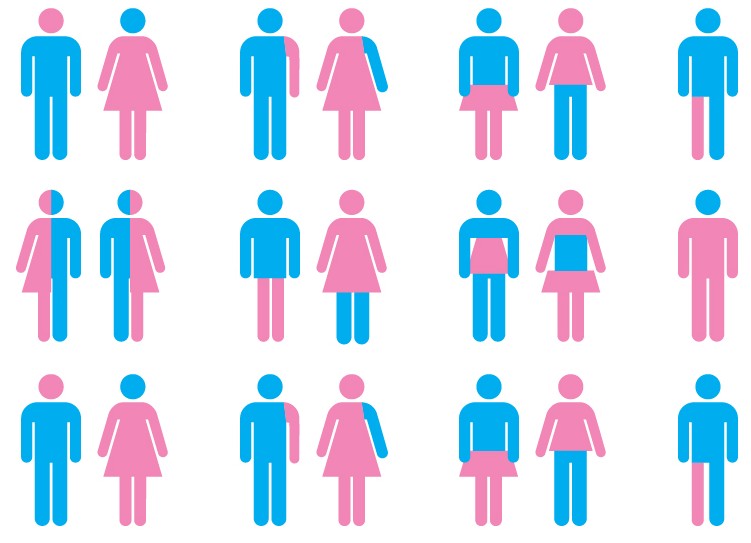
Key Takeaways
- Binary classifications simplify complex phenomena, aiding initial understanding.
- Many natural systems exhibit spectra and continuums that exceed binary models.
- Embracing non-binary frameworks enhances inclusivity and accuracy in various disciplines.
1. Physical Systems That Appear Binary but Exhibit More Complex Behavior
Quantum Mechanics: Beyond Simple States
At the quantum level, particles such as electrons and photons do not adhere strictly to binary states. Quantum mechanics introduces concepts like superposition, where particles can exist in multiple states simultaneously until measured. This phenomenon challenges the binary notion of "on/off" or "up/down," indicating that the foundational properties of matter are far more nuanced.
Additionally, quantum entanglement demonstrates that particles can become interlinked in ways that transcend traditional binary separations. Entangled particles maintain correlated properties regardless of the distance separating them, indicating a level of interconnectedness that binary categorizations cannot adequately describe.
Electromagnetic Fields: A Spectrum of Forces
Electromagnetic fields are often simplified into positive and negative charges or north and south magnetic poles for ease of understanding. However, these fields are continuous and dynamic, not fixed to binary endpoints. For instance, magnetic fields do not have isolated north or south poles, as the existence of magnetic monopoles has not been observed in nature. Instead, magnetic poles always come in pairs, and the fields themselves are a gradient of forces that extend through space.
Furthermore, in classical electromagnetism, the behavior of electric and magnetic fields is governed by Maxwell's equations, which describe how these fields propagate and interact in ways that are inherently non-binary. The continuous variation and interaction of these fields reflect a level of complexity that surpasses binary descriptions.
Table 1: Binary Models vs. Actual Complexities in Physical Systems
| Aspect | Binary Model | Complex Reality |
|---|---|---|
| Quantum States | On/Off, Up/Down | Superposition of multiple states until measurement |
| Magnetic Poles | North/South | Continuous field with no isolated monopoles |
| Particle Identity | Baryon/Meson | Quantum entanglement and particle correlations |
2. Biological Systems That Transcend Simple Categorization
Sex Determination in Nature: Beyond XX/XY
While many species, including humans, are commonly understood to have binary sex determination systems (XX for females and XY for males), this model is a simplification that does not account for the diversity observed in nature. In reality, numerous species exhibit more complex sex determination mechanisms, including environmental influences and multiple mating types.
For example, many reptiles possess temperature-dependent sex determination, where the incubation temperature of eggs influences the sex of the offspring. In certain fish species, individuals can change sex in response to social cues, challenging the notion of fixed biological sexes.
Furthermore, humans and other species have intersex variations, where individuals are born with reproductive or sexual anatomy that does not fit typical definitions of male or female. Conditions such as androgen insensitivity syndrome (AIS) and Klinefelter syndrome (XXY) illustrate that sex characteristics exist on a spectrum, rather than fitting into a binary classification.
Genetic Expression: A Continuous Spectrum
Genetic expression involves the manifestation of traits controlled by genes, but this process is not strictly binary. It is influenced by a multitude of factors, including regulatory genes, epigenetics, and environmental conditions. For instance, gene expression can vary based on external stimuli, developmental stages, and interactions with other genes, resulting in a wide range of phenotypic expressions.
Moreover, the concept of genetic "switches" being entirely on or off fails to capture the gradations in gene expression levels. Quantitative differences in gene expression can lead to subtle variations in traits, further complicating the binary model and highlighting the intricate nature of biological systems.
Human Brain: A Mosaic of Features
The human brain does not conform to a binary model either. Neuroscientific research has shown that brain structures and functions exhibit a high degree of variability and overlap between individuals traditionally classified as male or female. Features such as neural connectivity, hormonal receptors, and cognitive abilities exist along continua, indicating that cognitive and neurological traits cannot be neatly dichotomized.
Table 2: Sex Determination and Genetic Expression
| Biological Aspect | Binary Perspective | Complex Reality |
|---|---|---|
| Sex Chromosomes | XX/Female, XY/Male | Includes variations like XXY, XYY, XO |
| Sex Determination | Genetic (XX/XY) | Environmental and social factors also play roles |
| Gene Expression | On/Off | Regulatory networks create varying expression levels |
3. Social and Cultural Constructs of Gender Across Different Societies and Time Periods
Diverse Gender Identities in Various Cultures
Gender is a deeply rooted social construct that varies significantly across different cultures and historical periods, defying the simplistic binary classification of male and female. Many cultures recognize the existence of more than two genders, each encompassing a range of identities and roles that extend beyond traditional notions.
For instance, South Asia acknowledges the hijras as a distinct third gender, which has been recognized for centuries. Similarly, the Indigenous cultures of North America honor Two-Spirit individuals, who embody both masculine and feminine characteristics and fulfill unique societal roles. In Samoa, fa'afafine represent a recognized non-binary gender category that integrates aspects of both male and female identities.
Historical Perspectives on Gender
Throughout history, various societies have conceived of gender as a spectrum rather than a binary. Ancient Greece, for example, embraced the concept of androgyny and recognized mythological figures that transcended gender boundaries. Such perspectives illustrate that binary gender frameworks are not universal or timeless, but rather culturally contingent constructs.
The fluidity of gender in historical contexts underscores the artificiality of imposing binary categories on diverse human experiences. It highlights the importance of contextualizing gender within specific cultural and temporal frameworks to fully appreciate its complexity and variability.
Contemporary Understanding of Gender as a Spectrum
In modern discourse, gender is increasingly understood as a multidimensional spectrum that encompasses a wide array of identities, expressions, and roles. This perspective moves beyond the limitations of binary categorization, recognizing that individual experiences of gender are influenced by a combination of biological, psychological, and social factors.
This more inclusive view of gender fosters greater recognition and validation of individuals who do not conform to traditional male or female roles, promoting a more equitable and understanding society.
Impact of Colonialism on Gender Constructs
The imposition of rigid binary gender systems in colonized societies often undermined and erased indigenous understandings of gender. Colonial powers frequently enforced Eurocentric and patriarchal gender norms, disregarding the existing non-binary and fluid gender frameworks of native cultures. This enforcement not only disrupted traditional social structures but also marginalized individuals who identified outside the imposed binary system.
This historical context underscores the significance of recognizing and preserving diverse gender constructs, as they embody rich cultural heritages and complex understandings of human identity.
4. How Binary Thinking Influences Spiritual and Philosophical Frameworks
Dualism in Western Philosophy
Binary thinking has been a foundational element in Western philosophical traditions, particularly in the form of dualism. Cartesian dualism, for example, posits a strict separation between mind and body, treating them as distinct and independent entities. This binary separation has profound implications for how consciousness, identity, and existence are conceptualized.
Furthermore, Western ethical frameworks often dichotomize morality into concepts of good and evil, simplicity and complexity. Such binary categorization can limit ethical discourse, constraining it within predefined moral boundaries and neglecting the gray areas that are essential for nuanced moral reasoning.
Eastern Philosophies: Complementary Dualities
Contrasting with Western binary dualism, many Eastern philosophical traditions embrace the idea of complementary dualities that are interdependent and fluid. Taoism’s principle of yin and yang epitomizes this nuanced understanding, where seemingly opposite forces are interconnected and constantly transforming into each other.
This perspective acknowledges the inherent complexity and continual change within natural and human-made systems, rejecting the static and rigid boundaries often implied by binary models. By embracing the balance and interplay of opposites, Eastern philosophies offer a more dynamic and inclusive framework for understanding existence.
Spiritual Frameworks and Binary Constructs
Binary thinking extends into various spiritual frameworks, where dualities such as light and dark, creation and destruction, and transcendence and immanence are prevalent. While these binaries can provide structure and meaning, they can also oversimplify spiritual experiences and phenomena, ignoring the rich, intertwined nature of these concepts.
For example, in many spiritual traditions, the concept of duality is used as a pedagogical tool to convey complex spiritual truths. However, a deeper exploration often reveals a more integrated and holistic understanding that transcends binary opposition, highlighting the limitations of binary thinking in capturing the essence of spiritual realities.
5. The Utility and Limitations of Binary Models as Tools for Human Understanding
Utility of Binary Models
Binary categorizations have been instrumental as cognitive tools, providing a simplified framework for navigating and comprehending the complexity of the world. They facilitate communication, education, and decision-making by reducing vast amounts of information into manageable categories.
For instance, in early education, binary models such as positive/negative or male/female help learners grasp foundational concepts before delving into more intricate details. Similarly, in scientific disciplines, binary distinctions can be essential for hypothesis testing and experimental design, offering clear variables for study.
Limitations of Binary Models
Despite their utility, binary models have significant limitations when applied to systems that inherently possess complexity and variability. These models can lead to reductionism, oversimplifying phenomena that exist on continua or involve multiple variables.
-
Reductionism: By forcing complex systems into binary categories, important nuances and interdependencies may be overlooked. This can result in incomplete or inaccurate understandings of the phenomena under study.
-
Marginalization: Binary frameworks often marginalize individuals or elements that do not fit neatly into predefined categories. In social contexts, this can perpetuate exclusionary practices and stigmatization of non-conforming identities.
-
Philosophical Stagnation: Over-reliance on binary thinking can hinder philosophical inquiry and problem-solving by restricting perspectives to dual oppositions, limiting creative and comprehensive approaches to understanding complex issues.
Balancing Binary Models with Nuanced Frameworks
To mitigate the limitations of binary models, it is essential to complement them with more nuanced and flexible frameworks. Embracing spectrum-based, intersectional, or multidimensional perspectives allows for a more accurate and inclusive representation of complex systems.
In practice, this means recognizing the limitations of binary categorizations and actively seeking to understand the underlying continuums and interconnections within systems. Whether in scientific research, social policy, or philosophical discourse, integrating nuanced frameworks can lead to deeper insights and more equitable outcomes.
Table 3: Utility vs. Limitations of Binary Models
| Aspect | Utility | Limitations |
|---|---|---|
| Simplicity | Facilitates initial understanding and communication. | Oversimplifies complex phenomena, ignoring nuances. |
| Educational Tool | Helps learners grasp foundational concepts. | May hinder deeper understanding if not expanded upon. |
| Social Policy | Provides clear categories for legislation and rights. | Can marginalize non-conforming identities and experiences. |
Conclusion
Binary categorizations serve as foundational tools in human cognition, offering simplified models that aid in the initial comprehension of complex phenomena across various domains. However, their inherent limitations underscore the necessity for more sophisticated and inclusive frameworks that accurately reflect the multifaceted nature of natural systems, biological diversity, and social constructs.
In physics, embracing the complexities revealed by quantum mechanics and electromagnetic field theories moves us beyond simplistic binary models, fostering a deeper understanding of the universe's intricate behaviors. Similarly, in biology, recognizing the spectrum of sex determination and genetic expression enhances our comprehension of the living world’s diversity and adaptability.
Socially and culturally, the acknowledgment of non-binary gender identities across different societies and historical periods challenges entrenched binary norms, promoting a more inclusive and accurate representation of human identity. Furthermore, philosophical and spiritual traditions benefit from moving beyond dualistic frameworks, allowing for more nuanced explorations of existence and morality.
Ultimately, while binary models remain valuable as cognitive tools, their thoughtful integration with more nuanced and spectrum-based frameworks paves the way for a more comprehensive and equitable understanding of the world. Embracing this complexity honors the diversity and richness inherent in natural systems and human experiences.
References
Last updated January 22, 2025