
Unveiling the Microscopic Allies: How Biofertilizers Nurture Plants
A visual and conceptual journey into the diverse mechanisms by which biofertilizers enhance plant growth and soil vitality.
Biofertilizers are remarkable substances brimming with living microorganisms. When applied to seeds, plant surfaces, or soil, these tiny powerhouses colonize the rhizosphere (the area around plant roots) or the interior of the plant, promoting growth by a multitude of fascinating mechanisms. Understanding these processes is key to appreciating their role in sustainable agriculture. While I cannot directly "draw" an image for you, this guide will help you visualize and comprehend these mechanisms in detail, complemented by diagrams and illustrative concepts.
Key Insights into Biofertilizer Action
- Nutrient Provisioning: Biofertilizers significantly enhance nutrient availability through processes like nitrogen fixation and the solubilization of phosphorus and potassium, making these essential elements accessible to plants.
- Growth Stimulation: Many beneficial microbes produce plant growth hormones (phytohormones) that stimulate root development, enhance nutrient uptake, and improve overall plant vigor and yield.
- Plant Protection & Soil Health: Biofertilizers can offer biocontrol against plant pathogens and contribute to improved soil structure and organic matter content, fostering a healthier growing environment.
Visualizing the Mechanisms: A Conceptual Blueprint
Imagine a central, healthy plant with a well-developed root system embedded in rich soil. This plant is the focal point, with various biofertilizer mechanisms depicted as interconnected processes occurring in its vicinity, particularly within the rhizosphere. This "blueprint" describes how such an image could be constructed to illustrate these dynamic interactions.
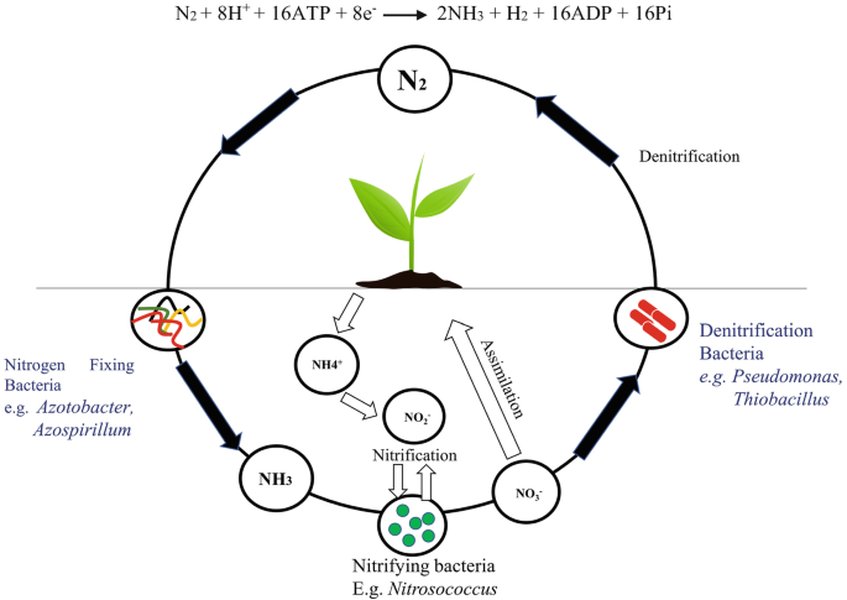
This diagram showcases various mechanisms of microbial biofertilizers, including nitrogen fixation, phosphate solubilization, phytohormone production, and pathogen antagonism, all contributing to improved plant health and soil fertility.
Core Mechanisms in Action
The efficacy of biofertilizers stems from a range of direct and indirect mechanisms orchestrated by diverse groups of microorganisms:
1. Nitrogen Fixation: Capturing Atmospheric Gold
Certain bacteria, notably Rhizobium (symbiotically with legumes, forming root nodules), Azotobacter, and Azospirillum (free-living or associative), possess the unique ability to convert inert atmospheric nitrogen gas (N2) into ammonia (NH3). This biologically fixed nitrogen is a readily usable form for plants, crucial for protein synthesis and overall growth.
Visualization: Imagine arrows depicting N2 from the air being drawn towards root nodules (on legumes) or bacteria in the soil, then transformed and absorbed by the plant roots. Small bacterial icons could be shown actively engaged in this conversion.
2. Phosphorus Solubilization: Unlocking Hidden Reserves
Soils often contain abundant phosphorus, but much of it is in insoluble forms unavailable to plants. Phosphate Solubilizing Bacteria (PSB), such as species of Bacillus and Pseudomonas, and fungi, release organic acids (e.g., gluconic acid, citric acid) and enzymes (e.g., phosphatases). These substances break down complex inorganic and organic phosphate compounds (like tricalcium phosphate) into soluble phosphate ions (e.g., H2PO4-, HPO42-) that plant roots can absorb.
Visualization: Depict bacterial clusters around rock phosphate particles or organic P compounds, with 'dissolving' effects shown as these compounds break down and release soluble P, which then moves towards the roots.
3. Potassium Solubilization and Mobilization: Accessing Essential K
Similar to phosphorus, potassium can be trapped in soil minerals (e.g., feldspar, mica). Potassium Solubilizing Bacteria (KSB), including certain Bacillus species, produce organic acids and extracellular polysaccharides that weather these minerals, releasing potassium ions (K+) into the soil solution for plant uptake.
Visualization: Show microbes interacting with mineral particles, with K+ ions being liberated and made available to the plant roots.
4. Production of Plant Growth-Promoting Substances (Phytohormones)
Many biofertilizer microorganisms, often termed Plant Growth-Promoting Rhizobacteria (PGPR), synthesize and secrete vital phytohormones. These include:
- Auxins (e.g., Indole-3-Acetic Acid - IAA): Promote root elongation, formation of lateral and adventitious roots, and cell division.
- Gibberellins: Stimulate stem elongation, seed germination, and flowering.
- Cytokinins: Enhance cell division, shoot growth, and delay senescence.
Visualization: Illustrate microbes near the roots releasing tiny molecules (representing hormones) that diffuse towards the plant, leading to visibly enhanced root branching and shoot growth.
5. Siderophore Production: Iron Scavenging for Plants
Iron is essential for chlorophyll synthesis and various enzymatic reactions, but its availability can be low in many soils. Some biofertilizer microbes produce siderophores – low molecular weight compounds with a high affinity for ferric iron (Fe3+). These siderophores chelate iron, sequestering it from the environment and making it available to the plant (and the microbe itself), while potentially limiting its availability to pathogenic microorganisms.
Visualization: Show microbes releasing unique molecules (siderophores) that bind to iron particles in the soil, then transport this iron complex towards the plant roots.
6. Suppression of Plant Pathogens (Biocontrol)
Biofertilizers can indirectly promote plant health by protecting them from soil-borne pathogens. This biocontrol activity occurs through several mechanisms:
- Antibiosis: Production of antibiotics or lytic enzymes (e.g., chitinases, glucanases) that inhibit or kill pathogens.
- Competition: Beneficial microbes compete with pathogens for nutrients, space, and infection sites on the root.
- Siderophore Production (Dual Role): As mentioned, by sequestering iron, siderophores can deprive pathogens of this essential nutrient.
- Production of HCN: Some microbes produce hydrogen cyanide (HCN), which can be toxic to certain pathogens.
- Induced Systemic Resistance (ISR): Certain PGPR can trigger the plant's own defense mechanisms, making it more resistant to a broad range of pathogens.
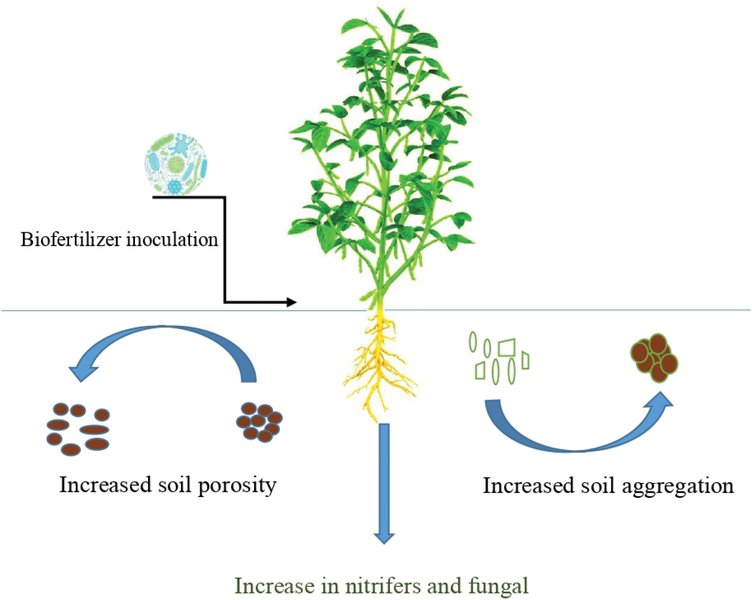
This image illustrates the overall positive impact of biofertilizers, leading to enhanced plant growth and development through improved nutrient uptake and soil health.
7. Organic Matter Decomposition and Soil Structure Improvement
Many biofertilizer microorganisms contribute to the decomposition of organic matter in the soil. This process releases nutrients locked within organic residues, making them available to plants. Furthermore, microbial activity, particularly the production of exopolysaccharides by bacteria and the hyphal networks of fungi, helps bind soil particles together, improving soil aggregation, aeration, water infiltration, and water-holding capacity.
Visualization: Show microbes breaking down organic debris (e.g., leaf litter) into humus, and illustrate improved soil structure with more pore spaces and better root penetration.
8. Mycorrhizal Associations: An Extended Root System
Mycorrhizal fungi, especially Arbuscular Mycorrhizal (AM) fungi (e.g., Glomus spp.), form symbiotic relationships with the roots of most plant species. The fungi extend their hyphae far into the soil, effectively increasing the root surface area for nutrient and water absorption. They are particularly efficient at acquiring phosphorus and other less mobile nutrients (like zinc and copper) and transferring them to the plant. In return, the plant provides the fungi with carbohydrates.
Visualization: Depict a fine network of fungal hyphae extending from the plant roots deep into the soil, channeling nutrients back to the plant.
Interactive Map of Biofertilizer Mechanisms
The mindmap below provides a simplified visual overview of the primary ways biofertilizers work, branching out from the central concept to showcase the diverse beneficial actions these microorganisms perform to support plant life and soil health.
(e.g., Rhizobium, Azotobacter)"] id1b["Phosphorus Solubilization
(e.g., Bacillus, Pseudomonas)"] id1c["Potassium Solubilization
(e.g., Bacillus)"] id1d["Micronutrient Mobilization
(e.g., Siderophores for Iron)"] id2["Growth Promotion"] id2a["Phytohormone Production
(Auxins, Gibberellins, Cytokinins)"] id2b["Enhanced Root Development"] id2c["Improved Shoot Growth"] id3["Plant Protection (Biocontrol)"] id3a["Antibiosis"] id3b["Competition for Resources"] id3c["Induced Systemic Resistance (ISR)"] id3d["Siderophore-mediated Pathogen Suppression"] id4["Soil Health Improvement"] id4a["Organic Matter Decomposition"] id4b["Improved Soil Structure & Aggregation"] id4c["Increased Water Retention"] id5["Symbiotic Associations"] id5a["Mycorrhizal Fungi
(Enhanced P & Nutrient Uptake)"]
Comparing Biofertilizer Contributions
Different types of biofertilizer microorganisms excel in various functions. The radar chart below offers a conceptual comparison of the relative contributions of key microbial groups to different plant and soil benefits. The values are illustrative, representing general strengths rather than precise quantitative data, and demonstrate the multifaceted impact of these microbes.
Key Microbial Players and Their Roles
The world of biofertilizers is populated by diverse microorganisms, each contributing uniquely to plant and soil health. The table below summarizes some common types of biofertilizer microorganisms and their primary mechanisms of action.
| Microorganism Type | Examples | Primary Mechanisms/Benefits |
|---|---|---|
| Nitrogen-Fixing Bacteria (Symbiotic) | Rhizobium, Bradyrhizobium, Sinorhizobium, Mesorhizobium | Fix atmospheric N2 in root nodules of legumes. |
| Nitrogen-Fixing Bacteria (Free-living/Associative) | Azotobacter, Azospirillum, Beijerinckia, Clostridium | Fix atmospheric N2 in the rhizosphere or in loose association with roots. Produce growth hormones. |
| Phosphate Solubilizing Microorganisms (PSM) | Bacteria: Bacillus spp., Pseudomonas spp., Enterobacter spp. Fungi: Aspergillus spp., Penicillium spp. |
Solubilize inorganic and organic soil P by releasing organic acids and enzymes. Some produce phytohormones. |
| Potassium Solubilizing Microorganisms (KSM) | Bacillus mucilaginosus, Bacillus edaphicus, Acidothiobacillus ferrooxidans | Solubilize K from silicate minerals by producing organic acids. |
| Plant Growth-Promoting Rhizobacteria (PGPR) | Various species of Pseudomonas, Bacillus, Azospirillum, Serratia | Produce phytohormones (IAA, gibberellins, cytokinins), siderophores, HCN; induce systemic resistance; nutrient cycling. |
| Arbuscular Mycorrhizal Fungi (AMF) | Glomus, Gigaspora, Acaulospora | Enhance P, Zn, Cu, and water uptake; improve soil structure; increase stress tolerance. Form extensive hyphal networks. |
| Biocontrol Agents | Trichoderma spp., Pseudomonas fluorescens, Bacillus subtilis | Suppress plant pathogens through antibiosis, competition, parasitism, or induced systemic resistance. |
Delving Deeper: Biofertilizer Mechanisms Explained
The following video provides a concise explanation of why biofertilizers are important for crops, touching upon some of their key mechanisms and benefits in an accessible format. Understanding these fundamentals can highlight their significance in modern, sustainable agriculture.
This video explains the importance and mechanisms of biofertilizers for crop health and sustainable farming.
Frequently Asked Questions (FAQ)
What are the main ways biofertilizers help plants grow?
Biofertilizers help plants grow primarily by:
- Increasing nutrient availability: They fix atmospheric nitrogen, solubilize phosphorus and potassium, and mobilize other micronutrients, making them accessible to plants.
- Producing growth hormones: They synthesize substances like auxins, gibberellins, and cytokinins that stimulate root development, shoot growth, and overall plant vigor.
- Protecting against pathogens: Some biofertilizers can suppress harmful soil-borne diseases through mechanisms like antibiotic production, competition, or by inducing plant defense responses.
- Improving soil health: They contribute to better soil structure, organic matter content, and water retention.
How do biofertilizers make nitrogen available to plants?
Certain bacteria in biofertilizers, such as Rhizobium (which forms nodules on legume roots) and free-living bacteria like Azotobacter and Azospirillum, can perform biological nitrogen fixation. This process involves converting atmospheric nitrogen gas (N2), which plants cannot directly use, into ammonia (NH3) and other nitrogenous compounds that plants can absorb and utilize for their growth.
What is phosphorus solubilization by biofertilizers?
Many soils contain phosphorus, but it's often in forms that plants cannot absorb (insoluble phosphates). Phosphate Solubilizing Microorganisms (PSMs), like certain bacteria (e.g., Bacillus, Pseudomonas) and fungi, release organic acids and enzymes. These substances break down insoluble phosphate compounds into soluble phosphate ions, which plant roots can then take up. This mechanism significantly enhances phosphorus availability for plants, vital for energy transfer, root development, and flowering.
Can biofertilizers protect plants from diseases?
Yes, some biofertilizers have biocontrol properties. They can protect plants from diseases caused by harmful microorganisms through various mechanisms:
- Antibiosis: Producing antibiotics or lytic enzymes that kill or inhibit pathogens.
- Competition: Outcompeting pathogens for nutrients and space in the rhizosphere.
- Siderophore production: Producing compounds that bind iron, making it less available to pathogens.
- Induced Systemic Resistance (ISR): Stimulating the plant's natural defense systems, making it more resistant to a wider range of pathogens.
Recommended Further Exploration
- What are the different types of biofertilizers and their specific microbial compositions?
- How do environmental factors affect the efficiency of biofertilizer mechanisms in the soil?
- Compare the long-term benefits of biofertilizers versus chemical fertilizers on soil health.
- What are the best application methods for different types of biofertilizers to maximize their effectiveness?
References
Last updated May 18, 2025