
Unlocking Biological Secrets: How Bioinformatics and Key Databases Drive Modern Discovery
Explore the power of computational biology in deciphering life's code and the essential databases fueling research breakthroughs.
Bioinformatics stands at the intersection of biology, computer science, statistics, and mathematics. It's an essential interdisciplinary field dedicated to developing and applying computational methods to acquire, store, analyze, and interpret vast amounts of biological data. As technologies like genome sequencing generate data at an unprecedented rate, bioinformatics provides the crucial tools and techniques to transform this raw information into meaningful biological insights.
Highlights of Bioinformatics
- Data Management & Analysis: Bioinformatics provides the computational infrastructure to handle the enormous datasets generated by modern biological research, enabling efficient storage, retrieval, and analysis.
- Accelerating Discovery: It significantly speeds up research in genomics, proteomics, drug discovery, and personalized medicine by identifying patterns, predicting structures, and modeling complex biological systems.
- Interdisciplinary Foundation: By integrating computational power with biological questions, bioinformatics bridges disciplines and fosters collaboration, driving innovation across the life sciences.
Why is Bioinformatics So Important?
Driving Progress in Life Sciences
The significance of bioinformatics in contemporary science cannot be overstated. Its ability to manage and interpret the deluge of biological data generated by high-throughput experiments is fundamental to progress. Here’s a closer look at its critical roles:

Computational infrastructure is essential for handling large-scale bioinformatics data.
Handling Biological Big Data
Genomic sequencing, proteomic analysis, and other large-scale biological studies produce massive datasets. Bioinformatics develops the algorithms, software, and database systems necessary to manage, process, analyze, and visualize this data effectively, preventing researchers from being overwhelmed and enabling the extraction of valuable information.
Advancing Genomics and Genetics
Bioinformatics tools are indispensable for assembling genomes, identifying genes, studying genetic variation within populations, and understanding evolutionary relationships. Analyzing sequence data helps researchers link specific genetic variations to diseases, traits, and drug responses.
Revolutionizing Drug Discovery and Development
By analyzing biological data, bioinformatics accelerates the identification of potential drug targets, predicts the efficacy and toxicity of drug candidates, and helps design new therapeutic molecules. Understanding protein structures and interaction networks is crucial for developing targeted therapies.
Enabling Precision Medicine
Bioinformatics is the engine behind personalized medicine. By analyzing an individual's genomic data alongside clinical information, it allows for tailored treatment strategies, predicting disease risk and optimizing therapeutic interventions for better patient outcomes, especially in fields like oncology.
Understanding Complex Biological Systems
Biological processes involve intricate networks of interactions between genes, proteins, and other molecules. Bioinformatics employs systems biology approaches to model these networks, helping scientists understand how cellular processes function, how they are disrupted in disease, and how they respond to treatments.
Essential Bioinformatics Databases: The Researcher's Toolkit
Organized Repositories of Biological Knowledge
Bioinformatics research relies heavily on specialized databases that serve as organized repositories for biological data. These databases, coupled with software tools, allow researchers to store, update, query, retrieve, and analyze information crucial for their work. They range from primary databases containing raw experimental data to secondary databases offering curated and integrated information. Here are five key databases frequently used in the field:
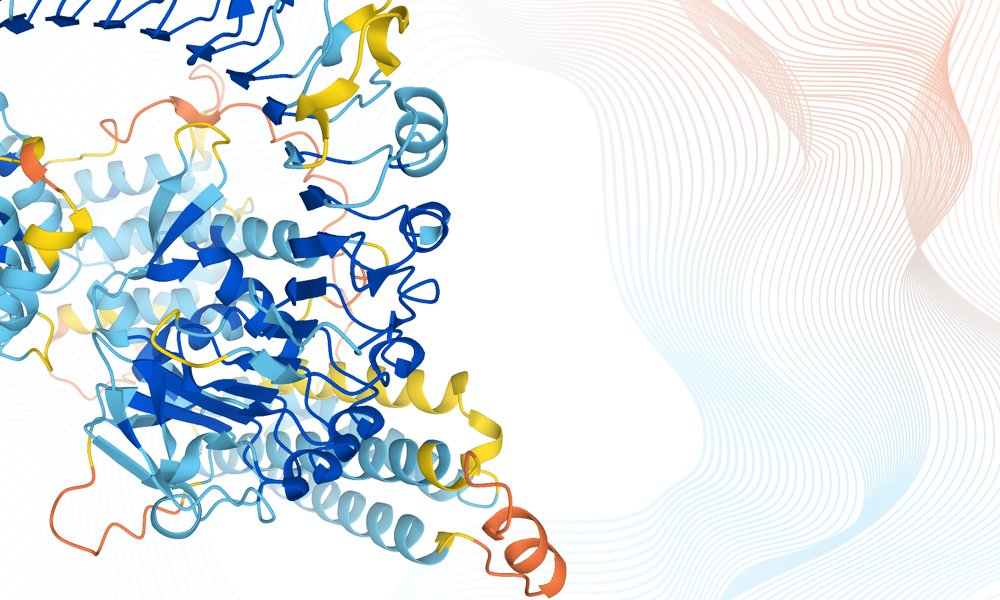
Databases store vast amounts of information, including predicted protein structures vital for research.
1. NCBI (National Center for Biotechnology Information)
A Comprehensive Gateway to Biological Data
Hosted by the U.S. National Institutes of Health (NIH), NCBI is a vast, publicly accessible resource providing access to a multitude of databases and analysis tools. It's a cornerstone for researchers worldwide.
- Content: Includes GenBank (a primary nucleotide sequence database collecting submissions directly from researchers), PubMed (biomedical literature), RefSeq (curated reference sequences), dbSNP (genetic variations), Genome database, and many others.
- Usage: Researchers use NCBI to retrieve DNA, RNA, and protein sequences; perform sequence similarity searches using tools like BLAST (Basic Local Alignment Search Tool); access scientific articles; download genome assemblies; and explore genetic variation data. It serves as a central hub connecting various types of biological information.
2. UniProt (Universal Protein Resource)
The Premier Protein Sequence and Function Database
UniProt is a collaborative project (involving EMBL-EBI, SIB Swiss Institute of Bioinformatics, and PIR) that provides a comprehensive, high-quality, and freely accessible resource of protein sequence and functional information.
- Content: Contains extensive protein information, including sequences, functions, domain structures, post-translational modifications, variants, and detailed annotations curated from literature and computational analyses. It comprises two main sections: UniProtKB/Swiss-Prot (manually reviewed) and UniProtKB/TrEMBL (computationally annotated).
- Usage: Scientists rely on UniProt to obtain definitive information about specific proteins, study protein families, analyze functional annotations, investigate protein structures, and understand their roles in biological pathways. It's essential for proteomics, functional genomics, and systems biology research.

UniProt and ExPASy are central resources for protein analysis in bioinformatics.
3. STRING (Search Tool for the Retrieval of Interacting Genes/Proteins)
Mapping the Landscape of Protein Interactions
STRING is a specialized database focused on known and predicted protein-protein interactions (PPIs). These interactions encompass direct physical binding as well as indirect functional associations.
- Content: Integrates PPI information from numerous sources, including experimental data (e.g., yeast two-hybrid, co-immunoprecipitation), computational predictions (e.g., gene co-occurrence, gene fusion events), curated pathway databases, and text mining of scientific literature.
- Usage: Researchers use STRING to visualize and explore interaction networks for proteins of interest, identify potential functional partners, perform pathway enrichment analysis, and understand the broader biological context of genes or proteins. It's valuable for hypothesis generation and interpreting experimental results.
4. ExPASy (Expert Protein Analysis System)
A Portal for Proteomics Tools and Resources
Hosted by the SIB Swiss Institute of Bioinformatics, ExPASy serves as a web portal providing access to a wide array of databases and software tools primarily focused on proteomics (the large-scale study of proteins).
- Content: Offers access to UniProtKB, SWISS-MODEL (a protein structure homology-modeling server), and various tools for protein sequence analysis, characterization (e.g., predicting post-translational modifications, computing physicochemical properties), and structure prediction.
- Usage: Scientists utilize ExPASy tools for detailed protein analysis, such as identifying proteins from mass spectrometry data, predicting protein structure and function, analyzing protein sequences for specific motifs or domains, and accessing curated protein knowledge.
5. OMIM (Online Mendelian Inheritance in Man)
Cataloging Human Genes and Genetic Disorders
OMIM is an authoritative, comprehensive, and continuously updated catalog of human genes and genetic phenotypes, with a particular focus on the relationship between genetic variations and inherited diseases.
- Content: Contains detailed textual information and references about human genes, genetic disorders, and traits, including clinical features, molecular genetics, population genetics, and allelic variants. It links genes to specific phenotypes and diseases.
- Usage: Clinicians, geneticists, and researchers use OMIM to investigate the genetic basis of diseases, understand gene-phenotype correlations, access information on specific genetic conditions for diagnosis and counseling, and find relevant scientific literature. It is often cross-referenced in other databases like NCBI and STRING.
Comparing Key Bioinformatics Databases
Feature Focus at a Glance
The following chart provides an opinionated comparison of the five discussed databases across several key dimensions. This helps visualize their relative strengths and primary focus areas within the bioinformatics landscape. The scores (ranging notionally from 5 to 10 for visibility) reflect a general assessment rather than precise quantitative metrics.
This visualization highlights NCBI's broad scope, UniProt's high curation level for proteins, STRING's focus on interactions, ExPASy's strength in analysis tools, and OMIM's specialization in genetic disorders. Researchers often use these databases in concert, leveraging their unique strengths for comprehensive analysis.
Visualizing the World of Bioinformatics
Mapping Key Concepts and Connections
Bioinformatics integrates various disciplines and utilizes specific tools and databases to achieve its goals. The mind map below illustrates the core components of bioinformatics, its major application areas, and the role of the key databases discussed.
This mind map provides a structured overview, connecting the definition and purpose of bioinformatics with its practical applications and the fundamental database resources that underpin research in this dynamic field.
How Researchers Utilize These Databases: A Workflow Perspective
Integrating Data for Comprehensive Insights
Bioinformatics databases are rarely used in isolation. A typical research workflow often involves querying multiple databases and using various analytical tools sequentially or in parallel to answer complex biological questions. Here’s a simplified example of how these resources might be integrated:
- Starting Point - Sequence Retrieval: A researcher might begin by identifying a gene or protein of interest. They could search **NCBI** (e.g., GenBank or RefSeq) to retrieve its nucleotide or amino acid sequence.
- Protein Details - Functional Annotation: To understand the protein's function, structure, and known characteristics, they would query **UniProt**, accessing highly curated information and annotations.
- Interaction Context - Network Analysis: To see how this protein works with others, the researcher could use **STRING**. By inputting the protein, they can visualize its known and predicted interaction partners, revealing potential pathways or functional modules.
- Detailed Analysis - Specialized Tools: For more specific protein analysis, such as predicting post-translational modifications or finding conserved domains, tools accessed via the **ExPASy** portal might be employed, often using the sequence data retrieved earlier.
- Clinical Relevance - Disease Connection: If the research involves a human gene or protein potentially linked to a disease, **OMIM** would be consulted to find information on associated genetic disorders, phenotypes, and relevant clinical studies.
- Literature Search: Throughout the process, NCBI's **PubMed** database would be used to find relevant scientific publications supporting the findings or guiding further investigation.
This interconnected use transforms raw data points into a cohesive understanding of biological systems, demonstrating the power of integrating information from these specialized resources.
Database Summary Table
Key Features and Uses
This table provides a concise summary of the five key databases discussed, highlighting their primary data types, main focus, and typical applications in bioinformatics research.
| Database | Primary Data Type(s) | Main Focus | Common Uses |
|---|---|---|---|
| NCBI | Nucleotide sequences, protein sequences, literature, genomes, variations | Comprehensive access point for diverse biological data and literature | Sequence retrieval (GenBank), literature search (PubMed), sequence alignment (BLAST), genome browsing |
| UniProt | Protein sequences, functional annotations | Centralized, high-quality protein information | Retrieving detailed protein function, structure, PTMs; protein family analysis; proteomics reference |
| STRING | Protein-protein interactions (known & predicted) | Mapping and analyzing protein interaction networks | Exploring functional relationships, pathway analysis, network visualization, hypothesis generation |
| ExPASy | Protein sequences, structures, analytical tools | Portal for proteomics analysis tools and databases | Protein identification, sequence analysis, structure prediction, accessing specialized protein tools |
| OMIM | Human genes, genetic disorders, phenotypes | Cataloging human gene-disease relationships | Investigating genetic basis of inherited diseases, clinical genetics research, finding gene-phenotype correlations |
Introduction to Bioinformatics Video
Understanding the Basics
For a concise visual introduction to the field of bioinformatics, the following video provides a helpful overview, defining the term and explaining its significance in modern biological research. It touches upon the types of data handled and the computational approaches used.
This video serves as a good starting point for those new to the concept, illustrating how bioinformatics bridges the gap between complex biological questions and computational solutions, making sense of the vast data landscapes generated in life sciences.
Frequently Asked Questions (FAQ)
What skills are essential for a career in bioinformatics?
A successful bioinformatician typically needs a strong foundation in biology (especially molecular biology, genetics, and biochemistry), proficiency in computer programming (Python and R are common), knowledge of statistics and algorithms, familiarity with relevant databases and software tools, and good communication skills to collaborate effectively with biologists and computational scientists.
How is Artificial Intelligence (AI) impacting bioinformatics?
AI, particularly machine learning (ML) and deep learning, is revolutionizing bioinformatics. It's used for tasks like predicting protein structures (e.g., AlphaFold), identifying complex patterns in genomic data, improving drug discovery pipelines, analyzing medical images, and building predictive models for disease risk and treatment response. AI enhances the ability to extract deeper insights from complex biological datasets.
Are the databases like NCBI, UniProt, and STRING free to use?
Yes, the major databases discussed here (NCBI, UniProt, STRING, ExPASy resources, OMIM) are generally publicly funded and freely accessible to researchers worldwide via the internet. This open access policy is crucial for fostering global scientific collaboration and accelerating discovery.
What is the difference between primary and secondary biological databases?
Primary databases store raw, experimentally derived data submitted directly by researchers. Examples include GenBank (nucleotide sequences) and Protein Data Bank (PDB - protein structures). Secondary databases contain curated information derived from analyzing and integrating data from primary sources. They often provide added value through annotation, cross-referencing, and computational analysis. UniProtKB/Swiss-Prot and RefSeq are examples of highly curated secondary database resources.
Recommended Reading
- How is bioinformatics specifically applied in the process of discovering and developing new drugs?
- What are the latest advancements using machine learning and AI within bioinformatics research?
- What are the current challenges facing the field of bioinformatics and what future trends are emerging?
- What educational pathways and skills are recommended for starting a career in bioinformatics?
References
Last updated May 1, 2025